
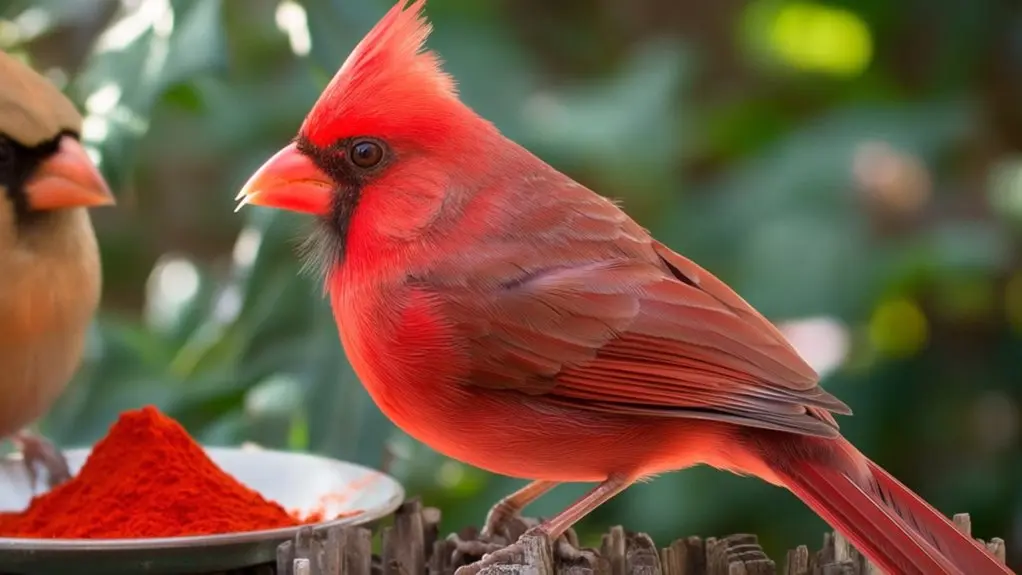
You can safely feed cayenne pepper to birds because they lack the VR1 receptors that trigger the burning sensation mammals feel from capsaicin. This cool evolutionary trait means many bird species can eat spicy peppers naturally without any irritation. It actually helps them spread seeds around.
Mammals avoid cayenne because it’s uncomfortable for them, but birds handle it just fine. That makes cayenne a great way to keep squirrels away without harming the birds.
If you want, you can explore practical ways to use cayenne and other tips to protect your feeders. It’s pretty handy stuff to know!
Why Birds Don’t Mind Cayenne Pepper
Although cayenne pepper causes a burning sensation in mammals, birds don’t mind it because they lack the VR1 receptors that detect capsaicin. Since these receptors are absent, birds don’t experience irritation or discomfort when consuming cayenne pepper.
This biological difference allows many bird species, such as thrushes and cardinals, to eat hot peppers without adverse effects on their digestive or sensory systems.
You can understand this as an evolutionary adaptation: capsaicin deters mammals, which often destroy seeds during consumption, while attracting birds that help disperse seeds effectively.
By not reacting to capsaicin, birds serve as efficient agents in spreading pepper seeds, ensuring the plant’s reproductive success.
This selective sensitivity highlights a sophisticated plant-animal interaction shaped by ecological pressures.
What Capsaicin Does to Mammals and Birds
When you encounter capsaicin, the active compound in cayenne pepper, your body reacts by activating VR1 receptors that signal pain and heat. This produces a strong burning sensation. These receptors trigger pain and irritation, which usually makes mammals want to avoid it.
Capsaicin activates VR1 receptors in mammals, causing pain and a burning sensation that promotes avoidance.
But birds are different. They don’t have these VR1 receptors, so they don’t feel the burning or discomfort that capsaicin causes in mammals. Because of this, birds can safely eat spicy peppers and help spread their seeds without any harm.
Research shows that capsaicin-coated birdseed keeps mammals like squirrels away but doesn’t bother birds at all. This clearly shows a species-specific response.
Understanding these differences explains why mammals avoid capsaicin while birds don’t mind it, highlighting how this compound affects species selectively.
Can Cayenne Pepper Help Keep Squirrels Away?
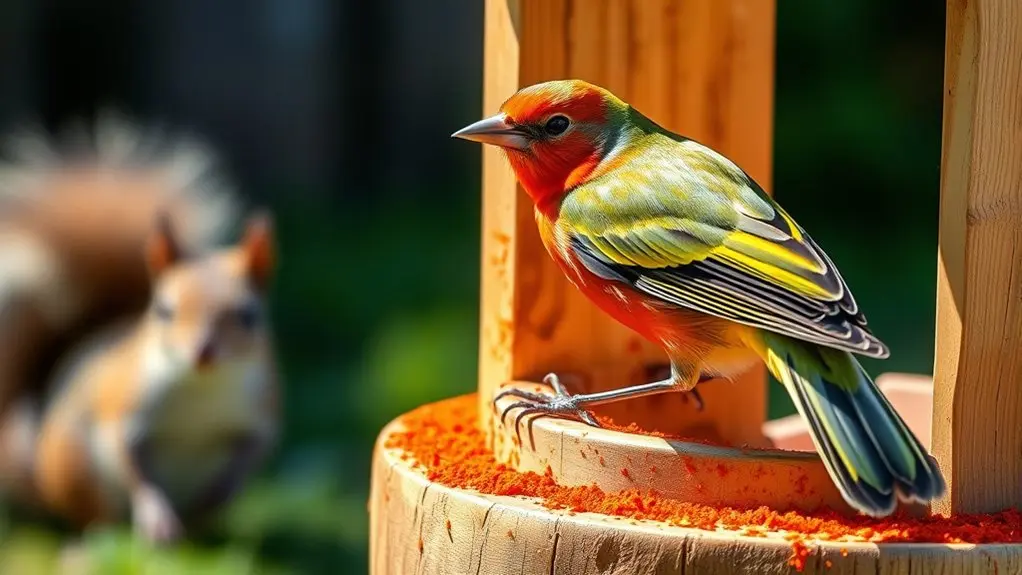
Understanding how capsaicin affects mammals and birds sets the stage for examining its practical use in deterring squirrels. You can use cayenne pepper, rich in capsaicin, to make birdseed unappealing to squirrels because mammals find the heat bothersome.
Birds, lacking the necessary taste receptors, remain unaffected and can safely consume treated seeds.
However, loose cayenne powder can blow around and might irritate birds’ eyes if not properly managed. To prevent this, you should use baffles or guards around feeders to keep the pepper contained and minimize the mess. That way, you protect the birds while keeping squirrels away.
While cayenne pepper effectively discourages squirrels, it’s important to check your feeders regularly. This helps make sure the birds aren’t getting irritated and keeps the feeding area clean. It’s a simple way to balance keeping squirrels off your feeders without harming the birds.
Is Hot Pepper Safe for Birds and People?
You’ll find that birds can safely eat cayenne pepper because they don’t have the receptors that make it feel hot to mammals. So, while it might be spicy for us, it’s totally fine for them.
That said, when you’re handling hot pepper powders, it’s a good idea to wear gloves. This helps prevent any skin or eye irritation, which can be pretty uncomfortable.
Knowing these little differences makes it easier to keep both birds and people safe when using cayenne pepper.
Bird Safety With Capsaicin
Although capsaicin causes a burning sensation in mammals by activating VR1 receptors, birds lack these receptors and don’t experience irritation from hot peppers like cayenne. This difference means cayenne pepper and chili powders are safe for birds, causing no harm or discomfort.
Wild birds such as cardinals and thrashers regularly consume hot peppers without adverse effects. They play a crucial role in seed dispersal.
While capsaicin deters mammals, it poses no toxicity risk to birds.
However, though the substance is safe for birds, you should still handle cayenne products cautiously to prevent irritation to your skin or eyes.
Human Handling Precautions
When handling cayenne pepper, you should wear gloves to prevent irritation. Capsaicin can cause a burning sensation if it comes into contact with your skin or mucous membranes. So, it’s best to protect yourself.
Also, avoid inhaling the powder when mixing it into birdseed. Try to mix it slowly and in a well-ventilated area to reduce irritation. Afterward, always wash your hands thoroughly to prevent accidentally transferring the pepper to sensitive areas like your eyes.
Hot pepper products for birds come with safety instructions. These are designed to minimize irritation or allergic reactions, so be sure to follow them closely.
| Precaution | Reason | Action Required |
|---|---|---|
| Wear gloves | Prevent skin irritation | Use disposable gloves |
| Avoid inhaling powder | Capsaicin irritates mucous membranes | Mix slowly, in well-ventilated area |
| Wash hands | Prevent accidental transfer | Use soap and water thoroughly |
Capsaicin Effects Differences
Because birds lack the VR1 receptors that trigger the burning sensation in mammals, they can consume capsaicin, the active compound in cayenne pepper, without experiencing irritation or pain.
Capsaicin binds to nerve receptors in humans, causing the characteristic burning feeling and discomfort, especially in the mouth and on the skin.
Birds’ anatomy, however, prevents capsaicin from interacting with their tissues in the same way, making hot peppers safe for them to eat.
Scientific studies and observations confirm that many bird species tolerate cayenne pepper well, showing no adverse reactions.
In contrast, humans must handle hot peppers carefully to avoid eye irritation and skin discomfort.
Understanding these differences highlights why capsaicin is selectively irritating to mammals but harmless to birds.
How to Use Cayenne Pepper Safely Around Feeders
To guarantee cayenne pepper deters unwanted pests without harming birds, you should take specific precautions around feeders. Use baffles and guards to prevent cayenne particles from blowing into birds’ eyes, which can cause irritation. Mix cayenne pepper sparingly into birdseed and avoid direct contact to minimize skin or eye exposure.
Wear gloves when handling treated seed or refilling feeders to protect yourself from irritation. Position feeders in sheltered, wind-protected areas to reduce dispersal of loose particles, limiting unintended exposure.
Regularly clean feeders to remove residual cayenne, decreasing the risk of irritation or accidental ingestion by birds.
These measures ensure cayenne pepper’s effectiveness as a deterrent while maintaining a safe feeding environment for birds. It’s all about carefully controlling capsaicin exposure to keep everyone safe and happy.
Other Ways to Keep Squirrels Away
Although cayenne pepper can help deter squirrels, integrating additional strategies enhances your success in protecting bird feeders. Installing baffles or guards around feeders physically blocks squirrels from accessing seeds.
Positioning feeders on metal poles away from trees or structures decreases squirrels’ ability to jump onto them.
You can also use seed cylinders bonded with gelatin, which limits loose seed availability and makes feeding more challenging for squirrels.
Offering alternative food sources, such as squirrel feeders filled with corn or nuts placed away from bird feeders, distracts squirrels and reduces their incentive to forage at bird stations.
These methods collectively create a multi-faceted approach, limiting squirrel access through physical barriers, environmental adjustments, and behavioral redirection.
All of these improve feeder protection without harming local wildlife.
Choosing Squirrel-Proof Bird Feeders
You’ll want to pick feeders that come with built-in deterrents like baffles, cages, or weight-activated mechanisms—these really help keep squirrels at bay.
It’s also a good idea to go for durable materials and place your feeder in a spot that’s hard for squirrels to reach, like away from nearby branches.
Plus, don’t forget regular maintenance; keeping these features in good shape ensures they keep doing their job protecting your birdseed.
Types Of Feeders
When selecting squirrel-proof bird feeders, you should focus on designs that incorporate baffles, weight-activated perches, or protective cages to effectively block squirrels from accessing seeds. These mechanisms work by either physically obstructing squirrels or responding to their weight to close access points.
Opt for feeders with tight-sealing lids to keep hot pepper-treated seeds dry, which helps maintain their deterrent properties. Seed-circulation or cylinder feeders reduce spillage and make it harder for squirrels to get to the seeds by limiting exposed seed.
Choosing feeders made from metal or heavy-duty plastic increases resistance to gnawing, so they last longer.
Also, placing feeders at least 10 feet from launching points and 5 to 6 feet above the ground further limits squirrel reach. Combining these features makes sure you provide birds with safe, accessible food while keeping squirrels at bay.
Effective Squirrel Deterrents
Because squirrels are agile and persistent, choosing effective squirrel-proof bird feeders is essential to protect your birdseed. These feeders often have physical barriers like baffles or cages that block squirrels from getting in.
Many models use weight-activated mechanisms that close seed ports when a squirrel lands, so only lighter birds can feed.
Treating seed with cayenne pepper can help deter squirrels, but its effectiveness varies. That’s why well-designed feeders tend to be a more reliable solution.
Placing feeders strategically also helps. Hanging them from thin wires or high perches can reduce squirrel interference even more.
Using multiple deterrent methods, like squirrel-resistant seed and physical barriers, provides the most consistent protection. This way, you minimize seed loss and keep a safe feeding environment for your birds.
Maintenance And Placement
Although selecting a squirrel-proof bird feeder is crucial, proper maintenance and strategic placement greatly enhance its effectiveness. You should position feeders away from trees and structures to reduce squirrels’ jumping access. Hanging feeders in open spaces limits their ability to attack.
Choosing feeders with baffles, guards, or weight-activated mechanisms further deters squirrels without relying on cayenne pepper treatments.
Regular cleaning prevents seed spoilage, discouraging pests and maintaining bird health. Combining these measures with thoughtful habitat management optimizes bird safety and minimizes squirrel intrusion.
Which Birds Eat Hot Peppers in the Wild?
Birds in the American tropics, such as thrushes and flycatchers, consume hot peppers like jalapeños without experiencing any adverse effects. This ability stems from their lack of the VR1 receptor that detects capsaicin’s heat, which mammals possess.
You’ll find that several bird species regularly feed on spicy fruits, including thrushes and flycatchers, which eat hot peppers naturally. Cardinals and grosbeaks also consume wild capsaicin-containing peppers, helping with seed dispersal.
There are various other species that have evolved to feed on both wild and cultivated chili peppers. It’s pretty fascinating how these birds can enjoy spicy foods without any trouble!
Frequently Asked Questions
Can Cayenne Pepper Affect a Bird’s Digestion or Health Long-Term?
Cayenne pepper generally won’t affect a bird’s digestion or health long-term because they lack capsaicin receptors.
However, you should avoid giving them excessive amounts. High concentrations might irritate their digestive tracts and cause discomfort or harm. So, it’s best to be careful with how much you offer.
Are There Specific Bird Species That Avoid Cayenne Pepper?
Imagine a cardinal flicking its beak away from spicy seeds. While some species might avoid cayenne pepper, most common backyard birds don’t.
You’ll find limited data pinpointing specific species that consistently shun this fiery seasoning. So, it’s really not clear-cut which birds steer clear of it. But generally, many birds seem fine with a little heat in their diet.
How Does Cayenne Pepper Impact Insects in Bird Feeders?
Cayenne pepper disrupts insects’ sensory receptors, which helps keep ants and beetles away from bird feeders. You’ll notice it reduces insect infestations quite effectively.
Just be careful not to overdo it. Using too much might also repel beneficial insects and throw off the feeder’s natural balance. It’s all about finding the right amount to keep things in check without causing issues.
Can Cayenne Pepper Powder Harm Bird Feathers or Skin?
Cayenne pepper powder won’t harm your birds’ feathers or skin if used properly. Their receptors don’t react like ours.
But you should still avoid large quantities or direct contact to prevent mild irritation or discomfort. It’s better to be cautious when using any spice around your feathered friends.
Is It Safe to Mix Cayenne Pepper With Birdseed Directly?
When a backyard enthusiast mixed cayenne pepper directly into birdseed, their birds remained healthy while squirrels avoided the feeder. You can safely mix it, but avoid airborne powder to prevent respiratory irritation.
Always use moderation for safety. It’s best to sprinkle just enough cayenne to deter squirrels without bothering the birds. This way, everyone stays happy, and your feeder stays squirrel-free.
Conclusion
You might think cayenne pepper would deter all animals, but birds and mammals respond very differently to capsaicin. While squirrels find it unbearable, birds don’t mind and even enjoy it in the wild. This contrast lets you protect feeders without harming your feathered friends.
By understanding these biological differences, you can use cayenne pepper safely and effectively. It’s all about balancing deterrence and care in your backyard ecosystem.