
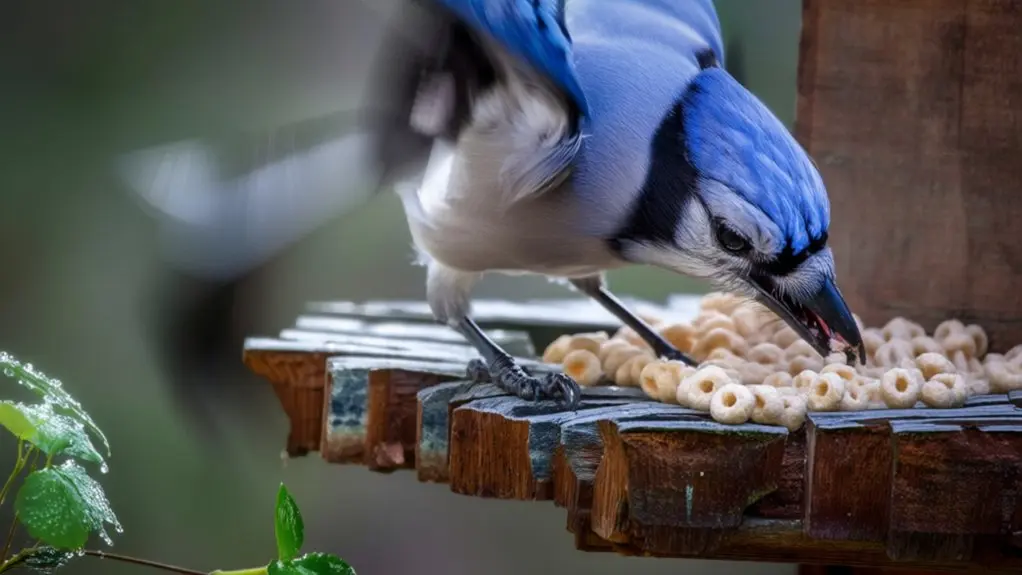
Yes, you can safely feed birds plain, unsweetened Cheerios as an occasional treat. Make certain they’re fresh, whole-grain, and free from added sugars or artificial ingredients. Avoid flavored or expired versions, and never soak them in liquids to prevent spoilage and digestive issues.
Offer small pieces suitable for the bird’s beak and monitor their response to avoid adverse effects. Understanding proper feeding practices and species preferences will help you provide Cheerios safely and beneficially. It’s all about giving them a little extra without causing any harm.
Is It Safe to Feed Birds Cheerios?
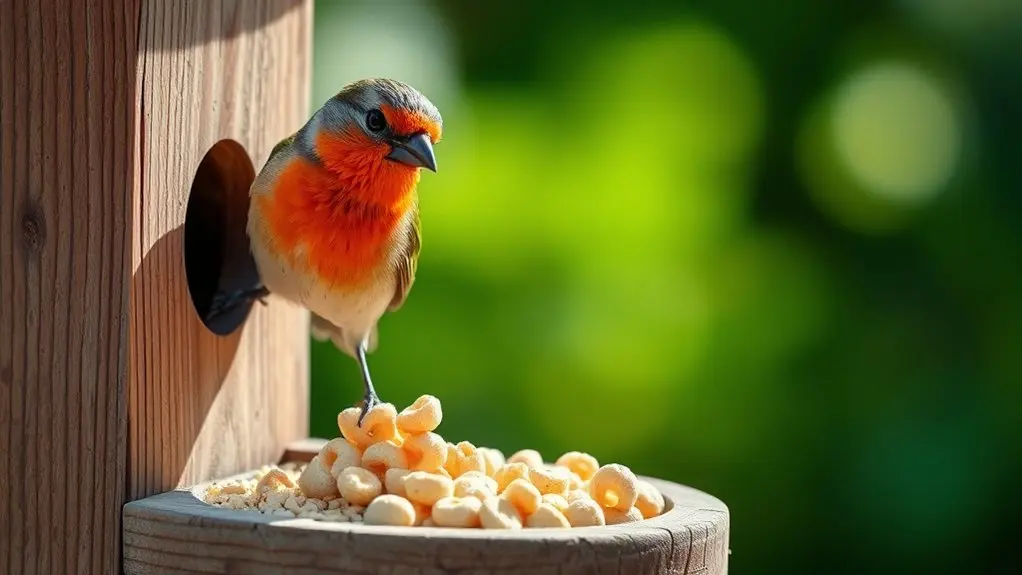
Although Cheerios can be a safe occasional treat for birds, you should offer them only plain, unsweetened varieties made from whole-grain oats. These cereals contain no added sugars, artificial flavors, or high salt levels, which can be harmful to birds’ health.
Before feeding, always check that the Cheerios are fresh and not rancid or expired, as spoiled food may cause digestive issues.
Moderation is vital. Cheerios should complement a bird’s regular diet rather than replace it.
Avoid flavored or sugary versions, as these contain additives that can negatively affect birds.
By selecting plain Cheerios and providing them sparingly, you minimize health risks and guarantee a safe, enjoyable treat for your feathered friends.
Just keep it simple and don’t overdo it!
Nutritional Benefits of Cheerios for Birds
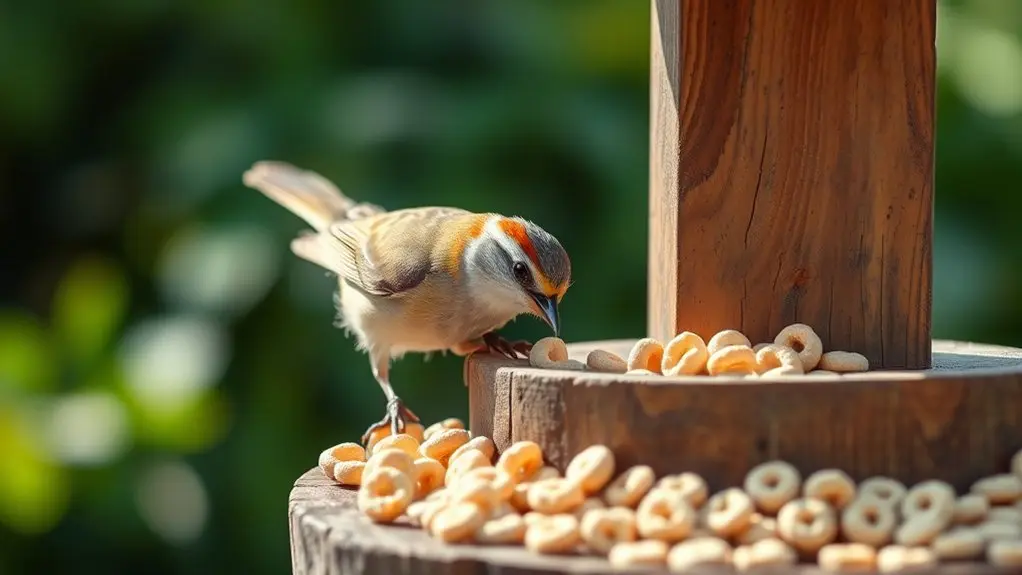
When you offer birds plain Cheerios, you provide them with a source of whole-grain oats that deliver dietary fiber essential for healthy digestion. These oats supply sustained energy, supporting active and migrating birds. Cheerios also contain essential vitamins and minerals, which can supplement a bird’s diet when given in moderation.
Offering birds plain Cheerios provides fiber-rich whole grains and vital nutrients for energy and healthy digestion.
Their low sugar content makes them a healthier option compared to many processed cereals, reducing the risk of negative health effects linked to high sugar intake. Additionally, Cheerios lack excessive salt, making them a safer treat choice.
By incorporating Cheerios responsibly, you can enhance a bird’s nutritional intake without exposing them to harmful additives. This promotes overall well-being while giving you a simple, convenient feeding option.
It’s an easy way to do something nice for your feathered friends!
How to Safely Feed Cheerios to Birds
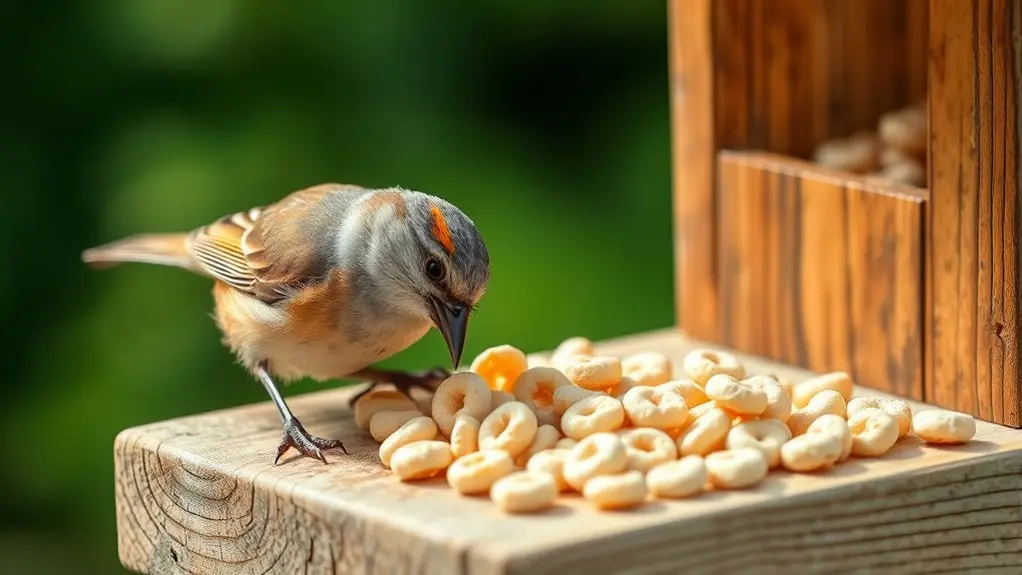
To feed Cheerios to birds safely, you need to offer them in moderation and make sure they’re plain, whole-grain varieties without added sugars or salts. Always check the ingredient labels to confirm they don’t contain any artificial additives or too much sodium.
Avoid soaking Cheerios in milk before feeding them to birds. Excess moisture can cause digestive issues like diarrhea in wild birds.
Use Cheerios only as an occasional treat, not a regular part of their diet. This helps prevent nutritional imbalances that could harm their health.
Keep an eye on the birds after you give them Cheerios. If you notice any bad reactions, stop feeding them right away.
Which Bird Species Eat Cheerios Most?
Since different bird species have varying dietary preferences, some are more likely to eat Cheerios than others. Parrots and cockatiels frequently enjoy Cheerios, incorporating them regularly into their diet.
Wild blue jays and orioles prefer cereals like Grape Nuts but will consume Cheerios in moderation.
Small songbirds such as chickadees and sparrows often pick at Cheerios left on feeders.
Larger birds like doves and pigeons consume Cheerios primarily as treats.
Your ability to attract specific species depends on understanding these preferences.
While Cheerios aren’t a staple for all birds, they serve as a suitable supplemental food for several species.
This variability highlights the importance of tailoring feeding strategies to the natural dietary habits of the birds you wish to attract.
Are Expired Cheerios Safe for Birds?
Although expired Cheerios might seem like a convenient option for feeding birds, you should carefully inspect them before offering.
Older Cheerios that are only a few weeks past the expiration date are generally safe if they retain their natural texture and show no signs of spoilage. Check for mold, discoloration, or off-odors, as rancid cereal can cause health problems in birds.
While expired Cheerios that look and smell normal are unlikely to harm birds, their nutritional value may be diminished. To minimize risk, prioritize fresh, unspoiled Cheerios whenever possible.
Feeding stale or expired cereal should be done cautiously, ensuring you avoid any potential health issues related to rancidity or contamination.
Always assess quality before use to protect bird health. It’s better to be safe than sorry when it comes to what you feed your feathered friends.
Cereals to Avoid When Feeding Birds (Including Cheerios)
You should avoid feeding birds cereals that are high in salt or added sugars because these can cause toxicity and metabolic problems. Also, spoiled or rancid cereals aren’t safe—they can lead to digestive issues, so make sure to throw those out.
Instead, go for natural, whole-grain options to keep birds safe and well-nourished.
High Salt Content
Why does salt content matter when feeding birds cereals like Cheerios? Many cereals, including some Cheerios varieties, contain added salt that can harm birds if they eat too much. Processed cereals such as cornflakes often have salt levels higher than seawater, which can be really risky for birds.
High salt intake can cause dehydration and kidney damage in birds, leading to serious health problems. So, when you’re feeding wild or pet birds, it’s important to check cereal labels to make sure the salt content is low.
Too much salt can cause immediate health issues and should be avoided in bird diets. By choosing cereals with little or no added salt, you help protect birds from salt-related toxicity and keep them healthy.
Always go for salt-free or low-salt options to make sure feeding time is safe and good for the birds.
Added Sugars Risks
How do added sugars in cereals like Cheerios affect birds? Added sugars pose significant risks to avian health. When birds consume cereals with high sugar content, they may develop obesity, digestive issues, and weakened immune responses.
Many processed cereals, including some Cheerios varieties, contain these harmful sugars. This makes them unsuitable for feeding wild or pet birds.
You should avoid cereals with added sugars because they can cause diarrhea and malnutrition due to digestive disturbances. They can also increase susceptibility to infections from immune system impairment.
In the long term, added sugars may lead to obesity and related health complications.
To protect birds, always choose cereals without added sugars. This helps maintain their natural diet balance and prevents potential poisoning or chronic health problems.
Spoiled Or Rancid
When should you avoid feeding cereals like Cheerios to birds? You should never offer spoiled or rancid cereals. These contain spoiled fats and bacteria that can cause digestive issues or poisoning in birds. Always inspect cereals for signs of spoilage before feeding.
| Spoilage Indicator | Description | Risk to Birds |
|---|---|---|
| Sour Smell | Off or fermented odor | Digestive discomfort |
| Mold Growth | Visible fuzzy or colored spots | Respiratory problems |
| Texture/Color Change | Clumping, discoloration | Toxicity, illness |
Feeding moldy or rancid Cheerios can lead to diarrhea, respiratory distress, and other health problems. So, it’s really important to make sure cereals are fresh before you offer them to your feathered friends. Keeping an eye out for any weird smells, colors, or textures will help you avoid any risks. Safe feeding means happy birds!
Which Cheerios Ingredients Can Harm Birds?
Because certain ingredients in Cheerios can negatively affect birds, it’s important to understand which ones pose risks. Some varieties contain components that may harm avian health if ingested in significant amounts. You should be cautious about:
- High salt content: Excessive sodium can lead to toxicity and dehydration in birds.
- Added sugars and artificial additives: These disrupt natural digestion and may cause long-term health issues.
- Flavorings like honey or fruit additives: Such ingredients can upset a bird’s digestive system and promote bacterial growth.
Additionally, preservatives or other chemical additives found in some Cheerios varieties may trigger adverse reactions.
Always review ingredient lists carefully and opt for whole grains with minimal additives to guarantee safety.
This vigilance helps protect birds from potential harm linked to certain cereal ingredients. It’s better to be safe and choose options that support their health.
Comparing Cheerios to Other Bird Treats
Although Cheerios aren’t made specifically for birds, they can be a nice occasional treat since they’re made from whole-grain oats and have low fat.
Compared to dried fruits or sunflower seeds, Cheerios have less fat, but watch out for added sugars, so don’t overdo it.
They’re different from high-calorie granola or flavored cereals because plain Cheerios are simple and low in sugar, which can be better for birds.
That said, they don’t have as many nutrients as specialized bird treats like those from Lafeber.
Cheerios have a neutral flavor and texture, making them pretty versatile.
Still, they should be a supplement, not a replacement, for a balanced diet that includes seeds, fruits, and veggies.
When you look at Cheerios compared to other bird treats, they’re easy to find, but they don’t offer complete nutrition.
Tips for Including Cheerios in Your Bird’s Diet
When you’re adding Cheerios to your bird’s diet, it’s best to pick the plain kind—no added sugars or salt—to keep things safe.
Serving them in moderation is key because it lets your bird enjoy the whole grain benefits without messing up their balanced diet.
Also, try to offer Cheerios only every now and then. Mixing them with fresh fruits or veggies is a great way to boost the nutrition even more.
This way, your bird gets a tasty and healthy treat!
Serving Cheerios Safely
If you want to include Cheerios in your bird’s diet, it’s important to serve them safely to avoid health risks. Choose whole-grain, plain Cheerios without added sugars or salts to minimize potential harm. Avoid soaking them in liquids, as moisture can promote spoilage and digestive issues.
Break the cereal into smaller pieces to accommodate your bird’s beak size. This helps reduce choking hazards and makes it easier for your feathered friend to enjoy their snack.
Consider these guidelines:
- Offer Cheerios in moderation to prevent dietary imbalance.
- Use only natural, unprocessed varieties to guarantee safety.
- Observe your bird’s behavior and health closely after introducing Cheerios.
Just keep an eye on how your bird reacts, and you should be good to go!
Nutritional Benefits Overview
Serving Cheerios safely is the first step, but understanding their nutritional benefits will help you make informed choices for your bird’s diet. Cheerios are made from whole-grain oats, providing fiber and essential carbohydrates that support energy needs, especially for migrating or active birds.
Choosing plain, low-sugar Cheerios helps avoid excessive calories and harmful additives. To maximize nutritional value, avoid cereals with added sugars, salts, or artificial ingredients, which can be bad for birds.
You can enhance your bird’s diet by combining Cheerios with natural foods like fruits or seeds. This offers a broader range of nutrients.
Moderation And Frequency
Although Cheerios can offer nutritional benefits, you should feed them to birds sparingly to avoid overfeeding and related health issues. Treat Cheerios as an occasional supplement, not a staple, to maintain dietary balance.
When including Cheerios, keep portions small and bird-appropriate. Avoid daily feeding; limit servings to once or twice weekly to ensure variety and prevent nutritional imbalances.
To properly incorporate Cheerios into your bird’s diet, consider these guidelines:
- Offer Cheerios alongside seeds, fruits, and vegetables for a well-rounded diet
- Monitor your bird’s health and digestion after feeding Cheerios
- Adjust feeding frequency based on your bird’s response and overall diet
Frequently Asked Questions
Can Feeding Birds Cheerios Affect Their Natural Foraging Behavior?
Yes, feeding birds Cheerios can affect their natural foraging behavior. You’ll notice they rely more on easy food, reducing their instinct to search for natural prey. This change can potentially impair their survival skills in the wild over time.
It’s kind of like if you always had snacks handed to you—you might stop looking for your own meals. Birds need to keep practicing their natural habits to stay sharp and healthy. So, while it’s fun to feed them, it’s good to do it in moderation.
Do Cheerios Attract Unwanted Pests When Placed Outside for Birds?
Yes, Cheerios attract unwanted pests like ants, wasps, and rodents when placed outside.
You’ll want to use covered feeders and clean regularly to minimize these issues. This helps prevent mold and pest infestations around your feeding area.
Taking these steps makes feeding birds outside much more enjoyable and less messy.
How Often Is Too Often to Offer Cheerios to Birds?
You shouldn’t offer Cheerios to birds more than two to three times per week. Excessive feeding risks nutritional imbalance, obesity, and health problems. So, keep Cheerios as an occasional treat, not a daily staple.
Can Birds Develop Allergies From Eating Cheerios?
Yes, birds can develop allergies from eating Cheerios. Like a hidden storm, ingredients like wheat or preservatives may trigger itching, swelling, or respiratory issues.
Watch closely and consult an avian vet if symptoms appear. It’s better to be safe than sorry when it comes to your feathered friend’s health.
Are Cheerios Safe for Baby Birds or Only Adults?
Cheerios are safe for baby birds when unsweetened and given in moderation. You should introduce them carefully and watch for any digestive issues.
Avoid giving too many to prevent nutritional imbalances. This helps ensure healthy development alongside their regular diet.
Just remember, moderation is key, and keep an eye on how the baby birds respond.
Conclusion
You might think feeding birds Cheerios is harmless, but remember, it’s not a miracle superfood. Too much can upset their delicate nutrition balance. While Cheerios offer some vitamins and fiber, they’re far from a perfect diet.
They can also pose risks if overused or expired. Always feed in moderation and prioritize natural seeds and fruits. Staying informed is key.
Your careful choices can truly make the difference between a thriving bird and one struggling to stay healthy. So, keep it balanced and enjoy watching your feathered friends!