
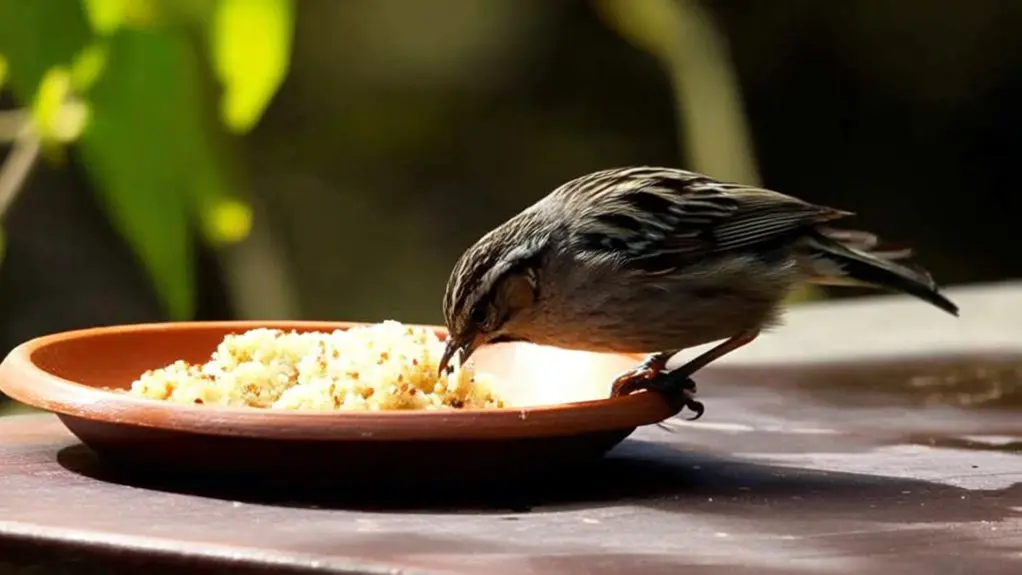
You can safely feed your birds cooked quinoa if you rinse it well to remove saponins and cook it thoroughly until fluffy. Serving it cooled and plain avoids digestive issues like bloating or diarrhea.
Quinoa offers essential vitamins, minerals, complete proteins, and fiber that support your bird’s health and energy. Introduce it gradually, mixing with familiar foods to guarantee tolerance.
Properly prepared quinoa complements a balanced diet and promotes vitality. Explore its benefits and safe feeding tips to optimize your bird’s nutrition.
Is Cooked Quinoa Safe and Healthy for Birds?
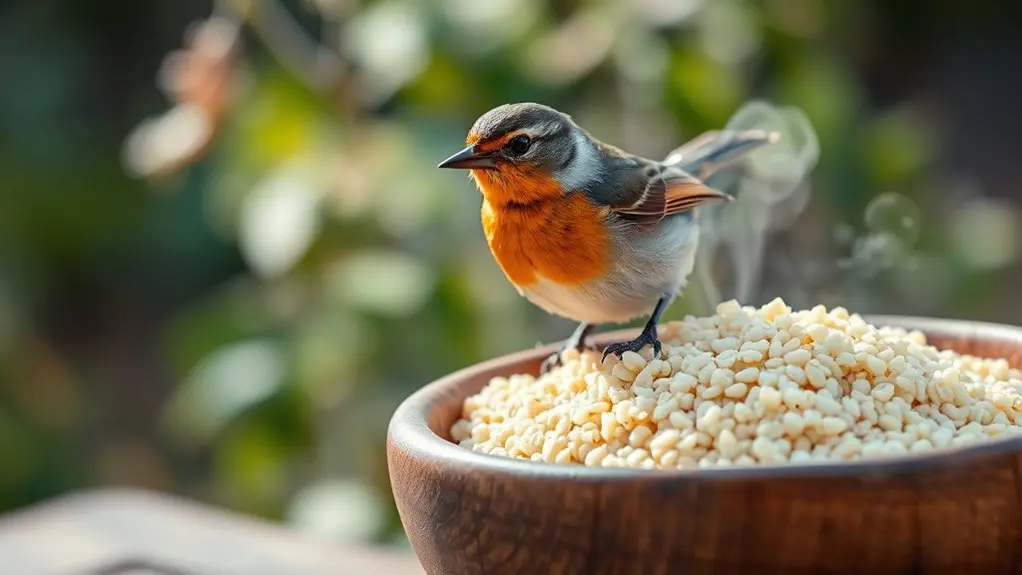
Although you might wonder whether cooked quinoa is suitable for birds, it’s safe and nutritious when properly prepared. You need to thoroughly rinse quinoa before cooking to remove saponins, which can be harmful.
Cooked quinoa is safe for birds if rinsed well to remove harmful saponins before cooking.
After cooking, serve it at room temperature to avoid digestive discomfort.
Quinoa offers a protein-rich supplement that supports your bird’s health and energy but shouldn’t replace a balanced diet. Moderation is key; feeding too much can cause bloating or diarrhea.
Always verify quinoa is fully cooked, cooled, and free from contaminants before offering it to your bird.
What Nutrients Does Cooked Quinoa Provide to Birds?
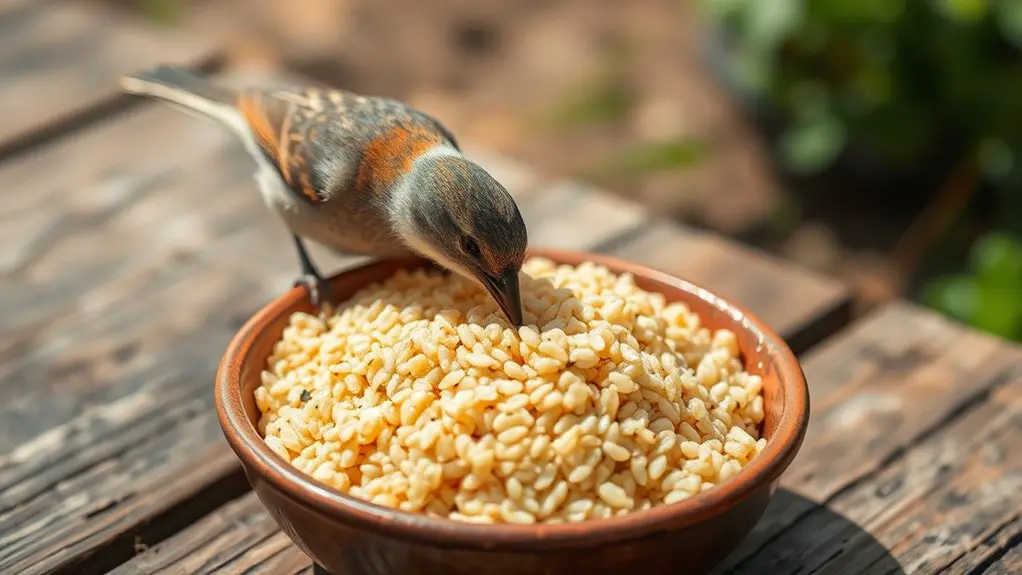
You’ll find that cooked quinoa offers birds essential vitamins and minerals like iron, magnesium, and B vitamins. These nutrients help support their energy levels and keep their neurological functions running smoothly.
Plus, quinoa provides high-quality complete proteins, which means it contains all eight essential amino acids birds need for growth and repair.
On top of that, the fiber in quinoa promotes healthy digestion and supports good intestinal health in birds. It’s a great little food packed with benefits!
Essential Vitamins And Minerals
When birds consume cooked quinoa, they gain access to a range of essential vitamins and minerals that support their physiological functions. This grain provides B-complex vitamins such as B6, riboflavin, thiamin, and niacin, which are imperative for energy metabolism.
Additionally, it supplies vitamin E, which enhances reproductive health and strengthens immune response. Quinoa’s mineral content includes calcium and phosphorus, indispensable for bone strength. Iron and zinc support oxygen transport and immune function.
Selenium is known for its antioxidant properties. The presence of lysine, an essential amino acid, further aids calcium absorption and protein synthesis.
Together, these nutrients contribute to birds’ vitality, immune system efficiency, and healthy development across various species.
High-Quality Protein Content
Because birds require all essential amino acids for proper growth and tissue repair, cooked quinoa serves as an excellent protein source by providing a complete profile of these nutrients. You’ll find that quinoa offers high-quality proteins that support energy levels, immune function, and muscle development in birds.
Additionally, it contains important macro- and micro-minerals like iron, magnesium, and phosphorus, which play key roles in protein metabolism.
The B-vitamins in cooked quinoa further enhance energy production and metabolic efficiency in avian species.
By incorporating cooked quinoa into your bird’s diet, you guarantee they receive a balanced, nutrient-dense protein source essential for maintaining prime health and physiological functions.
This makes quinoa a valuable component in supporting your bird’s overall nutritional requirements.
Fiber And Digestive Support
How does cooked quinoa support your bird’s digestive health? Cooked quinoa provides dietary fiber essential for promoting healthy digestion and regular bowel movements in birds. Its soluble fibers help stabilize blood sugar levels and contribute to maintaining gut health.
The fiber content also encourages a feeling of fullness, which can prevent overeating. Beyond fiber, quinoa supplies magnesium and B vitamins that assist digestive enzyme function, optimizing nutrient breakdown and absorption.
When prepared properly, cooked quinoa is gentle on your bird’s digestive system, reducing the risk of constipation and bloating.
Incorporating cooked quinoa into your bird’s diet offers a well-rounded approach to supporting digestive wellness through its combination of fiber and crucial nutrients. This makes quinoa a valuable addition to your bird’s nutritional regimen.
How to Prepare Quinoa Properly for Bird Feeding
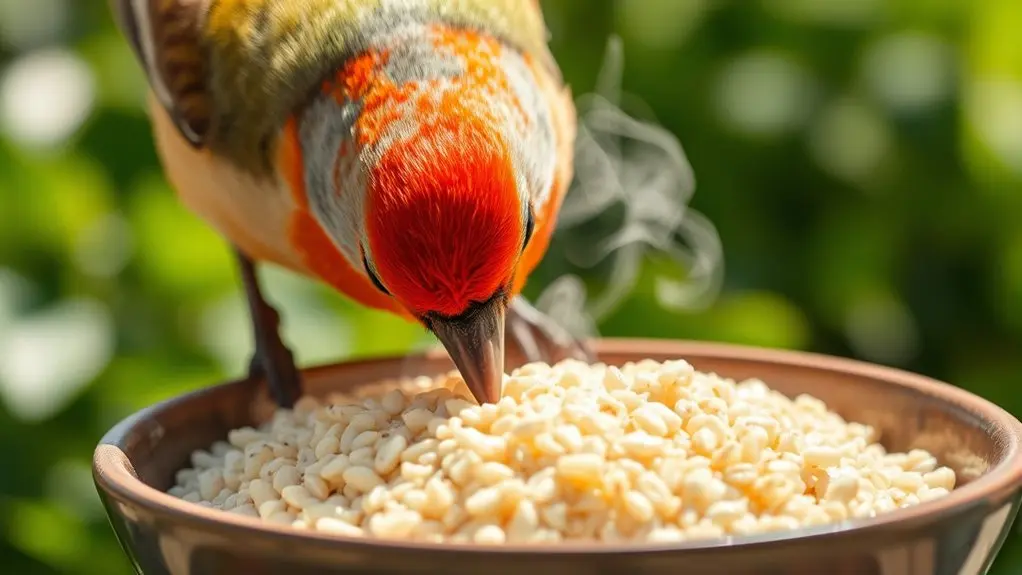
Before offering quinoa to birds, you need to prepare it properly to guarantee it’s safe and nutritious. Start by rinsing raw quinoa thoroughly under cold water to remove saponins. These are natural coatings that can be toxic to birds.
Next, cook the quinoa by boiling two parts water to one part quinoa for 14-18 minutes until it becomes fluffy. Then, drain any excess water. Let the cooked quinoa cool completely to room temperature before serving.
Boil quinoa with twice the water until fluffy, drain, and cool fully before serving to birds.
Alternatively, you can sprout quinoa by soaking it in water for 2-4 hours, rinsing, and allowing it to sprout in a jar or tray for 2-4 days.
Always offer cooked or sprouted quinoa in moderation, without seasonings or additives. Think of it as a supplement to a balanced bird diet.
Which Birds Benefit Most From Cooked Quinoa?
When you offer cooked quinoa to birds, you provide them with a nutrient-rich food that supports their energy, immune function, and overall health. Birds such as finches, canaries, and parrots benefit most due to quinoa’s high protein, vitamins, and minerals.
Cooked quinoa is also digestible and supplies essential amino acids, which is perfect for small to medium-sized pet birds.
Wild birds like doves and pigeons can use it as a supplement during breeding or winter when food might be scarce.
Baby birds need it mashed to help with growth and to prevent digestive issues.
Small to medium pet birds with high protein needs
Breeding or molting birds requiring extra nutrients
Wild birds during nutrient-scarce seasons
Baby birds needing easily digestible food for development
How to Safely Introduce Cooked Quinoa Into Your Bird’s Diet
Offering cooked quinoa can greatly benefit various bird species, but introducing it into their diet requires careful attention to guarantee safety and acceptance.
First, thoroughly rinse quinoa to remove residual saponins. Then cook it until soft and cool it to room temperature before serving.
Begin with small portions, about a teaspoon for small birds or a tablespoon for larger species. This helps you monitor tolerance and prevent digestive upset.
To ease acceptance, mix quinoa with familiar foods like vegetables or seeds. This allows your bird to gradually adapt to its texture and flavor.
Serve quinoa as an occasional supplement rather than a staple to maintain nutritional balance.
Always observe your bird for adverse reactions, such as changes in stool or behavior. If you notice any discomfort, stop feeding quinoa immediately.
Risks of Feeding Quinoa to Birds and How to Avoid Them
Although quinoa provides nutritional benefits, feeding it to birds carries specific risks if not handled correctly. You need to be cautious about preparation and portion size to avoid health issues.
Feeding uncooked quinoa with saponins can cause gastrointestinal upset and weakness. Overfeeding cooked quinoa may result in bloating or diarrhea. Using unwashed quinoa can leave residual saponins or contaminants harmful to birds.
Raw, untreated quinoa is unsafe because saponins can damage the bird’s gastrointestinal lining. To minimize risks, always rinse quinoa thoroughly to remove saponins, cook it properly, and serve it in moderation.
Try to incorporate quinoa as part of a balanced diet rather than a staple. That way, you’ll help keep your bird’s digestive health in great shape.
Simple Cooked Quinoa Recipes Your Birds Will Love
Since cooked quinoa provides essential nutrients in a digestible form, you can enhance your bird’s diet by mixing it with finely chopped vegetables, nuts, or seeds.
Start by boiling one part quinoa with two parts water for 14 to 18 minutes. Then, thoroughly rinse it and let it cool to lukewarm.
Combine the fluffed quinoa with shredded vegetables like carrots or diced yams. Add crushed nuts or seeds for extra texture and nutrients.
Avoid seasoning to keep the dish safe and healthy.
Serve small portions at lukewarm temperature to guarantee easy digestion and prevent discomfort.
This simple preparation not only improves palatability but also delivers a balanced mix of proteins, vitamins, and minerals.
It’s an ideal supplement for your bird’s diet.
Frequently Asked Questions
Can Baby Birds Eat Cooked Quinoa Safely?
Yes, you can safely feed baby birds cooked quinoa if it’s thoroughly rinsed and mashed to prevent choking. Introduce it gradually, serving small cooled portions, and keep an eye on them for any adverse reactions.
If you notice anything like diarrhea or rashes, it’s best to stop and consult a vet. Just take it slow and make sure the quinoa is properly prepared. That way, you’re helping your little birds stay healthy and happy.
How Often Can I Feed Quinoa to My Pet Bird?
You can feed your pet bird cooked quinoa once or twice a week. Overfeeding it might cause digestive issues like bloating.
So, it’s best to keep it in moderation. This way, you make sure your bird gets balanced nutrition without any health risks.
Feeding quinoa too often or in large amounts isn’t a great idea. Just a little here and there is enough to keep things healthy!
Does Cooked Quinoa Help With Bird Feather Growth?
Yes, cooked quinoa supports your bird’s feather growth by providing essential amino acids, biotin, zinc, and B vitamins. These nutrients promote keratin synthesis, which is key for strong and healthy feathers.
It helps enhance feather strength, vibrancy, and regeneration during molting or recovery phases. So, including quinoa in your bird’s diet can really make a difference.
Feather health is important for your bird’s overall well-being, and quinoa offers a natural way to boost it. Just make sure it’s cooked properly before feeding.
Can Wild Birds Eat Cooked Quinoa From Feeders?
Think of your feeder as a tiny café; you can serve wild birds cooked quinoa safely if you rinse it well and avoid additives. This nutritious protein supports their diet, especially when natural grains are scarce or unavailable.
Just make sure the quinoa is plain and cooled down before offering it. Birds will appreciate the extra boost, and it can be a nice change from the usual seeds. It’s a simple way to help them stay healthy during tough times.
Is Quinoa Better Than Other Grains for Birds?
Yes, quinoa is better than many grains for birds because it offers complete proteins, essential amino acids, fiber, antioxidants, and a low glycemic index. You’ll provide superior nutrition and easier digestion compared to traditional grains.
It’s pretty impressive how quinoa packs all those nutrients into one little seed. Birds can really benefit from that mix, especially if you want to give them something healthier than the usual grains. Plus, it’s easier on their digestive systems, which is always a win!
Conclusion
Incorporating cooked quinoa into your bird’s diet can be a gentle boost to their nutrition, offering essential proteins and vitamins in a digestible form. By preparing it thoughtfully and introducing it gradually, you create a nurturing environment that supports their well-being without overstepping dietary boundaries.
Always keep an eye out for any subtle signs of discomfort. This way, quinoa remains a pleasant and beneficial addition rather than a questionable guest at their table. It’s all about making sure your feathered friend enjoys their food safely and happily.