
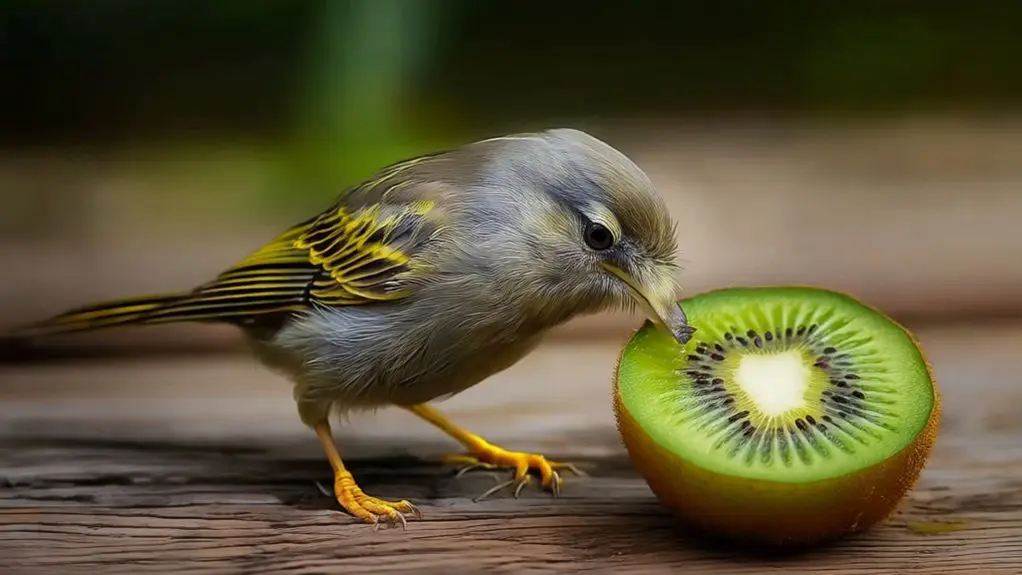
Yes, you can safely offer your bird small, peeled, and thoroughly washed pieces of kiwi fruit. It provides beneficial vitamins and antioxidants that are great for your feathered friend. Just make sure to start with tiny portions to see how your bird reacts.
Keep an eye out for any digestive or allergic reactions like watery droppings or lethargy. Avoid overfeeding since kiwi has sugar and acidity levels that might not be great in large amounts. If you notice any adverse symptoms, it’s best to stop feeding kiwi altogether.
Careful preparation and a gradual introduction will help your bird enjoy this nutritious treat without any issues. If you want, you can get more guidance on portion sizes, which species are best suited for kiwi, and tips on monitoring their health.
Can Birds Safely Eat Kiwi?
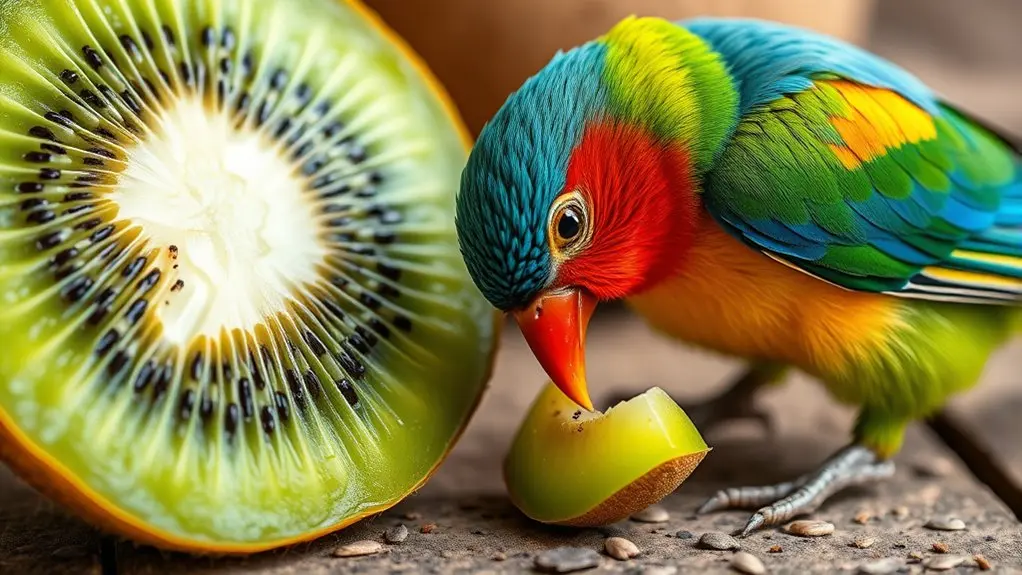
How safe is kiwi fruit for birds? You can safely offer many pet birds small portions of peeled kiwi. Peeling reduces pesticide exposure and removes the fuzzy outer layer.
Kiwi fruit contains low sugar and high antioxidants, making it a nutritious occasional treat when fed appropriately. It’s important to thoroughly wash the fruit before peeling to get rid of any pesticide residues.
Removing the skin and any seeds is essential to prevent choking hazards and avoid ingestion of potentially harmful compounds. While kiwi is generally safe, you should offer it in moderation because of its natural sugar content.
Which Bird Species Can Safely Eat Kiwi?
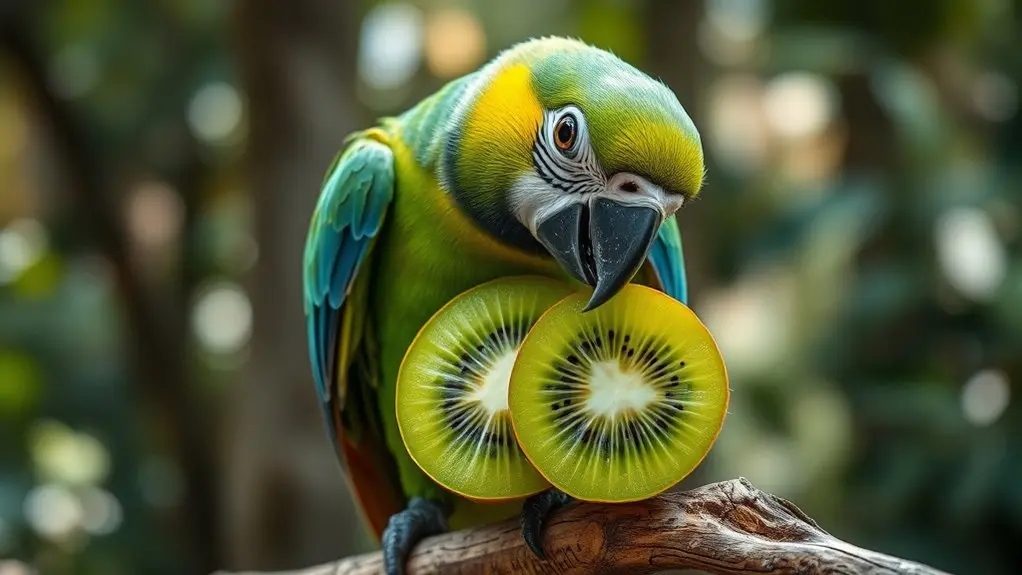
Although kiwi fruit is safe for many bird species when properly prepared, you should know which birds can consume it without risk. Kiwi must be peeled and thoroughly washed to eliminate potential contaminants that could harm birds.
Kiwi fruit is safe for many birds when peeled and washed to remove harmful contaminants.
Here are three bird groups that can safely eat kiwi:
- Small to medium-sized parrots, including conures and caiques, enjoy peeled fresh kiwi in moderation.
- Fruit-eating birds like toucans and hornbills accept small kiwi pieces as part of a varied diet.
- Native Australian birds, such as lorikeets, can consume kiwi if offered in manageable sizes.
Additionally, certain finches that prefer soft, sweet fruits may safely include kiwi. But always introduce it cautiously and watch for any adverse reactions.
Why Kiwi Is a Healthy Treat for Birds
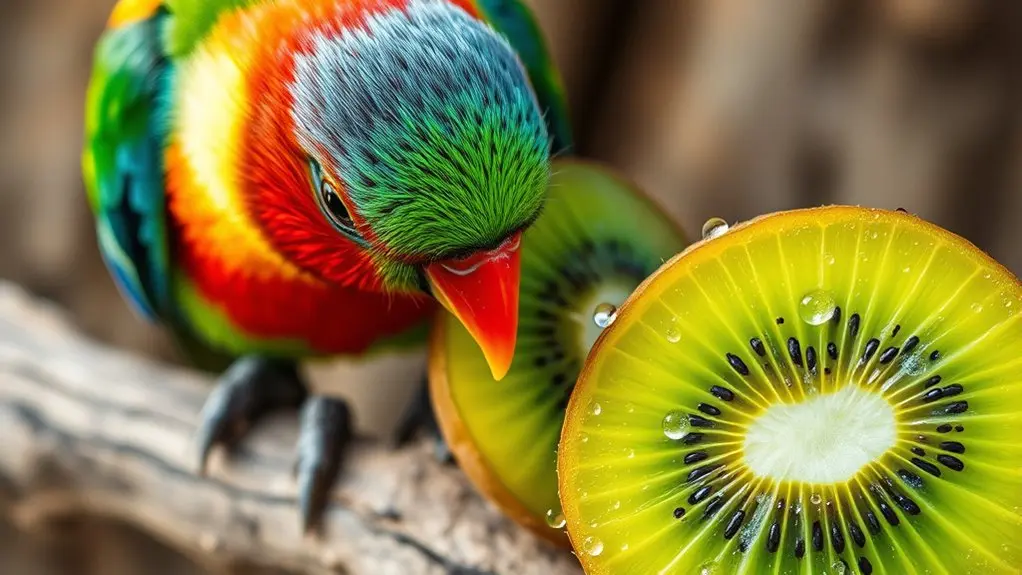
Because kiwi fruit contains a high concentration of antioxidants, vitamins C and K, it effectively supports a bird’s immune system and overall health. You’ll find kiwi provides natural sugars for quick energy, while its low fat and high fiber content aid digestion and weight maintenance. Its high water content also helps keep your bird hydrated, especially during warmer weather.
| Nutrient | Benefit | Impact on Birds |
|---|---|---|
| Antioxidants | Immune system support | Reduces oxidative stress |
| Vitamins C, K | Tissue repair, clotting | Enhances overall health |
| Fiber | Digestive health | Promotes regularity |
Offering kiwi in moderation guarantees your bird enjoys a balanced, nutritious treat. So, why not add a little kiwi to their diet and watch them thrive?
Preparing Kiwi Fruit for Your Bird
When preparing kiwi for your bird, start by peeling it thoroughly to get rid of the fuzzy skin. After that, give the fruit a good rinse under running water to wash away any leftover residues.
Next, cut the kiwi into small pieces. This helps reduce the risk of choking, and if you notice any large seeds, you might want to take those out too.
Finally, serve the kiwi in controlled portions. Since it contains natural sugars, giving too much at once could cause digestive issues for your bird. So, a little at a time is best!
Peeling And Cleaning
When preparing kiwi fruit for your bird, start by thoroughly washing the fruit to remove any residual pesticides or contaminants on the surface.
Next, peel the kiwi to eliminate the fuzzy outer skin, which can trap dirt, bacteria, and pesticides, potentially causing harm.
After peeling, cut the fruit into small, manageable pieces that your bird can easily eat and digest.
Follow these steps for safe kiwi preparation:
- Wash the whole fruit under running water to remove surface residues.
- Use a clean knife or peeler to remove the skin completely, avoiding the fuzzy texture.
- Slice the peeled kiwi into bite-sized pieces suitable for your bird’s size.
This method minimizes ingestion risks and promotes safe consumption.
Just take it step by step, and your bird will enjoy a tasty and safe treat!
Portion Size Guidelines
Although kiwi fruit offers valuable nutrients, controlling the portion size is essential to prevent excessive sugar intake and digestive issues in birds.
You should peel the kiwi thoroughly to remove the fuzzy outer skin. Then cut it into small, manageable pieces or slices to reduce choking risks and make it easier for your bird to eat.
Removing any large or hard seeds is really important to further minimize choking hazards. Serve only a small portion at a time since kiwi’s natural sugars can upset your bird’s digestive system if overfed.
It’s best to incorporate kiwi as a modest part of a varied diet. Make sure it complements other nutrient-rich foods without taking over their intake.
Following these guidelines will help keep your bird healthy while safely providing kiwi’s nutritional benefits.
How Much Kiwi to Feed Your Bird
Since kiwi contains natural sugars that can affect your bird’s digestion, offering small portions about the size of a thumbnail is essential to prevent excess sugar intake. Moderation is key to maintaining your bird’s health and digestive balance.
Offer kiwi in small thumbnail-sized portions to avoid excess sugar and support your bird’s digestive health.
Here’s how to manage kiwi feeding effectively:
- Limit kiwi to a few times per week to keep it an occasional treat, not a staple.
- Serve only a small slice or chunk, ensuring nutritional balance and preventing overconsumption.
- Observe your bird’s reaction to kiwi, adjusting portion sizes if you notice any digestive changes like watery droppings.
Potential Health Risks of Feeding Kiwi to Birds
You should keep an eye on how much kiwi your bird is eating because the natural sugars in the fruit can upset their digestion if they’ve too much.
Some birds, especially those with sensitive stomachs, might end up with watery droppings or diarrhea if they’re overfed.
Knowing these risks can help you avoid any tummy troubles and keep your bird feeling healthy.
Sugar Content Concerns
When birds consume kiwi fruit in large quantities, the natural sugars it contains can cause digestive disturbances such as watery droppings. These sugars, while natural, pose specific health concerns if overfed. You should consider the following:
- Excessive sugar intake can lead to weight gain and increase the risk of obesity in birds.
- Regular consumption of large kiwi portions may contribute to metabolic disorders.
- Monitoring and limiting kiwi intake helps prevent sugar-related health issues.
While small amounts of kiwi are generally safe, consistently feeding birds high quantities elevates these risks. It’s important to observe your bird’s response and ensure kiwi remains a treat rather than a staple.
This controlled approach minimizes potential negative effects linked to the fruit’s sugar content.
Digestive Sensitivity Risks
Although kiwi fruit offers nutritional benefits, its digestive properties can pose significant risks to birds if not properly managed. Kiwi contains natural sugars that, when consumed excessively, may cause watery droppings and digestive upset.
Its high acidity can irritate the gastrointestinal tract, leading to discomfort or inflammation, especially if given in large amounts.
Also, overfeeding kiwi risks disrupting your bird’s nutrient balance, which can potentially stress liver and kidney function. The fuzzy peel is another concern because it’s difficult to clean thoroughly. This increases exposure to bacteria that can cause digestive issues.
To minimize these risks, you should offer only small, moderate portions of peeled kiwi. Careful portion control and good hygiene are essential to protect your bird’s digestive health when including kiwi in their diet. Just keep an eye on how your bird reacts and adjust accordingly.
How to Spot If Kiwi Doesn’t Agree With Your Bird
If your bird consumes kiwi fruit and soon after exhibits watery or excessive droppings, this may indicate intolerance. You should closely monitor your bird for additional signs that the fruit doesn’t agree with them. These signs can be subtle but significant and warrant immediate attention.
Watch for these key indicators:
- Decreased appetite or lethargy, suggesting gastrointestinal distress or discomfort.
- Vomiting or abdominal discomfort as direct responses to kiwi ingestion.
- Skin irritation or allergic reactions, such as swelling around the beak or eyes.
Careful observation of your bird’s behavior and stool consistency after feeding kiwi helps you assess their tolerance. If these symptoms appear, discontinue kiwi and consult a veterinarian to prevent further complications.
How to Introduce Kiwi Gradually Into Your Bird’s Diet
Since kiwi fruit introduces new flavors and nutrients to your bird’s diet, you should start by offering small, peeled, and thoroughly washed pieces. This helps minimize the risk of digestive upset or allergic reactions.
Begin with tiny portions, like a thin slice or small cube, and watch how your bird responds during the first few feedings.
To help your bird accept the new fruit and reduce any hesitation, try mixing the kiwi with familiar foods such as vegetables or pellets. This can make the transition smoother and less stressful for your feathered friend.
Gradually increase the portion size over time, but keep in mind that kiwi should remain a dietary supplement rather than a primary food source.
Keep an eye on your bird for any adverse reactions—you want to catch anything unusual early. This way, you can safely expand your bird’s nutritional variety while keeping them healthy and happy.
Frequently Asked Questions
Can Baby Birds Eat Kiwi Fruit Safely?
You can safely feed baby birds small, peeled kiwi pieces in moderation, making sure no skin or pesticides remain.
Introduce it gradually and keep an eye out for any digestive upset. High sugar content might cause watery droppings or other reactions.
Just take it slow and watch how they respond!
Does Kiwi Fruit Affect a Bird’s Feather Color?
You’ll find kiwi’s vitamin A content supports vibrant feather pigmentation, but no direct evidence shows it changes color.
Feeding kiwi in balance helps maintain feather health without causing nutritional imbalances or dullness from excess sugar.
It’s a tasty treat that can be part of a healthy diet for your bird, just don’t overdo it.
Can Kiwi Fruit Cause Allergic Reactions in Birds?
Yes, kiwi fruit can cause allergic reactions in some birds due to specific proteins. You should carefully observe your bird for symptoms like sneezing or itching.
If you notice any adverse signs after your bird eats kiwi, it’s best to consult a veterinarian immediately. Better safe than sorry!
Is Frozen Kiwi Safe for Birds to Eat?
Yes, you can safely feed birds frozen kiwi if you thoroughly thaw it first. Make sure to remove any ice crystals, and guarantee it contains no added sugars or preservatives.
This helps prevent choking hazards and keeps its nutritional benefits intact. So, just take a little extra care before offering it to your feathered friends. They’ll enjoy a tasty and safe treat!
Can Birds Eat Kiwi Seeds Without Harm?
You might be surprised, but birds can eat kiwi seeds without harm when given in moderation. These seeds contain no toxins like cyanide.
Still, you should keep an eye on your bird to make sure there’s no choking or digestive issues. It’s always better to be safe than sorry!
Conclusion
You can safely offer kiwi fruit to many bird species, but remember to introduce it gradually to avoid digestive upset. Studies show that kiwi is rich in vitamin C, providing up to 92 mg per 100 grams, which supports your bird’s immune system effectively.
However, always monitor your bird closely for any adverse reactions. By preparing kiwi properly and feeding it in moderation, you guarantee a nutritious, enjoyable treat that complements your bird’s balanced diet.