
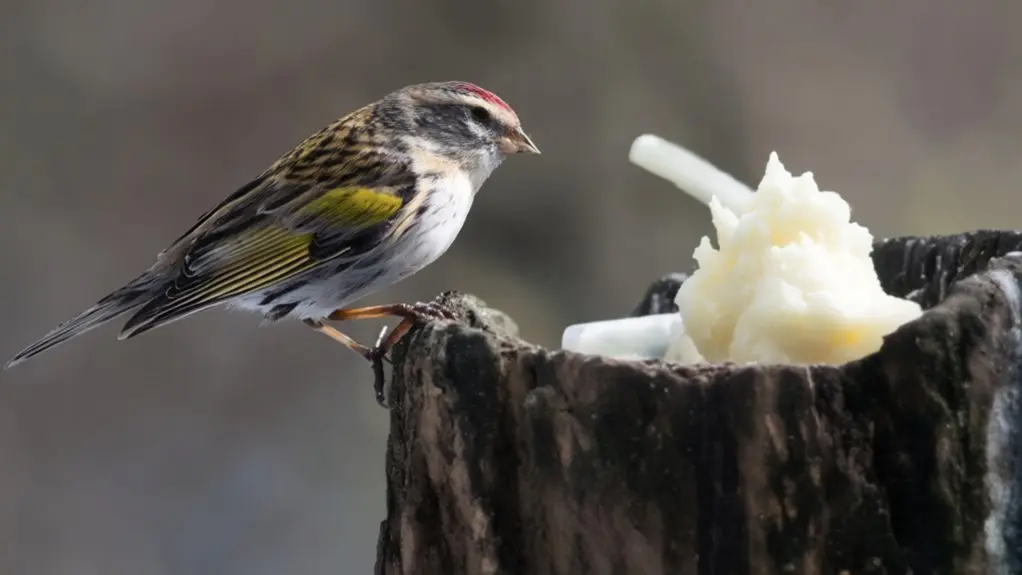
Yes, you can safely feed birds plain, unsalted lard. It offers a dense source of energy and essential fats that are vital for their survival and feather health, especially in cold months.
Just make sure to avoid lard with salt, preservatives, or additives. These can harm birds metabolically and cause dehydration or organ issues.
Use only fresh, unprocessed lard in moderation to support natural metabolic functions. Understanding proper preparation, timing, and alternatives will help you provide the best bird nutrition.
What Is Lard And Why Feed It To Birds?
Although you might primarily know lard as a cooking fat derived from rendered pig fat, it serves a valuable purpose when feeding wild birds. Lard is a dense source of calories and saturated fats, providing birds with essential energy, especially during colder months when food is scarce.
Lard offers wild birds a vital, energy-rich food source, especially during harsh, cold seasons.
You can use either homemade or commercially purchased lard, commonly incorporated into homemade bird fat balls and suet mixes.
The fats in lard support feather health and overall vitality, helping birds maintain their energy reserves.
To guarantee bird safety, you should always use plain, unsalted, and unprocessed lard. This careful selection prevents the ingestion of harmful additives, making lard a reliable and nutrient-rich food supplement for wild birds in need.
Is Plain Lard Safe For Wild Birds?
When you offer plain, unsalted lard to wild birds, you provide them with a concentrated source of energy that supports their survival during colder months. Just make sure the lard is pure and unprocessed, free from additives, preservatives, or salt. These substances can pose health risks.
Moderation is key. Feeding lard occasionally as a treat supplies beneficial fats and calories without causing nutritional imbalances or obesity. So, avoid large or frequent servings since they may negatively affect birds’ health.
Also, make certain the lard is fresh and stored properly to prevent rancidity. Spoiled lard can be harmful to birds.
What Are The Nutritional Benefits Of Lard For Birds?
Providing plain, unsalted lard to wild birds not only serves as a safe treat but also delivers significant nutritional benefits. Lard is rich in fat, offering a dense, concentrated energy source essential during winter or breeding seasons when energy demands rise.
Its essential fatty acids contribute to healthy feathers and skin while supporting overall metabolic functions. The high triglyceride content promotes fat deposition, which is critical for maintaining body heat and survival in cold conditions.
Additionally, lard’s caloric density helps birds undergoing moulting or recovering from illness by supplementing their energy intake. When given in moderation, lard can effectively complement natural diets, especially when food is scarce.
This way, birds maintain necessary energy reserves and physiological health without replacing their primary nutrient sources.
Are There Risks Feeding Birds Lard With Salt Or Additives?
If you feed birds lard containing salt or additives, you risk causing serious health issues. Birds can’t safely process high salt levels, which can lead to dehydration, kidney problems, and electrolyte imbalances.
Many commercial lards include preservatives, flavorings, or other additives that may be toxic to avian species. These substances can disrupt their delicate physiological balance, impair organ function, and even result in long-term health complications.
Because birds’ metabolic systems differ profoundly from mammals, they’re especially vulnerable to such compounds. To protect their health, avoid salted or seasoned lard entirely.
Instead, opt for pure, unsalted, and additive-free animal fats. This approach minimizes the risk of toxicity and supports birds’ nutritional needs, especially during colder months when energy demands increase.
It’s a simple way to keep our feathered friends healthy and happy.
How To Prepare Lard Safely For Your Birds
Ensuring the safety of lard for birds involves careful preparation techniques that minimize health risks while maximizing nutritional benefits. You should always start with pure, unsalted, and unseasoned lard, free from preservatives or artificial additives. Proper rendering and complete cooling are essential to prevent spoilage and bacterial growth.
To make it easier for birds to consume, gently melt the lard and mix it with bird-safe seeds or grains before letting it solidify. Store the prepared lard in the refrigerator, serving it in small portions to avoid rancidity and mold.
- Use only rendered, cooled, pure lard without additives
- Melt gently and combine with bird-safe seeds or grains
- Store in the refrigerator to prevent spoilage
- Offer small quantities to minimize health risks
Avoid raw or unrefrigerated lard to guarantee bird safety.
When’s The Best Time To Offer Lard To Birds?
You should offer lard mainly in late autumn and winter. That’s when birds really need the extra calories to build up fat reserves and keep warm.
It’s best to avoid feeding lard in spring and summer because it might get in the way of their natural foraging.
Also, make sure to provide lard during daylight hours. This helps the birds safely eat and digest this high-energy food.
Optimal Seasonal Timing
When is the best time to offer lard to birds for maximum benefit? Seasonal timing is crucial to support birds’ natural energy needs without disrupting their behaviors. You should focus on periods when natural food is limited and energy demands are high.
Consider these points: Offer lard in late autumn to help birds build fat reserves before winter. Feed during winter, especially in extreme cold, to maintain birds’ energy and warmth.
Avoid lard during spring and early summer breeding seasons to prevent interference with natural foraging.
Stop feeding lard by late winter or early spring as insects and seeds become more available.
Daily Feeding Windows
Although birds can feed throughout the day, offering lard during early morning and late afternoon aligns best with their natural foraging patterns and energy needs.
In winter, morning feeding helps birds accumulate energy for daily activity, while late afternoon feeding supports maintaining body heat overnight.
Avoid providing lard during midday, as higher temperatures increase the risk of melting and spoilage. This can deter birds and attract pests.
Consistently offering lard at these times encourages regular visitation and predictable feeding routines.
During breeding season, limit lard feeding to prevent dependency. This ensures birds continue natural foraging behaviors essential for raising young.
By timing lard offerings carefully, you support birds’ physiological demands and ecological balance without disrupting their natural habits.
It’s all about helping them stay healthy while keeping their routines natural.
How To Tell If Birds Like Or Reject Lard Foods
Because birds communicate their preferences through behavior, observing their interactions with lard-based foods gives you clear signs of whether they like it or not. You can tell by carefully watching their feeding patterns and how they react.
For example, birds that land and actively peck or eat the lard are showing they like it. If they visit often and feed more, that usually means they prefer it.
On the other hand, if they ignore the lard or land but don’t eat, that’s a sign they’re not interested.
Sometimes, birds might change their behavior, like suddenly abandoning the feeder. That often happens if the lard is rancid or stored poorly, which affects its smell and texture, making it unappealing to them.
Homemade Bird Food Recipes With Lard
Observing birds’ reactions to lard-based foods helps you understand their preferences. But creating your own bird food with lard lets you tailor a nutritious, energy-rich option that supports their dietary needs.
Start by melting unsalted, pure lard, then mix it with seeds, nuts, dried fruit, and oats to form a dense, calorie-packed blend.
This mixture acts as a natural binder, which is essential for making bird cakes or crumbles. These are especially beneficial in cold weather.
Pour the blend into molds or spread it on trays, then cool it until solid.
Once set, you can hang these treats in feeders or place them on bird tables.
Just remember to offer lard-based foods in moderation to prevent overfeeding or dependency. That way, you’ll ensure balanced nutrition that supports bird health effectively.
Lard Vs. Other Fats And Suets For Birds
When choosing fats for feeding wild birds, it’s important to understand the differences between lard and other fats or suets. Lard stands out because it has a high saturated fat content, which gives birds quick energy, especially during colder months.
Compared to processed suets, pure lard usually has fewer additives, making it a more natural choice. And unlike many vegetable oils, lard is more stable at room temperature, so it’s less likely to go rancid.
Here are some things to consider when picking fats:
- Lard provides higher fat content and a more natural composition compared to vegetable fats.
- Unsalted, unprocessed lard avoids harmful additives.
- Processed suets may contain preservatives or chemicals.
- Lard’s stability means it can be stored longer without spoiling.
All these points show why lard can be a great option for energy-rich bird feeding.
What Are Good Alternatives To Lard For Energy Feeding?
Although lard is a popular energy source for wild birds, you can use several effective alternatives that provide similar nutritional benefits.
Suet and beef fat, especially when unsalted and free from preservatives, offer high-calorie energy suitable for birds. Commercial options like suet blocks or fat balls made from pure, non-processed fats provide a consistent energy supply without harmful additives.
Coconut or palm oil can serve as alternatives but should be used sparingly due to their high saturated fat content.
For a balanced approach, you can prepare homemade bird cakes by combining rendered, unsalted animal fats with seeds, nuts, and dried fruits.
Always verify that any fat source is fresh and additive-free to avoid adverse effects on bird health.
This careful selection supports ideal energy feeding for wild birds. It’s all about making sure the birds get what they need without any harm.
Frequently Asked Questions
Can Lard Attract Unwanted Pests to My Bird Feeder?
Yes, lard can attract unwanted pests like rats, mice, and squirrels to your bird feeder.
You should store and place it carefully. Using squirrel-proof feeders can really help.
Also, make sure to regularly clean the area to keep pest activity to a minimum.
How Should I Store Lard to Keep It Fresh for Birds?
Store lard in an airtight container, sealed tightly like a vault, inside your refrigerator. Keep it away from sunlight and heat to prevent spoilage.
Make sure to use clean utensils to avoid contamination. This helps preserve freshness and keeps birds healthy.
Can Baby Birds Digest Lard Safely?
No, baby birds can’t digest lard safely because their immature digestive systems struggle with high-fat, greasy substances. This increases the risks of malnutrition, choking, or blockages.
You should provide softer, easily digestible foods instead. It’s much better for their health and growth.
Is Lard Suitable for All Wild Bird Species?
Lard’s limited legacy limits its use. It suits some species like woodpeckers but stresses smaller birds like finches. You shouldn’t serve it as a staple.
Offer only salt-free, additive-free lard in measured amounts for bird health. That way, you can keep your feathered friends happy without any worries. Just remember, moderation is key!
How Often Should I Clean Feeders Used for Lard?
You should clean feeders used for lard at least once a week. But when the weather is hot, or if the lard starts to get sticky or rancid, it’s best to clean them more often.
Try to clean every 2 to 3 days using hot, soapy water. This helps prevent mold and bacteria from building up. Keeping feeders clean is really important for the health of the animals.
Conclusion
So, can you feed lard to birds? Yes, but only if it’s plain and free from harmful additives like salt. Lard offers a dense energy source, especially in colder months. But improper preparation can pose health risks.
Would you jeopardize their well-being for convenience? Always prioritize safe, additive-free lard or consider alternatives like suet or vegetable fats. These provide balanced nutrition.
Careful handling ensures you support wild birds without unintended harm.