
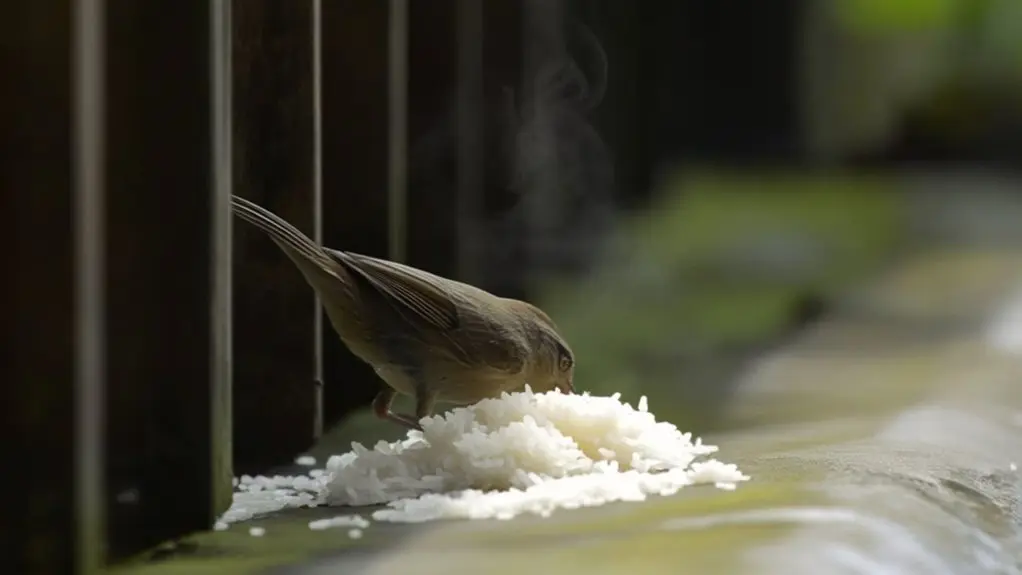
Yes, you can safely feed birds cooked rice in moderation, as it’s easier for them to digest than uncooked rice. Just make sure the rice is plain, without salt, seasonings, or additives, since those can be toxic.
Cooked rice gives birds quick energy through carbohydrates but doesn’t provide complete nutrition. So, it’s best to use it as a supplement to their natural diet.
Be careful not to overfeed because that can lead to health problems like obesity and digestive issues. Knowing how to feed birds properly and the risks involved will help you keep them healthy.
Can Birds Safely Eat Cooked Rice?
Birds can safely eat cooked rice when given in moderation, as it’s easier for them to digest compared to uncooked rice. Cooked rice primarily supplies carbohydrates, serving as an accessible energy source for both wild and domestic birds.
Cooked rice offers birds an easily digestible, energy-rich carbohydrate source when fed in moderation.
However, it lacks essential vitamins and minerals necessary for balanced nutrition, so it shouldn’t be the sole food offered.
When you provide cooked rice, make sure it contains no seasoning, salt, or additives, which could cause toxicity.
Feeding birds small amounts of plain cooked rice as part of a varied diet can be beneficial. Just remember, don’t overfeed them because too much rice might lead to obesity and affect their flying ability, especially for wild birds.
How Does Cooked Rice Compare to Uncooked Rice for Birds?
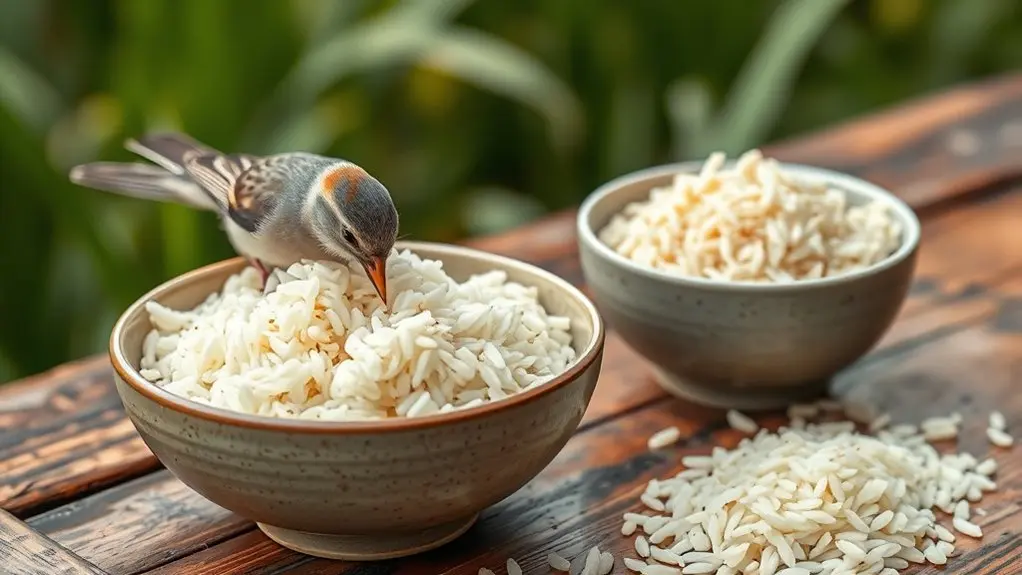
Understanding how cooked rice compares to uncooked rice can help you make informed decisions about feeding birds. Cooked rice is generally easier for birds to recognize and digest because it softens during preparation. This reduces the risk of choking or digestive discomfort.
While uncooked rice keeps more of its original nutrients, it can be harder and trickier for birds to digest. Nutritionally, both cooked and uncooked rice provide similar carbohydrate content. But cooking might reduce some nutrient levels.
Species like sparrows and doves often find cooked rice more palatable and easier to eat. When served properly—meaning moderately and without seasoning—cooked rice can be a safe and effective supplemental food source.
Knowing this helps you choose rice forms that suit birds’ dietary safety and nutritional needs.
Which Wild Birds Eat Rice Naturally?
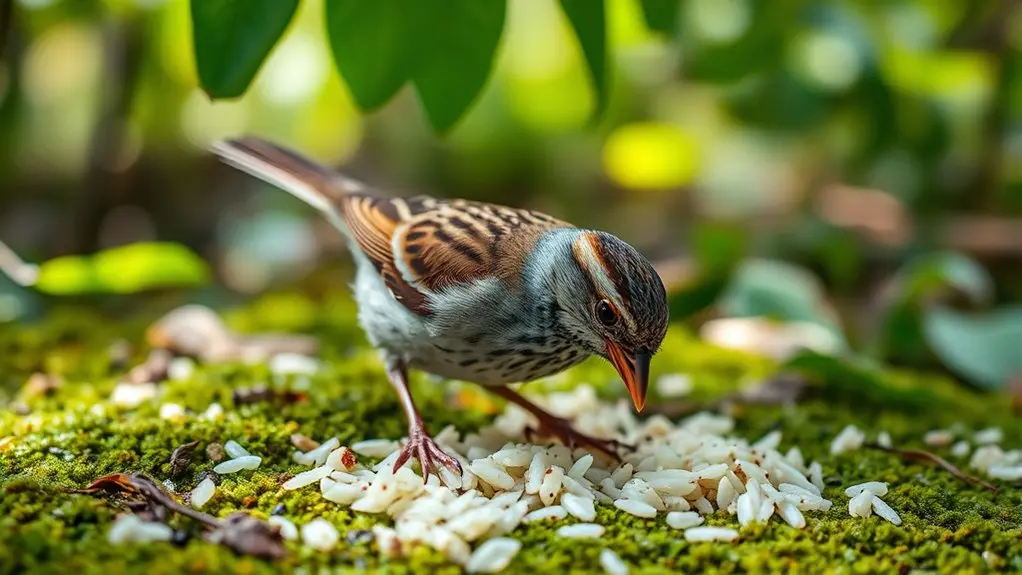
You’ll find that many wild birds, like bobolinks, red-winged blackbirds, and sparrows, naturally include rice in their diets. This is especially true during migration and in areas where rice is grown.
Bobolinks, in particular, really seem to like rice—a fact that matches their scientific name, which means “rice-eating long-claw.”
On top of that, wild rice is an important food source for waterfowl and songbirds. It plays a big role in their foraging habits, especially in places where their habitats overlap with rice cultivation.
Common Rice-Eating Birds
Although many wild birds have diverse diets, several species show a clear preference for rice, especially in habitats near agricultural fields and wetlands. You’ll often find bobolinks, red-winged blackbirds, and grackles feeding on rice naturally.
Bobolinks, whose scientific name translates to “rice-eating long-claw,” exhibit a strong dietary reliance on rice, underscoring its importance in their nutrition.
Additionally, various songbirds and waterfowl exploit rice fields as critical feeding sites during migration.
Wild rice, a naturally occurring aquatic grain, also constitutes an essential food source for numerous waterbirds and marsh-dwelling species.
These birds have adapted physiologically and behaviorally to incorporate rice into their diets, showing its natural role within their ecological food web.
Understanding these species helps clarify rice’s significance to wild bird nutrition.
Migration and Diet Habits
Because migratory birds face high energy demands during long flights, they actively seek nutrient-rich foods like rice to refuel. Species such as bobolinks and red-winged blackbirds commonly forage in agricultural rice fields, taking advantage of the abundant grains.
Waterfowl and songbirds also consume wild rice, a native North American grain, which supplies essential nutrients during migration.
Additionally, sparrows, grackles, and blue jays frequent rice paddies, incorporating rice into their natural diet. These birds rely on diverse food sources, including grains, seeds, and insects, but rice provides a high-energy option crucial for sustaining their endurance.
Rice fields therefore function as indispensable stopover habitats, offering accessible nourishment that supports migratory birds’ physiological needs throughout their long journeys.
Wild Rice Preferences
Which wild birds naturally seek out rice as part of their diet? Species such as bobolinks, red-winged blackbirds, and grackles frequently consume rice, particularly during migration periods. Bobolinks, whose scientific name translates to “rice-eating long-claw,” are especially known for foraging in rice fields.
Additionally, sparrows, blue jays, and various blackbird species often exploit rice paddies in agricultural regions. Wild rice, an aquatic grass native to wetlands, serves as a vital food source for waterfowl and songbirds, providing essential carbohydrates and nutrients.
Its high nutritional value supports energy demands during migration and breeding. Understanding these natural feeding behaviors highlights why rice forms a significant component of many wild birds’ diets in their habitats. It’s more than just an incidental food source—it plays an important ecological role.
What Nutritional Benefits Does Cooked Rice Provide Birds?
When birds consume cooked rice, they gain a rapid source of carbohydrates that fuels their daily energy needs. This energy is vital during periods of high activity, such as migration or breeding.
Cooked rice is generally easier for many bird species to digest than raw rice, minimizing potential digestive stress.
However, while it efficiently supplies energy, cooked rice lacks essential vitamins and minerals that birds require for overall health. So, you should consider cooked rice as a supplemental food rather than a primary diet component.
Feeding small amounts can support birds during energy-intensive times, but relying too heavily on cooked rice risks nutritional imbalances.
To keep birds in the best health, they need a varied diet that includes natural foods rich in diverse nutrients alongside occasional cooked rice.
It’s all about balance and making sure they get what they need from different sources.
What Are the Risks of Feeding Cooked Rice to Birds?
Although cooked rice is generally safe for birds in moderation, feeding it improperly can pose several risks. If you overfeed cooked rice, you may inadvertently cause weight gain and nutritional imbalances by displacing more nutrient-rich foods essential for their health.
Avoid offering seasoned or flavored rice, as salt, spices, and additives can be toxic to birds. Excessive consumption of cooked rice might also lead to digestive upset or blockages, especially in birds with underlying health issues.
Contrary to common myths, cooked rice doesn’t swell in a bird’s stomach. Still, improper feeding practices can jeopardize their wellbeing by contributing to diet-related complications.
Are Arsenic and Other Contaminants in Rice Harmful to Birds?
Beyond the immediate nutritional and digestive concerns associated with feeding cooked rice to birds, you should also consider the presence of arsenic and other contaminants in rice. Arsenic is a toxic element that can build up in birds’ tissues and harm their health. Cooking rice doesn’t get rid of these contaminants, so the risk is still there.
When you’re thinking about rice as bird food, keep these points in mind:
- Non-organic rice often has higher arsenic levels because of pesticide use and contaminated irrigation.
- Long-term exposure to arsenic and heavy metals can lower birds’ reproductive success and cause developmental issues.
- Picking organic or wild rice varieties can help reduce exposure to contaminants and the health risks that come with them.
What Are the Best Practices for Feeding Rice to Birds?
If you want to feed rice to birds safely, you should offer cooked rice in moderation since it’s easier for many species to digest than raw rice.
Always provide plain rice without seasonings, salt, or additives, which can be toxic to birds.
Serve small portions and promptly remove any leftovers to prevent mold growth and associated health risks.
To guarantee balanced nutrition, complement rice with natural foods like seeds, nuts, and fresh greens.
Use clean, bird-safe feeders or hand-feed the rice to minimize contamination and reduce disease transmission.
These practices help maintain birds’ health while allowing them to benefit from rice as an occasional food source without compromising their dietary needs or safety.
Why Should Cooked Rice Be Given in Moderation?
You should give cooked rice in moderation to keep a good nutritional balance and avoid health problems like obesity or even reduced flying ability.
If you feed too much, it can mess with their natural foraging habits and lead to dietary imbalances that are specific to each species.
Knowing these differences helps you offer rice safely without harming the birds’ health.
Nutritional Balance Importance
Although cooked rice offers birds a quick source of carbohydrates and energy, it lacks essential vitamins and minerals necessary for their overall health. Feeding cooked rice in moderation is vital to maintain nutritional balance.
When you give birds too much rice, you risk nutritional imbalances due to insufficient vitamins and minerals. Plus, they might eat less of nutrient-rich foods like seeds, insects, and natural grains, which can lead to malnutrition.
There’s also the chance of digestive issues caused by an unvaried diet.
To keep birds healthy, you should provide a diverse diet that includes natural, nutritionally complete foods. This supports their metabolic needs and stops them from relying on just one food source. Doing this helps promote ideal health and longevity.
Risks of Overfeeding
When birds eat too much cooked rice, it can cause several health problems that affect their well-being. Overfeeding might lead to obesity, which makes flying and finding food harder for them.
Also, eating a lot of rice can cause digestive issues like bloating and diarrhea, especially if it replaces more nutritious foods.
Cooked rice doesn’t have the essential vitamins and minerals birds need, so feeding them large amounts can throw off their nutrient balance.
Plus, relying too much on rice can dull their natural foraging skills, making them depend more on people for food.
Another thing to watch out for is leftover rice. If birds don’t eat it all, it can get moldy and spoiled, which might introduce harmful toxins.
Species Dietary Variations
Understanding the risks of overfeeding cooked rice highlights why it’s important to take into account species-specific dietary needs. Different bird species vary in their ability to digest cooked rice, and its nutritional limitations make moderation essential.
When feeding cooked rice, consider these factors:
- Digestive Capacity: Some species, like waterfowl, process cooked rice more efficiently due to their digestive adaptations.
- Nutritional Balance: Cooked rice lacks critical vitamins and minerals, so it shouldn’t replace nutrient-rich natural foods.
- Dietary Diversity: Overreliance on cooked rice can cause nutritional imbalances, impairing overall bird health.
Which Foods Should You Avoid Feeding Alongside Rice?
Since birds have sensitive digestive systems, you should avoid feeding them processed foods like bread and seasoned rice. These contain additives and low nutritional value that can harm their health.
Salt, spices, and other seasonings commonly found in human-prepared rice can be toxic to birds. They can disrupt electrolyte balance and cause distress.
Also, avoid dairy products such as cheese or milk. Many birds can’t digest these properly, often resulting in gastrointestinal upset.
High-fat and sugary foods contribute to obesity and metabolic issues in wild birds, so it’s best to steer clear of those.
Be cautious with the size and texture of cooked rice grains too. Large pieces or sticky rice can pose choking hazards or digestive difficulties.
Prioritizing safe, unseasoned rice makes sure you don’t accidentally compromise avian health.
How Can You Support Healthy Bird Nutrition Beyond Rice?
You can support healthy bird nutrition by offering a balanced diet that includes natural seeds, nuts, and fresh fruits. These help meet their diverse nutrient needs beyond just rice.
Using specialized bird feed is also a good idea because it provides essential proteins and minerals that rice alone can’t guarantee.
And don’t forget, always make sure birds have access to clean water.
It’s important to avoid giving them too many processed foods, as that can affect their overall health.
Keeping things natural and balanced is the best way to support your feathered friends!
Balanced Diet Essentials
Although cooked rice can provide a quick source of energy for birds, it lacks the complete nutrients necessary for their overall health. To support balanced nutrition, you need to diversify their diet beyond rice.
Consider these essentials:
- Provide a variety of natural seeds, nuts, and fresh fruits to supply vitamins and minerals rice lacks.
- Incorporate insect protein or specialized bird feed to meet species-specific dietary requirements.
- Offer a mix of wild and cooked grains along with greens to mimic natural foraging and promote health.
Additionally, regularly rotating food types prevents deficiencies and stimulates natural behaviors.
Don’t forget to guarantee constant access to clean, fresh water, which is crucial for digestion and nutrient absorption.
This all-encompassing approach maintains ideal bird health beyond simple carbohydrate sources like rice.
Safe Feeding Practices
When supporting healthy bird nutrition beyond rice, implementing safe feeding practices is essential to minimize health risks and promote natural behaviors. You should provide a variety of natural seeds, nuts, and suet to meet birds’ nutrient requirements. Always supply fresh, clean water to support hydration and digestion.
Use bird feeders designed to prevent mold and spillage, which helps reduce contamination risks. Choose seed types like sunflower or millet that are tailored to species-specific diets. Finally, limit human interference to encourage natural foraging habits.
| Practice | Benefit | Emotion Evoked |
|---|---|---|
| Variety of seeds/nuts | Nutrient completeness | Confidence |
| Fresh water | Hydration and digestion | Care |
| Specialized feeders | Food safety | Assurance |
| Species-specific seeds | Dietary support | Respect |
| Minimal interference | Natural behavior preservation | Connection |
Frequently Asked Questions
Can Baby Birds Eat Cooked Rice Safely?
Yes, you can safely feed baby birds small amounts of plain, cooked rice in moderation. Make sure it’s unseasoned and part of a varied diet.
It’s best to prioritize specialized bird feed for their proper nutrition and growth. That way, they get all the nutrients they need to thrive.
Does Cooked Rice Attract Unwanted Pests or Animals?
Yes, cooked rice can attract unwanted pests like ants, flies, and rodents, especially if left uncovered or mixed with seasoning.
It’s best to store it in airtight containers. Also, make sure to dispose of leftovers promptly to keep those pests away.
How Should Cooked Rice Be Stored Before Feeding Birds?
Don’t let your rice throw a wild party in the open. Store it airtight, chill it within two hours, and keep it away from sunlight and moisture.
Before feeding the birds, warm the rice to room temperature to prevent thermal shock. That way, the birds will enjoy their meal safely and happily.
Can Cooked Rice Cause Digestive Issues in Birds?
Cooked rice rarely causes digestive issues if you feed it in moderation. However, overfeeding or offering it excessively can disrupt birds’ nutrient balance.
Is It Okay to Mix Cooked Rice With Birdseed?
Like adding a plot twist, mixing cooked rice with birdseed is effective if you keep it plain and moderate. This combo enhances nutrition and attracts diverse birds without causing digestive or nutritional issues when balanced carefully.
It’s best to avoid seasoning the rice or adding oils. Birds appreciate simplicity, and that keeps their diet safe. Just make sure you don’t overdo it — a little cooked rice goes a long way.
Conclusion
Feeding birds cooked rice is like offering them a small, nourishing pebble in their vast ecosystem. While it provides energy and some nutrients, you shouldn’t rely on it as their main sustenance. Like a balanced diet supports your health, birds need variety to thrive.
Always serve rice in moderation, avoiding harmful additives, and complement it with diverse natural foods. This mindful approach helps maintain their delicate nutritional balance and supports their survival in the wild.