
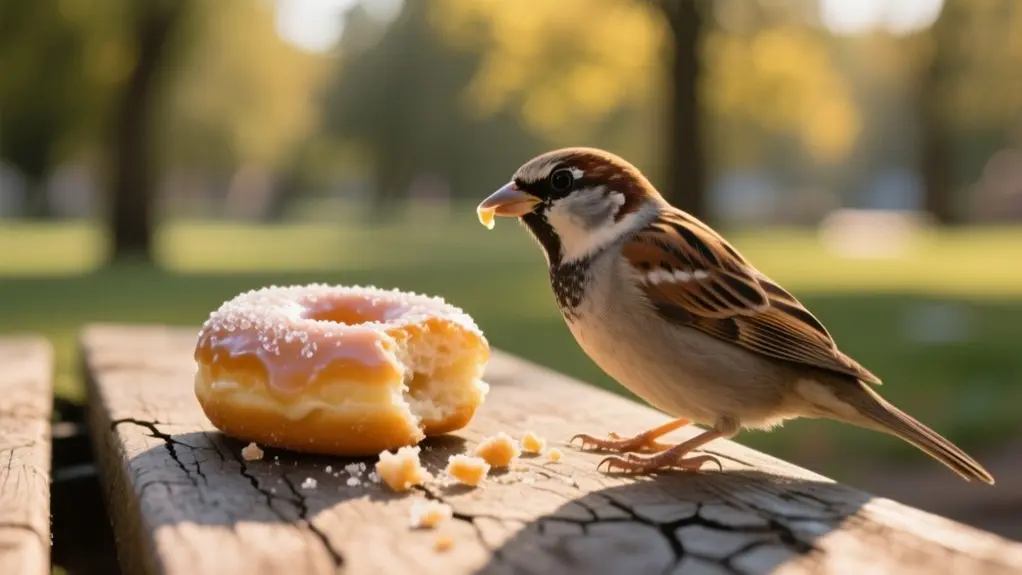
You shouldn’t feed donuts to birds because their high sugar, salt, and processed ingredients can cause obesity, dehydration, and digestive issues. Common components like chocolate are toxic to them.
Donuts lack essential nutrients birds need and disrupt their natural foraging behavior, risking long-term health problems. Instead, offer seeds, fruits, and nuts that support their well-being.
If you want to keep your feathered friends healthy and happy, there’s more to learn about safe feeding habits and better food choices.
Understanding Why Donuts Are Harmful to Birds
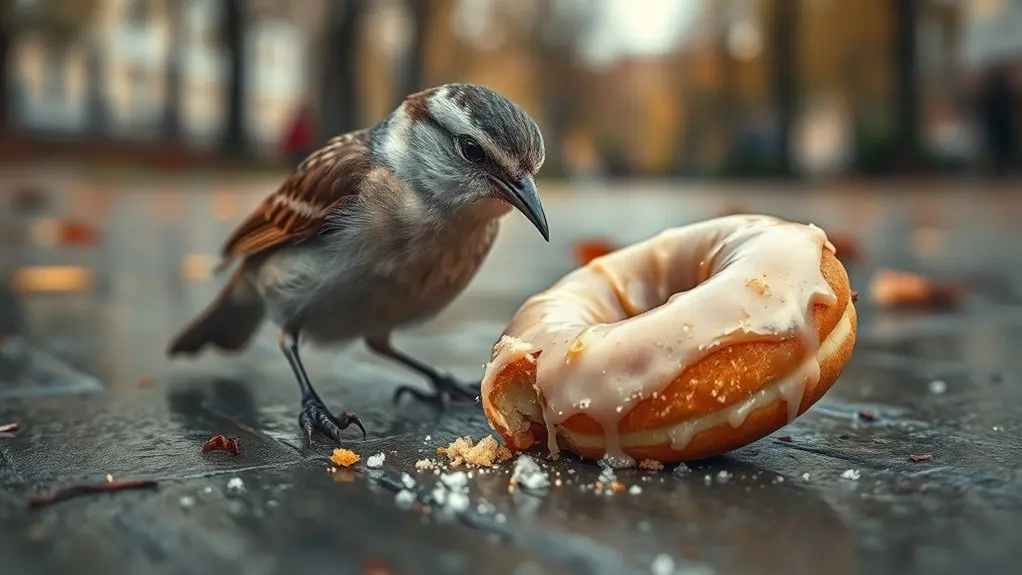
Although donuts might seem like a harmless treat, you should avoid feeding them to birds because their high sugar, salt, and processed ingredient content can cause serious health problems.
Donuts are harmful due to their excessive sugar and refined carbohydrates, which can lead to obesity and other health issues in birds.
The high salt content can cause dehydration and kidney problems, making donuts even more dangerous.
Excessive salt in donuts can lead to dehydration and serious kidney issues in birds.
Besides, donuts contain processed ingredients that lack the nutritious value birds need for a balanced diet.
Feeding birds donuts also disrupts their natural foraging behavior, leading them to rely on unhealthy food instead of finding nutritious options.
Some common donut ingredients, like chocolate or artificial sweeteners, can be toxic, putting birds at great risk.
Why You Shouldn’t Feed Donuts to Birds
You really shouldn’t feed donuts to birds. They’re packed with sugar, fat, and all kinds of additives that can actually harm your feathered friends.
Birds need natural foods that help keep them healthy, not processed treats like donuts that mess with their diet.
Plus, giving them donuts can lead to digestive problems and even make them rely too much on human food.
And that’s definitely not good for them in the long run. So, it’s best to stick to foods that are made for birds!
Harmful Ingredients In Donuts
Because donuts contain high levels of sugar, fat, and salt, feeding them to birds can cause serious health problems like obesity, dehydration, and kidney damage. You should avoid giving donuts to birds due to these harmful ingredients. Here’s why:
- High sugar and fat content leads to obesity and related health issues in birds.
- Processed ingredients such as artificial flavors and preservatives disrupt their digestive systems.
- The high salt content in donuts can cause dehydration and kidney problems.
- These ingredients encourage birds to rely on unhealthy human food instead of natural foraging.
Birds’ Natural Diet Needs
Donuts might seem like a tempting treat to share with birds, but their natural diet is very different from the sugary, processed snacks we enjoy. Birds thrive on a natural diet consisting of seeds, fruits, and insects, which provide essential nutrients and energy.
Feeding the birds processed foods like donuts disrupts this balance and can cause malnutrition since these snacks lack crucial nutrients. Processed foods also contain high sugar, unhealthy fats, and salt levels that birds can’t properly digest.
When you feed birds donuts, you risk harming their health and weakening their immune systems. Sticking to natural foods supports their well-being and keeps bird populations healthy.
Risks Of Feeding Processed Foods
Although it might seem harmless to share your snacks with birds, feeding them processed foods like donuts can seriously harm their health. Donuts contain high sugar, unhealthy fats, and salt, which pose significant health risks to birds.
When you feed processed foods, you disrupt their natural feeding habits, making them dependent on unhealthy options.
Here are key reasons to avoid feeding donuts to birds:
- High sugar and fats can cause obesity and metabolic issues.
- Excess salt leads to dehydration and kidney problems.
- Toxic ingredients like chocolate and artificial sweeteners threaten bird health.
- Processed foods cause digestive issues, as birds aren’t built to digest them.
Choosing natural foods supports birds’ well-being and natural diet needs.
What Ingredients in Donuts Harm Birds
You mightn’t realize it, but many ingredients in donuts can seriously harm birds.
High sugar, unhealthy fats, and salt all mess with their health and digestion. When you feed birds donuts, these harmful components can cause lasting damage.
Harmful Donut Ingredients
Since birds’ bodies aren’t designed to process many common donut ingredients, feeding them these treats can cause serious harm. You should watch out for these harmful components:
- Harmful fats and oils can upset their digestive systems and lead to long-term health issues.
- Artificial flavorings and preservatives may be toxic, disrupting their natural diet and causing illness.
- Chocolate toxicity is a major concern, as even small amounts of chocolate can be deadly to birds.
- High salt content can cause dehydration and other complications, especially in smaller bird species.
Avoid giving birds any donuts containing these ingredients. While it’s tempting to share, these substances pose real risks that their bodies aren’t equipped to handle.
Instead, stick to bird-safe foods to keep your feathered friends healthy and happy.
Effects On Bird Health
When birds eat donuts, the high sugar and fat levels can quickly cause obesity and serious health problems. The processed ingredients, like artificial flavors and preservatives, mess with their digestive systems. This makes it hard for them to absorb nutrients properly.
Donuts also have salt and sometimes chocolate, which are toxic to birds. These can cause dehydration or even death. Feeding donuts makes birds depend on human food, which messes with their natural foraging and diet balance.
| Ingredient | Effect on Birds | Consequence |
|---|---|---|
| Sugar & Fat | Causes obesity | Health decline |
| Processed Ingredients | Disrupt digestion | Poor nutrient absorption |
| Salt & Chocolate | Toxic, raises blood pressure | Dehydration, severe harm |
How Birds Control Their Own Food Intake
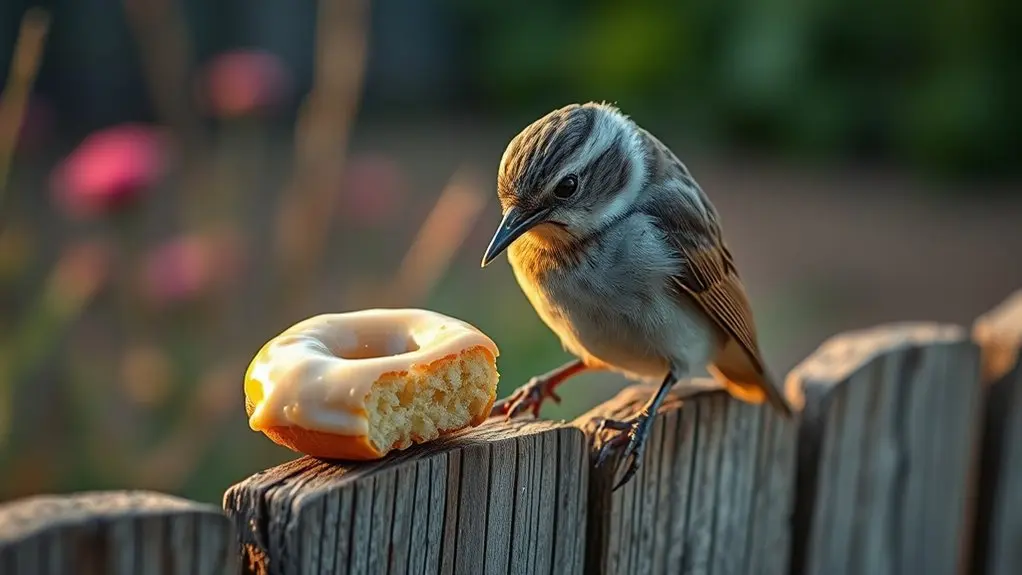
Although birds might seem indiscriminate eaters, they actually control their food intake based on their energy needs and surroundings. They self-regulate by adjusting their feeding habits to stay healthy and avoid overconsumption.
Here’s how they do it:
- Birds instinctively eat according to their physical condition and energy demands.
- They prefer nutrient-rich foods, like sunflower seeds, over low-quality options.
- Their natural ability helps them avoid overeating unhealthy foods, such as donuts.
- Birds can differentiate between food types, choosing what benefits them most.
Healthy Alternatives to Donuts for Feeding Birds
You’ll want to skip donuts and go for more nutritious options like black oil sunflower seeds and fresh fruits to keep birds healthy. These choices aren’t only tasty for them but also give them the nutrients they need.
It’s important to avoid harmful ingredients found in processed foods since those can upset their digestion. Instead, sticking to safe seeds and fruits will support their well-being.
Plus, offering these healthy treats can attract a variety of bird species to your yard, making your bird-feeding experience even more enjoyable.
Nutritious Bird Food Options
Because donuts lack essential nutrients and can harm birds, you should choose healthier alternatives to feed them.
When you place nutritious options near glass doors, you might notice morning doves leave the feeders less often, enjoying the food more.
Here are four great choices:
- Black oil sunflower seeds attract many wild birds and provide crucial nutrients.
- Fresh fruits and vegetables, like apple slices or carrot sticks, offer essential vitamins.
- Suet mixed with seeds or fruits delivers energy-packed food, especially in winter.
- Nuts and mealworms cater to diverse species, promoting a balanced diet.
Safe Seeds And Fruits
When you choose safe seeds and fresh fruits instead of donuts, you provide birds with the nutrients they truly need to stay healthy.
Opt for seed varieties like black oil sunflower seeds, which supply essential oils and proteins without harmful additives.
Incorporate fresh fruits such as apples, berries, and grapes to offer natural sugars and vitamins that boost avian health.
These fruit benefits support digestion and overall well-being, unlike processed foods.
Effective feeding strategies include mixing various seeds and fruits to attract a diverse range of bird species to your feeder.
Avoiding Harmful Ingredients
Choosing natural seeds and fresh fruits sets a strong foundation for feeding birds, but it’s equally important to steer clear of harmful ingredients found in many human snacks.
For better bird nutrition and to follow proper feeding guidelines, avoid:
- Processed foods with high sugar, like donuts, which harm birds’ digestive systems and health impact.
- Baked goods containing chocolate or artificial sweeteners, as they’re toxic to birds.
- Moldy or spoiled food, which can cause disease.
- Foods lacking essential vitamins and minerals that fresh fruits and vegetables provide.
Instead, offer nutritious options like black oil sunflower seeds, apples, and leafy greens.
Which Seeds and Fruits Attract the Most Birds
What seeds and fruits attract the most birds to your feeder? Black oil sunflower seeds top the list, thanks to their high oil content and nutrition, drawing in a wide range of bird species.
Black oil sunflower seeds attract the most birds due to their rich oil content and nutritional value.
Nyjer seeds are perfect for finches, especially American goldfinches, so including them in your seed blends can boost visits.
Offering fruit varieties like sliced apples, oranges, and berries will entice fruit-loving birds such as robins and bluebirds.
Different feeder types help present these foods effectively. Tube feeders work well for nyjer, while platform feeders accommodate mixed seed blends and fruits.
Combining seeds and fruits not only diversifies the diet but also attracts a broader spectrum of birds, making your feeder a lively hotspot for wild visitors.
How to Offer Treats Safely to Wild Birds
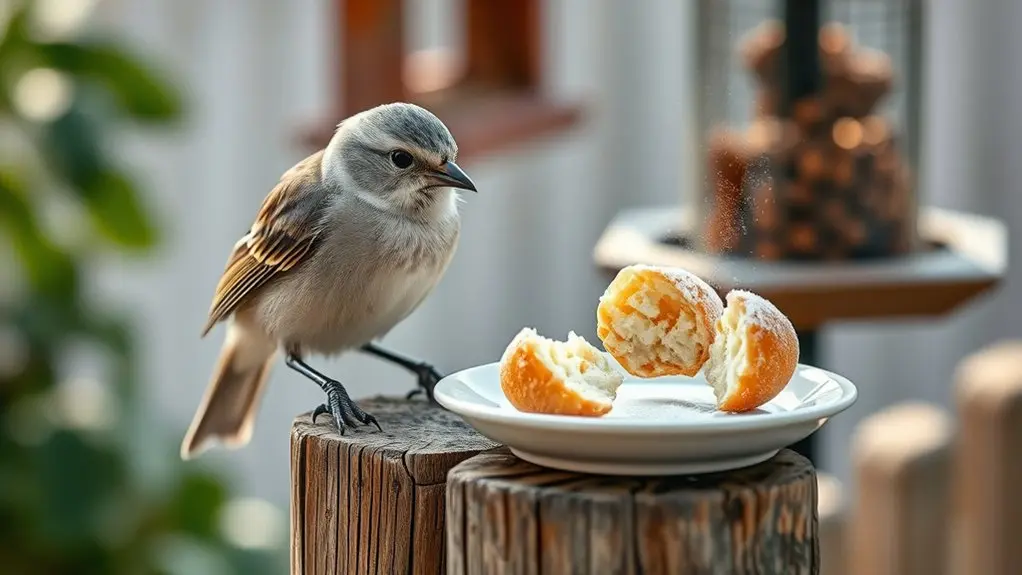
Although offering treats can enhance your bird-feeding experience, you need to prioritize their health by selecting safe options.
When engaging in bird feeding, it’s best to support natural foraging habits and limit feeding frequency to avoid overdependence on treats.
Here’s how to offer treats safely:
- Choose treats made from whole, natural ingredients without additives or preservatives.
- Avoid processed foods like donuts, which contain harmful salts and additives.
- Provide high-quality seeds or fresh fruits to supply essential nutrients.
- Clean feeding areas regularly and remove uneaten food to prevent pests and disease.
Risks of Feeding Processed Foods to Birds
When you offer treats to wild birds, it’s important to avoid processed foods like donuts. These items contain high sugar and unhealthy fats that harm birds’ digestive systems and overall health.
Ingredients such as chocolate or artificial sweeteners like xylitol are toxic to birds. Feeding processed foods disrupts their natural foraging behavior, making them dependent on human-provided snacks that lack essential nutrients.
This shift in bird feeding habits can cause nutritional deficiencies, malnutrition, and obesity. Over time, unhealthy diets weaken their immune systems, increasing disease risk among bird populations.
To support wild birds, focus on natural foods that align with their dietary needs and encourage healthy foraging behavior rather than relying on processed treats that pose serious risks.
How Feeding Affects Birds’ Health and Behavior
Because feeding birds processed foods like donuts can harm their health, you should be careful about what treats you offer.
Junk food dependency causes bird behavior changes, making birds rely less on natural foraging.
The feeding frequency impact is significant; frequent feeding of unhealthy snacks can lead to nutritional deficiencies as birds skip natural foods, obesity and related health issues, reduced foraging instincts and survival skills, and overcrowding at feeding spots, increasing disease risk.
When birds depend on processed foods, their health declines and their natural behaviors shift.
To protect wild birds, avoid offering donuts or sugary, salty treats. Instead, provide nutritious seeds and fresh produce to support their well-being and maintain healthy bird populations.
Your feeding choices directly influence how birds thrive and behave.
Best Practices for Bird Feeder Placement and Maintenance
Placing and maintaining bird feeders properly can make a big difference in attracting healthy, happy birds to your yard. Position feeders close to windows, within six feet, to prevent collisions while maximizing visibility.
Proper placement of bird feeders near windows enhances safety and visibility, attracting more vibrant birds to your yard.
For safety, keep feeders away from trees and shrubs so birds have clear escape routes from predators.
Regularly clean feeders using non-toxic methods and discard moldy or stale food to stop disease spread.
Keep feeders well-stocked, especially during seasonal adjustments, to discourage birds from searching elsewhere.
Experiment with feeder aesthetics and seed varieties to attract diverse species, enhancing your chances of attracting wildlife.
How Seasonal Changes Affect Bird Feeding Preferences
As seasons shift, birds adjust their feeding habits to match changing nutritional needs and food availability. You’ll notice their dietary adaptations closely follow their migration patterns and the seasonal variety of foods around you.
Here’s what to expect:
- In spring, birds focus on protein-rich insects and seeds to support nesting and raising chicks.
- Summer brings a preference for fruits and berries, providing hydration and energy.
- Autumn signals a shift toward seeds and grains, helping birds prepare for migration.
- Winter diets favor high-fat foods like suet and sunflower seeds to sustain energy and warmth.
Understanding these changes helps you offer the right foods year-round, supporting local bird populations through their natural cycles.
What to Do If Birds Eat Unhealthy Foods Like Donuts
Anyone who notices birds eating donuts should act quickly to prevent potential health issues. Since donuts contain high sugar, salt, and processed ingredients, they can disrupt bird behavior and feeding habits, causing digestive problems or dehydration.
First, remove access to donuts and replace them with high-quality seeds and fresh produce to support proper nutrition.
Keep a close eye on the birds for any unusual signs of distress or illness, and contact a vet if you suspect health issues.
Finally, use this opportunity for community education. Share responsible bird feeding tips with neighbors to protect local bird populations.
Frequently Asked Questions
Can Feeding Donuts to Birds Affect Local Ecosystem Balance?
Yes, feeding donuts to birds can affect local ecosystem balance. When you offer donuts, you cause a nutrient imbalance in their diet, weakening their health.
This can attract predators and pests drawn to the sugary food, increasing predator attraction in the area.
Furthermore, it disrupts natural food competition by encouraging some species to dominate resources.
That harms native bird populations and alters the ecosystem’s delicate balance.
Do Certain Bird Species React Differently to Sugary Foods?
Oh, sure, because every bird’s just lining up for a sugar rush like it’s a candy store!
You’ll find sugar sensitivity varies wildly. Crows crave sugary treats, while finches might shun them, showing distinct species preferences.
Their behavioral responses are just as dramatic. Some get hooked, disrupting natural habits, while others barely notice.
Are There Any Birds That Naturally Consume Sweet Foods in the Wild?
Yes, you’ll find that some birds naturally consume sweet food sources as part of their avian dietary habits.
Species like honeycreepers and orioles show natural foraging behaviors focused on nectar and sugary fruits.
These sweet foods provide essential energy, fitting well into their diet.
How Does Bird Metabolism Handle Occasional Sugary Treats?
You’d think birds would throw a party for sugary treats, right? But their sugar metabolism isn’t built for processed sweets.
When you give them occasional sugar, their energy levels might spike briefly, but it often leads to digestive issues.
Their systems prefer natural sugars from fruits and nectar, so those quick sugary hits can backfire.
You’ll do better sticking to their natural diet to keep them healthy and energized.
Can Bird Feeders Spread Diseases if Donuts Are Used as Bait?
Yes, bird feeders can spread diseases if you use donuts as bait. Donuts spoil quickly, encouraging mold and harmful bacteria growth, which increases disease transmission among birds.
If you don’t maintain proper feeder hygiene, you risk compromising bird health by attracting pathogens.
To keep birds safe, you should avoid processed foods like donuts and regularly clean feeders.
Focus on offering fresh, natural foods that support their well-being instead.
Conclusion
You might be surprised to learn that feeding birds sugary treats like donuts can drastically shorten their lifespan. Studies show poor diets reduce bird longevity by up to 30%.
By avoiding harmful ingredients and offering healthier alternatives, you’re helping birds thrive and stay active. Remember, your choices impact their health and behavior.
So next time you want to feed birds, stick to natural, nutritious foods and watch them flourish in your backyard.