
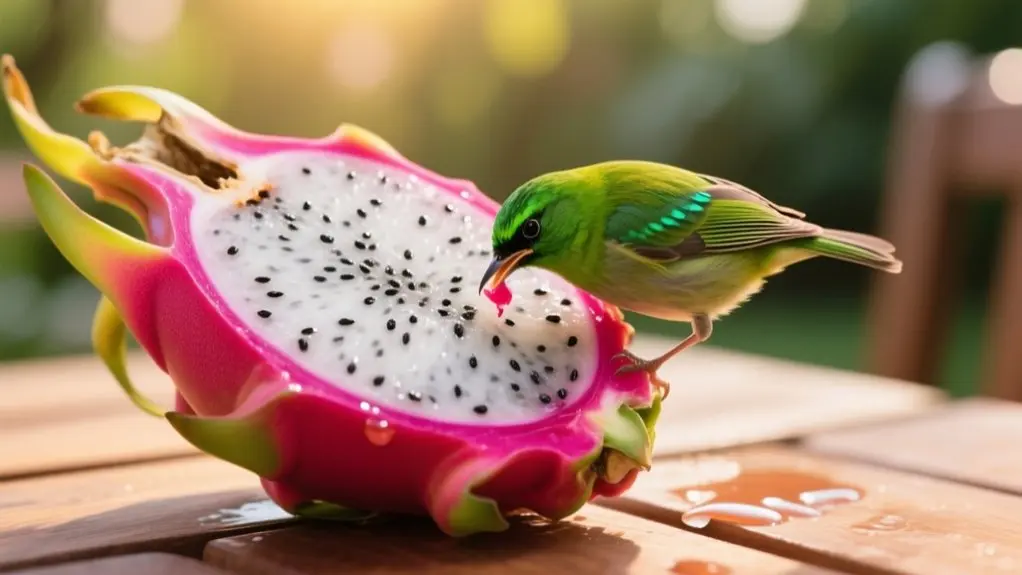
Yes, you can safely offer dragon fruit to birds, and many species like sunbirds and parrots enjoy its sweet flesh and crunchy seeds. Birds are often curious and playful, sometimes tossing fruit pieces as they explore its unique texture and mild taste.
While some birds may hesitate at first, they usually warm up after a few tries. If you’re curious about how this fruit affects your garden and the best ways to manage it, there’s more to uncover.
What Is Dragon Fruit and Why Might Birds Like It?
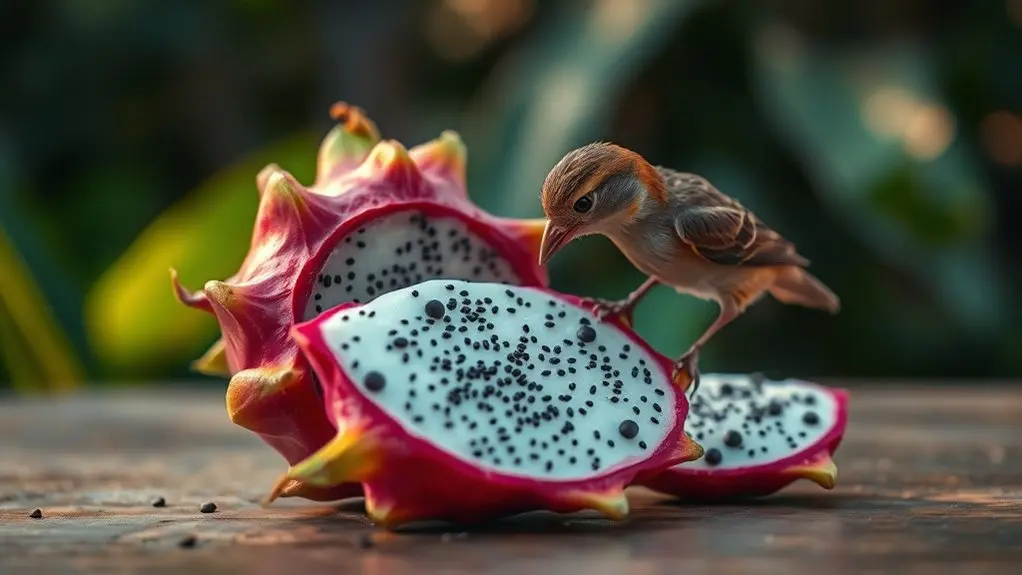
Dragon fruit’s bright colors and unique appearance naturally attract birds, making it an intriguing snack for them. When you spot its vibrant pink or yellow skin and speckled flesh, you’ll understand why birds love this exotic fruit.
Its mild, bland taste mightn’t seem exciting to you, but birds are curious and often enjoy exploring new textures. The crunchy, nutty-flavored seeds add another layer of interest, offering a playful eating experience.
Birds delight in the crunchy, nutty seeds, turning mild flavors into a fun, textured treat.
Beyond being tasty, dragon fruit boasts nutritious content, packed with vitamins and minerals that benefit birds’ health.
Watching tropical species like sunbirds engage with dragon fruit, sometimes tossing pieces around, shows just how appealing and enjoyable this fruit can be for them.
It’s no wonder birds are drawn to this unique treat.
Can Birds Safely Eat Dragon Fruit?
You might wonder if the colorful and inviting fruit birds enjoy is safe for them to eat. The good news is that dragonfruit is indeed edible for birds and can safely become part of their diet.
Many birds find the sweet flesh appealing, though some species, like Kiwi, may hesitate before trying it. The small black seeds inside have a nutty flavor but aren’t digestible unless chewed thoroughly.
When birds eat dragonfruit, they often show playful behavior, tossing pieces around out of curiosity.
Keep in mind that the vibrant color can stain their faces, making the experience visually amusing.
Introducing dragonfruit can encourage birds to expand their diet and enjoy this exotic treat safely.
Which Bird Species Are Most Likely to Eat Dragon Fruit?
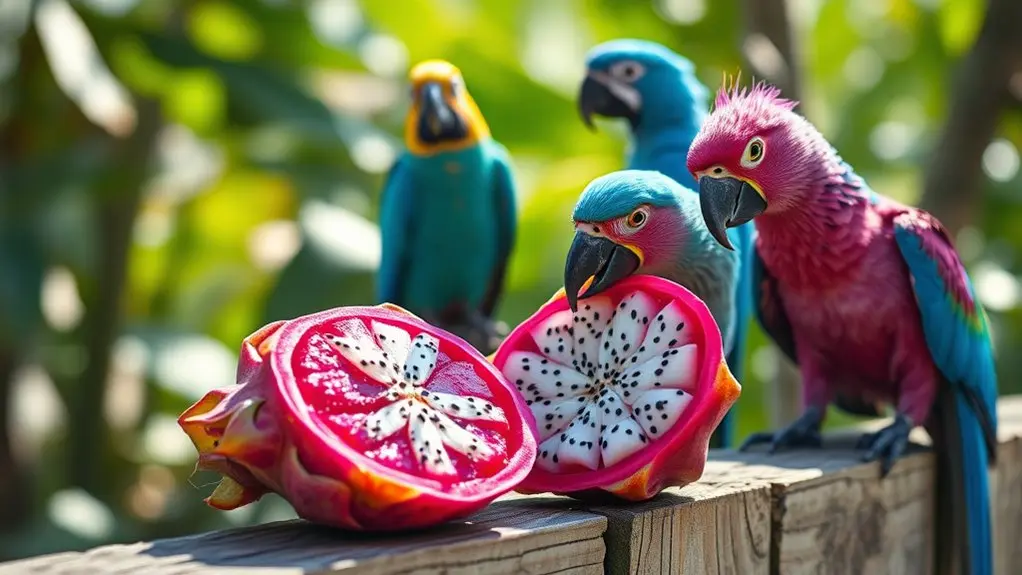
You’ll find that sunbirds and parrots are some of the most common species drawn to dragonfruit. They’re attracted by its bright color and seeds.
If you watch their feeding behaviors, you’ll notice that some birds dive right in and enthusiastically accept the fruit, while others take a bit more time to explore it.
Getting to know these species’ preferences and reactions can really help you encourage more wildlife interaction in your garden.
Common Dragonfruit-Eating Birds
Although many birds show interest in various fruits, sunbirds and parrots are among the species most drawn to dragonfruit because of its bright color and soft texture.
You’ll also find kiwi birds sampling dragonfruit, sometimes tossing it aside before giving it another try. These birds seem curious, often playing by tossing pieces to each other.
When you watch closely, you’ll notice how the edible seeds inside dragonfruit attract various birds, offering them a nutritious snack.
Because dragonfruit grows in urban gardens, it becomes an accessible food source that supports local wildlife.
If you want to encourage biodiversity around your home, planting dragonfruit can help attract these common fruit-eating birds, enriching your garden’s ecosystem in a natural and vibrant way.
Bird Feeding Behaviors
When birds encounter dragonfruit, their feeding behaviors reveal a mix of curiosity and playfulness that varies across species.
You’ll notice sunbirds and parrots enthusiastically pecking at the fruit, drawn by its bright color and soft texture.
Even birds like Kiwi, which may initially reject dragonfruit, often come around after repeated offerings. This shows how bird feeding behaviors adapt over time.
You might see playful tossing of fruit pieces or birds getting their faces stained with vibrant pulp, adding to the fun.
Curiously, a budgie’s cere changed color when introduced to new foods, hinting at dietary effects.
If you want to explore these behaviors further, you’ll need to log in or register on specialized bird forums to share observations and tips.
Species Preferences and Reactions
Birds show distinct preferences for dragonfruit, with species like sunbirds and parrots keenly drawn to its bright color and juicy flesh.
You’ll notice species preferences vary widely, from kiwi to other fruit-eating birds, each reacting differently. Some birds may initially hesitate but adapt after repeated exposure.
When they do eat dragonfruit, you often see playful behaviors, like tossing fruit pieces or staining their faces with juice ranging from blue to brown hues.
Here’s what you can expect:
- Sunbirds and parrots actively seek out dragonfruit.
- Kiwi birds enjoy it safely, showing mild interest.
- Some species reject the fruit due to its mild flavor.
- Playful tossing and juice stains are common.
- Repeated exposure encourages reluctant birds to try it.
Understanding these reactions helps you spot which birds really love dragonfruit.
How Do Birds React When Offered Dragon Fruit?
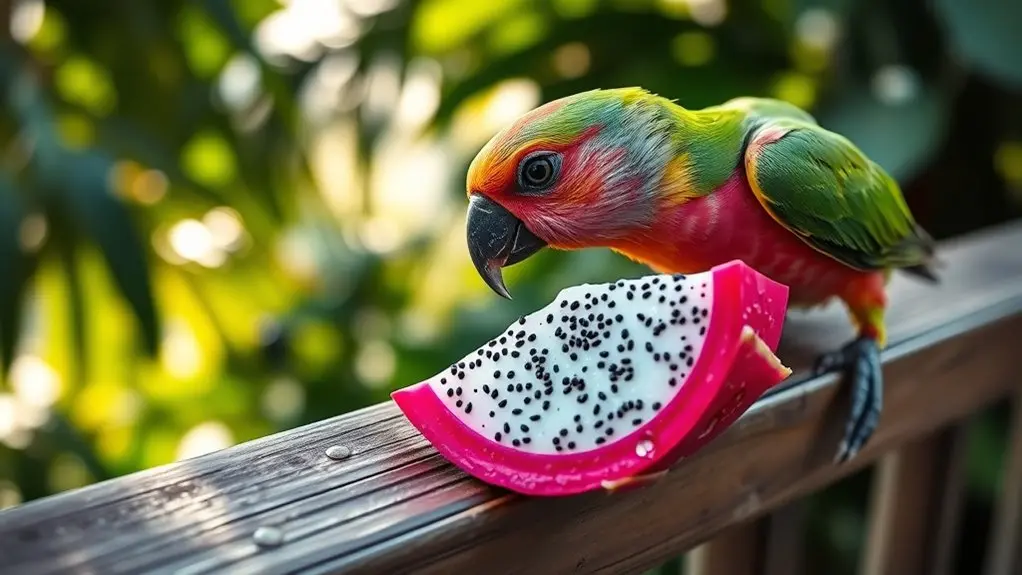
If you offer dragon fruit to some species, like sunbirds, you might notice hesitation at first as they get used to the unfamiliar taste and texture.
Birds often take time to decide whether to consume dragonfruit, showing initial reluctance or even tossing it aside.
However, once they become familiar, many birds actively enjoy the fruit’s mild flavor and edible seeds.
You’ll see them explore the dragonfruit with curiosity, sometimes playing with it or leaving colorful stains on their faces.
This behavior highlights their interest and acceptance of dragonfruit as a food source.
Why Do Birds Sometimes Toss Dragon Fruit Away?
You might notice birds tossing dragon fruit at first because its texture and look seem strange to them.
Their taste preferences can make them hesitate, especially if the seeds feel hard to eat or the fruit stains their feathers.
Sometimes, they just play with the fruit, turning tossing into a fun part of their behavior.
Initial Bird Reactions
Although dragon fruit’s bright colors often catch their attention, birds may toss it away at first because its texture and mild taste don’t immediately appeal to them. Their initial bird reactions can seem cautious or even playful as they get familiar with this unusual fruit.
You might notice birds engaging in playful behavior, like tossing pieces around, as they explore this new food source. With continued exposure, they often grow more comfortable and willing to try the fruit.
- Bright colors spark curiosity but cautious testing
- Unfamiliar texture feels odd to their beaks
- Mild taste might seem bland initially
- Playful behavior helps them explore and assess
- Continued exposure encourages acceptance over time
Taste Preferences Impact
Birds’ playful interactions with dragon fruit often stem from their taste preferences, which can lead them to toss it away. Many birds find dragon fruit bland, lacking the sweetness or tanginess they usually prefer in fruits.
Even species like Kiwi, which can safely eat dragon fruit, might initially discard it if the flavor doesn’t appeal to them.
You’ll notice that some birds are also put off by the texture and appearance of the seeds, which resemble poppy seeds.
However, with repeated exposure, birds can adapt and become more willing to try dragon fruit again.
Playful Bird Behavior
Playful behavior drives many birds to toss dragon fruit pieces away as they explore and interact with their surroundings. When you watch birds, you’ll notice they often use this tossing as a way to engage with the fruit before deciding if it’s for them.
This playful behavior also helps them explore the fruit’s texture and color, making the experience more than just eating. Birds like Kiwi may toss dragon fruit aside initially before getting used to it.
Tossing can be a form of social play among birds. The bright color and unique texture encourage birds to peck and play. Some birds end up with stained faces from their playful fruit exploration.
Tossing helps birds assess the fruit’s taste and suitability. You’ll see that tossing isn’t wasteful. It’s all part of their natural curiosity.
What Funny or Surprising Behaviors Do Birds Show With Dragon Fruit?
How do birds react when they encounter dragon fruit for the first time? You’ll often see playful behavior as they toss pieces around instead of eating them right away. Some birds might reject the fruit initially but come back curious, exploring its unique texture and taste.
As they eat, vibrant stains frequently decorate their faces, making their feeding look quite humorous. You might also notice birds engaging in social interactions by throwing dragon fruit pieces at each other, turning mealtime into a lively game.
This fruit seems to spark their curiosity and playfulness, leading to surprising and funny behaviors that show how much birds enjoy experimenting with new foods in their environment.
What Nutritional Benefits Does Dragon Fruit Offer Birds?
You’ll find that dragon fruit offers a good mix of fiber, antioxidants, and healthy fats.
These nutrients work together to support your bird’s digestion and boost its immune system.
Plus, the balanced nutrients help keep your bird energized throughout the day.
Nutrient Composition Breakdown
Dragon fruit offers several nutritional benefits that can support your bird’s health. Its nutrient composition is packed with essentials like vitamin C and antioxidants that help strengthen the immune system and combat oxidative stress.
Including dragon fruit in your bird’s diet can enhance overall well-being with its unique mix of nutrients.
Here’s what makes dragon fruit valuable for your feathered friend:
- Rich in vitamin C, boosting immune defense
- Contains antioxidants to reduce oxidative damage
- High fiber content promotes healthy digestion
- Small black seeds provide healthy fats for energy
- Introduces new textures and flavors, diversifying diet
Benefits For Avian Health
Although many fruits offer health benefits, few match the unique advantages dragon fruit provides to birds. Its benefits for avian health include a rich supply of vitamin C, which supports skin health and improves iron absorption.
The high fiber content aids digestion, promoting a healthy gut in both pet and wild birds. Furthermore, dragon fruit’s antioxidants boost the immune system, helping birds stay resilient against diseases.
The tiny black seeds contribute essential fatty acids and proteins, rounding out its nutritional profile.
Plus, its high water content keeps birds hydrated, especially in warm climates.
Including dragon fruit in your bird’s diet offers a natural way to enhance their overall well-being without adding unnecessary calories or artificial additives.
Energy Source For Birds
When birds consume dragon fruit, they gain access to a natural energy boost thanks to its blend of healthy fats, vitamins, and moisture. This fruit acts as an excellent energy source, supporting their active lifestyles with essential nutrients and hydration.
You’ll find that its seeds offer healthy fats crucial for sustained energy, while the flesh provides water to keep birds hydrated. Plus, the vitamin C and antioxidants help enhance their overall well-being.
Here’s why dragon fruit is a great choice for birds:
- Supplies healthy fats for energy source
- Provides hydration through moisture content
- Delivers vitamin C and antioxidants as nutrients
- Encourages dietary variety with unique flavors
- Supports immune function and overall health
Including dragon fruit can keep your birds energized and healthy.
Are Dragon Fruit Seeds Safe for Birds’ Digestion?
Are dragon fruit seeds safe for your bird’s digestion? Yes, these seeds are safe for birds, but they’re indigestible unless chewed well. While birds like sunbirds can eat dragon fruit seeds without harm, the seeds don’t add much nutritional value.
The fruit’s flesh offers more benefits, but seeds can still be part of a bird’s diet. Introducing dragon fruit seeds gradually helps avoid digestive discomfort.
| Aspect | Detail | Note |
|---|---|---|
| Seed Size | Small | Easy for birds to handle |
| Digestibility | Indigestible if not chewed | Chewing improves digestion |
| Nutritional Value | Minimal | Flesh is more nutritious |
| Safety | Safe for birds | No harm reported |
| Bird Behavior | Playful with seeds | Tossing seeds during feeding |
How Can You Encourage Birds to Try Dragon Fruit Safely?
How can you help your birds feel comfortable trying dragon fruit? Introduce dragonfruit gradually by mixing small pieces with foods they already enjoy. This way, they won’t feel overwhelmed by the new taste.
Always observe the birds’ reactions closely, as some might toss the fruit aside at first. Persistence can lead to acceptance over time. To guarantee safety, make sure the fruit is ripe, fresh, and free from pesticides or chemicals.
- Mix small dragonfruit pieces with familiar foods
- Offer bright, ripe fruit to attract attention
- Watch for playful or hesitant behavior
- Remove any uneaten pieces after a short time
- Confirm the dragonfruit is pesticide-free before serving
How Does Dragon Fruit Affect Urban Gardens?
Although urban gardens offer a unique space to grow dragon fruit, you’ll often find birds like sunbirds snacking on the fruit before you get a chance to harvest.
These wildlife interactions highlight a lively ecosystem but can reduce your homegrown yield.
In urban gardens, understanding bird behavior is essential to managing these challenges effectively.
By monitoring your plants’ growth and fruiting phases closely, you can better assess when your dragon fruit is most vulnerable.
Connecting with local gardening communities can provide valuable tips and shared experiences to balance wildlife presence while protecting your harvest.
Embracing this knowledge helps you maintain a thriving garden that supports both your produce and the urban wildlife around you.
How Can You Protect Your Dragon Fruit Harvest From Birds?
Protecting your dragon fruit harvest from birds takes a proactive approach since these persistent visitors can quickly spoil your crop.
Keeping birds away from your dragon fruit requires early action to prevent crop damage.
You’ll want to combine physical barriers, observation, and deterrents to keep your fruit safe. Use netting or mesh covers around plants to block birds from reaching your dragon fruit.
Practice regular monitoring to spot bird activity early and respond swiftly. Employ scare tactics like wind chimes, shiny tape, or fake predators to create an unwelcoming environment.
Plant companion herbs or flowers that birds avoid to distract them from your fruit.
You can also set up bird feeders nearby with alternative food sources to reduce bird interest in your dragon fruit.
Should You Grow Dragon Fruit If You Want to Attract Birds?
Why should you consider growing dragon fruit if you want to attract birds? Dragon fruit plants draw various bird species, including sunbirds, which enjoy the vibrant fruit and aid in pollination.
By growing dragon fruit, you boost biodiversity in your garden, offering food and habitat for local wildlife, especially in urban areas.
While some birds, like Kiwi, may hesitate at first, they often adapt and develop a taste for the fruit over time.
However, keep in mind that birds can consume the fruit before you harvest, so monitoring is essential.
Balancing your desire to attract birds with protecting your crop will help you support local ecosystems without sacrificing your dragon fruit yield.
Frequently Asked Questions
Can Dragon Fruit Cause Allergies in Birds?
Yes, dragon fruit can cause allergies in birds, though it’s rare. You’ll want to watch for allergy symptoms like skin irritations, respiratory issues, or digestive upset after feeding it.
Dragon fruit nutrients are generally safe, but bird digestion varies, so introducing it slowly helps you spot any problems.
Chewing the seeds well is important to avoid confusion with digestive issues.
Always check with an avian vet before adding new foods.
How Often Should Birds Be Fed Dragon Fruit?
You should limit your bird’s feeding frequency of dragon fruit to about 5-10% of their overall diet.
Keep the portion size small, especially when you first introduce it, to observe how they respond.
This approach lets you provide the nutritional benefits of dragon fruit, like hydration and vitamins, without overwhelming their system.
Offering it occasionally keeps their diet balanced and exciting, ensuring they enjoy it safely and healthily.
Does Dragon Fruit Affect Bird Migration Patterns?
You might be surprised to learn that less than 5% of bird migration behavior is influenced by food sources like dragon fruit.
Migration cues depend mostly on seasonal changes and habitat preferences, not on specific fruits.
While dragon fruit offers a tasty stopover snack, it doesn’t greatly alter migration patterns.
Instead, birds respond to daylight length and temperature shifts, which guide their routes far more than any single food source could.
Can Feeding Dragon Fruit to Birds Impact Their Vocalization?
Feeding dragon fruit to birds can impact their vocalization by encouraging playful and social behaviors. You’ll notice some species preferences, like sunbirds, vocalizing more when trying this new treat.
While dragon fruit offers dietary benefits, including vitamins that support vocal health, it doesn’t directly change how they sing.
Instead, it sparks curiosity and engagement, which can naturally boost their vocal activity during feeding times.
Is Dragon Fruit Safe for Baby Birds or Chicks?
Yes, dragon fruit is safe for baby birds and chicks, offering excellent nutritional benefits like vitamins and hydration from its high water content.
When feeding dragon fruit, follow proper feeding guidelines: introduce it gradually and remove the skin to avoid choking hazards.
Preparation methods matter. Cut the flesh into small, manageable pieces with seeds intact, as they provide extra nutrients.
This mild fruit can help diversify their diet and support healthy growth.
Conclusion
So, can birds really enjoy dragon fruit without any trouble? Absolutely. You can safely share this vibrant treat with many feathered friends, especially if you know which species to watch for.
But why do some birds toss it away? It’s all part of their natural curiosity and taste preferences.
If you want to attract birds while protecting your harvest, you’ll need some smart strategies. Ready to grow dragon fruit and invite your avian visitors?