
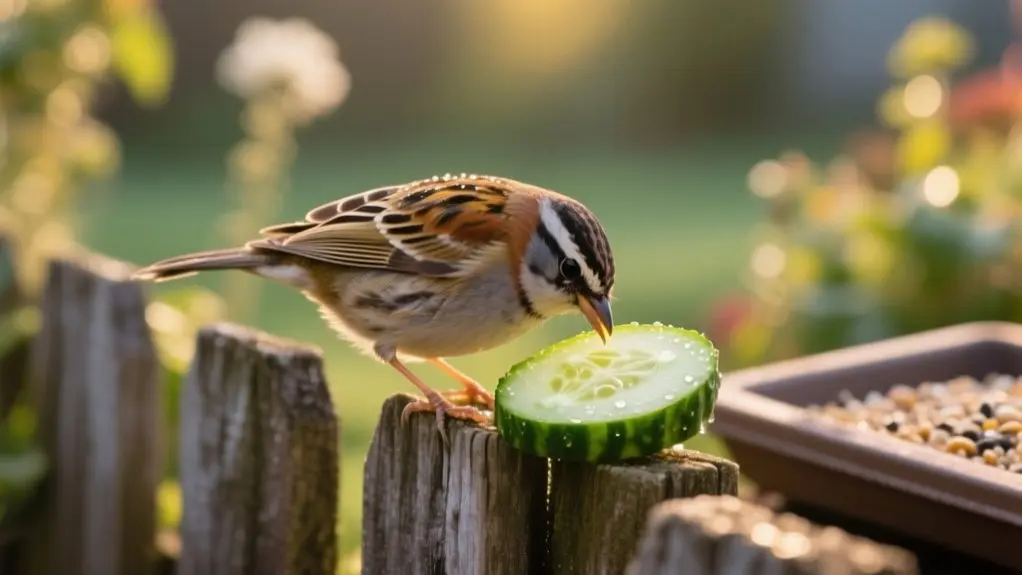
You can safely feed your bird cucumbers as a low-calorie, hydrating treat when prepared properly. Peel and cut cucumbers into small pieces to remove wax and chemicals, and introduce them gradually to avoid digestive issues.
Feed cucumbers a few times a week based on your bird’s size, but avoid overfeeding to prevent loose droppings or appetite loss. Watch for any signs of discomfort, and explore more tips on preparation, suitable birds, and other safe fruits and veggies.
Is Cucumber Safe for Birds to Eat?
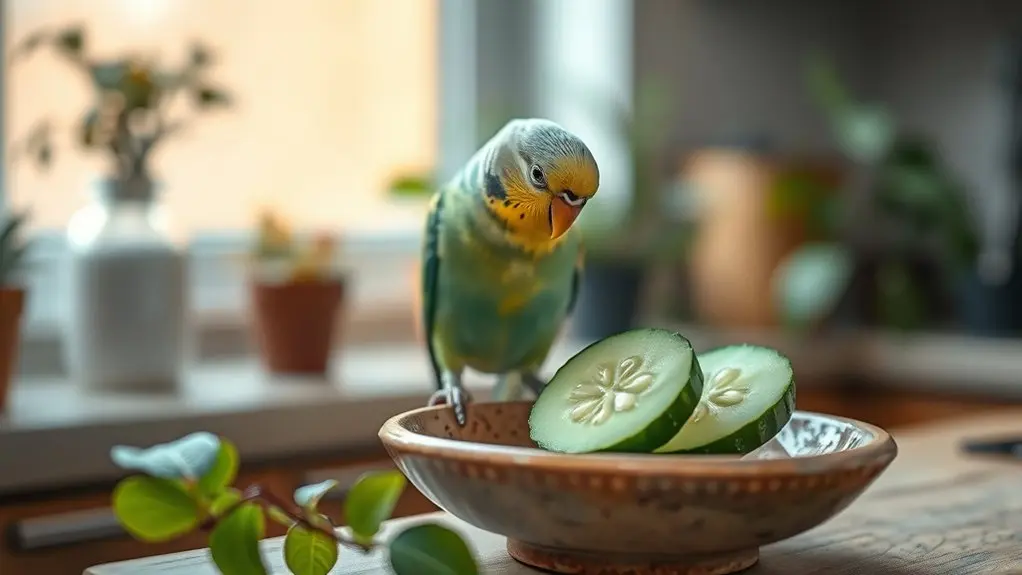
Although cucumbers don’t offer much nutrition, you can safely give your bird cucumber as a hydrating treat since they’re non-toxic and low in sugar.
Cucumbers are generally safe for birds to eat, making them a great occasional snack, especially during hot weather when hydration is key.
Cucumbers provide a refreshing, safe snack for birds, perfect for keeping them hydrated in warm weather.
Before offering cucumbers, make sure to scrub or peel them if they aren’t organic to remove any wax or chemicals that could harm your bird.
Start with small amounts and watch for any digestive issues, as every bird reacts differently to new foods.
Remember, cucumbers should complement a balanced diet, not replace it.
What Nutrients Do Cucumbers Provide Birds?
When you offer cucumbers to your bird, you’re not just providing a hydrating treat but also a modest boost of nutrients. Cucumbers contain about 95% water, making them ideal for keeping your bird hydrated, especially on warm days.
They’re low in calories, with only 15 calories per 100 grams, and offer some dietary fiber, mainly in the skin. The nutritional value includes vitamin C, which supports your bird’s immune system as a powerful antioxidant, and potassium, essential for energy production and muscle function.
However, cucumbers have minimal nutritional value overall, so while they’re a healthy supplement, they shouldn’t replace more nutrient-dense foods in your bird’s diet.
Use them as a revitalizing, occasional snack rather than a main source of nutrition.
How Should You Prepare Cucumbers for Your Bird?
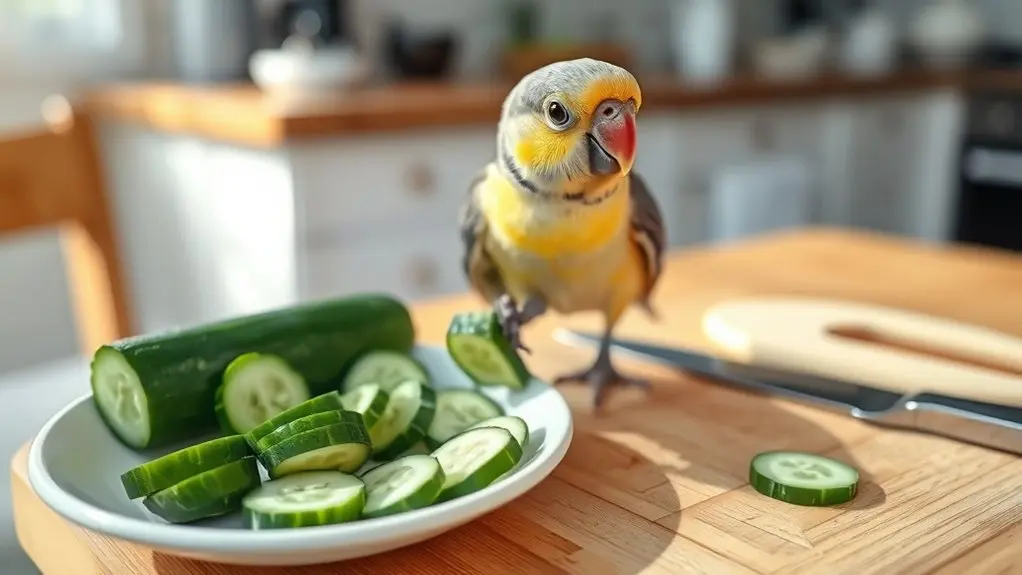
Preparing cucumbers properly guarantees your bird enjoys a safe and tasty treat. To prepare cucumbers, follow these simple steps:
Peel the cucumber to remove any wax or chemicals, especially if it’s not organic. This ensures your bird only gets the freshest bite.
Cut the cucumber into small, manageable pieces like thin slices or chunks. This makes it easier for your bird to handle and eat without choking.
Introduce cucumbers gradually by starting with a small piece.
Watch for any adverse reactions and remove uneaten pieces within a couple of hours to keep the food fresh.
Can Birds Eat Cucumber Skin and Seeds?
Wondering if your bird can safely munch on cucumber skin and seeds? Yes, both are safe when the cucumber skin is thoroughly washed to remove any wax or chemicals.
Seeds add a fun foraging element and some nutrients to your bird’s diet, but neither should be the main food source. Introduce cucumber skin and seeds gradually to watch for any adverse reactions. Always maintain freshness to keep your bird healthy.
| Aspect | Details |
|---|---|
| Cucumber Skin | Safe if washed, contains nutrients |
| Seeds | Safe, encourage foraging behavior |
| Feeding Tip | Introduce gradually, maintain freshness |
How Much Cucumber Should You Feed Your Bird?
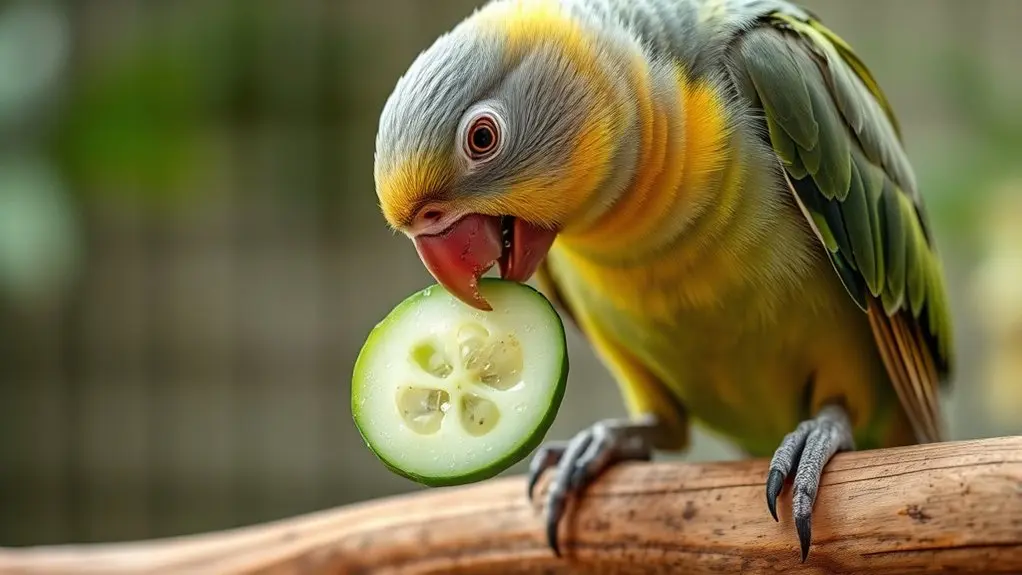
You should offer your bird cucumber in portions that match its size. For tiny birds, small pieces work best, while larger birds can enjoy a few slices.
It’s a good idea to start with small amounts and see how your bird reacts. This way, you can avoid any digestive issues.
Also, make sure to remove any uneaten cucumber within a couple of hours to keep everything fresh and safe.
Appropriate Portion Sizes
Feeding your bird the right amount of cucumber is key to keeping its digestive system healthy. Offering appropriate portion sizes guarantees cucumber complements your bird’s diet without causing upset.
Here’s a simple guide:
- Small birds like budgies and finches should get a fingernail-sized piece 2-3 times weekly.
- Medium birds, such as cockatiels and conures, can have one or two thin slices or small chunks 2-3 times a week.
- Large birds, including African greys and macaws, can enjoy a few small chunks or slices 2-3 times weekly.
Always introduce cucumber gradually and remove leftovers within a couple of hours to maintain freshness.
This approach helps keep your bird’s diet balanced and digestive system happy.
Monitoring Bird Reactions
After offering the right portion size of cucumber, keep a close eye on how your bird responds. Start with a small piece and monitor for 24 hours for any digestive or behavioral changes.
Monitoring is essential for pet birds to guarantee their animal welfare. If you notice loose droppings or discomfort, reduce the amount or pause cucumber feeding. Persistent issues beyond 48 hours require veterinary advice to avoid health risks.
| Bird Size | Portion Size |
|---|---|
| Small Birds | Fingernail-sized piece 2-3x/week |
| Medium Birds | 1-2 thin slices 2-3x/week |
| Large Birds | Small chunk or few slices 2-3x/week |
| Signs to Watch | Watery droppings, digestive upset |
Always prioritize monitoring to keep your feathered friend safe and healthy.
Which Cucumber Products Should You Avoid?
Why should you steer clear of certain cucumber products for your bird? Some cucumber products can be harmful because of added chemicals, seasonings, or spoilage.
To keep your feathered friend safe, avoid these:
1. Pickles and Seasonings
Pickles, dips, and dressings often contain garlic, onion, and salt, which are toxic to birds.
2. Waxed Cucumbers
Those shiny cucumbers have chemical coatings. Always scrub or peel them to remove harmful pesticides.
3. Processed Products
Cucumber juices, smoothies, or pre-packaged items may include sugars, preservatives, or additives that aren’t safe for birds.
Stick to fresh, plain cucumbers without additives.
Checking labels and avoiding processed cucumber products will help keep your bird healthy and happy.
Can Baby Birds Eat Cucumbers Safely?
You shouldn’t offer cucumbers to baby birds until they’re fully weaned and eating solid foods.
Once they’re ready, you can start introducing cucumbers, but take it slow.
Keep an eye on how they react to make sure everything’s going smoothly.
This way, you can avoid any digestive issues and keep their diet balanced.
Baby Bird Diet Timing
Although baby birds rely on a formula diet during their early weeks, you can start introducing cucumbers safely once they’re fully weaned, usually around 4 to 6 weeks old.
At this stage, cucumbers offer a revitalizing, hydrating snack thanks to their high water content.
To guarantee safe introduction, keep these tips in mind:
- Start with small, peeled, or well-scrubbed cucumber pieces to avoid pesticides or wax residues.
- Observe baby birds closely for any digestive upset or changes in droppings after feeding.
- Offer cucumbers occasionally, complementing their balanced diet without replacing essential nutrients.
Gradual Cucumber Introduction
When baby birds finish weaning, you can start introducing cucumbers gradually to guarantee they tolerate this new food well. Begin with a small piece of fresh cucumber, observing closely for any digestive issues like watery droppings.
Remember, baby birds should remain on formula until fully weaned, as their digestive systems aren’t ready for solid foods like cucumbers before then. You can offer cucumbers with or without the skin as long as it’s well scrubbed since the skin adds minimal nutrients but isn’t necessary.
Fresh cucumber serves as a hydrating snack but shouldn’t replace the main diet of pellets and formula.
How Can Cucumbers Enrich Your Bird’s Diet?
How exactly can cucumbers benefit your bird’s diet? Including cucumbers introduces hydration, nutrition, and stimulation that support your bird’s well-being. Here are three key ways cucumbers enrich their diet:
- Hydration Boost: With about 95% water content, cucumbers keep your bird refreshed, especially during warm days.
- Nutrient Supply: The skin contains fiber and vitamins C and K, promoting digestion and immune health when properly cleaned.
- Dietary Variety: Offering cucumbers alongside other veggies encourages foraging behavior and prevents boredom while keeping calorie intake low.
What Are the Risks of Feeding Too Much Cucumber?
Cucumbers can add great benefits to your bird’s diet, but feeding too much can cause problems. One of the main risks is that cucumber’s high water content can lead to loose or watery droppings, which might upset your bird’s digestive system.
Overfeeding cucumbers can also reduce your bird’s appetite for more nutrient-dense foods, creating an unbalanced diet. You might notice lethargy or a change in behavior if digestive distress occurs.
To avoid these risks, introduce cucumbers gradually and never make them the primary food. If watery droppings last more than 24-48 hours after feeding cucumber, it’s crucial to consult a veterinarian to guarantee your bird stays healthy and comfortable.
What Are the Signs Your Bird Has Trouble With Cucumber?
You might notice signs like loose droppings or a drop in appetite if your bird is having trouble with cucumber.
It could also seem more tired or less active than usual.
Keeping an eye out for these changes really helps you catch any problems early on.
Digestive Disturbances
Although cucumbers are generally safe for birds, consuming too much can cause digestive disturbances. These issues arise mainly from cucumbers’ high water content, which may upset your bird’s system if overdone.
Watch for these key signs:
- Loose or watery droppings. This is the most common symptom of digestive disturbances and can last 24-48 hours.
- Reduced appetite. If your bird suddenly avoids pellets or other foods, it might be due to cucumber overload.
- Lethargy. Excessive cucumber intake can make your bird less active, indicating discomfort.
If watery droppings persist beyond two days, consult a veterinarian.
To avoid problems, introduce cucumber gradually and monitor your bird’s droppings closely for any digestive disturbances.
Behavioral Changes
When your bird starts showing signs like reduced appetite, watery droppings, or lethargy, it might be struggling with too much cucumber. These behavioral changes often signal digestive upset caused by overconsumption.
You may notice your bird avoiding its usual pellets or vegetables, favoring soft foods instead, or simply eating less overall.
Watery droppings are the most common sign and usually resolve within a day once cucumber intake is reduced.
However, if symptoms persist beyond 24-48 hours, a vet visit is necessary.
Monitoring your bird’s behavior and droppings closely when introducing cucumber helps catch any issues early.
Adjusting quantities and offering a balanced diet guarantees your feathered friend stays healthy without discomfort from too much fresh cucumber.
Which Bird Species Can Safely Eat Cucumbers?
Which bird species can safely enjoy cucumbers as a revitalizing treat? Many common pet birds can eat cucumbers without any issues, making it a great hydrating snack.
Many common pet birds can enjoy cucumbers safely, making them a refreshing and hydrating treat.
Here’s a quick guide:
- Small birds like finches should get fingernail-sized pieces 2-3 times per week to avoid digestive problems.
- Medium-sized birds such as cockatiels and conures can enjoy one or two thin slices or small chunks a few times weekly.
- Larger birds like African greys and macaws may have small chunks or a few slices 2-3 times per week, but watch for any adverse reactions.
Introduce cucumbers gradually to all birds so you can monitor their tolerance and keep them safe while they eat this revitalizing treat.
What Other Fruits and Vegetables Are Safe for Birds?
If you want to keep your bird’s diet varied and nutritious beyond cucumbers, there are plenty of other fruits and vegetables you can safely offer.
Apples are a great choice, but only give the flesh since the seeds contain toxic cyanide.
Strawberries are another safe fruit for birds, rich in vitamins and enjoyed fresh or sliced.
Carrots provide beta-carotene and can be served raw or cooked to add variety.
Leafy greens like spinach and kale are excellent sources of essential vitamins and minerals, promoting your bird’s overall health.
Bell peppers also rank among safe fruits and vegetables for birds, adding vibrant color and a boost of vitamins A and C.
Including these options guarantees a balanced diet your bird will love.
Frequently Asked Questions
Can Cucumbers Help Prevent Dehydration in Birds?
Yes, cucumbers can help prevent dehydration in birds thanks to their hydration benefits. You’ll find they’re about 95% water, making them a revitalizing and hydrating snack, especially during hot weather.
When you offer fresh cucumber slices, you encourage your bird to consume more fluids, supporting their overall health.
Just introduce cucumbers gradually to avoid any digestive upset while maximizing these hydration benefits for your feathered friend.
How Often Should Cucumbers Be Introduced to a Bird’s Diet?
You should introduce cucumbers to your bird’s diet about 2-3 times per week to maintain a healthy dietary balance.
Start with small portions and watch for any digestive issues. This moderate frequency helps prevent overconsumption of water-rich cucumbers, avoiding loose droppings.
Always combine cucumbers with a variety of other fruits and veggies to keep your bird’s nutrition balanced and interesting.
Remove uneaten pieces promptly to keep things fresh.
Are There Any Benefits to Feeding Organic Cucumbers to Birds?
You’ll boost hydration, improve digestion, and enrich your bird’s diet by feeding organic cucumbers. Their nutritional value shines through with high water content, essential vitamins, and fiber that supports overall health.
You’ll avoid harmful pesticides and wax coatings found on non-organic cucumbers, ensuring safer snacking.
Plus, your bird will enjoy the crunchy texture, which encourages natural foraging behavior.
Incorporate organic cucumbers regularly for a tasty, healthy treat your bird will love.
Can Cucumbers Cause Allergic Reactions in Birds?
Yes, cucumbers can cause mild allergic reactions in some birds, though it’s rare.
You’ll want to watch your bird’s behavior closely after introducing cucumbers, looking for changes like lethargy, reduced appetite, or unusual droppings.
If you notice these signs, stop feeding cucumbers and consult a vet.
What Is the Best Time of Day to Feed Cucumbers to Birds?
The best time of day to feed cucumbers to birds is in the morning when they’re most active and curious.
You’ll want to start with a small piece to monitor how they react.
Offering cucumbers again in the late afternoon works well as a revitalizing snack, especially during warmer months.
Remember to remove any uneaten slices within a couple of hours to keep things fresh.
These feeding strategies guarantee your birds enjoy cucumbers safely and happily.
Conclusion
Just like the tale of the tortoise and the hare teaches us balance, feeding your bird cucumbers calls for moderation and care. You can safely offer this crunchy treat, but don’t let it take over their diet.
Remember, variety is the spice of life for both you and your feathered friend. Keep portions small, watch for signs of trouble, and enjoy sharing nature’s simple gift with your bird, one rejuvenating bite at a time.