
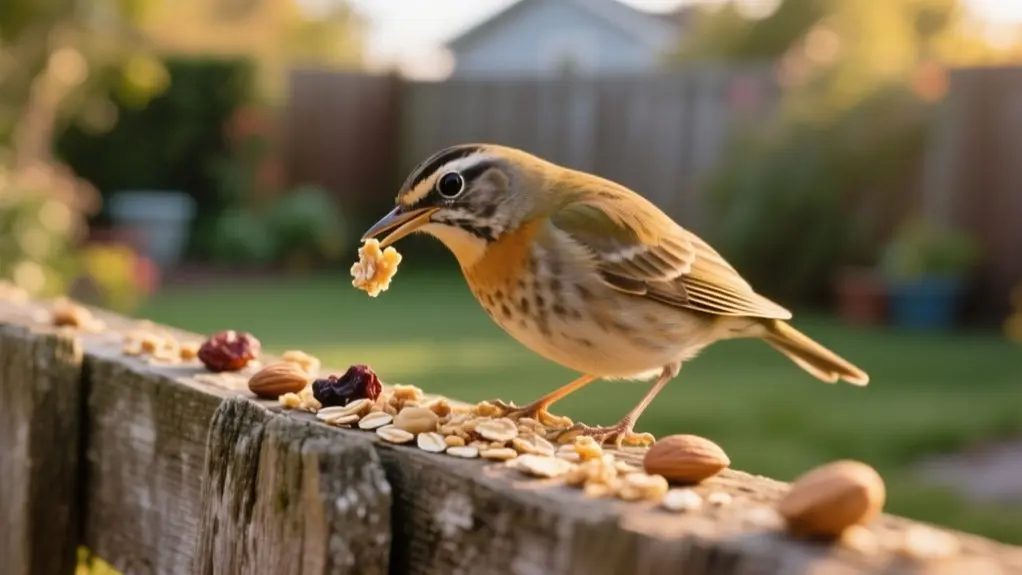
You can safely offer birds granola cereal as an occasional treat, but make sure it’s free from harmful additives like chocolate, raisins, and excess sugar. Choose granola with oats, nuts, and dried fruits such as apples or blueberries for a nutritious boost.
Feed small amounts to avoid health issues like obesity or digestive upset. Homemade granola lets you control ingredients, ensuring safety.
To learn more about which granola types work best and how to feed birds responsibly, keep exploring.
What Is Granola Cereal? Common Ingredients
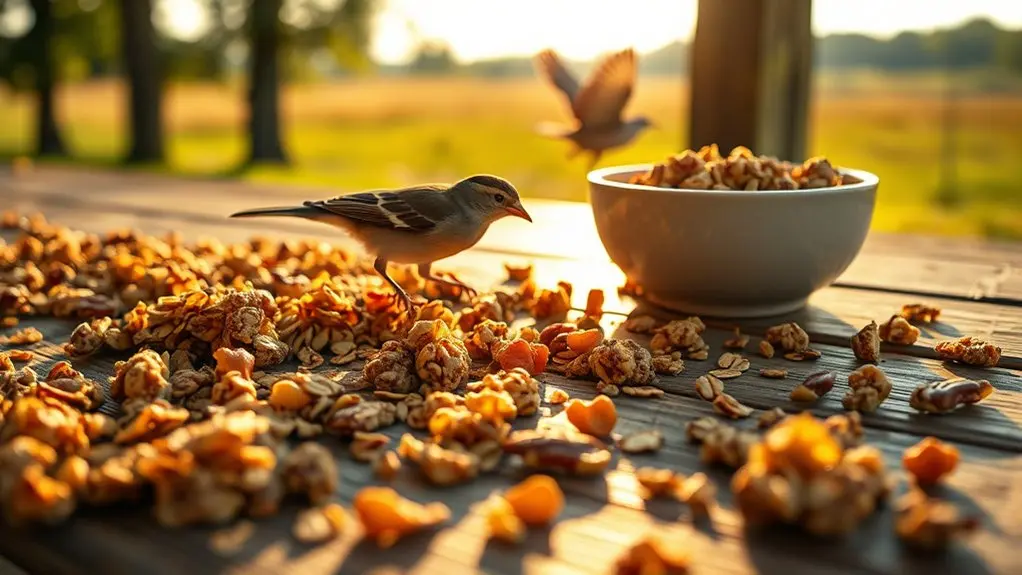
Granola cereal combines rolled oats, nuts, seeds, and sweeteners like honey or maple syrup, baked until crispy.
When you try a granola recipe, you’ll often notice common ingredients such as dried fruits like raisins, cranberries, or goji berries. These boost natural sweetness and provide essential nutrients.
To hold everything together, these recipes usually include binding agents like oil or extra sweeteners, forming clusters.
You might also find added flavors like cinnamon, vanilla, or coconut to enrich the taste.
Granola’s appeal comes from its balanced mix of fiber and protein, mainly from oats and nuts, making it a popular, nutritious breakfast or snack.
Understanding these common ingredients helps you appreciate why granola is both tasty and packed with essential nutrients that fuel your day.
Can Birds Safely Eat Granola Cereal?
How safe is it to share your granola cereal with birds? Many granola cereals contain oats, nuts, and dried fruits that can be nutritious for birds if offered in moderation.
However, you should avoid granola cereals with added sugars, artificial flavors, or preservatives, as these ingredients can harm birds.
Portion control matters because too much granola can lead to obesity and other health problems. Homemade granola gives you full control over what goes in, making it easier to provide a bird-friendly treat.
Remember to introduce granola gradually to watch for any adverse reactions, and always provide fresh water when feeding birds.
Good and Bad Granola Ingredients for Birds
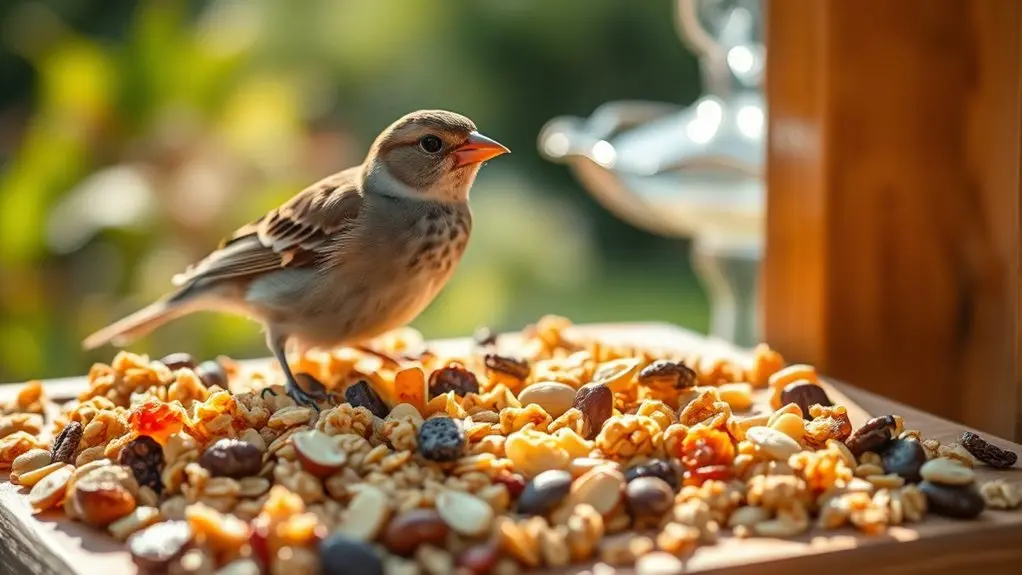
When picking granola for birds, go for safe ingredients like nuts, seeds, dried fruits, and whole grains. These provide great nutrition that your feathered friends will appreciate.
Just be sure to steer clear of harmful additives like added sugars, preservatives, chocolate, and artificial sweeteners since these can be toxic.
Safe Granola Ingredients
While it’s tempting to share your snack, you should always check the ingredients before offering granola to birds. Choosing safe granola ingredients is vital if you want to feed them a healthy treat every day.
Birds benefit from a wide range of natural components that provide energy and nutrition without risks.
Look for granola that includes:
- Oats and whole grains, which offer carbohydrates and fiber to support digestion
- Seeds, providing essential fats and proteins for energy
- Dried fruits like apples or blueberries, which supply vitamins without harmful additives
Avoid anything with added sugars, artificial flavors, or preservatives.
Sticking to these safe granola ingredients guarantees you’re supporting your bird’s health and happiness with every snack you share.
Harmful Additives To Avoid
Choosing the right ingredients is only part of feeding granola to birds safely. You need to avoid harmful additives like added sugars, preservatives, artificial flavors, and high salt levels that can harm birds.
Ingredients such as chocolate, raisins, and macadamia nuts are toxic and must never be included. When selecting granola, look for natural, wholesome components like whole grains, oats, and seeds, including sunflower seeds and black sunflower seeds, which are safe and nutritious.
Avoid granola mixes with unhealthy fats or allergens that could cause issues. While suet balls are great bird treats, granola with harmful additives isn’t.
Always check labels carefully to verify your feathered friends enjoy a safe and healthy snack without risking their well-being.
Nutritional Benefits For Birds
Although granola can provide birds with valuable carbohydrates and energy from oats and dried fruits, you need to be cautious about the ingredients it contains. Different granola types vary widely, so understanding bird preferences and feeding frequency is key to safe feeding.
Look for granola that includes nuts and seeds, which supply essential fats and proteins. Also, choose options with minimal or no added sugars and preservatives to avoid health risks. Make sure it contains no toxic ingredients like chocolate or raisins.
Feeding granola occasionally and in moderation complements a bird’s diet, but it shouldn’t replace seeds and vegetables.
Why Granola Benefits Birds’ Nutrition and Energy
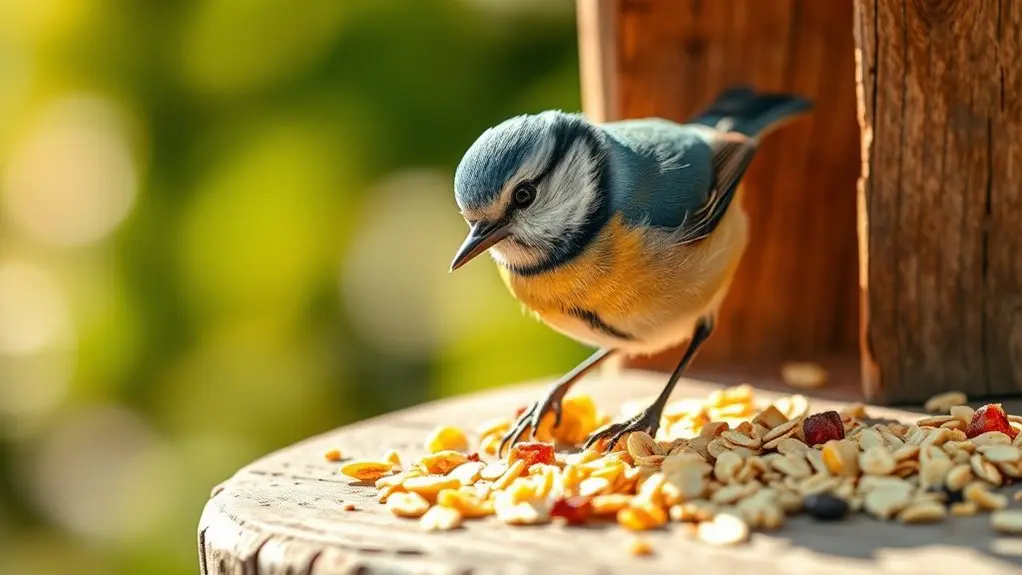
Because granola contains essential carbohydrates, nuts, and dried fruits, it provides birds with a balanced source of energy and important nutrients.
When you offer different granola varieties during bird feeding, you contribute to their nutritional balance, supplying crucial fats and proteins that support their health.
Ingredients like oats and seeds attract various bird species, enriching your backyard’s biodiversity.
Granola’s wholesome mix fuels birds especially during colder months or active times like migration and breeding when energy demands rise.
By choosing granola without added sugars or harmful additives, you guarantee it complements their diet safely.
Feeding granola in moderation helps birds maintain energy levels and overall well-being, making it a valuable addition to your bird feeding routine.
Risks of Sugary or Processed Granola for Birds
You should be careful with sugary and processed granola because too much sugar can really harm your bird’s health.
Plus, some granola mixes have artificial additives that might upset your bird’s digestion or, worse, be toxic.
Sugar Content Concerns
When feeding birds granola, you need to be cautious about the sugar content because many commercial varieties contain added sugars and sweeteners that birds can’t process well.
Birds have a limited ability to handle sugar metabolism, so high sugar intake can lead to serious health implications like obesity and diabetes.
To keep your feathered friends safe, consider these points:
Choose granola with natural sweeteners or no added sugars to support their health.
Avoid processed granola that overwhelms their digestive systems with excessive sugar.
Opt for homemade granola using whole ingredients without sweeteners for a bird-friendly snack.
Artificial Additives Risks
Sugary content isn’t the only concern with granola cereals; many commercial brands include artificial additives that can harm your bird’s health.
Practicing additive awareness is essential when selecting granola, as artificial preservatives and flavorings may trigger allergic reactions or long-term health implications in birds.
You should apply ingredient scrutiny to avoid harmful components like chocolate, raisins, and certain nuts, which can be toxic.
Processed granola often contains these additives alongside high sugar levels, increasing risks of obesity and diabetes in your feathered friend.
To protect your bird, choose granola with natural ingredients and no artificial additives.
Digestive Issues Potential
Although granola might seem like a convenient snack, feeding your bird sugary or processed varieties can cause digestive problems. Birds often suffer from sugar intolerance, and high sugar content in many granolas can trigger digestive distress.
The ingredient impact in processed granola, such as honey, syrups, and artificial additives, can disrupt their delicate digestive systems. To keep your feathered friend healthy, avoid granola that’s loaded with sugars and preservatives.
Here’s what you should watch out for:
- Added sugars and syrups can cause gastrointestinal upset and obesity.
- Artificial preservatives may interfere with natural digestion.
- Excessive sugar disrupts nutrient balance, harming overall health.
Choose low-sugar, natural granola options to minimize digestive issues and keep your bird thriving.
How Often to Feed Granola to Wild Birds
Since granola contains high sugar levels, you should offer it to wild birds only as an occasional treat rather than a staple food.
Limit the feeding frequency to about once a week to avoid health issues, as granola’s sugar can disrupt their natural diet.
When choosing granola types, pick low-sugar, natural varieties without preservatives or artificial ingredients to keep it safe.
Pay attention to bird preferences; some species might ignore granola or show signs of digestive discomfort. If that happens, stop feeding it immediately.
Always provide fresh, clean water alongside granola to help with digestion and hydration.
Serving Granola to Attract a Variety of Birds
When you serve granola to birds, you invite a variety of species to your garden by offering a mix of carbohydrates, fats, and proteins from oats, nuts, and seeds.
Tailoring your granola feeding techniques to bird species preferences guarantees more visitors. For instance, dried fruits attract fruit-loving birds, while clumped granola mimics natural foraging. Using seasonal granola recipes lets you adjust ingredients for year-round appeal.
Try these tips to attract diverse birds:
- Hang granola in mesh bags to appeal to finches and chickadees.
- Use feeders designed for seeds mixed with granola for sparrows and jays.
- Offer seasonal granola recipes with berries in winter for energy-rich snacks.
These methods help you create a bird-friendly environment with variety and nutrition.
Homemade Granola Recipes Safe for Birds
You can easily make homemade granola using bird-safe ingredients like oats, mashed bananas, and unsweetened applesauce. These ingredients provide essential nutrients and energy that your feathered friends will appreciate.
Plus, adding things like flax seeds, walnuts, or dried fruits not only boosts the nutritional value but also keeps it natural and healthy.
When it comes to baking, make sure you do it at the right temperature. This helps achieve that crunchy texture birds really love.
And the best part? Once baked, your granola is easy to store for later use, making it super convenient for feeding time.
Bird-Safe Ingredients
Crafting homemade granola for birds means choosing natural, wholesome ingredients like oats, fruits, nuts, and seeds while steering clear of added sugars and artificial additives that could harm their health.
To keep your granola bird-safe, focus on:
- Bird-friendly oats: Use plain, unflavored oats as a nutritious base.
- Nutritious seeds: Add flax seeds and sunflower seeds for healthy fats and protein.
- Wholesome fruits: Incorporate mashed bananas, unsweetened applesauce, or dried cranberries to provide essential vitamins.
Avoid toxic ingredients like chocolate, caffeine, and macadamia nuts.
Remember, granola should be a treat, not a staple, due to its calorie content.
Nutritional Benefits Explained
Choosing the right ingredients for homemade granola not only guarantees safety but also boosts the nutritional value your birds receive. Understanding granola origins helps you appreciate its natural components like oats, nuts, and dried fruits, which provide essential vitamins and minerals supporting bird nutrition.
When making homemade snacks, you’ll want to include flax seeds and walnuts for healthy fats and protein that enhance energy and overall health. Unsweetened applesauce and natural sweeteners keep the granola free from harmful sugars, ensuring it’s safe for avian consumption.
Plus, antioxidant-rich dried fruits such as cranberries and goji berries contribute to stronger immune systems. By avoiding refined sugars and additives, you create a wholesome treat that meets your birds’ dietary needs effectively.
Preparation Tips for Birds
Although preparing granola for birds requires some care, following simple guidelines guarantees a safe and nutritious treat. You’ll want to focus on the granola texture importance. It should be crunchy but not too hard to avoid choking. Use safe ingredients like rolled oats, dried fruits, and unsalted nuts chopped finely. Baking at a low temperature helps preserve nutrients and texture.
Keep these tips in mind:
- Store your granola in an airtight container to maintain freshness; these granola storage tips prevent mold and spoilage.
- Feed birds in moderation; bird feeding frequency should be limited to avoid overfeeding.
- Mix in omega-3-rich flax seeds for extra health benefits.
Following these steps assures your homemade granola is both tasty and safe for your feathered friends.
Choosing Safe Granola for Wild Birds
How can you guarantee the granola you offer wild birds is both safe and nutritious? Start by choosing granola types made from natural ingredients without added sugars, salt, or artificial flavors.
Ensure your wild bird granola is safe by selecting natural, sugar-free, salt-free, and flavor-free ingredients.
Focus on blends with nuts, seeds, and dried fruits that align with bird preferences and provide essential nutrients and energy.
Avoid granola containing chocolate, raisins, or other toxic ingredients, as these harm birds. Keep feeding frequency moderate; granola should supplement, not replace, their natural diet. Offering it too often may reduce birds’ natural foraging instincts.
Always provide fresh, clean water alongside granola to aid hydration and digestion.
Alternatives to Granola for Healthy Bird Treats
If you want to vary the treats you offer wild birds, there are plenty of healthy alternatives to granola that they’ll enjoy. Nutrient rich options like nuts and seeds supply essential fats and protein.
Seasonal feeding choices such as fresh fruits and vegetables provide vitamins and hydration. You can also try homemade treat ideas to keep your feathered friends happy and healthy year-round.
Consider these options:
- Unsalted nuts and seeds like sunflower seeds and almonds
- Fresh or dried fruits and veggies like berries, apples, carrots, and peas
- Homemade suet balls combining beef suet, seeds, and dried fruits for energy
These choices make great nutrient rich alternatives that support wild birds’ diets without added sugars found in granola.
Storing and Handling Granola for Bird Feeding
When you store granola for bird feeding, keeping it fresh and free from moisture is essential to prevent spoilage. Use airtight containers to block humidity and keep granola crisp.
Store these containers in a cool, dry spot away from direct sunlight to preserve its nutritional value.
If you freeze granola for long-term use, seal it in a vacuum bag to avoid freezer burn and texture loss. Label your containers with dates to track freshness easily.
Following bird feeding guidelines means checking ingredient safety проверка; avoid granola with added sugars, artificial flavors, or preservatives, as these can harm birds.
Tips for Feeding Granola Responsibly to Wild Birds
Properly storing and handling granola sets the stage for feeding wild birds safely. When offering granola varieties, choose natural, unsweetened options without toxic ingredients like chocolate or raisins.
Keep feeding frequency moderate to avoid overwhelming their diet, as granola is calorie-dense and should complement seeds, fruits, and vegetables. Pay attention to bird preferences by breaking granola into smaller pieces for easier consumption.
Here are some tips for feeding granola responsibly:
- Offer small portions to prevent overeating and digestive issues.
- Always provide fresh water alongside granola to help birds stay hydrated.
- Observe which birds prefer granola and adjust your offerings accordingly to support diverse diets.
Frequently Asked Questions
Can Domestic Pet Birds Eat Granola Cereal Safely?
Yes, you can safely offer your pet birds granola cereal as a treat, but only if the granola ingredients don’t include added sugars, chocolate, or artificial additives.
Since birds have specific dietary needs, granola should be an occasional safe snack, not a main meal.
Always check for nuts or dried fruits that might cause allergies, introduce it gradually, and keep it balanced with pellets, fresh fruits, and veggies to keep your bird healthy.
How Does Granola Affect Birds During Different Seasons?
You’ll notice granola affects birds differently across seasons due to their seasonal nutritional needs.
In colder months, they rely more on granola’s high-energy ingredients like nuts and seeds to stay warm.
During warmer seasons, when natural foods abound, their foraging behavior shifts, and they eat less granola.
Also, variations in granola ingredients can influence how attractive it’s year-round.
Offering it in moderation helps support birds without disrupting their natural diet.
Are There Specific Bird Species That Avoid Granola?
You might think all birds enjoy granola, but that’s not true. Some species, like hawks and crows, avoid it because their dietary preferences lean toward high-protein foods, not sugary granola ingredients.
If you want to feed them, try granola alternatives like seeds or insects.
Understanding which birds prefer what helps you offer treats they’ll actually eat, keeping their diet balanced and healthy.
Can Granola Feeding Impact Bird Migration Patterns?
Yes, feeding birds granola can impact migration patterns. When you offer granola, you might unintentionally alter their dietary preferences, causing them to rely on non-native foods.
This change affects migration triggers, as birds depend on natural food availability to time their journeys.
If they consume too much granola, their energy reserves and foraging behavior may shift, potentially disrupting their natural migration schedules and overall health during long-distance flights.
Is Granola Safe for Baby Birds or Nestlings?
Granola can be safe for baby birds if you follow strict feeding guidelines. Its nutritional value comes from oats and dried fruits, but you should avoid added sugars or fats.
Always soften it to prevent choking hazards since nestlings have delicate beaks.
If you’re unsure, consider alternative foods like mashed fruits or specially formulated bird diets. Consulting an avian specialist guarantees you’re providing the safest, healthiest options for your baby birds.
Conclusion
You can safely offer birds granola if you choose the right ingredients. For example, Emma fed her backyard finches unsweetened granola with oats and dried fruits, boosting their energy during migration. Just avoid sugary, processed types that can harm them.
Always store granola properly and feed in moderation to keep birds healthy. By picking natural, bird-friendly granola, you’ll enjoy watching vibrant, energized visitors flutter happily in your yard.