
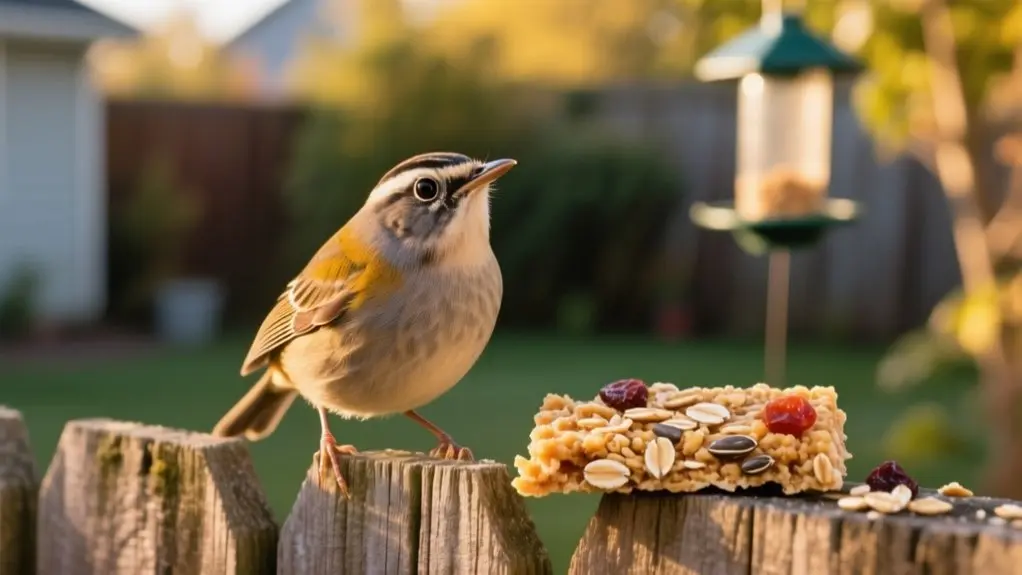
You can offer birds granola bars only if you pick ones with natural, minimally processed ingredients and skip harmful additives like chocolate, excess sugar, and preservatives. Avoid overfeeding since too much sugar and some nuts can upset their digestion or cause health issues.
Breaking bars into small pieces also reduces choking risks. For safer treats, focus on whole grains, seeds, and unsweetened nuts. Stick around to discover better feeding tips and what to watch out for.
Can Birds Eat Granola Bars Safely?
How safe is it to feed granola bars to birds? Years ago, people rarely considered the effects of processed snacks on wildlife. Today, you need to be cautious.
Granola bars often contain nuts, seeds, and dried fruits, which can be okay for birds in moderation. However, many commercial bars are loaded with sugars, fats, preservatives, and sometimes harmful ingredients like chocolate.
Granola bars may have bird-friendly ingredients but often contain sugars, fats, preservatives, and harmful additives like chocolate.
If you decide to offer granola bars, choose those minimally processed and free from artificial additives. Break them into small pieces to help birds eat easily, but don’t overfeed.
Always guarantee birds have access to fresh water and a variety of natural foods like seeds and fruits to maintain a balanced diet.
Relying solely on granola bars is unsafe and not recommended.
Granola Bar Ingredients That Affect Birds
You mightn’t realize it, but common granola bar ingredients like chocolate, raisins, and added sugars can actually harm birds.
Yeah, it’s surprising, right? Birds just aren’t built to handle those things.
And that’s not all. You also want to watch out for harmful additives like preservatives and artificial flavors.
Birds can’t digest those very well, which can cause them some serious trouble.
So, knowing which ingredients to avoid is really important.
It’s a simple way to help protect birds from potential health risks. Just a little bit of awareness goes a long way!
Common Granola Ingredients
Many common granola bar ingredients can harm birds, so you need to be cautious when offering these snacks. Ingredients like chocolate, raisins, and some nuts are toxic to birds, posing serious health risks.
High sugar levels and artificial sweeteners in many commercial bars can upset a bird’s digestive system and overall well-being.
When doing granola variety comparisons, remember whole grains, oats, and seeds are bird-friendly and align with bird nutrition essentials.
However, added preservatives and flavorings often negate these benefits. If you want a safer option, consider homemade granola recipes where you control what goes in.
Always read labels carefully, avoiding bars with harmful additives like xylitol.
Prioritizing natural, simple ingredients keeps your feathered friends safe and healthy.
Harmful Additives To Avoid
Although granola bars might seem like a convenient snack, you should steer clear of certain additives that can harm birds. Ingredients like chocolate are toxic and can cause serious health problems or death.
High sugar levels and artificial sweeteners such as xylitol disrupt birds’ digestion and may lead to obesity or metabolic issues. Nuts can be choking hazards, especially for smaller species, and preservatives like BHA and artificial flavors may cause long-term harm.
Even the high fiber content, while healthy in moderation, can cause gastrointestinal blockages in birds.
Instead of risking these dangers, opt for granola bar alternatives that provide safe bird snacks.
Choose healthy feeding options like seeds, fresh fruits, and nuts specially prepared for birds to keep them safe and nourished.
Are Chocolate and Nuts Harmful to Birds?
You really shouldn’t give birds chocolate. It has theobromine and caffeine, which are toxic to them and can even be deadly.
When it comes to nuts, they can be safe to share, but you’ve got to be careful. Salted or flavored nuts might cause dehydration or digestive problems for birds.
Chocolate Toxicity in Birds
Because chocolate contains theobromine, it poses a serious risk to birds, causing symptoms like increased heart rate, restlessness, and even seizures. These chocolate effects can quickly disrupt normal bird behavior, making chocolate a dangerous ingredient in granola bars for birds.
You should avoid feeding birds any chocolate-containing foods and instead offer safe alternatives such as seeds and fresh fruits. Here’s a quick overview:
| Aspect | Effect on Birds | Safe Alternative |
|---|---|---|
| Chocolate Effects | Toxicity, seizures, restlessness | Seeds, fruits, vegetables |
| Bird Behavior | Hyperactivity, distress | Calm, natural activity |
| Feeding Advice | Avoid processed chocolate foods | Natural, unprocessed foods |
| Health Impact | Heart and nervous system damage | Supports overall well-being |
Stick to natural foods to keep your feathered friends safe and healthy.
Nuts: Risks and Benefits
While nuts can offer birds valuable nutrients like protein and healthy fats, not all nuts are safe to feed your feathered friends. Some nut varieties, like almonds and peanuts, are generally safe when unsalted and unseasoned. They provide essential nutrients without harmful additives.
However, avoid macadamia nuts and any nut containing chocolate, as these can be toxic to birds. You should also watch the feeding frequency; offering nuts too often can lead to obesity and disrupt nutritional balance.
Stick to natural, raw nuts and serve them in moderation to maintain a healthy diet for your birds. Remember, salted nuts pose risks due to birds’ inability to process salt, which can cause dehydration and kidney problems.
Always prioritize your bird’s safety and well-being when selecting treats.
Why Added Sugars and Preservatives Can Harm Birds
Although granola bars might seem like a convenient snack to share with birds, their added sugars and preservatives can cause serious harm. The sugar impact on birds is significant because their digestive systems aren’t built to process high sugar levels. This can lead to obesity and other health problems.
Preservative dangers are also a concern. Chemicals like BHT and BHA may cause liver damage and other complications. Birds thrive on a natural diet rich in unprocessed foods, so feeding them granola bars disrupts their nutritional balance and can cause deficiencies.
Furthermore, relying on processed snacks can weaken their foraging instincts and natural behaviors. To protect their health, you should avoid offering birds granola bars containing these harmful additives.
Are Common Granola Bar Ingredients Safe for Birds?
You might think granola bars are a quick snack for birds since they contain nuts, seeds, and dried fruits.
But, actually, many bars also have added sugars and preservatives that can harm them. Plus, some ingredients, like chocolate and artificial sweeteners, are outright toxic.
Common Ingredients Overview
Because granola bars often contain ingredients like oats, nuts, and natural sweeteners, it’s important to understand which of these are safe for birds before sharing.
You should consider bird dietary preferences and explore granola bar alternatives or homemade bird treats tailored to their needs. Here’s a quick overview:
Oats are safe and digestible grains for most birds.
Nuts provide protein but must be unsalted and chopped to prevent choking.
Natural sweeteners like honey and maple syrup are okay in small amounts.
Avoid harmful ingredients like chocolate, artificial sweeteners (e.g., xylitol), and preservatives.
Potential Risks To Birds
While some granola bar ingredients like oats and unsalted nuts can be safe for birds, many common components pose serious health risks. Ingredients such as chocolate, raisins, and certain nuts can be toxic. High sugar levels may lead to obesity and metabolic problems.
Artificial sweeteners like xylitol are especially dangerous and can cause liver failure. Processed additives and preservatives in granola bars further jeopardize bird health.
To protect your feathered friends, it’s important to focus on bird health education and adopt safe feeding practices. Instead of granola bars, choose natural seeds, fruits, and vegetables as alternatives.
This approach guarantees you provide nutritious options without risking harm, promoting long-lasting health and well-being for the birds you care about.
How Birds Digest Grains and Seeds in Granola Bars
Although granola bars contain a mix of oats, nuts, and seeds, birds rely on their specialized gizzard to grind these grains effectively. This makes nutrient absorption much easier.
The gizzard plays an essential role in seed digestion by breaking down tough outer shells to release nutrients.
The gizzard breaks down tough seed shells, unlocking vital nutrients for birds.
When you offer granola bars, remember to break them into smaller pieces to aid this process and prevent choking. Birds’ faster digestive systems allow them to process these grains quickly, benefiting from the energy-rich components.
Key points to keep in mind:
- The gizzard mechanically crushes grains for better nutrient absorption
- Seeds in granola bars are broken down efficiently for digestion
- Smaller pieces make consumption safer and easier
- Fast digestion helps birds quickly utilize the nutrients from grains and seeds
Signs a Bird Is Sick From Granola Bars
If you notice your bird acting lethargic, refusing to eat, or showing signs of vomiting and diarrhea after eating granola bars, these could be warning signs of illness. Granola bar symptoms often include digestive distress due to high sugar, artificial sweeteners, or preservatives harmful to birds.
Pay close attention to bird behavior changes like increased aggression, withdrawal, or decreased activity, as these are essential avian health indicators.
Dehydration signs such as fluffed feathers and sunken eyes also signal trouble.
If these symptoms persist, it’s vital to consult an avian veterinarian promptly. Monitoring these granola bar symptoms helps you protect your bird’s health and respond quickly to any illness caused by improper foods.
Safer Natural Granola Bar Ingredients for Birds
Choosing granola bars with natural ingredients like oats, nuts, and seeds gives your bird a nutritious treat packed with healthy fats and proteins that support their energy needs.
When selecting safer natural granola bar ingredients for birds, focus on bird nutrition essentials and safe snack alternatives that boost their health without risks.
Consider these points:
Use natural sweeteners benefits wisely by choosing honey or maple syrup in moderation.
Opt for whole grains like oats and barley to improve digestion.
Include nuts and seeds for protein and healthy fats.
Avoid artificial additives, chocolate, and raisins, which are harmful to birds.
Better Bird Treats Than Granola Bars
Granola bars might seem like a convenient treat, but many contain added sugars, preservatives, and even chocolate, which can harm your bird.
Instead, you can offer homemade bird treats that are both safe and appealing.
Seed cakes made from suet and natural seeds provide nutritious bird snacks that support their health without harmful additives.
Nut butter spread on apple slices or whole grain bread encourages natural foraging behaviors and offers essential nutrients.
Mixing birdseed with dried fruits and unsalted nuts creates a balanced snack that’s perfect for attracting wild birds to your yard.
How to Offer Bird-Friendly Snacks Safely
When offering bird-friendly snacks, make certain to select granola bars that exclude added sugars, artificial sweeteners, and chocolate, all of which can harm birds.
Choose bars with natural ingredients like oats, seeds, and nuts, as these serve as healthy bird treats. Use safe bird feeding techniques to guarantee their well-being.
Keep these tips in mind:
- Break granola bars into small pieces to avoid choking hazards.
- Place pieces on feeders or platforms to protect birds from ground predators.
- Regularly check and remove uneaten snacks to prevent mold and spoilage.
- Offer natural snack alternatives alongside granola bars for a balanced diet.
When Should You Avoid Giving Granola Bars to Birds?
Why should you be cautious about offering certain granola bars to birds? You should avoid granola bars with high sugar, artificial sweeteners, chocolate, or preservatives that can harm birds or cause digestive issues.
Also, if bars contain nuts, make sure they’re unsalted and uncoated to protect bird health.
Processed oats or grains in granola bars may not support a proper bird nutrition balance, so whole, natural grains are preferable.
Remember, feeding granola bars regularly risks nutritional imbalances, so stick to treat frequency guidelines and offer these snacks sparingly.
When in doubt, consider granola bar alternatives made specifically for birds to guarantee their diet remains safe and balanced.
Avoid giving unsuitable granola bars to keep your feathered friends healthy.
Creating Safe Feeding Spots for Birds Eating Granola Alternatives
Although feeding birds can be rewarding, you need to create safe feeding spots that protect them from harmful ingredients and pests. Using proper bird feeding techniques helps guarantee their health when offering granola alternatives.
Focus on safe feeding locations that minimize risks and encourage diverse bird visits.
Keep these tips in mind:
- Choose granola bars free from chocolate, raisins, and artificial sweeteners.
- Use unsweetened granola with natural ingredients to avoid high sugar content.
- Place food on elevated feeders or platforms to deter pests.
- Clean feeding spots regularly to prevent mold and disease.
Frequently Asked Questions
Can Baby Birds Eat Granola Bars?
No, baby birds can’t eat granola bars. The granola bar ingredients like sugars, nuts, and preservatives don’t meet baby bird nutrition needs and can harm their health.
Instead, you should offer safe food alternatives that provide essential proteins and nutrients, such as specialized bird formula or small insects.
If you find a baby bird, it’s best to consult a wildlife rehabilitator to guarantee it gets proper care and nutrition for healthy growth.
How Often Can Birds Have Granola Bars as Treats?
You should limit feeding granola bars to birds no more than once a week, following feeding frequency guidelines to keep them healthy.
Since granola bar ingredients often include sugars and fats, it’s best to choose low-sugar options without harmful additives.
Always break bars into small pieces.
If you want safer bird treat alternatives, try fruits, seeds, or unsalted nuts instead.
Keep an eye on your bird’s reaction to new treats for any issues.
Do Wild Birds Recognize Granola Bars as Food?
You might think wild birds instantly recognize granola bars as food, but that’s not usually the case. Their bird food preferences lean toward natural items like seeds and insects, so they often ignore processed granola bar ingredients.
However, wild bird behavior shows they can be curious about new smells or textures, sometimes pecking at bars.
Still, they don’t typically see granola bars as familiar or preferred food sources.
Can Granola Bars Help Birds During Migration?
Yes, granola bars can help birds during migration by providing essential migration energy through their nutritional benefits like carbohydrates, fats, nuts, and seeds.
When you use smart feeding strategies, such as offering natural, additive-free bars and crumbling them into smaller pieces, you make it easier for birds to access this quick energy source.
This support is especially useful when natural food is scarce, helping birds sustain their long, demanding journeys.
Are Homemade Granola Bars Safer for Birds Than Store-Bought?
You might think all granola bars are the same, but homemade granola bars are definitely safer for birds than store-bought ones.
You control the nutritional content, avoiding ingredient concerns like excessive sugar or harmful additives.
Plus, you can tailor them to bird preferences by including oats, seeds, and dried fruits that birds love.
This makes homemade options a healthier, more reliable choice to support birds’ energy and wellbeing.
Conclusion
You might think offering a granola bar to birds is a kind gesture, but it’s best to avoid it due to harmful ingredients like added sugars and chocolate. Instead, try giving them plain oats or unsalted nuts.
For example, Sarah noticed her backyard birds thrived after switching from sugary snacks to sunflower seeds, which kept them healthy and happy. So, stick to bird-friendly treats to enjoy watching them safely and confidently.