
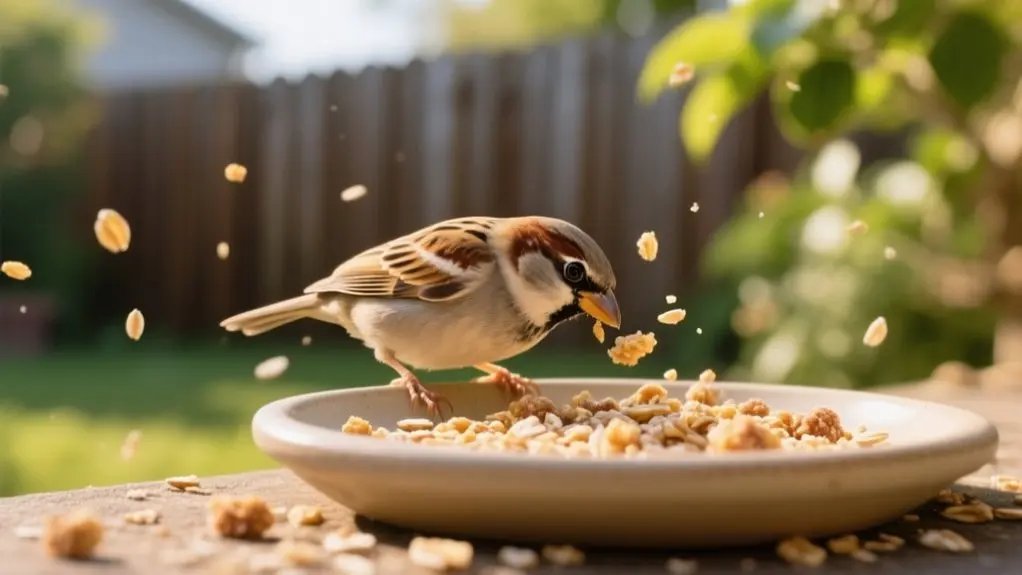
You can feed birds granola safely if you choose bird-friendly ingredients like whole grains, unsweetened dried fruit, nuts, and seeds, and offer it in moderation. Breaking it into small pieces helps birds like chickadees and woodpeckers eat it easily.
Avoid granola with chocolate, added sugars, or salt to keep birds healthy. Serving granola a few times a week as a treat complements their diet without causing harm. Explore more tips to guarantee your feathered friends benefit the most.
Can Birds Eat Granola? Benefits and Basics
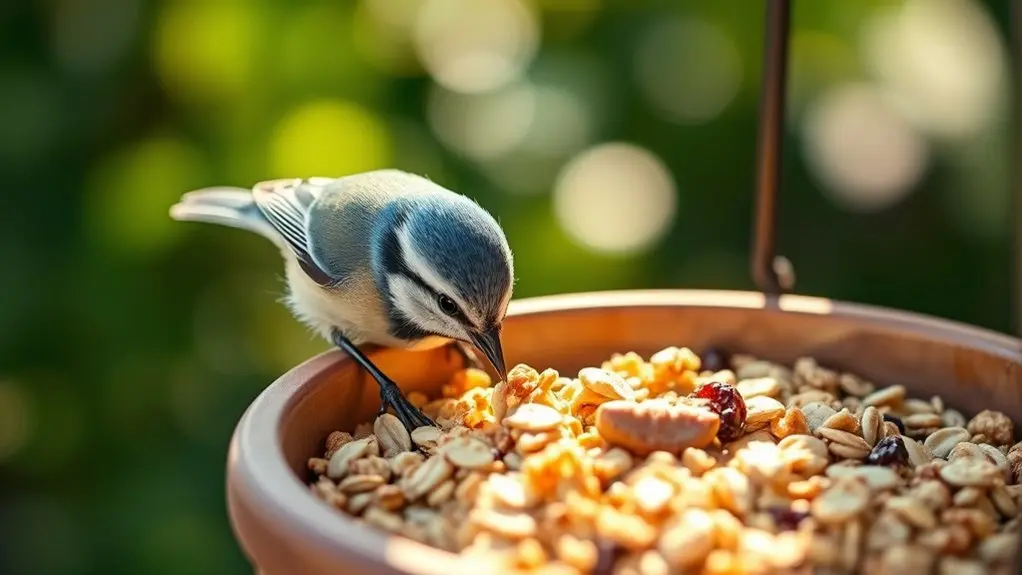
Wondering if birds can eat granola? Yes, they can enjoy granola made from whole grains, nuts, and seeds, which provide essential nutrients and energy.
When you offer granola to birds like chickadees, woodpeckers, or jays, it’s best to break it into smaller pieces to make it easier for them to eat.
Breaking granola into smaller pieces helps birds like chickadees and woodpeckers enjoy it with ease.
Remember, granola should be given in moderation as part of a varied diet to avoid health issues such as obesity.
By including granola in small amounts, you help supply birds with beneficial nutrients while keeping their diet balanced.
Just keep in mind that moderation is key when feeding granola to guarantee your feathered friends stay healthy and active.
Safe vs. Harmful Granola Ingredients for Birds
Although granola can be a nutritious snack for birds, you need to be careful about the ingredients you choose. Opt for granola with whole grains like oats and nuts such as almonds or walnuts, which provide essential nutrients.
Including sunflower seeds is a great idea since many birds, including the red sided species, enjoy them.
Make sure any dried fruits, like raisins or cranberries, are unsweetened and offered in small amounts to avoid sugar overload. Avoid granola containing chocolate, excess salt, added sugars, or artificial additives, as these can harm birds.
Always feed granola in moderation and keep feeders clean to prevent spoilage and deter pests. This way, you’ll safely support your feathered friends’ health and happiness.
Choosing or Making Bird-Safe Granola
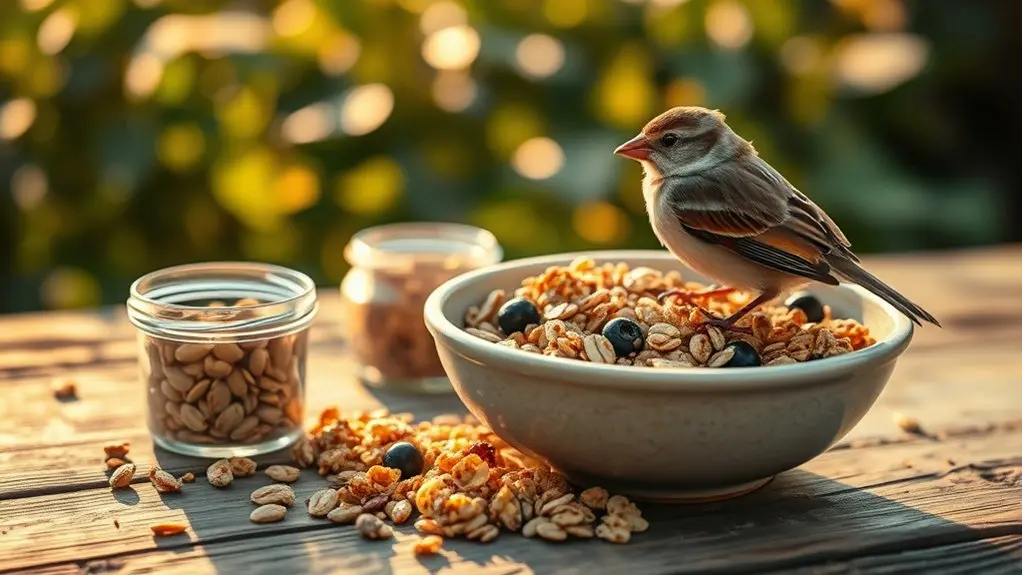
Selecting or preparing bird-safe granola starts with choosing wholesome ingredients that support birds’ health. Use whole grains like oats and barley, and add nuts such as almonds and walnuts for protein and healthy fats.
For granola flavoring options, include small amounts of unsweetened dried fruits like cranberries or raisins to offer natural sweetness without harmful additives. Avoid any artificial preservatives, added sugars, chocolate, or excess salt, as these can be dangerous for birds.
When making homemade granola recipes, break the granola into small pieces to make it easier for birds to eat.
Finally, follow granola storage tips by keeping it in a sealed container away from moisture and pests, ensuring your bird-safe granola stays fresh and safe for your feathered friends.
Which Birds Love Granola?
You’ll notice that birds like chickadees and titmice are drawn to granola because of its seeds and nuts.
If you offer nut-rich granola, woodpeckers, nuthatches, and jays will likely stop by for a snack.
Finches and sparrows also enjoy the seed content, making granola a great treat for a variety of seed-loving birds.
Birds Attracted To Nuts
When you offer granola rich in nuts, you’ll likely attract a variety of birds that rely on these high-fat, protein-packed treats. Birds like chickadees, titmice, woodpeckers, and nuthatches have strong preferences for nut varieties such as almonds, pecans, and walnuts.
These nuts provide essential fats and proteins that fuel their energetic lifestyles. Jays, in particular, favor crunchy nuts and will seek them out enthusiastically.
To maximize your feeder’s appeal, consider your feeding strategies carefully. Mixing nut varieties can cater to different bird preferences and encourage more visits.
Seed-Loving Granola Eaters
Although granola contains a mix of seeds and nuts, many seed-loving birds find it especially appealing. Chickadees, titmice, finches, and sparrows enjoy the variety that different granola flavor combinations offer, savoring the seeds in particular.
Woodpeckers and nuthatches may also sample granola, attracted mainly by its nut content. Understanding bird feeding habits helps you offer granola that suits these species’ preferences, especially during colder months when seasonal granola preferences shift toward energy-rich seeds.
Jays, known for their nut affinity, will appreciate nut-rich granola but also nibble on seed blends. By providing granola in moderation, you support diverse nutrition for these birds, complementing their natural diets without overwhelming them with too many nuts or seeds.
This balance keeps your seed-loving granola eaters happy and healthy.
Nut-Rich Diet Preferences
Because many birds rely on nuts for energy and nutrition, offering nut-rich granola can attract species like chickadees, titmice, woodpeckers, nuthatches, and jays.
These birds have strong nut preferences, making granola an ideal treat that fits their natural feeding habits.
Jays especially love nuts and won’t hesitate to visit your feeder when you provide them.
Woodpeckers and nuthatches benefit from the protein and fats found in nuts, supporting their active lifestyles.
Including granola in their diet promotes dietary diversity, ensuring they get more than just seeds.
While finches and sparrows focus more on seeds, adding nut-rich granola can complement their feeding habits too.
Just remember to offer granola in moderation to keep their diet balanced and healthy.
How to Prepare Granola for Bird Feeding
Preparing granola for bird feeding involves combining rolled oats, unsweetened applesauce, and ground pellets to create a nutritious base.
To get the right granola texture and ingredient proportions, follow these steps:
- Mix oats, applesauce, and pellets with unsalted nuts, seeds, and a small amount of dried fruit.
- Bake at 350°F for 30 minutes to achieve a crunchy texture birds enjoy.
- After cooling, chop into smaller pieces for safe consumption and easier feeding.
You’ll want to feed this granola at a moderate frequency to avoid overfeeding.
Store any leftovers in the freezer to keep the granola fresh.
This approach guarantees a balanced treat that attracts various bird species while meeting their nutritional needs.
How Much Granola Should You Feed Birds?
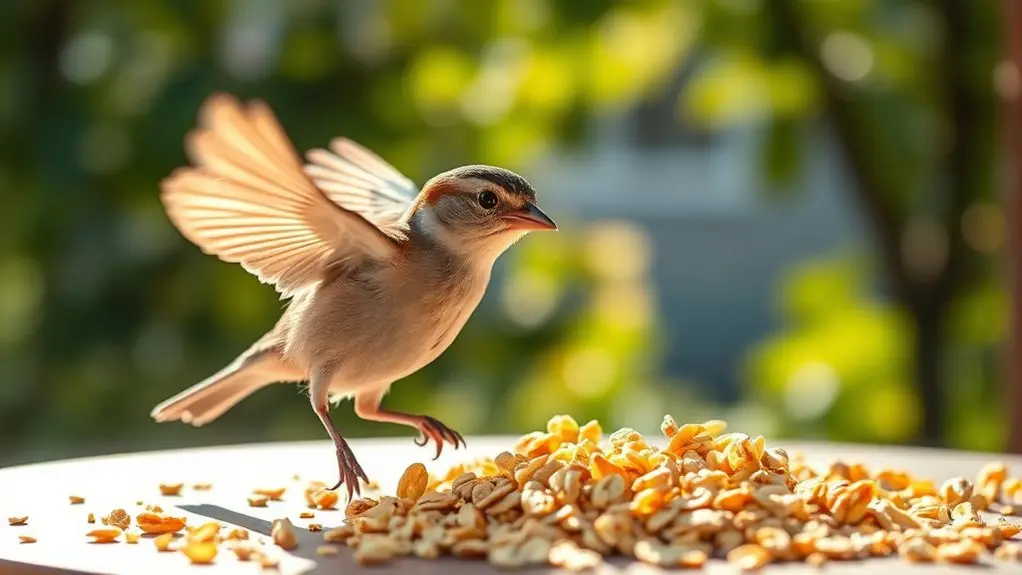
You should feed birds granola in moderation—about one tablespoon per bird, depending on their size.
It’s important to remember that granola should only be a small part of their varied diet. Try not to give it to them too often.
Keep an eye on their health, and that way, you can adjust how much and how often you feed them as needed.
Recommended Feeding Quantity
Offering birds the right amount of granola is key to keeping them healthy and happy.
To match their granola texture preferences and bird feeding habits, follow these guidelines:
Give small to medium-sized birds no more than one tablespoon per feeding to avoid excess sugar and fat.
Adjust amounts slightly for larger birds, but always keep granola as a treat, not a staple.
Monitor birds closely after introducing granola to catch any adverse reactions early.
Moderation And Frequency
Although granola can be a tasty treat for birds, you should feed it sparingly to avoid health issues like obesity from its high fat and sugar content.
Stick to small granola serving sizes, a handful broken into bite-sized pieces, to match birds’ texture preferences and prevent choking.
Incorporate granola as an occasional supplement rather than a daily staple. Adjust your bird feeding schedules to offer granola just a few times a week, ensuring it doesn’t replace more nutritious foods like seeds or pellets.
Also, watch for leftover granola, as frequent feeding can attract pests if feeders aren’t cleaned regularly.
Best Times and Places to Feed Birds Granola
When’s the best time to feed birds granola? To make the most of your bird feeding schedules, aim for early morning or late afternoon when birds are most active.
Choosing ideal feeding locations is just as important. Here are three tips to guide your granola feeding techniques:
- Place granola in sheltered spots like under trees or inside feeding stations to protect it from rain and wind.
- Use platform or tray feeders to give larger birds easy access and reduce waste.
- Adjust your feeding based on the season; in winter, add calorie-rich nuts and seeds alongside granola.
How to Monitor Bird Reactions to Granola
Since birds can react differently to new foods, you’ll want to watch their behavior carefully when introducing granola. Start with small portions using careful granola feeding techniques to avoid overwhelming them.
Pay close attention to bird behavior observations. Note if they enthusiastically accept or hesitate to try the granola. Track species-specific preferences, as chickadees might respond differently than jays.
Look for any changes in their activity or droppings that could indicate discomfort. Keeping a feeding log helps you record which ingredients attract particular birds, allowing you to tailor future offerings more effectively.
Health Risks and Precautions When Feeding Granola
Feeding granola to birds requires careful attention to its ingredients and preparation to confirm their safety. You need to avoid harmful additives like chocolate, excess salt, and added sugars, which can be toxic.
Follow these bird feeding guidelines to minimize health risks:
- Break granola into small pieces to prevent choking and ease consumption.
- Monitor fat content to avoid obesity and related issues.
- Clean feeders regularly to prevent pest attraction and contamination.
Introduce granola gradually and watch for any adverse reactions. If you’re concerned about these risks, consider granola alternatives or other healthy treat options that better suit your bird’s diet.
Staying mindful confirms you provide a safe, enjoyable snack without compromising their health.
Other Healthy Treats for Birds
Although granola can be a tasty treat, you might want to offer your birds a variety of other healthy snacks to keep their diet balanced. Incorporate fruit snacks, vegetable treats, and protein sources to provide essential nutrients and variety.
Fresh fruits like apples and berries offer vitamins, while crunchy vegetables such as carrots and peas add fiber. Protein sources like unsalted nuts and mealworms support growth and energy.
| Category | Examples | Benefits |
|---|---|---|
| Fruit Snacks | Apples, Bananas, Berries | Vitamins, antioxidants |
| Vegetable Treats | Carrots, Peas, Leafy Greens | Fiber, minerals |
| Protein Sources | Almonds, Sunflower Seeds, Mealworms | Growth, energy |
Offering diverse treats helps maintain your bird’s health and happiness.
Tips for Maintaining a Healthy Bird Feeding Area
Providing a variety of healthy treats like granola and fresh fruits is only part of keeping your birds happy.
To maintain a healthy bird feeding area, you need consistent bird feeder maintenance and pest control strategies. Here are three essential tips:
- Clean feeders and surrounding areas regularly using seasonal cleaning tips to prevent mold and deter pests.
- Store granola in airtight containers to keep it fresh and avoid spoilage, especially in humid conditions.
- Break granola into smaller pieces before feeding, helping birds eat easily while reducing waste.
Frequently Asked Questions About Feeding Granola to Birds
Wondering if granola is a safe and healthy treat for your backyard birds? You’ll want to choose granola varieties that include whole grains, nuts, and seeds, while steering clear of chocolate, excess sugars, and artificial additives.
Birds like chickadees, woodpeckers, and jays love the nutty, seed-packed content. When feeding, use proper feeding techniques. Break granola into smaller pieces to match bird behavior and make consumption easier.
Always offer granola in moderation to avoid high-fat intake. Keep feeders clean and remove leftovers promptly to prevent pests.
Watching how birds interact with your feeder can guide you in adjusting portions and granola types.
With these tips, you can safely enjoy attracting a variety of birds to your yard using granola treats.
Frequently Asked Questions
Can Granola Feeding Affect a Bird’s Migration Patterns?
Yes, feeding birds granola can affect their migration patterns. When you offer granola, it can change their dietary preferences and alter natural migration cues.
Granola provides energy sources like fats and carbohydrates, which might make birds rely on your food rather than instinctual feeding habits.
This reliance can disrupt their timing and readiness for migration, as their bodies mightn’t respond properly to natural signals guiding their journey.
Does Granola Impact Bird Vocalization or Communication?
You might think birds would sing like Shakespeare’s minstrels with granola in their diet, but granola doesn’t directly affect their vocalization.
However, dietary influences from nuts and seeds can enhance their vocal clarity and reduce vocalization stress.
When you provide a balanced mix, you help birds pick up communication cues better.
Just avoid sugary granola, as it could cause stress that hinders their ability to communicate effectively.
Can Granola Attract Unwanted Pests or Predators?
Yes, granola can attract unwanted pests or predators like ants, rodents, and raccoons. To manage this, you should use pest control methods such as cleaning feeders regularly and removing leftover granola promptly.
Consider granola alternatives like plain seeds or fruit to reduce risks.
Also, adjust your feeding frequency to avoid excess food buildup. By doing this, you’ll help keep your bird feeding area safe and enjoyable for the birds without inviting trouble.
Is Granola Safe for Baby Birds or Chicks?
Yes, granola can be safe for baby birds or chicks if you choose granola with suitable ingredients, avoiding added sugars, chocolate, and excess salt.
Keep in mind baby bird digestion is delicate, so break the granola into small pieces to help them eat it easily.
Granola’s nutritional value from whole grains, nuts, and seeds can support their growth, but offer it in moderation alongside fresh foods for the best results.
How Does Granola Feeding Influence Bird Social Behavior?
You might think feeding granola creates harmony among birds, but it actually stirs competition. While granola’s nutritional benefits boost energy, it shifts bird foraging habits, sparking more aggressive behaviors as they compete for this tasty treat.
However, the dietary diversity effects of granola encourage flocking and social bonding, as birds gather and share.
Conclusion
So, can birds eat granola? Sure, if you want to turn your feathered friends into tiny, crunchy connoisseurs. Just keep the sugar and salt away or you’ll be hosting a birdie sugar crash.
Remember, not all granola is bird-friendly, so choose wisely or DIY like a bird chef. Feed responsibly, or you might end up with jittery sparrows debating the ethics of oat clusters.
Happy granola adventures—your birds will tweet their thanks (or just tweet).