
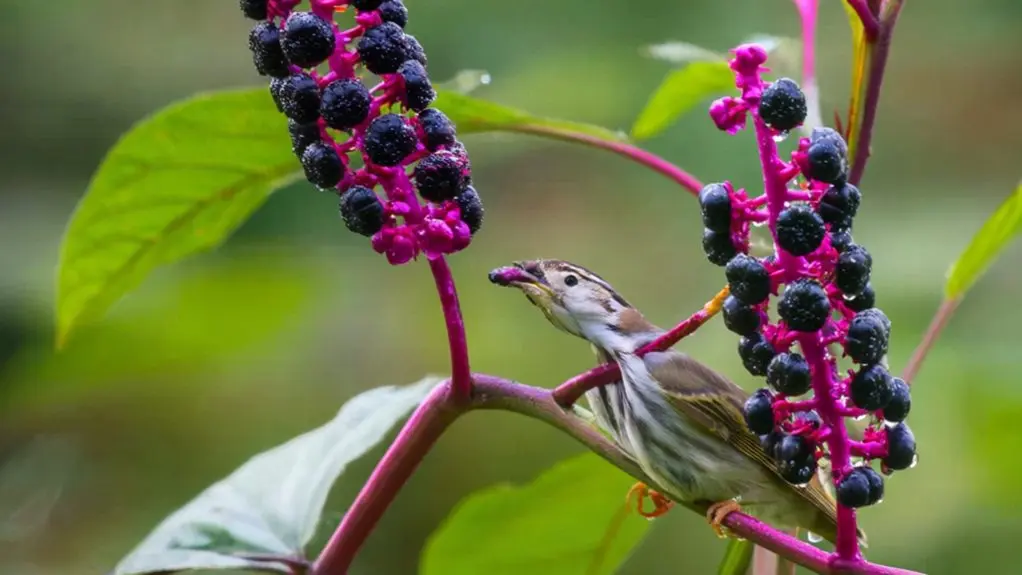
You can safely observe many bird species eating pokeweed berries, despite their toxicity to humans. Birds like northern cardinals and cedar waxwings tolerate these berries because of specialized enzymes and gut flora that neutralize harmful compounds. Their rapid digestion and shorter intestines reduce toxin absorption, which lets them use these berries as a nutrient source while helping with seed dispersal.
However, intentional feeding or giving birds large quantities may pose risks. It’s good to know how this interaction affects birds and your yard’s ecosystem. So, while birds can enjoy pokeweed berries safely, it’s best to let nature take its course.
What Are Pokeweed Berries And Where Do They Grow
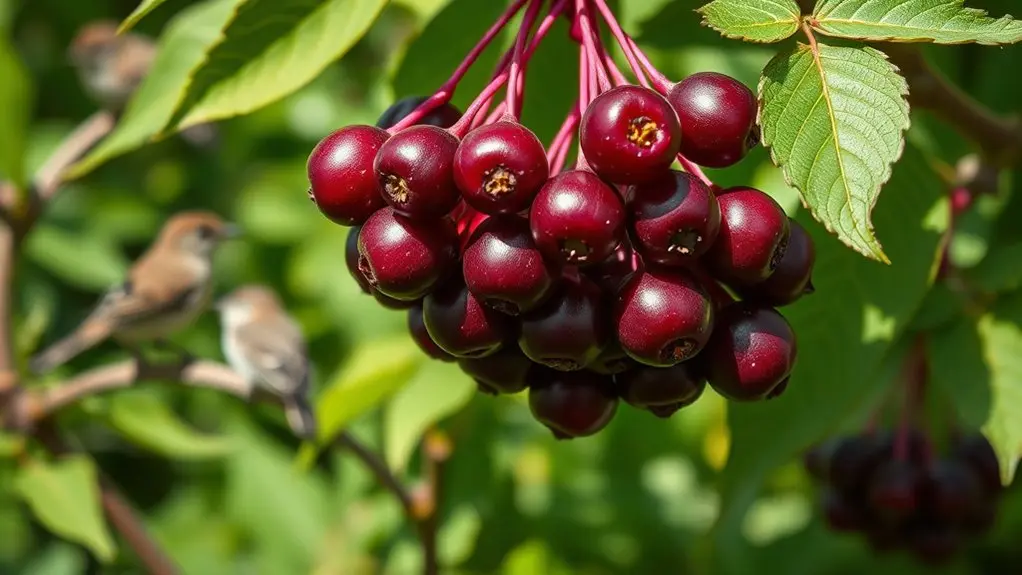
Although pokeweed berries may look inviting with their bright purple or black clusters, you should know they grow on a perennial plant native to North America. You’ll commonly find pokeweed in fields, forest edges, and along roadsides.
The pokeweed plant can reach up to 10 feet tall and develops berries on mature, woody stems. These berries usually ripen in late summer to fall and play a vital role in the plant’s reproductive cycle by containing seeds.
When animals and birds eat the berries, they help spread the seeds, which allows the plant to grow in new areas. While the berries’ colorful appearance seems attractive, it’s important to understand their biological function and ecological role in their native habitats.
Knowing where and how pokeweed grows helps you recognize its growth patterns and environmental distribution. So, even though they look tempting, it’s good to be aware of the bigger picture.
Why Are Pokeweed Berries Toxic To Humans But Not To Birds?
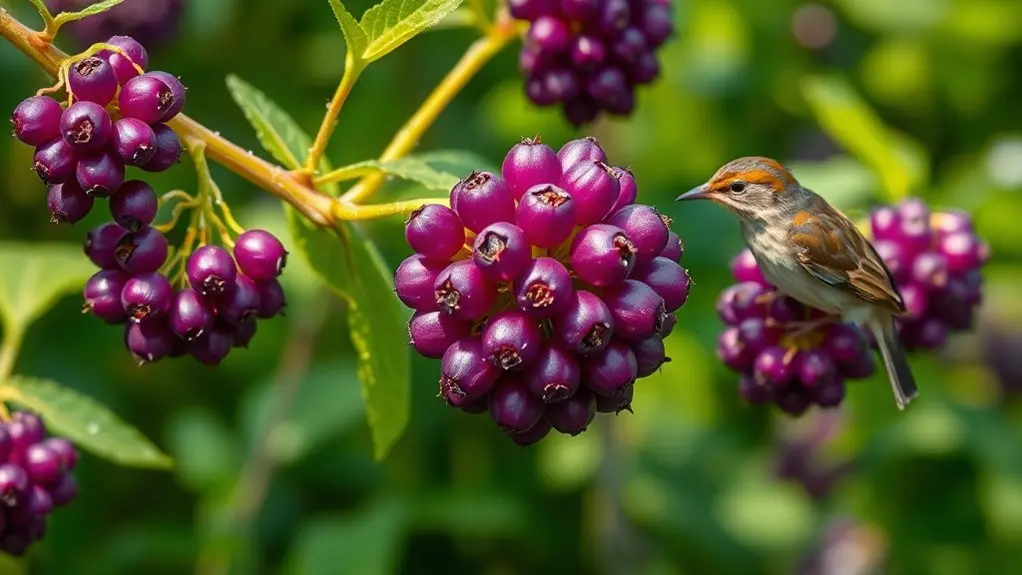
You’ll notice that pokeweed berries contain toxins like phytolaccatoxin. These toxins affect humans but don’t seem to bother birds at all.
That’s because birds have specialized digestive systems and unique metabolic pathways that can neutralize these compounds. So, while these berries can be harmful to us, birds can safely eat them and even help spread the seeds around.
It’s pretty fascinating how nature works like that!
Chemical Composition Differences
Because pokeweed berries contain toxins like phytolaccatoxin and phytolaccigenin, they pose significant health risks to humans, causing symptoms such as nausea, vomiting, and respiratory distress. These toxins’ chemical structures interact differently across species, influencing how they’re metabolized.
Humans lack the specific liver enzymes found in certain birds, such as northern bobwhites and pheasants, that efficiently break down and detoxify these compounds. This enzymatic variation results from evolutionary adaptations, enabling birds to consume pokeweed berries without adverse effects.
In contrast, humans process these toxins less effectively, leading to their pronounced toxicity. Understanding these chemical composition differences highlights why pokeweed berries are harmful to humans but tolerated by many bird species.
It really emphasizes just how species-specific toxin metabolism can be.
Bird Digestion Adaptations
Understanding the chemical differences in toxin metabolism leads us to examine how birds’ digestive systems handle pokeweed berries without harm. Unlike humans, birds possess unique adaptations that neutralize the toxic effects of pokeweed compounds. Here’s why:
- Birds produce specialized digestive enzymes and harbor gut flora that detoxify phytolaccatoxin and phytolaccigenin.
- Their rapid digestion and shorter intestines limit toxin absorption by quickly processing the berries.
- Evolution has selected for species with increased tolerance to pokeweed toxins, allowing safe consumption.
- The chemical defenses designed to deter mammals are less effective against birds due to these physiological differences.
These adaptations create a system where pokeweed berries pose minimal risk to birds. It really highlights an evolutionary divergence in toxin handling between species.
Common Bird Species That Eat Pokeweed Berries
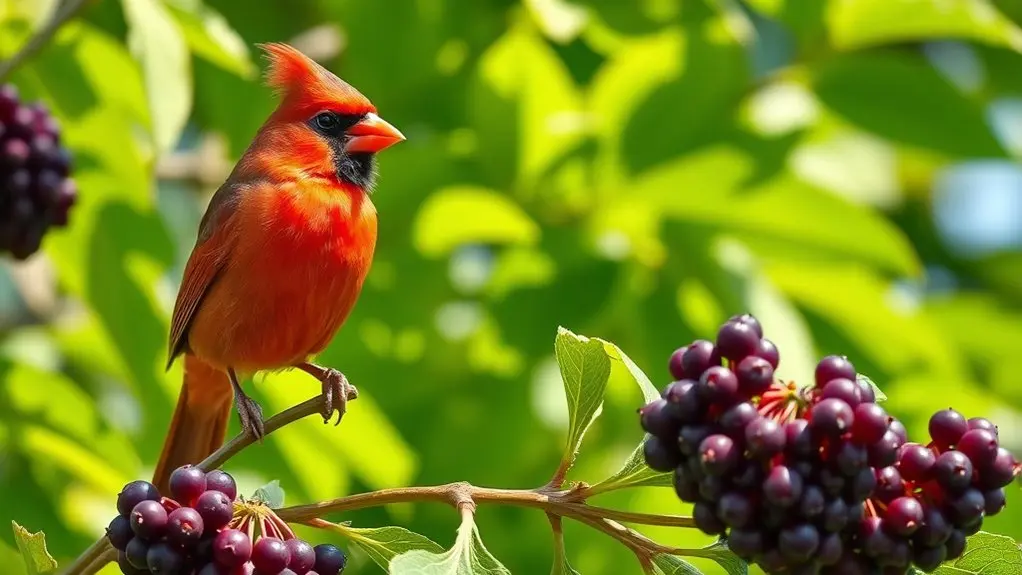
Although pokeweed berries contain toxins, several common bird species have adapted to safely consume them as a valuable food source. These berries provide important nutrients during late summer and fall, especially for songbirds. Species like northern cardinals, American robins, cedar waxwings, mockingbirds, and thrushes frequently feed on pokeweed berries.
Their tolerance to small toxin amounts allows them to exploit this resource effectively.
| Bird Species | Feeding Season | Notes on Consumption |
|---|---|---|
| Northern Cardinal | Late summer fall | Regular consumer, nutrient-rich |
| American Robin | Late summer fall | Commonly forages on berries |
| Cedar Waxwing | Late summer fall | Prefers clusters, high intake |
| Mockingbird | Late summer fall | Opportunistic feeder |
| Thrush | Late summer fall | Consumes berries in various habitats |
How Birds Safely Digest Pokeweed Berries
When birds like thrushes, northern cardinals, and blackbirds consume pokeweed berries, their specialized digestive enzymes break down the otherwise toxic compounds such as phytolaccatoxin and phytolaccigenin. This adaptation enables them to safely digest these berries, which are harmful to many mammals.
You’ll find that the berries’ high fiber content also helps their digestive process by making toxin breakdown easier. Birds tend to feed on these berries in late summer and fall when toxin concentrations are naturally lower, which further reduces the risk.
High fiber in pokeweed berries aids digestion, while seasonal feeding minimizes toxin risks for birds.
Here’s how birds manage pokeweed berry digestion:
- Specialized enzymes target and neutralize toxic phytochemicals.
- Dietary fiber improves toxin processing efficiency.
- Seasonal consumption coincides with reduced toxin levels.
- This digestion supports seed dispersal, benefiting both birds and the plant.
Are Pokeweed Berries Harmful To Birds?
You’ll find that pokeweed berries contain toxins, but they’re usually less concentrated in the fruit itself. This makes them less harmful to many bird species.
That said, different birds react differently. For example, northern mockingbirds, thrashers, and cedar waxwings handle these berries pretty well.
On the other hand, some birds might get mildly poisoned if they eat a lot of them. Knowing these differences helps us understand how pokeweed affects birds’ health and behavior.
Toxicity Levels For Birds
How harmful are pokeweed berries to birds? Pokeweed berries contain toxic compounds like phytolaccatoxin and phytolaccigenin. These can pose risks to many bird species.
While some birds may eat small amounts without immediate effects, toxicity can cause serious health issues. You should be aware of the following toxicity aspects:
- Toxic compounds in berries can cause digestive upset or poisoning.
- Sensitivity varies among bird species; some tolerate small amounts better than others.
- Large quantities may induce symptoms such as vomiting, diarrhea, and weakness.
- Preventing birds from eating pokeweed berries reduces potential health risks.
Bird Species Sensitivity
Understanding the toxicity levels of pokeweed berries leads naturally to examining how different bird species respond to their consumption. Many birds, like American Robins and Cedar Waxwings, consume these berries without apparent harm because they’ve evolved mechanisms to tolerate or detoxify the toxins phytolaccatoxin and phytolaccigenin.
However, sensitivity varies; smaller or non-adapted species may be harmed if they ingest these toxins, especially from unripe berries, which are more toxic.
Ripe pokeweed berries generally pose less risk, but consuming large quantities can still cause adverse effects in some birds.
When you observe birds feeding on pokeweed, it’s important to recognize that species-specific physiological differences determine their susceptibility to the plant’s toxins, influencing their ability to safely incorporate these berries into their diet.
How Birds Help Spread Pokeweed Seeds
Because birds are attracted to the bright color of pokeweed berries, they consume them and subsequently disperse the seeds through their droppings. This natural process considerably aids pokeweed propagation.
Birds eat bright pokeweed berries and spread seeds through their droppings, helping the plant grow and thrive.
When you observe birds like thrushes, blackbirds, and blue jays feeding on these berries, you’re witnessing effective seed dispersal agents in action.
The seeds survive digestion because the bird’s digestive system breaks down the pulp without harming the seed coat, preserving viability for germination. Here’s how birds help spread pokeweed seeds:
- Birds are drawn to the conspicuous berry color.
- They ingest the berries, swallowing the seeds whole.
- Digestive enzymes remove pulp, leaving viable seeds.
- Seeds are excreted in new locations, promoting growth across habitats.
This mechanism enables pokeweed to expand widely in various ecosystems. It’s pretty neat how nature has these little systems working on their own, right?
Signs Birds Are Eating Pokeweed In Your Yard
When you notice a decrease in pokeweed berries or see partially eaten fruits scattered beneath the plants, it’s a clear indicator that birds like northern cardinals, American robins, and cedar waxwings are feeding on them. This feeding usually happens in late summer to early fall when the berries are ripe and soft.
If you see birds actively pecking at the clusters, that pretty much confirms they’re snacking on the pokeweed. Plus, finding discarded or partially eaten berries under the plants is another good sign that birds have been at it.
| Bird Species | Feeding Period | Signs in Yard |
|---|---|---|
| Northern Cardinal | Late summer to fall | Partially eaten berries, droppings |
| American Robin | Late summer to fall | Decreased berry count, peck marks |
| Cedar Waxwing | Late summer to fall | Scattered berries, active feeding |
These signs make it easier for you to tell when birds are enjoying pokeweed in your yard.
Should You Feed Birds Pokeweed Berries Intentionally?
You probably shouldn’t feed birds pokeweed berries on purpose. These berries have toxic compounds like phytolaccatoxin that can be harmful to many different species.
Now, some native birds do eat these berries in the wild without much trouble, but depending on them as a food source can be risky. It might lead to poisoning or other health problems for the birds.
Risks Of Intentional Feeding
Although some birds might eat pokeweed berries without immediate effects, feeding them these berries intentionally poses significant risks due to toxic compounds like phytolaccatoxin and phytolaccigenin. These substances can harm or even kill birds if ingested repeatedly or in large amounts.
You should consider the following risks:
- Most wild birds naturally avoid pokeweed berries because of their bitter taste and toxicity, meaning intentional feeding disrupts their natural foraging behavior.
- Repeated consumption can cause cumulative toxicity, leading to serious health problems.
- Wildlife experts discourage providing pokeweed berries, as safer, non-toxic alternatives exist.
- Intentional feeding increases the chance of poisoning incidents, complicating wildlife conservation efforts.
To protect bird health, avoid offering pokeweed berries and opt for approved food sources instead. It’s just better for the birds and easier for everyone involved.
Safe Alternatives For Birds
Since pokeweed berries contain toxic compounds harmful to many bird species, intentionally feeding them is generally discouraged.
While some birds, like northern mockingbirds and cedar waxwings, may eat pokeweed berries occasionally, many species can get stomach upset or even poisoning from them.
To keep birds healthy, it’s better to offer safer alternatives like elderberries, serviceberries, and blackberries. These berries provide important nutrients without the risks.
Plus, they support natural foraging habits and cut down on health problems.
Avoiding pokeweed berries when feeding birds helps reduce poisoning cases and supports local bird populations.
Choosing safe, nutritious fruits not only benefits the birds but also helps maintain a healthy ecosystem.
Safer Alternative Berries For Backyard Birds
When selecting berries to attract backyard birds, it’s important to choose native, non-toxic options for their health and safety. Unlike pokeweed berries, which contain harmful toxins, safer alternatives provide nutritious food without risking bird welfare.
You can support local bird populations by offering a variety of these safe berries. This also helps promote natural foraging behaviors among your feathered visitors.
Consider these safer options:
- Elderberries are rich in antioxidants and widely eaten by many bird species.
- Serviceberries are nutrient-dense and native to many regions, so they support diverse birds.
- Chokecherries provide essential vitamins and energy and are favored by thrushes and sparrows.
- Sunflower seeds, while not berries, are a common and safe backyard bird food source.
Always check local plant safety to make sure you’re giving the right nourishment for your specific bird community.
Managing Pokeweed Around Your Bird-Friendly Yard
While offering safe, native berries supports bird health, it’s important to address the presence of pokeweed in your yard. Pokeweed produces clusters of toxic berries containing phytolaccatoxin and phytolaccigenin. These toxins pose poisoning risks to many bird species, including songbirds.
Some birds like northern mockingbirds and cedar waxwings may eat these berries occasionally, but their consumption is hazardous. To protect visiting birds, you should actively manage pokeweed by removing or controlling its growth. This reduces accidental ingestion and limits toxin exposure.
Instead, focus on planting native fruiting plants known to be safe for birds. This approach fosters a bird-friendly habitat while minimizing risks associated with pokeweed. That way, you support local avian populations effectively and safely.
Frequently Asked Questions
Can Pets Get Sick From Pokeweed Berries Eaten by Birds?
Yes, pets can get sick if they eat pokeweed berries directly. But they won’t get poisoned from birds eating them.
You should prevent your pets from accessing pokeweed to avoid toxin ingestion and potential illness. It’s better to be safe than sorry!
Do Pokeweed Berries Affect Bird Migration or Behavior?
You won’t see pokeweed berries considerably altering bird migration or behavior. While some birds tolerate these berries well, excessive intake might cause mild behavioral changes. But overall, the berries don’t notably affect migration timing or patterns.
How Long Do Pokeweed Berries Stay on the Plant?
When it comes to pokeweed berries, you’ll find they cling to the plant for about 2 to 3 months. This usually happens from late summer through fall.
They stay put until frost and weather conditions force them to drop. It’s like a clockwork routine.
Can Pokeweed Berries Cause Allergic Reactions in Birds?
Yes, pokeweed berries can cause allergic reactions in birds. If your bird eats them, it might show symptoms like swelling, itching, or even have trouble breathing.
Are Pokeweed Berries Safe for Baby Birds or Nestlings?
You shouldn’t feed pokeweed berries to baby birds or nestlings, as their immature systems can’t safely process the toxic compounds. Exposure may lead to severe poisoning symptoms, so it’s best to avoid offering these berries to young birds.
It’s really important to keep their diets safe and simple. Stick to foods that are known to be gentle and nutritious for them. That way, you’re helping them grow strong without any risks.
Conclusion
You might be surprised to learn that over 60 bird species, including robins and cedar waxwings, safely consume pokeweed berries even though they’re toxic to humans. Birds have unique enzymes that let them digest these berries without any harm.
While pokeweed can support local wildlife, it’s important to keep an eye on its growth in your yard. You don’t want it to spread too much or be eaten excessively by animals.
It’s a good idea to consider safer berry options too. That way, you can keep a healthy, bird-friendly environment without worrying about toxicity.