
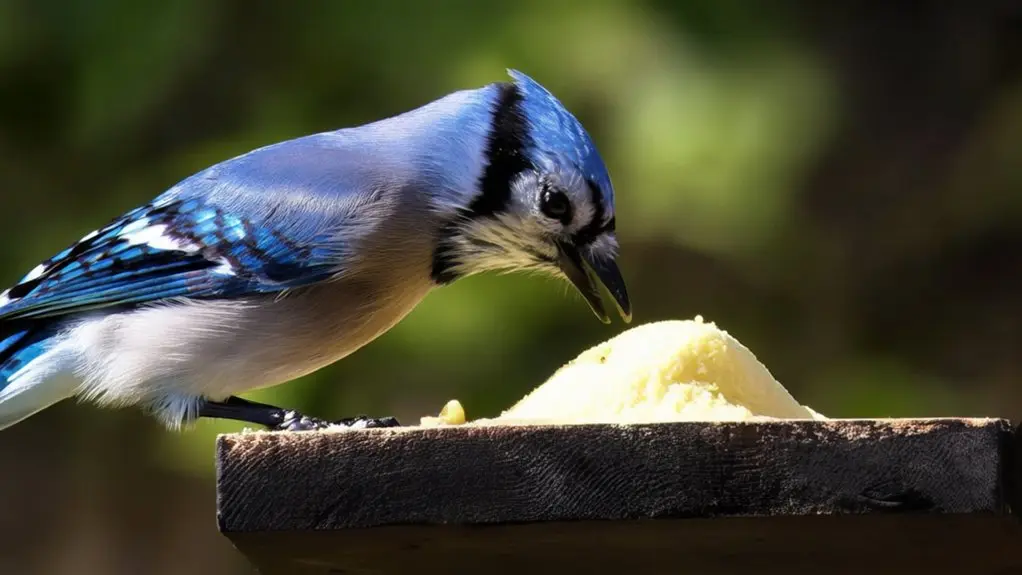
Yes, you can safely feed birds plain, fully cooked polenta in small amounts as an occasional energy boost. Just make sure it’s plain and fully cooked.
Avoid raw, seasoned, or processed polenta because these can cause digestive issues or be toxic. Additives like salt or garlic are especially harmful.
Focus on offering cooled, unsalted polenta pieces to species that benefit from carbs during colder months. Proper preparation and moderation are key to keeping birds healthy.
Learn how to serve polenta safely and explore better dietary options for wild birds.
Can Birds Safely Eat Polenta?
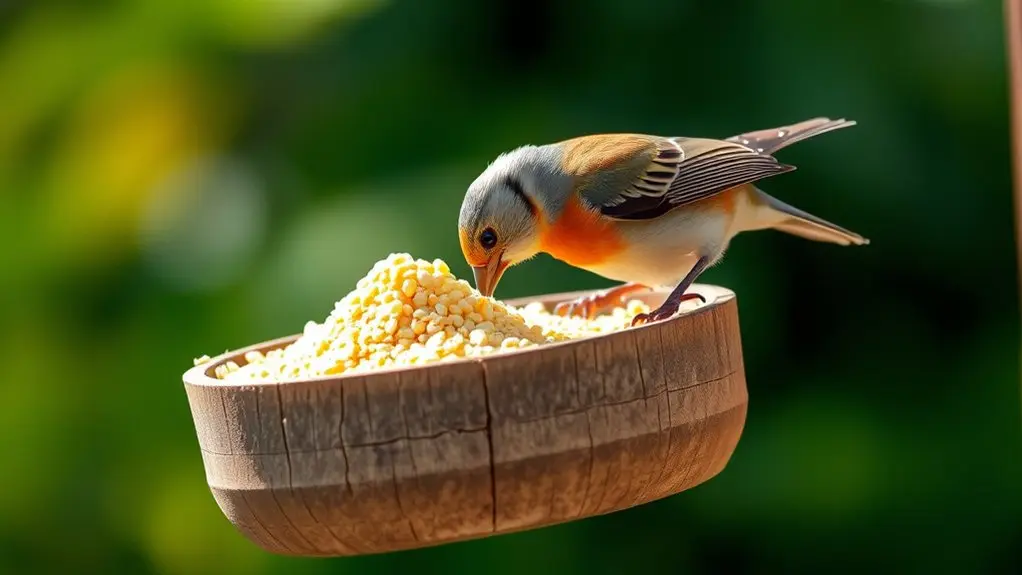
Although polenta isn’t a natural part of a bird’s diet, you can safely offer plain, cooked polenta in small amounts because it’s non-toxic to most avian species.
Just make sure it contains no added salt, butter, cheese, or seasonings, as these may harm birds.
The texture of cooled, solidified polenta is manageable for many birds to consume, especially when cut into small pieces.
Use polenta only as an occasional treat or supplemental food, not as a staple diet component.
Also, avoid polenta products with harmful ingredients like garlic, onion, or artificial additives, which could be toxic.
What’s In Polenta and Why It Matters to Birds
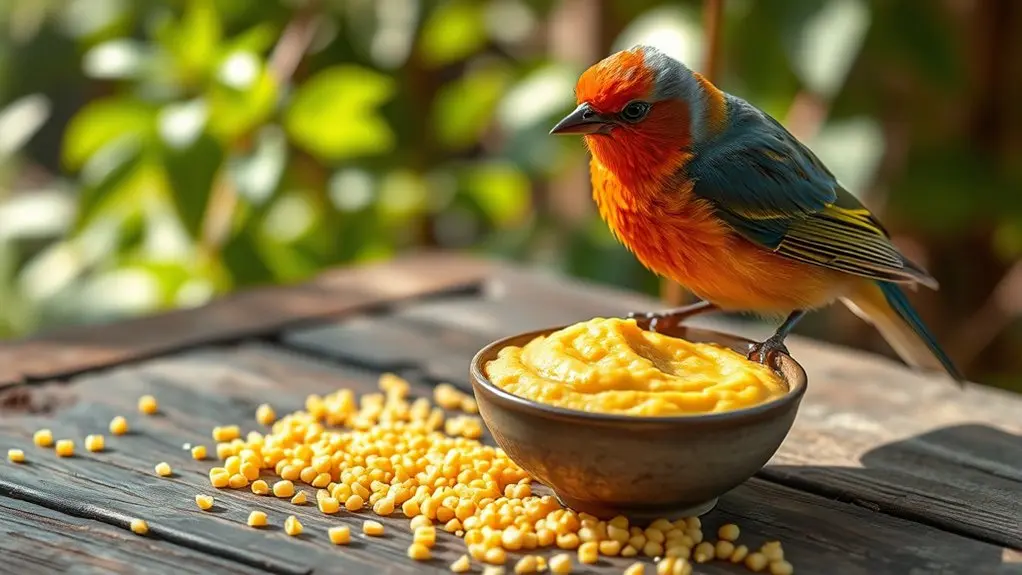
When you consider feeding polenta to birds, understanding its composition is essential because its nutritional profile directly impacts their health. Polenta is primarily made from cornmeal, which is a carbohydrate-rich food that provides energy but contains minimal protein. This makes it suitable only as an occasional treat, not a dietary staple.
Birds, especially granivores, may eat cooked or dried polenta if it’s free from added salts, fats, or seasonings. Raw or unprocessed polenta is harder for birds to digest, so it’s less suitable.
You should avoid polenta with additives like butter, cheese, or spices since these can be harmful.
Why Raw or Seasoned Polenta Can Harm Birds
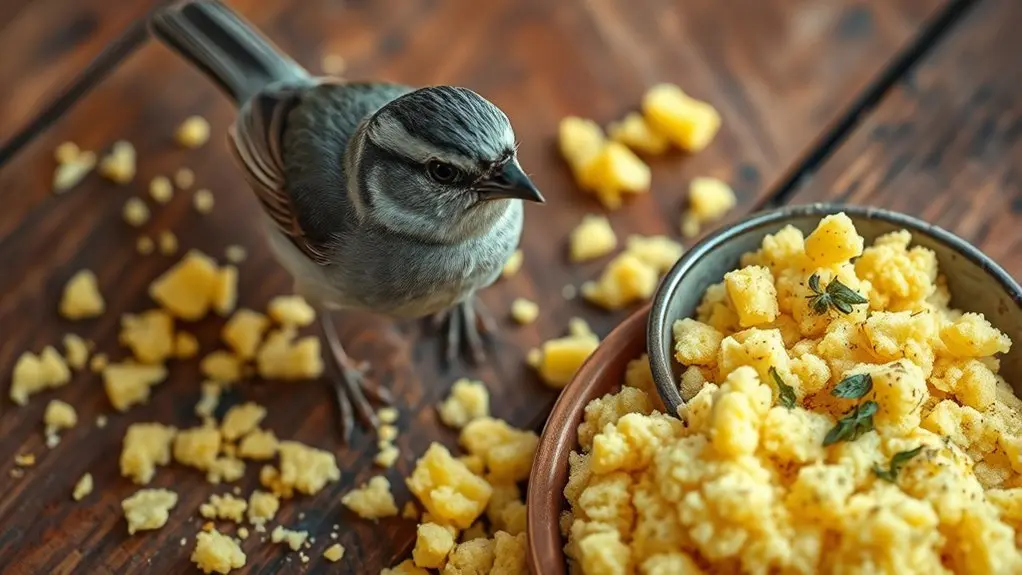
You shouldn’t feed birds raw polenta because it has a lot of starch, which can mess with their digestion.
Plus, seasoned polenta usually has salt and other additives that can be toxic or harmful to them.
Knowing these risks is important—it helps you keep birds safe from dehydration, poisoning, and stomach problems.
Raw Polenta Toxicity
Since raw polenta contains uncooked starches and potentially harmful compounds, feeding it to birds can cause digestive upset and other health issues. You should avoid offering raw polenta because it poses significant risks to avian health. Here’s why:
Uncooked starches in raw polenta are difficult for birds to digest, which can lead to gastrointestinal distress. Also, raw polenta contains compounds that may be mildly toxic and disrupt nutrient absorption.
Eating raw polenta in large amounts might cause nutritional imbalances or even toxicity. But when you cook polenta, it breaks down those starches and neutralizes harmful substances, making it safe for birds.
Seasoning Risks For Birds
Although cooked plain polenta can be safe for birds, raw or seasoned polenta poses significant health risks because of harmful bacteria and toxic additives. Raw polenta may carry pathogens that can make birds sick if they eat it.
Also, seasonings commonly added to polenta, like salt, garlic, and onion, are toxic to many bird species. These can disrupt their metabolic functions and cause serious problems.
Ingredients such as butter, cheese, and preservatives found in processed polenta make digestion harder and might lead to adverse reactions.
Too much salt and chemical additives can increase the risk of dehydration and poisoning.
To keep birds safe, avoid giving them raw or flavored polenta. Instead, offer only plain, fully cooked polenta without any seasoning or additives.
That way, you can help guarantee their safety and well-being.
Which Bird Species Benefit Most From Polenta
When you offer polenta to birds, certain species derive more benefit due to their feeding habits and dietary needs. Polenta’s carbohydrate content provides essential energy, especially during scarce winter months.
Here are four bird groups that benefit most:
- Small birds like garden-warblers and sparrows appreciate polenta as a nutritious carbohydrate source.
- Ground-feeders such as blackbirds and thrushes digest softened polenta easily, aiding nutrient absorption.
- Foraging birds including finches and doves utilize polenta moderately for sustained energy.
- Insectivorous and omnivorous birds gain supplemental nourishment from polenta when insects are limited.
Remember to serve polenta plain, avoiding salt or seasonings to keep it safe and healthy for these species.
Nutritional Pros and Cons of Polenta for Birds
If you want to offer polenta to birds, it’s important to understand both its nutritional benefits and limitations. Polenta is rich in carbohydrates, providing a quick energy source. But it lacks essential proteins, fats, vitamins, and minerals that are critical for avian health.
Feeding cooked polenta occasionally is safe. Just make sure to avoid uncooked or heavily processed forms since they may contain harmful additives. Also, dried polenta can pose choking and digestive risks.
So, moderation and variety are key to preventing nutritional imbalances.
| Aspect | Pros | Cons |
|---|---|---|
| Energy | High carbohydrate content | Lacks sustained energy from fats/proteins |
| Nutrients | None significant | Missing essential vitamins and minerals |
| Safety | Safe when cooked properly | Additives and drying can be harmful |
| Digestibility | Easily digestible when fresh | Dried polenta may cause digestive issues |
| Usage | Occasional treat | Not suitable as a staple diet |
How to Include Polenta in a Bird’s Diet
You can offer birds small amounts of plain, cooked, and cooled polenta as a supplemental energy source, especially during colder months.
Just make sure to avoid any seasonings, fats, or salts because those could harm them.
It’s also a good idea to cut the polenta into manageable pieces.
This helps prevent choking and makes it easier for the birds to eat safely.
Nutritional Benefits For Birds
Although polenta primarily offers carbohydrates, it can serve as a valuable energy source for birds, especially during migration or cold weather. When you provide polenta, remember these key nutritional benefits:
It supplies quick energy due to its high carbohydrate content, which is essential for active birds. Plus, once cooked and cooled, it becomes soft and easily digestible, making it easier for small birds to eat.
However, it contains minimal fat and protein, so it should complement other nutrient-rich foods for a balanced diet.
Polenta tends to attract species like sparrows and finches when offered in small, unsalted, unseasoned pieces. Use polenta as an occasional treat rather than a staple to maintain proper nutrition and support your birds’ health effectively.
Safe Preparation Methods
Providing polenta as a source of energy requires careful preparation to guarantee it benefits birds without causing harm. Cook the polenta thoroughly and serve it plain. Avoid salt, butter, or seasonings that could be toxic.
Let it cool completely before offering it to prevent burns or discomfort. Use soft, well-cooked polenta to mimic natural grains, making it easier for small birds to consume. Serve polenta as an occasional treat, not a staple, to maintain a balanced diet.
| Preparation Step | Reason | Notes |
|---|---|---|
| Cook Thoroughly | Ensure digestibility | Avoid raw or undercooked |
| Serve Plain | Prevent toxicity | No salt, butter, or spices |
| Cool Completely | Prevent burns | Offer at room temperature |
How to Prepare Polenta Safely for Birds
When preparing polenta for birds, make sure it has cooled completely before serving. It’s best to offer it in small, manageable portions to reduce the risk of choking.
To keep things safe and healthy, here are some tips to follow:
- Use plain, cooked polenta without any salt, butter, seasonings, oils, or sauces.
- Serve the polenta on a shallow dish or a clean surface to avoid contamination.
- Offer portions that are small enough for birds to eat easily to prevent choking hazards.
- Include polenta as part of a varied diet, so birds don’t rely on it as their only food source.
Following these simple steps will help you feed polenta to birds safely and responsibly.
How Much Polenta Should You Feed Birds?
Since polenta lacks essential vitamins and minerals, you should offer it to birds only in small amounts, such as about a teaspoon per bird. Feeding more than this can cause nutritional imbalances and digestion issues, as polenta doesn’t provide the complete nutrients birds require.
Offer birds only a teaspoon of polenta to avoid nutritional imbalances and digestive problems.
You should treat polenta strictly as an occasional supplement, not a substitute for their natural diet. To maintain balanced nutrition, it’s best to mix small portions of fully cooked, plain polenta without salt, butter, or seasoning with their usual foods like seeds or insects.
By controlling the quantity and frequency, you minimize health risks and support birds’ dietary needs effectively.
Always keep an eye on how birds respond to polenta to make sure it stays a safe, minor addition to their feeding routine.
When Is the Best Time to Offer Polenta to Wild Birds?
You should offer polenta to wild birds mainly during the cold winter months or when the weather is bad, and natural food is hard to find.
It’s best to serve it early in the morning or late in the afternoon because that’s when birds usually feed.
Just make sure to keep an eye on the temperature and weather conditions to keep feeding safe and effective.
Seasonal Feeding Considerations
Although polenta can be offered year-round, its nutritional benefits are most valuable during colder months when natural food sources dwindle. In winter, insects and seeds become scarce, making polenta a useful supplemental treat. You should serve it at room temperature or cooled to avoid harming birds’ delicate beaks and digestive systems.
During spring and summer, birds rely more on insects and native seeds, so polenta is less essential.
Consider these seasonal feeding points:
- Offer polenta primarily in fall and winter to support birds during food shortages.
- Avoid hot polenta to prevent injury to birds.
- Limit polenta use in spring and summer when natural diets suffice.
- Monitor bird reactions to adjust feeding practices accordingly.
Optimal Daily Timing
Feeding polenta at the right time of day can really boost its benefits for wild birds, especially when it’s colder and their energy needs go up. You want to offer polenta early in the morning or late in the afternoon since these are the times when birds are most active in feeding.
Try to avoid feeding at midday because the heat can make the polenta spoil or ferment faster, which isn’t good for the birds. Always serve polenta that’s cooked and cooled down to keep them safe from burns or stomach issues.
In winter, polenta is even more helpful since natural food is harder for birds to find. Make sure to replace the polenta regularly and clear away any leftovers quickly. This helps stop mold from growing and keeps pests away, creating a safer place for the birds and making sure they get the most nutrition from your feeding efforts.
Weather Impact on Feeding
When cold weather limits natural food availability, offering polenta becomes a valuable energy source for wild birds. You should focus on providing polenta during conditions that challenge birds’ foraging efforts. Consider these key weather impacts:
- Cold Months: Birds need extra energy. Polenta offers a quick, digestible boost.
- Snow and Freezing Temps: Natural food scarcity increases reliance on supplemental feeding.
- Rainy or Stormy Days: Birds expend more energy staying warm, so polenta helps maintain energy levels.
- Avoid Hot Weather: High temperatures spoil polenta quickly, reducing its appeal and safety.
Basically, think of polenta as a helpful snack when nature makes it tough for birds to find food. Just remember not to offer it when it’s hot outside since it won’t last long.
Safe and Nutritious Alternatives to Polenta for Birds
Since polenta should only be offered to birds in small, plain, cooked amounts as an occasional treat, you’ll want to focus on safer and more nutritious alternatives for regular feeding.
Birds benefit from native seeds and grains like millet, cracked corn, and hemp, which provide essential nutrients without harmful additives.
Sunflower seeds also serve as a rich energy source, while chopped fruits and vegetables supply vitamins and hydration.
Avoid processed human foods that contain salt, butter, or flavorings, as these can be toxic.
By providing bird-specific foods, you guarantee their dietary needs are met safely and effectively, supporting overall health and crucial.
This approach minimizes risks linked to polenta and other inappropriate human foods, promoting ideal nutrition for your feathered visitors.
Frequently Asked Questions
Can Baby Birds Eat Polenta?
You shouldn’t feed baby birds polenta because it’s hard for them to digest and lacks essential nutrients.
Instead, provide species-appropriate foods or consult experts to guarantee their diet supports healthy growth and development.
Does Polenta Attract Pests When Left Outside?
Yes, polenta left outside attracts pests like rodents and insects because it retains moisture and can ferment over time. This makes it a tasty target for unwanted visitors.
You should store it properly to prevent spoilage and mold growth. Keeping it safe also helps reduce increased pest activity, especially in warm weather conditions.
Can Polenta Cause Allergies in Birds?
Sure, polenta isn’t a feathered fiend, but yes, it can cause allergies in birds, especially if they’re sensitive to maize or additives.
Watch for vomiting or odd droppings. Those signs scream “allergy alert” loud and clear.
How Long Can Cooked Polenta Be Stored for Birds?
You can store cooked polenta for birds in the refrigerator for up to 24 hours. Just make sure it’s cooled completely before you serve it.
After that, it’s best to toss out any leftovers after 48 hours. This helps avoid any risks of mold or bacterial contamination. Better safe than sorry when it comes to your feathered friends!
Is Polenta Safe for Pet Birds Like Parrots?
Yes, you can safely offer plain, cooked polenta to your parrot in small amounts occasionally. Just make sure it’s plain without any seasoning.
It’s always a good idea to check with your avian vet before adding new foods. That way, you know it won’t disrupt your bird’s balanced, nutrient-rich diet.
Conclusion
You can offer birds polenta, but only in small, plain amounts to avoid health risks. Raw or heavily seasoned polenta can harm their digestive systems, so prepare it simply and sparingly.
While some bird species might benefit nutritionally, polenta shouldn’t become their main diet. It’s like giving them a tiny golden meal, not a feast.
For safer options, stick to natural seeds and grains. This way, your feathered friends stay healthy and strong.