
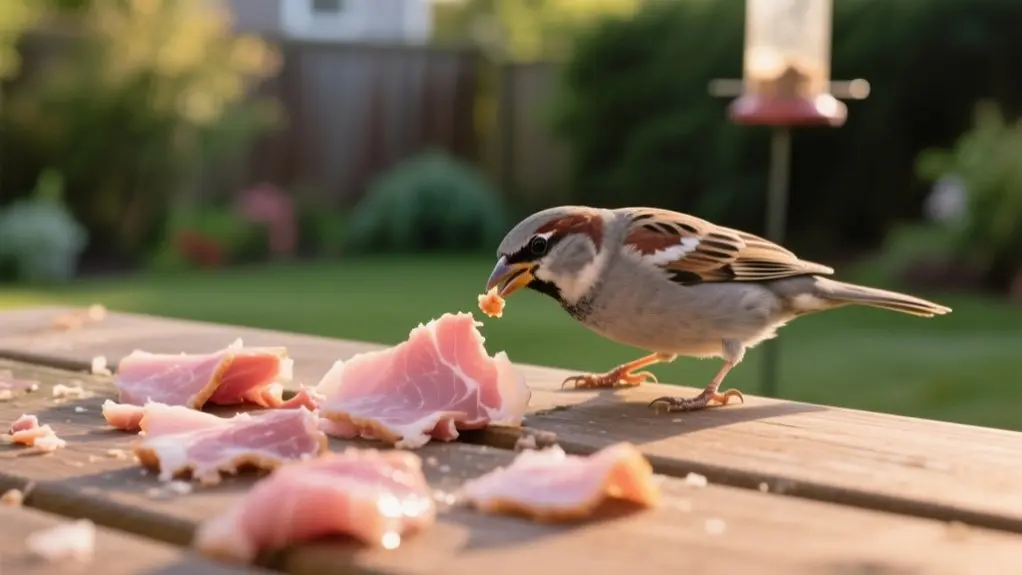
You shouldn’t feed ham to birds because its high salt and preservative content can seriously harm their health. Ham’s salt can cause dehydration, kidney issues, and even heart problems in birds.
Processed fats and chemicals increase risks of obesity and digestive trouble. If you want to keep birds healthy, consider safer protein options and always provide fresh water to help them stay hydrated.
Keep exploring to learn how to offer them a balanced diet safely.
What Is Ham and How Is It Made
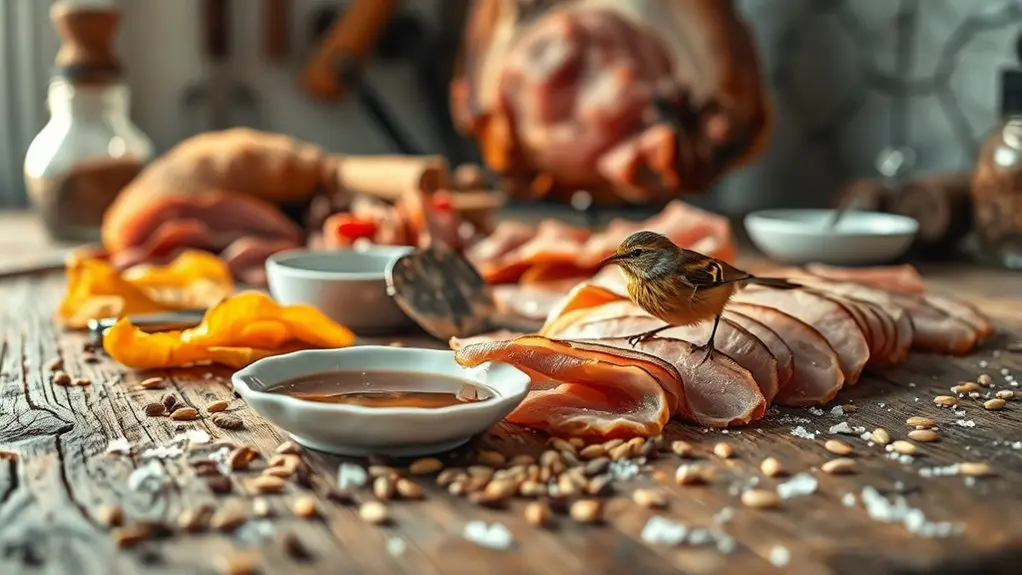
Ham is a type of processed meat made from a pig’s hind leg that goes through a curing process involving salting, smoking, or drying.
Ham is cured pork from the pig’s hind leg, prepared by salting, smoking, or drying.
You’ll find different types of ham depending on how it’s prepared, like city ham, which is wet-cured, and country ham, which is dry-cured.
During curing, preservatives such as nitrates and nitrites are often added to extend shelf life and boost flavor.
While ham packs a good amount of protein, it also contains high levels of sodium and saturated fats.
Because of these components, ham isn’t ideal for frequent consumption.
Whether cooked or eaten raw in some dry-cured varieties, ham’s nutritional profile is something you should consider carefully, especially if you’re watching your salt intake or overall diet.
Is Ham Safe for Birds to Eat?
You might think ham is a tasty treat for your bird, but it actually has a lot of salt, which can lead to serious health problems.
Sure, ham does have some protein, but the risks from all that salt and the additives really outweigh any benefits.
Ham Nutritional Concerns
Although birds might find ham tasty, you should be cautious about offering it due to its high salt content and preservatives.
Ham nutritional concerns primarily revolve around the amounts of salt and additives found in processed meats.
Too much salt can harm your bird’s health, causing dehydration and increased blood pressure.
Moreover, preservatives like nitrates in ham can have long-term negative effects.
Keep these points in mind:
- High amounts of salt can stress your bird’s organs
- Processed meats contain harmful preservatives
- Excessive fat and cholesterol may lead to obesity
- Ham should only be an occasional treat, not a regular food
Focus on natural, healthier alternatives to keep your bird safe and well-nourished.
Risks of Salt Content
Birds have a very low tolerance for salt, making the high sodium content in ham particularly dangerous. The risks of salt content in ham include dehydration, kidney problems, and heart disease, which can quickly affect a bird’s health.
Even small amounts of salt can overwhelm their systems since birds process sodium poorly. Furthermore, ham often contains preservatives and nitrates that add to the health risks.
If you feed birds ham, you’ll need to provide extra water, especially during winter, to help counterbalance the salt’s effects. However, it’s best to avoid ham altogether and choose healthy alternatives like raw peanuts, hard-boiled eggs, or unseasoned fish.
These options offer nutrients without the harmful salt content, keeping your feathered friends safe and healthy.
Why High Salt in Ham Harms Birds
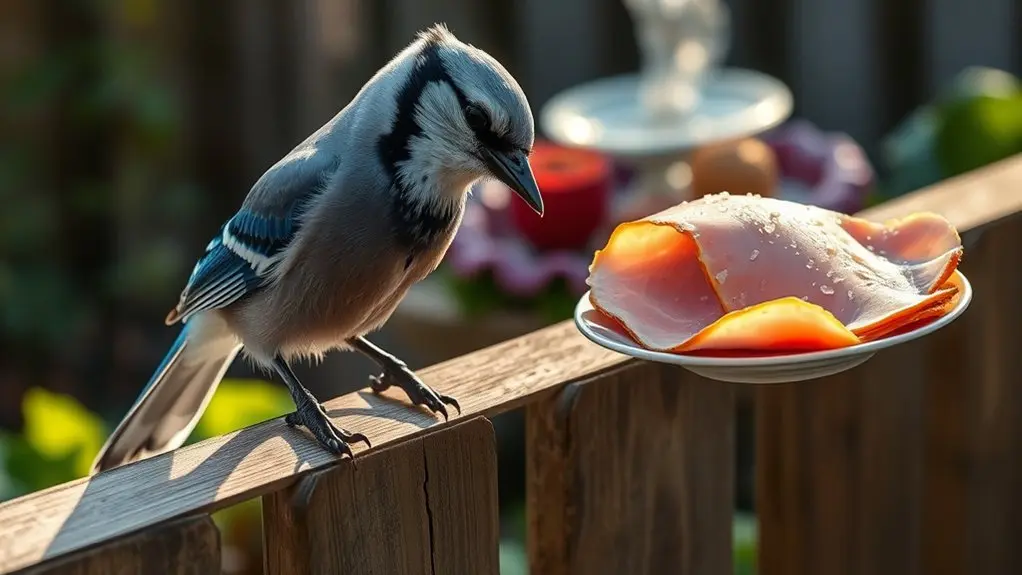
You’ve got to watch out when it comes to feeding birds ham. That’s because ham has a lot of salt in it, and too much salt can really hurt them.
You see, the high salt messes with their electrolyte balance, which can lead to dehydration and even damage their kidneys.
So, if birds happen to eat something salty like ham, it’s super important to always have fresh water available for them.
This helps keep them safe and healthy despite the salty snack.
Salt Toxicity In Birds
Even small amounts of salt can overwhelm a bird’s system, leading to serious health problems like kidney damage and high blood pressure.
Salt toxicity in birds happens because they can only handle tiny amounts of sodium.
When you feed birds ham or other processed meats with a high-salt diet, you risk triggering health issues that may not be immediately obvious.
Watch for these signs of salt toxicity in birds:
- Increased thirst and frequent urination
- Lethargy and weakness
- Kidney strain and eventual damage
- Risk of heart disease over time
Always provide fresh water to help flush excess salt and reduce the chance of severe complications.
Avoid feeding birds salty foods like ham to keep them safe and healthy.
Effects On Bird Health
Why does high salt content in ham pose such a danger to your feathered friends? Ham often contains high levels of salt, which birds can only process in tiny amounts. Consuming too much salt strains their kidneys and leads to dehydration.
This directly harms bird health by increasing the risk of heart disease and hypertension. You might notice symptoms like excessive thirst and increased urination if they eat salty foods like ham.
Since most birds’ natural diets don’t include high-salt items, feeding them ham disrupts their nutritional balance. Research shows that dietary salt can cause serious issues such as organ damage and a decreased lifespan.
To keep your birds healthy, it’s essential to avoid giving them ham or other foods with high levels of salt.
Water Needs And Salt
Although birds can tolerate only minimal salt, feeding them ham with its high sodium content greatly increases their water needs. Birds aren’t built to handle high salt intake, which can lead to dehydration and serious health problems.
When you offer ham, remember these points to protect their well-being:
Excess salt raises birds’ water needs, risking dehydration without enough fresh water. High salt intake can cause kidney damage and hypertension, potentially fatal conditions.
Birds’ natural diets have low salt, so ham disrupts their nutritional balance.
Always provide plenty of fresh water if you feed salty foods to help flush excess sodium.
Health Effects of Ham on Different Bird Species
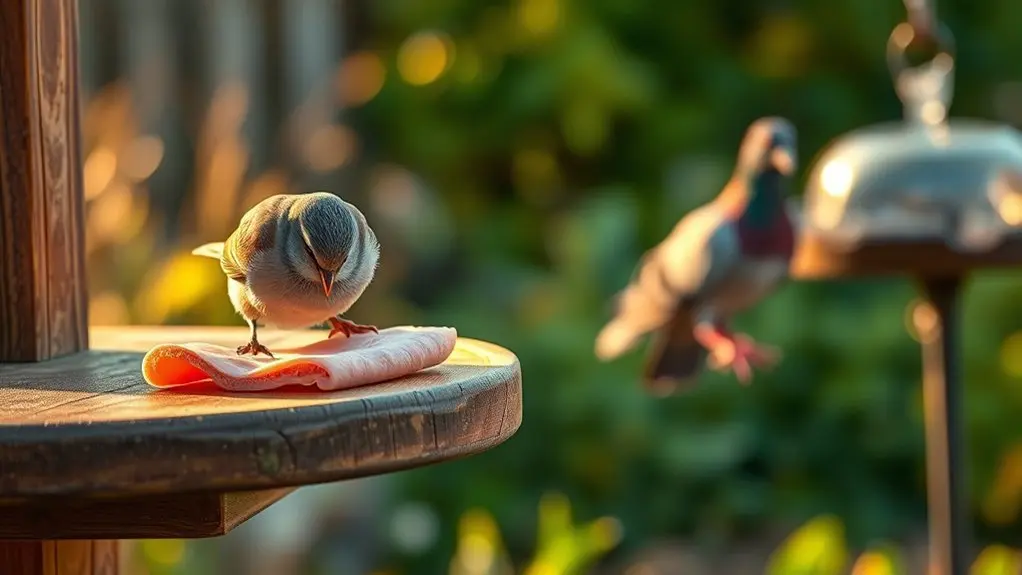
Because ham contains high levels of salt, preservatives, and saturated fats, feeding it to birds can pose serious health risks.
You should know that excessive salt can lead to dehydration and increased blood pressure, especially if your bird doesn’t have constant access to fresh water.
Processed meats like ham also contain nitrates and preservatives that may cause long-term harm.
While ham offers protein, its high cholesterol and saturated fat can contribute to obesity and heart disease in birds.
To avoid nutritional imbalances, consider ham only as an occasional treat rather than a regular part of their diet.
Keep in mind that many species, like crows and parrots, thrive on natural foods like fruits, seeds, and nuts, making ham a poor choice for their overall health and well-being.
Signs of Ham-Related Health Problems in Birds
You’ll want to watch for signs of salt toxicity, like excessive thirst or dehydration, when birds eat ham.
It’s pretty important to keep an eye out for digestive issues too, such as bloating, vomiting, or diarrhea, since these could signal that the bird is in distress.
Also, don’t overlook behavioral changes—things like lethargy or feather plucking can be important clues that something’s not right.
Salt Toxicity Symptoms
How can you tell if your bird is suffering from salt toxicity after eating ham? Salt toxicity symptoms can be subtle but are a great source of warning that your pet needs help.
Watch for these signs to catch the problem early:
- Excessive thirst and frequent urination indicating dehydration
- Lethargy, weakness, and lack of appetite showing overall distress
- Neurological symptoms like tremors or seizures in severe cases
- Long-term risks such as kidney damage and high blood pressure
If you notice any of these symptoms, it’s essential to seek veterinary care immediately.
Salt toxicity from ham’s high sodium content can quickly harm your bird’s health, so prompt attention can prevent serious complications and protect your feathered friend.
Digestive Issues Warning
When your bird consumes ham, its high salt and fat content can trigger digestive issues like bloating, constipation, or diarrhea.
You might notice health problems such as lethargy, decreased appetite, or unusual droppings, signaling that your feathered friend is uncomfortable.
Unlike peanuts, which birds can safely enjoy in moderation, ham poses risks due to its cholesterol and protein levels.
Regular intake can strain your bird’s kidneys and potentially lead to heart disease.
If your bird shows any signs of distress after eating ham, don’t wait.
Contact a vet immediately. Addressing these digestive issues early helps prevent serious complications and guarantees your bird stays healthy and happy.
Always prioritize safe, bird-friendly foods over risky options like ham.
Behavioral Changes Noticed
Although ham might seem like a harmless treat, feeding it to your bird can quickly lead to noticeable behavioral changes. Even a small amount can cause issues, so you need to make sure you watch for signs that your bird’s health is affected.
Behavioral changes often indicate underlying problems related to ham consumption.
Watch out for these signs:
- Lethargy due to high salt content causing dehydration
- Increased thirst as your bird tries to compensate for salt intake
- Decreased vocalization or increased aggression from discomfort
- Changes in feather quality or excessive molting linked to cholesterol
If you notice any of these behavioral changes, stop feeding ham immediately and consult a vet to keep your bird healthy.
Common Feeding Mistakes to Avoid With Ham
Since ham contains high levels of salt and preservatives, you should never feed it to birds. Many assume ham and other processed meats are safe, but they risk causing serious health issues like dehydration, heart problems, and digestive distress.
Feeding ham disrupts birds’ natural diet, leading to nutritional imbalances and obesity. Avoid these common mistakes to keep your birds healthy:
| Mistake | Consequence |
|---|---|
| Offering ham or processed meats | Salt overload and toxicity |
| Ignoring preservatives | Long-term health complications |
| Feeding large protein/fat amounts | Digestive issues (constipation) |
| Disregarding natural diet | Nutritional deficiencies, obesity |
Stick to species-appropriate foods and steer clear of ham to prevent these avoidable health risks.
Better Meat Alternatives to Feed Birds Instead of Ham
If you want to provide your birds with meat that supports their health without the risks associated with ham, consider safer alternatives like raw peanuts, hard-boiled eggs, and unseasoned fish.
These options supply essential nutrients without harmful additives.
Here are better meat alternatives to feed birds instead of ham:
- Raw peanuts: Packed with healthy fats and protein, perfect for energy.
- Hard-boiled eggs: Great source of protein and nutrients for growth and feather health.
- Unseasoned fish: Offers omega-3 fatty acids beneficial for overall well-being.
- Cooked poultry: Lean chicken or turkey without salt or spices, ideal for moderate feeding.
Providing these alternatives helps keep your birds healthy and nourished while avoiding processed meats like ham.
Why Raw, Unseasoned Meat Is Safer for Birds
Choosing the right type of meat for your birds matters a lot for their health. Raw, unseasoned meat is safer because it doesn’t contain harmful additives like salt or preservatives that can cause serious health issues.
Fresh, raw meat closely resembles what birds eat naturally, helping digestion and nutrient absorption. Processed meats often have toxins from curing or smoking, increasing risks.
Always verify the raw meat is fresh and from a trusted source to avoid contamination.
| Meat Type | Additives Present | Health Impact |
|---|---|---|
| Raw, Unseasoned | None | Supports health |
| Processed Meat | Salt, Preservatives | Causes health issues |
| Cooked Meat | High Fat, Sodium | Potential risks |
Choosing raw, unseasoned meat helps keep your birds healthier and happier.
How to Offer Ham to Birds Without Causing Harm
Although ham can be a tempting treat to share with your birds, you need to offer it carefully to avoid health risks. To keep your feathered friends safe, follow these guidelines when you offer ham:
Choose unsalted ham to reduce the risk of dehydration and other health risks tied to excess sodium.
Cut ham into small pieces to prevent choking and guarantee freshness to avoid bacterial contamination.
Offer ham only occasionally since processed meats can contribute to obesity and heart disease over time.
Watch your bird’s reaction closely; digestive issues or disinterest may mean ham isn’t suitable.
Why Fresh Water Matters When Feeding Birds Meat
When you feed birds meat like ham, providing fresh water is essential because protein-rich foods increase their thirst and the risk of dehydration.
High-protein foods like ham require more hydration to help birds digest and process the nutrients efficiently.
Without enough fresh water, birds may struggle to handle the salt and protein load, especially in warmer weather or during winter when water sources can freeze.
Fresh water helps flush out excess salt, reducing potential health problems tied to high sodium intake.
To keep birds healthy, you should regularly change and clean their water supply, ensuring it remains fresh and accessible.
This simple step supports proper hydration, helping birds safely enjoy meat without risking dehydration or related complications.
Tips for Creating a Balanced Diet for Wild Birds
To help wild birds thrive, you should offer a variety of foods like seeds, fruits, and nuts that align with their natural diets. Providing a balanced diet encourages healthy feeding habits and attracts different species to your site.
Offering diverse, natural foods supports wild birds’ health and attracts a variety of species to your space.
Focus on natural, nutrient-rich options and avoid processed foods high in salt or sugar.
Here are some tips for creating a balanced diet for wild birds:
- Use quality BIRD SEED blends tailored to local species.
- Include raw nuts like peanuts for protein. Many birds love to eat peanuts.
- Offer fresh fruits and unseasoned fish occasionally for variety.
- Set up feeders that mimic natural foraging, such as platform or hanging feeders.
This approach guarantees your site uses safe, healthy foods that support wild bird wellbeing.
What Wildlife Rehabilitators Say About Feeding Ham to Birds
Anyone considering sharing their leftovers with wild birds should think twice before offering ham. Wildlife rehabilitators strongly advise against feeding ham due to its high salt content, which can cause dehydration and salt poisoning in birds.
Processed meats like ham also contain preservatives and nitrates that pose long-term health risks.
Instead, rehabilitators stress the importance of providing birds with species-appropriate diets made up of natural foods.
When you feed birds ham or other processed meats, you risk causing nutritional deficiencies that can hinder their health and recovery.
Educating yourself and others about these risks helps protect wild birds and supports their rehabilitation.
Frequently Asked Questions
Can Baby Birds Eat Ham Safely?
No, you shouldn’t feed ham to baby birds. It’s not safe because of the high salt and additives that can harm their developing system.
For proper baby bird nutrition, focus on safe food options like soft fruits, insects, and specially formulated hand-feeding formulas.
These provide the right protein sources and vitamins essential for healthy growth.
Sticking to these options helps prevent nutritional deficiencies and keeps baby birds healthy and thriving.
How Does Ham Affect a Bird’s Digestion?
You might think ham’s high protein benefits your bird, but its nutritional content actually challenges the bird digestive system. The salt, fat, and preservatives in ham can cause bloating, constipation, and digestive upset because birds lack enzymes to process these efficiently.
Instead, choose safe food alternatives like fresh fruits, veggies, or lean meats in moderation to keep your bird’s digestion healthy and balanced without risking discomfort or nutritional imbalance.
Is Ham Toxic to Specific Bird Species?
Ham isn’t toxic to specific bird species, but its nutritional value doesn’t meet bird dietary needs well.
You should avoid feeding ham regularly since its high salt and preservatives can harm birds, especially smaller ones.
Instead, focus on safe food alternatives like fruits, vegetables, and whole grains to support your bird’s health.
Always prioritize balanced meals over processed meats like ham to keep your feathered friend thriving.
Can Feeding Ham Change a Bird’s Behavior?
Yes, feeding ham can trigger surprising behavioral changes in your bird. You might notice shifts in their dietary preferences, as they start craving salty, high-fat foods over their natural diet.
This shift doesn’t just affect what they eat. It can alter their social interactions too, making them more aggressive or withdrawn.
How Long Can Birds Store Ham in Their Crop?
You can expect the crop storage duration for ham to be several hours, but it varies by bird size and activity.
Because ham’s nutritional content analysis shows it’s high in protein and fat, the ham digestion process takes longer than lighter foods.
This means ham might stay in the crop longer, increasing spoilage risk.
You should monitor your bird closely to avoid digestive issues linked to prolonged crop storage.
Conclusion
When it comes to feeding birds ham, remember, “you are what you eat.” Although ham might seem like a tasty treat, its high salt and preservatives can harm your feathered friends.
If you do offer it, do so sparingly and always provide fresh water to keep them safe. Focus on creating a balanced diet with natural foods to support their health. After all, caring for birds means feeding them what’s best, not just what’s convenient.