
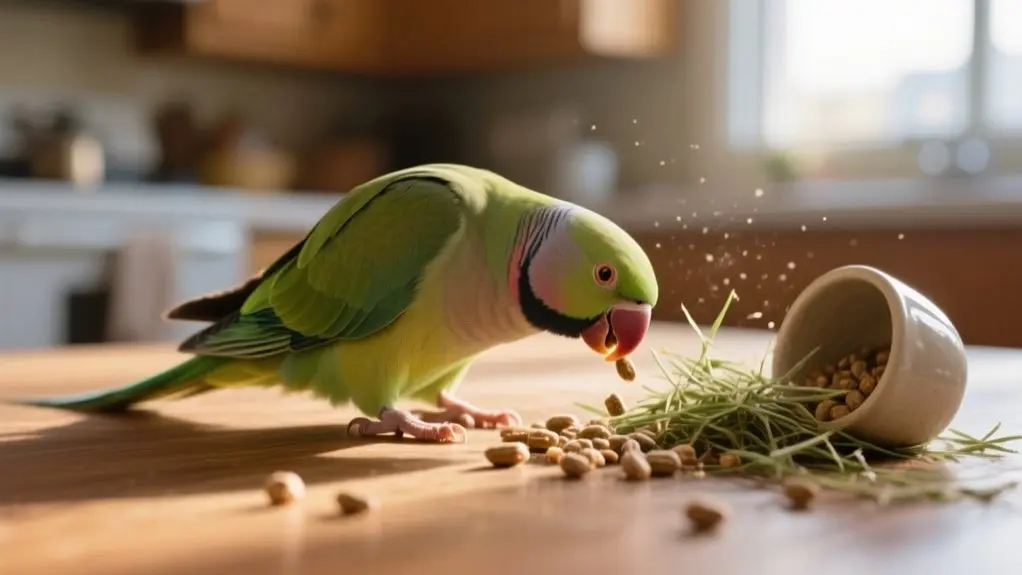
You shouldn’t feed your birds guinea pig food because it contains nutrients like excess vitamin C and calcium that can harm them. Regular feeding may cause digestive upset, obesity, and nutritional imbalances. Even occasional treats lack the specific vitamins birds need.
Guinea pig pellets can lead to health issues like kidney problems and weakened immunity. If you want to keep your birds healthy and safe, understanding why proper bird food matters is a good next step.
What’s in Guinea Pig Food Compared to Bird Food
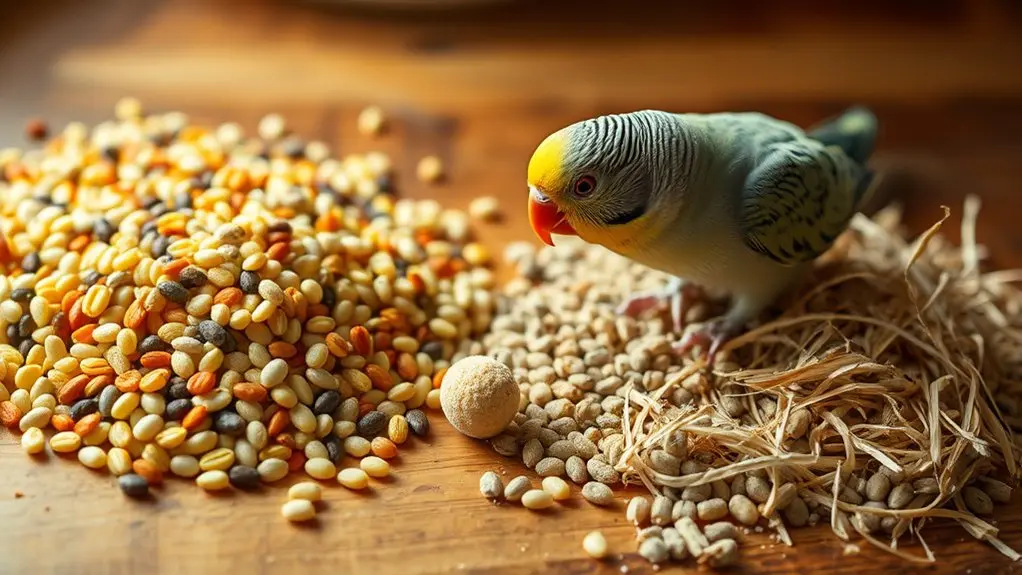
Although guinea pig food is designed to meet the specific needs of guinea pigs, it contains ingredients and nutrients that can be harmful or unsuitable for birds.
Guinea pig pellets are usually fortified with vitamin C, essential for guinea pigs but potentially excessive for birds.
Unlike bird food, which includes a balanced mix of seeds, grains, and dried fruits or vegetables, guinea pig food often has higher levels of fiber and carbohydrates that don’t align with avian dietary needs.
Many guinea pig pellets contain alfalfa or other high-calcium ingredients, which might cause health problems like kidney stones in birds.
When feeding birds, you should rely on bird food specifically formulated for their nutritional requirements rather than guinea pig food, which risks causing nutritional imbalances and digestive issues.
Why Birds Shouldn’t Eat Guinea Pig Pellets Regularly
You really shouldn’t feed your bird guinea pig pellets on a regular basis. That’s because they don’t have the right mix of nutrients that birds actually need.
Plus, these pellets can mess with your bird’s digestion.
On top of that, guinea pig pellets tend to be higher in carbohydrates, which can lead to your bird gaining too much weight.
Over time, if you keep relying on guinea pig food, it can seriously harm your bird’s health.
Nutritional Imbalance Risks
Because guinea pig food contains nutrients tailored specifically for rodents, feeding it to birds can throw off their delicate nutritional balance.
Different bird species have unique dietary needs, and guinea pig pellets often contain excessive vitamin C and high calcium levels that can cause nutritional imbalances.
For example, too much calcium disrupts the vital calcium-to-phosphorus ratio, risking metabolic bone disease in birds.
Furthermore, guinea pig food is high in fiber, which may not suit your bird’s digestive system, potentially leading to gastrointestinal issues.
Since birds require a diet rich in seeds, fruits, and vegetables, relying on guinea pig pellets won’t provide the essential nutrients they need.
If you want to feed birds properly, stick to species-specific food to maintain their health and well-being.
Potential Health Hazards
When birds eat guinea pig pellets regularly, they risk serious health problems due to the food’s unsuitable nutrient profile. Guinea pig food is high in carbohydrates, fats, and calcium, which can cause kidney issues and other health hazards in birds.
Unlike bird seed, guinea pig pellets don’t provide the right balance of vitamins and minerals birds need, leading to nutritional deficiencies over time. Excess vitamin C in guinea pig food may also contribute to kidney stones in birds.
Feeding your bird guinea pig pellets regularly can disrupt its natural diet and foraging habits, making it reliant on unhealthy food sources.
To keep your feathered friend healthy, stick to bird seed and species-appropriate diets instead of guinea pig food.
Is Occasional Guinea Pig Food Safe for Birds?
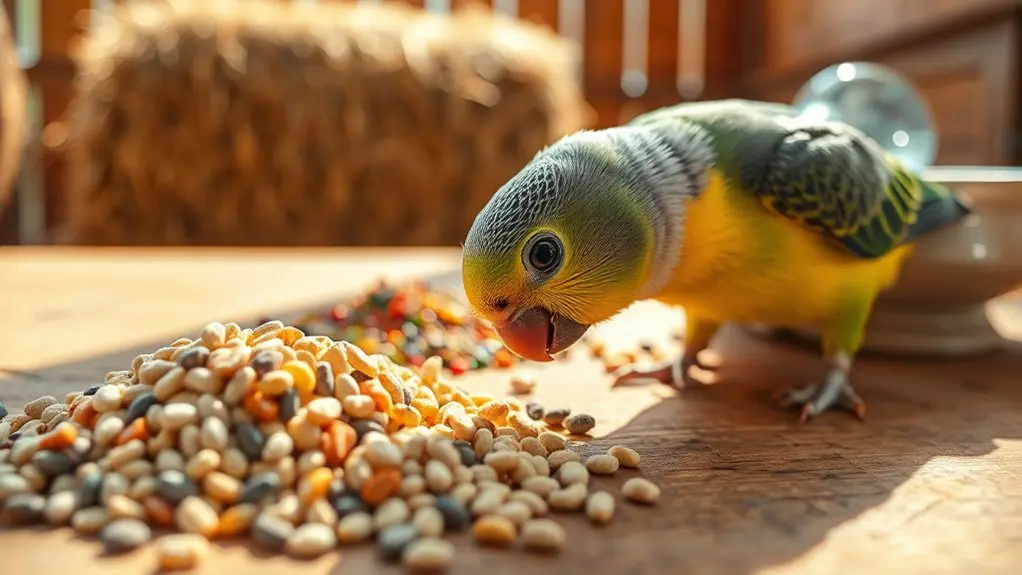
You might be wondering if it’s okay to give your bird a little guinea pig food every now and then. Honestly, a small amount probably won’t hurt them right away.
But here’s the thing: guinea pig food is made for a different set of nutritional needs. Over time, those differences could cause some health problems for your bird.
Nutritional Compatibility Concerns
Although guinea pig food is designed for herbivores, it doesn’t provide the specific nutrients birds need to thrive. When feeding birds, you must consider their unique nutritional requirements. Guinea pig food often contains higher calcium and protein levels, which can disrupt your bird’s balanced diet if given regularly.
Occasional feeding might not cause immediate harm, but it shouldn’t replace species-specific bird feed.
Here’s a quick comparison:
| Nutrient Component | Guinea Pig Food |
|---|---|
| Protein | Higher than birds need |
| Calcium | Elevated levels |
| Essential Vitamins | Often insufficient |
Feeding guinea pig food to birds occasionally isn’t ideal due to these nutritional concerns. To keep your birds healthy, always prioritize their specialized diet tailored for their needs.
Potential Health Risks
Nutritional imbalances in guinea pig food don’t just affect your bird’s diet. They can also pose real health risks.
Guinea pig pellets contain high levels of vitamin C, which might cause kidney stones in birds if eaten too often. This food also lacks key nutrients crucial for your bird’s health.
It can disrupt their digestive system because of fillers and additives designed for rodents, not birds. While an occasional nibble mightn’t cause immediate harm, regular feeding with guinea pig food can lead to long-term problems.
If you enjoy watching backyard birds, it’s important to stick to species-appropriate diets to keep them healthy and thriving.
Avoid substituting guinea pig food to guarantee your bird gets balanced nutrition tailored specifically for them.
Alternative Feeding Options
Even if your bird nibbles on guinea pig food occasionally, it won’t provide the balanced nutrition they need to stay healthy. Following proper nutritional guidelines and feeding strategies guarantees your bird gets the right diet variations essential for their well-being.
Guinea pig food lacks critical vitamins and minerals birds require and can lead to obesity because of its high carbohydrate content.
| Alternative Food | Benefits |
|---|---|
| Seeds | Rich in healthy fats |
| Fresh Fruits | Provide vitamins |
| Insects | High protein source |
| Pellets (Bird-specific) | Balanced nutrients |
| Vegetables | Fiber and antioxidants |
Stick to bird-specific foods and vary their diet to keep your feathered friend healthy and happy.
Digestive Issues in Birds From Guinea Pig Food
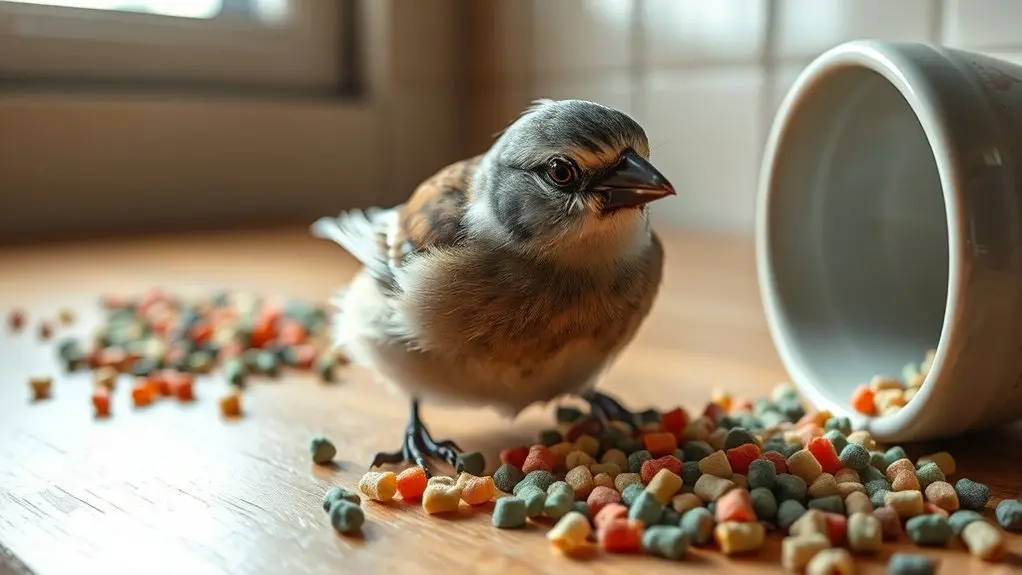
When you feed your bird guinea pig food, you risk causing digestive problems because their systems aren’t built to handle it. Birds have unique dietary needs, and guinea pig food can disrupt their digestive system, leading to serious health consequences.
Feeding birds guinea pig food can disrupt their digestion and cause serious health issues.
Here’s what can happen: high fiber content causes gastrointestinal distress or blockages. Excess vitamin C upsets birds that don’t require large amounts. Alfalfa-rich pellets may trigger diarrhea or digestive discomfort.
Improper nutrients create malnutrition and an upset stomach. Long-term feeding can result in obesity and liver issues.
You need to respect your bird’s specific dietary needs to avoid these digestive issues and keep their health on track. Guinea pig food simply isn’t designed for birds’ digestive systems.
Why Guinea Pig Food Can Cause Nutritional Deficiencies in Birds
Feeding your bird guinea pig food can disrupt more than just its digestion. It can also lead to serious gaps in its nutrient intake. Guinea pig food doesn’t match your bird’s unique nutritional needs or dietary preferences.
The excess vitamin C and unsuitable fiber types can create imbalances, while lacking essential protein and fat your bird requires. Over time, these feeding habits may cause your bird to develop selective eating, risking more deficiencies and a weakened immune system.
| Nutrient Issue | Impact on Birds |
|---|---|
| Excess Vitamin C | Imbalanced diet |
| Inappropriate Fiber | Digestive problems |
| Low Protein & Fat | Poor health, weakness |
| Selective Eating | Nutritional deficiencies |
Signs Your Bird Has Eaten Guinea Pig Food
If your bird has eaten guinea pig food, you might notice signs of gastrointestinal upset like diarrhea or vomiting due to the high vitamin C levels that birds can’t handle well.
You’ll also see behavior changes as your bird may become lethargic or less active.
Because guinea pig food doesn’t meet avian nutritional needs, your bird might lose interest in its usual dietary preferences.
Keep an eye out for these signs to guarantee food safety:
- Diarrhea or vomiting
- Reduced appetite for regular bird food
- Lethargy or decreased activity
- Changes in feather condition
- Respiratory difficulties
Noticing these symptoms early helps you understand how guinea pig food affects your bird’s health and dietary habits.
What to Do If Your Bird Consumes Guinea Pig Food
Noticing your bird has eaten guinea pig food calls for immediate action to protect its health. Since guinea pig food ingredients often include vitamin C, which birds don’t need, this can disrupt your bird’s dietary preferences and pet bird nutrition.
Excess vitamin C might cause kidney issues, so watch your bird closely for any signs of distress or illness. If you notice any unusual behavior, consult a veterinarian promptly.
Excess vitamin C can harm birds’ kidneys—monitor closely and seek vet care if behavior changes.
Although the high fiber content isn’t harmful, guinea pig food lacks the essential nutrients your bird requires.
To avoid future incidents, store bird food and guinea pig food separately and feed each pet in designated areas. This helps maintain proper nutrition and prevents accidental consumption of inappropriate foods.
What Leftover Guinea Pig Food Means for Backyard Birds
Several leftover guinea pig pellets scattered in your backyard might seem harmless, but they can pose risks to local birds. These pellets don’t match a bird’s natural diet and can disrupt their feeding habits and bird foraging instincts.
Unlike a guinea pig diet, which often includes vitamin C and high calcium levels, birds require different nutrients, and excesses may harm them.
Consider these points about leftover guinea pig food and birds:
- It lacks essential nutrients birds need for health.
- Excess vitamin C in pellets can be harmful.
- High calcium content may upset bird metabolism.
- Birds may become dependent on unnatural food sources.
- Improper feeding increases risks of illness and malnutrition.
Don’t Make These Mistakes Feeding Birds Guinea Pig Food
You might think feeding birds guinea pig food is harmless, but it can actually cause some serious nutritional imbalances.
The problem is, guinea pig food is packed with high levels of vitamin C and fiber, which aren’t really good for birds.
These ingredients can harm their digestive systems and affect their overall health.
So, it’s best to avoid these mistakes if you want to keep your birds safe and thriving.
Trust me, sticking to bird-specific food is the way to go!
Nutritional Imbalance Risks
Although guinea pig food may seem like a convenient option, feeding it to birds can cause serious nutritional imbalances. Birds have species-specific needs and dietary preferences that guinea pig pellets don’t meet. Relying on this food can lead to nutritional deficiencies and disrupt their natural diet.
Here’s what you should watch out for:
- Excess vitamin C, unnecessary for birds, can upset their nutrient balance.
- High carbohydrates may cause obesity and related health issues.
- Additives and preservatives in guinea pig food can harm bird digestion.
- Lack of variety fails to provide essential nutrients for avian health.
- Processed pellets reduce birds’ instinctive foraging behavior.
Stick to bird-appropriate foods to keep your feathered friends healthy and happy.
Potential Health Hazards
Beyond causing nutritional imbalances, feeding birds guinea pig food can lead to serious health hazards.
Guinea pig ingredients often include vitamin C, which, in excess, can cause kidney stones and other health issues in birds.
These pellets also contain fillers and sugars that aren’t suitable for bird dietary needs, risking obesity and digestive upset.
Birds have delicate digestive systems that require specific nutrients absent in guinea pig food.
So feeding it to them can result in malnutrition and long-term damage.
To protect your bird’s health, avoid guinea pig food altogether and provide a diet formulated specifically for their species.
Meeting their unique dietary needs guarantees they stay healthy and thrive, preventing avoidable health problems linked to inappropriate feeding choices.
Safer Alternatives to Guinea Pig Food for Wild and Pet Birds
When feeding wild or pet birds, choosing foods tailored to their nutritional needs guarantees their health and well-being.
Instead of guinea pig food, focus on options that offer seed diversity benefits and promote foraging enrichment strategies. These not only nourish but also engage birds naturally.
Choose diverse seeds and foraging enrichment to naturally nourish and engage your birds.
You can provide bird safe treats that encourage healthy habits and hydration.
Consider these safer alternatives:
- High-quality bird seed mixes without fillers like wheat or milo
- Fresh fruits such as apples and berries
- Vegetables like carrots and leafy greens
- Native plants and flowers for natural foraging
- Homemade bird safe treats with nuts and seeds
How to Provide a Balanced Diet for Your Birds
To keep your birds healthy, you need to offer a balanced diet that includes high-quality seeds, pellets, and fresh fruits and vegetables.
The seed variety importance can’t be overstated; relying on just one type of seed often leaves nutritional gaps.
Incorporate leafy greens and berries to provide essential hydration sources and vitamins that seeds alone don’t supply.
Pay attention to feeding frequency. Offering small, fresh portions multiple times a day helps maintain energy and prevents food spoilage.
Always clean feeders regularly and remove any spoiled food to avoid disease.
Avoid human scraps and low-quality seed mixes, as these can harm your birds’ health.
Why Proper Bird Food Matters for Long-Term Health
Although it might be tempting to share different types of food with your birds, feeding them proper bird food is crucial for their long-term health. Proper bird food provides bird nutrition essentials tailored to their unique dietary requirements, which you won’t find in guinea pig food or other animal feeds.
Feeding birds proper food tailored to their needs is essential for their long-term health and vitality.
Sticking to recommended feeding guidelines helps prevent nutrient deficiencies that affect feathers, immunity, and reproduction.
To keep your birds healthy and thriving, focus on:
- Providing species-specific formulas rich in vitamins and minerals
- Avoiding foods designed for other animals to prevent digestive issues
- Monitoring dietary needs as birds age or change health status
- Adjusting portions to maintain ideal weight and energy
- Consulting experts to align feeding guidelines with your bird’s lifestyle
Following these steps guarantees your birds get the nutrition they need for a vibrant, long life.
Frequently Asked Questions
Can Guinea Pig Food Attract Pests Harmful to Birds?
Yes, guinea pig food can attract pests harmful to birds. When you leave uneaten food around, it increases pest attraction, which threatens food safety and disrupts the bird diet.
Spoiled or moldy guinea pig pellets invite rodents and insects, spreading bacteria and fungi that can harm birds.
To protect birds, you should maintain cleanliness at feeding areas and remove leftover guinea pig food promptly.
Doing this minimizes pest problems and ensures a safer environment for the birds.
Is Guinea Pig Food Safe for Baby Birds or Chicks?
No, guinea pig food isn’t safe for baby birds or chicks. It lacks the nutritional benefits they need, especially protein and fats essential for their growth.
Feeding guinea pig food can upset their digestion and harm bird health because of excessive vitamin C and high fiber.
Stick to proper feeding guidelines by offering species-specific bird feed.
This way, you guarantee your chicks get balanced nutrition and thrive without health risks.
How Does Guinea Pig Food Affect Bird Behavior or Activity?
When you feed birds guinea pig food, it’s like giving them a puzzle with missing pieces. Their behavior dims and activity fades.
Guinea pig ingredients don’t meet bird dietary needs, leading to sluggishness and less chirping energy.
If you’re not careful with feeding precautions, your bird might rely on this unsuitable diet and disrupt natural habits.
Keep their nutrition tailored to their needs to keep their vibrant energy soaring.
Can Guinea Pig Food Cause Allergies in Certain Bird Species?
Yes, guinea pig food can cause allergy symptoms in certain bird species. You need to be cautious because ingredients like corn or wheat might trigger allergic reactions, impacting bird health negatively.
Since birds have specific dietary restrictions, feeding them guinea pig food can upset their digestive system or cause behavioral changes.
Always watch for signs like feather loss or unusual behavior, and avoid giving them unfamiliar foods to protect their well-being.
How Should Guinea Pig Food Be Stored to Avoid Contamination?
Obviously, you want your guinea pig food to become a science experiment, right? If not, stick to smart food storage methods: keep it in airtight containers to block pests and moisture.
Use ideal storage containers that seal tightly and store them in a cool, dry spot away from sunlight.
For contamination prevention tips, regularly inspect for mold or strange smells and rotate stock by using older bags first.
That way, you avoid spoiled food disasters!
Conclusion
Feeding your bird guinea pig food is like offering a fish a bicycle. It just doesn’t fit their needs. While an occasional nibble might not cause harm, making it a habit can lead your feathered friend down a rocky path of digestive troubles and nutrient gaps.
To keep their wings strong and spirits bright, stick to proper bird food. After all, their health is the melody you want to hear every morning.