
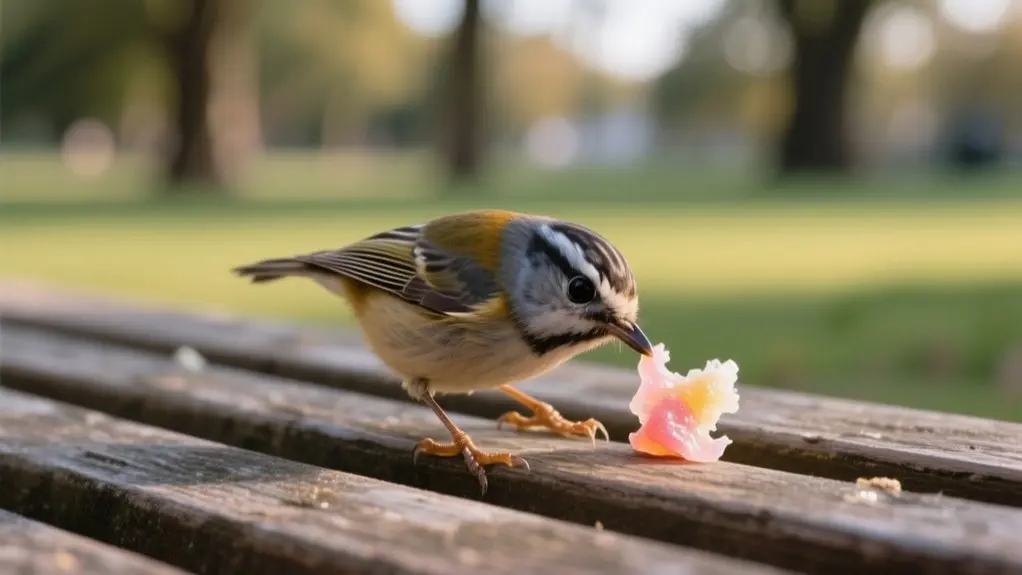
You shouldn’t let birds eat gum because it can cause choking and digestive blockages. Some gums contain xylitol and other toxic sweeteners that can harm birds’ fast metabolisms, leading to serious health issues.
While birds often avoid gum after tasting it, large pieces still pose a risk. Plus, discarded gum litters the environment, threatening wildlife.
If you want to protect birds and know safer snack options, keep exploring the facts and expert advice on this topic.
Can Gum Really Kill Birds? The Truth Explained
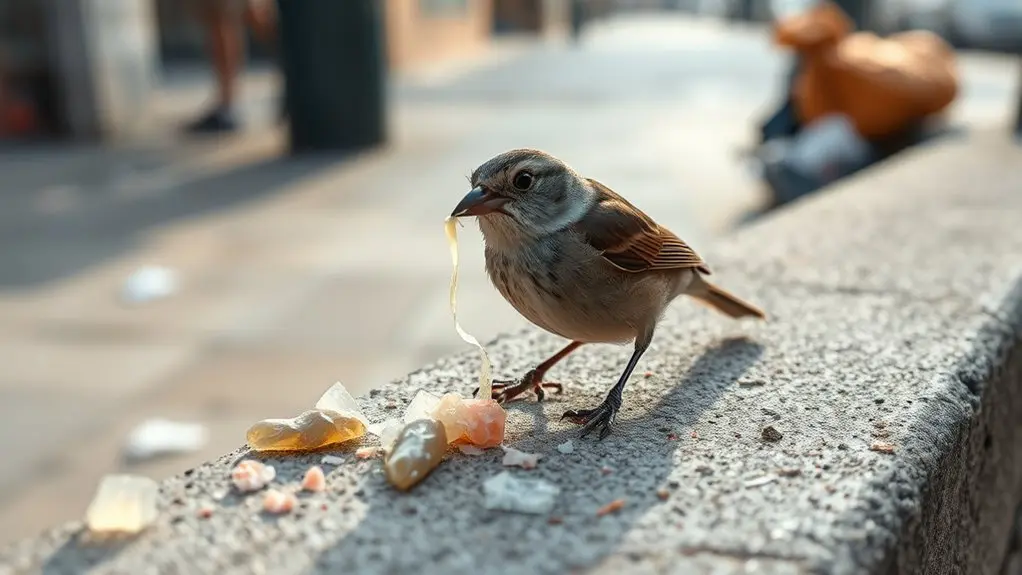
How dangerous is chewing gum to birds, really? Despite popular belief, the idea that gum kills birds is largely a myth. Experts have found no documented cases where chewing gum ingestion led to bird fatalities.
While large pieces of gum might pose a choking hazard, small birds usually detect and avoid inedible items after a first taste. Many images circulating online show dead birds but don’t accurately represent the cause, fueling misinformation.
Social media stories claiming discarded gum looks like food and causes bird deaths are urban legends with no scientific backing. Although gum itself isn’t lethal, you should always dispose of gum properly to prevent any environmental risks that could indirectly harm wildlife.
Harmful Ingredients in Chewing Gum for Birds
You should know that toxic sweeteners like xylitol in gum can seriously harm your bird, even if the full effects aren’t completely understood yet.
Plus, artificial additives and preservatives often found in sugar-free gums can cause health problems when your bird accidentally ingests them.
Toxic Sweeteners Risks
Although the effects of xylitol and other artificial sweeteners on birds aren’t fully studied, these ingredients pose serious risks due to birds’ fast metabolism and sensitivity to toxins. Toxic sweeteners in chewing gum can cause severe health problems for your bird.
You should be aware of these dangers:
- Xylitol may trigger hypoglycemia and liver damage, even if studies on birds are limited.
- Many sugar-free gums contain toxic sweeteners that can lead to gastrointestinal distress and other complications.
- Birds process toxins faster, increasing their vulnerability to harmful ingredients.
Avoid giving your bird any gum with artificial sweeteners. Instead, offer safe, natural alternatives like fresh fruits and vegetables to keep your feathered friend healthy and toxin-free.
Artificial Additives Effects
Since chewing gum contains various artificial additives, it can pose significant health risks to your bird. These artificial additives include sweeteners like xylitol, which, while not fully studied in birds, are known to cause serious problems in other pets.
Moreover, artificial flavors and colors in gum can irritate your bird’s sensitive digestive system. Sugar-free gums often contain harmful artificial additives that increase the risk of metabolic issues.
Even regular gum’s high sugar content can lead to obesity and other disorders. Birds’ fast metabolisms make them especially vulnerable to these harmful ingredients.
To protect your feathered friend, avoid giving them gum altogether, since exposure to artificial additives can negatively impact their health in ways you mightn’t immediately notice.
Bird Reactions to Gum on the Ground
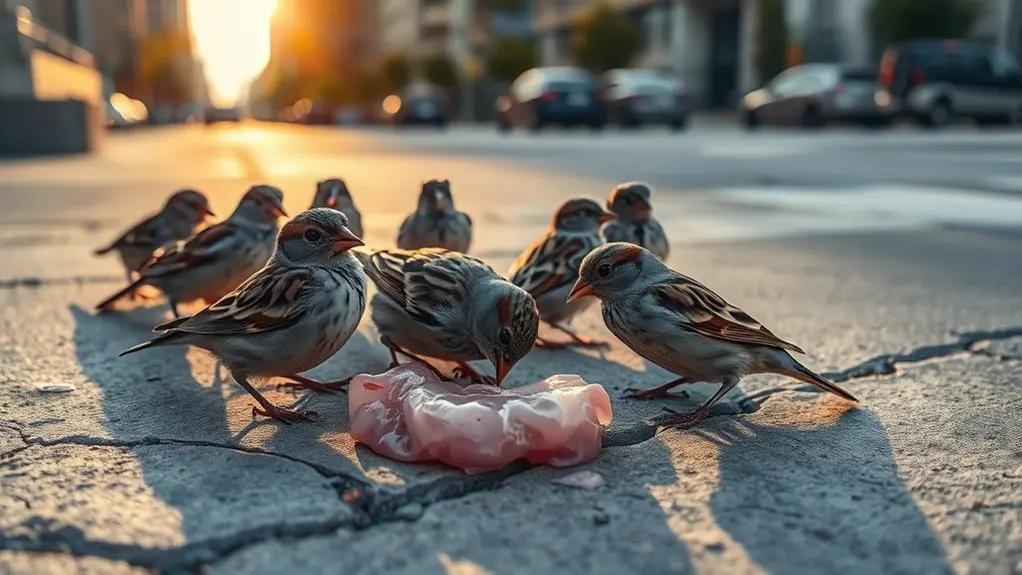
When you see birds pecking at gum on the ground, it’s usually because they think it’s food.
But most of the time, they figure out pretty quickly that the gum isn’t edible and stop after just a few nibbles.
You’ll notice they generally avoid eating any more once they realize it’s not a real meal.
Bird Interest In Gum
If you’ve ever noticed birds pecking at gum on the ground, you’re not alone. Many small birds show curiosity at first, mistaking it for edible items like seeds or bread. This interest usually lasts only until they realize it’s not food.
Here’s what typically happens: birds approach gum out of curiosity, drawn by its bright colors or texture.
After tasting, they quickly identify gum as inedible and avoid it. Although some species, like seagulls, may interact with gum, they rarely swallow it.
Typical Bird Behavior
Although birds often mistake discarded gum for food, they usually reject it after a quick taste. When you observe birds on the ground, you’ll notice they might peck at gum out of curiosity but quickly realize it’s not edible.
Small birds, like barn swallows, are more vulnerable since they can’t easily tell trash from real food. Still, birds tend to avoid swallowing gum once they’ve investigated it.
Experts haven’t found any cases of birds dying from gum ingestion, which shows their ability to discern what’s safe. However, the presence of gum and other litter on the ground can harm birds indirectly by contributing to environmental problems and habitat loss.
Avoidance After Pecking
Since birds often encounter discarded gum on the ground, you’ll notice they usually peck at it out of curiosity but quickly back away once they realize it’s not food.
Birds can recognize gum as inedible after tasting it, which leads to natural avoidance. This behavior helps protect them from choking hazards linked to large gum pieces.
When you see birds reacting to discarded gum, here’s what typically happens:
- Initial curiosity prompts birds to peck at the gum.
- After tasting, they identify the gum as non-food and reject it.
- Birds avoid further interaction, minimizing ingestion risks.
This instinctive avoidance shows that while birds might investigate discarded gum, they rarely consume it, keeping themselves safe from harm.
Can Gum Cause Choking or Digestive Blockages in Birds?
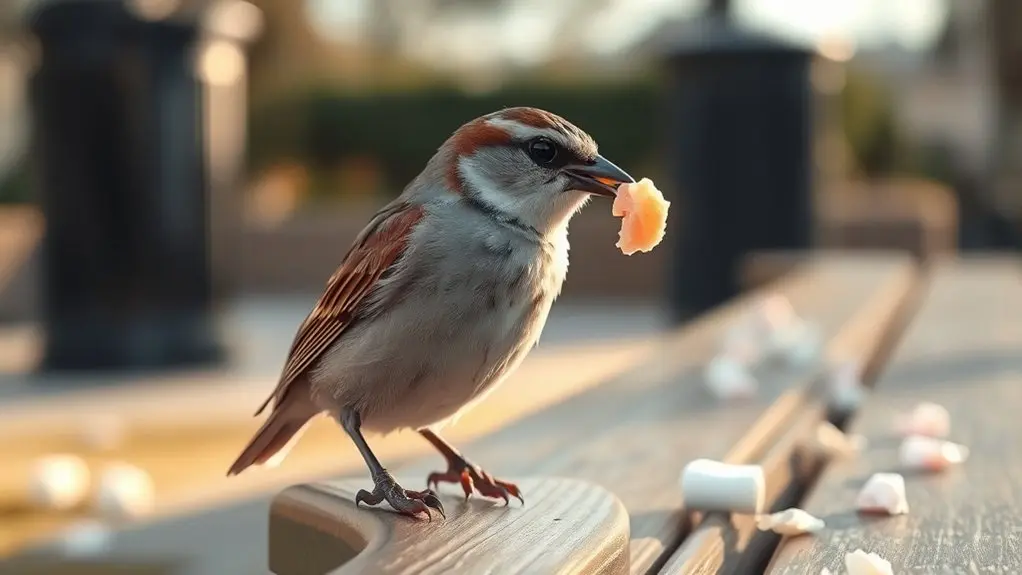
When birds try to eat chewing gum, they risk choking if the piece is too large for their beaks. Small birds especially have trouble telling food from non-food items, which increases the chance they’ll swallow gum accidentally.
While chewing gum usually passes through a bird’s digestive system, large pieces can cause blockages that prevent proper nourishment. These blockages might lead to discomfort or more serious complications.
Large gum pieces can block a bird’s digestive system, causing discomfort or serious health issues.
Although no confirmed cases show birds dying from chewing gum ingestion, the risk of choking or digestive issues remains real. Fortunately, wildlife experts note that birds often reject gum after tasting it, which lowers the chance of serious harm.
Still, it’s best to keep chewing gum away from areas where birds might find and try to eat it.
Why Xylitol in Gum Can Harm Birds
You need to be careful because xylitol in sugar-free gum can quickly lower your bird’s blood sugar and cause serious health problems.
It’s pretty serious stuff. Birds process toxins faster than mammals, which makes them especially vulnerable to xylitol’s effects.
Xylitol Toxicity Risks
Although research on xylitol’s effects specifically on birds is limited, you should know that this artificial sweetener found in sugar-free gum can cause serious harm.
Understanding xylitol toxicity risks is essential to keep your bird safe. Here’s why xylitol is dangerous:
- Even small amounts trigger a rapid insulin release, causing hypoglycemia (dangerously low blood sugar).
- Birds’ fast metabolism makes them more vulnerable to xylitol’s toxic effects.
- Symptoms like lethargy, vomiting, disorientation, and seizures can appear quickly and need urgent veterinary care.
Because of these risks, always keep gum and other xylitol-containing products well out of your bird’s reach to prevent accidental poisoning and safeguard their health.
Bird Metabolism Sensitivity
Understanding xylitol’s dangers becomes clearer once you consider how birds process substances differently than mammals. Their bird metabolism sensitivity is much higher, meaning even small amounts of xylitol in gum can quickly cause harm.
When birds consume gum containing xylitol, it can trigger hypoglycemia, leading to symptoms like lethargy or seizures. Because their digestive systems aren’t designed to handle artificial additives, the danger to birds increases considerably.
You mightn’t realize that eating gum, especially sugar-free varieties, poses a serious risk. Since their metabolism works faster and differently, toxic effects develop rapidly, sometimes causing liver damage.
Avoid Sugarless Gum
Because sugarless gum often contains xylitol, you need to be extremely careful about keeping it away from birds. Xylitol is highly toxic to birds, causing severe hypoglycemia and even liver damage. Their fast metabolism makes them especially vulnerable, so even tiny amounts can trigger dangerous symptoms.
Here’s why you should avoid sugarless gum around birds:
- Xylitol in sugarless gum can cause weakness, vomiting, and disorientation in birds.
- Birds process toxins quickly, increasing the risk of rapid poisoning.
- The full impact of xylitol isn’t fully understood, but existing evidence shows serious health risks.
To protect your feathered friends, never offer or leave sugarless gum where birds can access it.
Any Confirmed Bird Deaths From Gum?
While you might’ve heard stories claiming that chewing gum kills birds, no confirmed cases or scientific evidence support this.
Birds may peck at gum on the ground out of curiosity, but they usually reject it after tasting. Experts agree that birds are good at spotting inedible items, so it’s unlikely they’d swallow gum as food.
Birds often peck at gum but typically reject it, as they can easily spot inedible items.
Although some anecdotal reports mention birds choking on large pieces of gum, these incidents are rare and don’t represent a widespread danger.
Misleading social media images have fueled the false idea that gum is deadly for birds, but you shouldn’t worry about confirmed deaths from gum ingestion.
The Real Environmental Risks of Gum Litter for Wildlife
Though birds usually avoid swallowing gum, discarded gum litter still poses real environmental risks you should be aware of. Gum can be mistaken for food, causing digestive problems if birds do ingest it.
Beyond ingestion, gum litter damages habitats and disrupts food sources essential for wildlife survival.
Here are three key risks gum litter presents to wildlife:
- Gum waste pollutes natural environments, degrading bird habitats.
- Birds and other animals risk entanglement or injury from accumulated gum and trash.
- Gum litter contributes to broader ecological imbalances, threatening local ecosystems.
You can help protect wildlife by disposing of gum responsibly. Keeping gum out of the environment reduces these hazards and supports a healthier ecosystem for birds and other creatures.
How False Gum Stories Fool People Online
Many people come across emotional posts online claiming that chewing gum can kill birds, often showing pictures of mourning swallows to make the story more convincing.
These stories spread rapidly on social media, preying on your sympathy and concern for wildlife.
However, experts have debunked these myths, explaining that birds may be curious but don’t die from gum ingestion.
Experts clarify that while birds might investigate gum, it does not cause their death.
The images you see are often unrelated, showing birds harmed by accidents, not gum.
Despite the viral nature of these posts, no scientific evidence links gum to bird fatalities.
It’s easy to get fooled by social media’s emotional pull, but understanding the facts helps you avoid spreading misinformation and supports real efforts to protect birds.
Why Proper Gum Disposal Protects Birds
Because birds often mistake discarded chewing gum for food, you play an essential role in protecting them by disposing of gum properly.
When gum litters natural spaces, birds can swallow it, causing digestive issues and risking their health. Plus, gum contributes to environmental litter that harms bird habitats.
Here’s how you can help:
- Always throw gum in a trash bin to prevent it from ending up where birds feed.
- Encourage others to dispose of gum responsibly to reduce habitat pollution.
- Support community clean-up efforts to keep natural areas safe for wildlife.
Safe Snacks for Birds Instead of Gum
If you want to offer birds a healthy treat, choose fresh fruits, vegetables, nuts, seeds, or whole grains instead of gum. Fresh fruits like apples, bananas, and berries provide essential vitamins and hydration, making them safe snacks for birds instead of gum.
Vegetables such as carrots, bell peppers, and leafy greens offer crunch and nutrients when served raw. Unsalted nuts and seeds, like almonds and sunflower seeds, supply healthy fats and protein birds need.
Whole grains, including cooked quinoa and oats, fill and nourish your feathered friends.
Avoid processed foods and human snacks, as they can harm birds. By sticking to these natural options, you guarantee your birds enjoy safe snacks for birds instead of gum while staying healthy and happy.
What to Do If Your Bird Eats Gum
When your bird swallows gum, act quickly to watch for signs of choking or distress since gum can block their airway or cause digestive issues.
Here’s what you should do:
- Monitor your bird closely for unusual behavior or signs of discomfort, especially if it’s a small bird that may have difficulty expelling the gum.
- Offer fresh water to help dilute any harmful substances in the gum and encourage your bird to drink.
- Contact an avian veterinarian immediately. Be ready to provide details about the type and amount of gum ingested to aid in proper treatment.
Why Educating Others About Gum and Bird Safety Matters
Acting quickly after your bird swallows gum is important, but spreading awareness about gum and bird safety can prevent these situations altogether.
When you educate others, you help dispel myths like the false idea that gum is always fatal to birds, which isn’t backed by science.
You also highlight the choking risks posed by discarded gum, encouraging responsible disposal.
By sharing how gum litter harms the environment and wildlife, you promote better habits that protect local ecosystems.
Understanding that birds can often identify inedible items shifts focus from unfounded fears to real conservation efforts.
When you spread accurate information about gum and bird safety, you play an essential role in reducing harm and supporting healthier habitats for birds and other wildlife.
Frequently Asked Questions
Can Chewing Gum Ingredients Affect Other Pets Besides Birds?
Yes, chewing gum ingredients can affect other pets besides birds. You need to prioritize pet safety by keeping gum away from dogs and cats since xylitol, a common sweetener, is highly toxic to them.
Even artificial flavors and colors can cause digestive upset or allergic reactions.
How Can I Safely Clean Gum From Bird Feathers?
To safely clean gum from bird feathers, start with gentle gum removal by applying a small amount of vegetable oil to the affected area.
Use a soft cloth or cotton ball to carefully work the oil in, loosening the gum without pulling the feathers.
Afterward, rinse with warm water to remove residue.
If needed, try a mild soap solution, but rinse thoroughly and watch for any irritation.
Are Natural Chewing Gums Safer for Birds Than Artificial Ones?
You might think natural chewing gums are a miracle cure compared to artificial ones, but they’re not exactly safe for birds.
When it comes to natural vs. artificial, natural gums usually have fewer harmful chemicals, but that doesn’t mean they’re harmless.
Birds can still choke or react badly to sweeteners and additives.
What Training Methods Discourage Birds From Chewing Non-Food Items?
To discourage your bird from chewing non-food items, use behavioral modification techniques like positive reinforcement. Reward them with treats when they avoid inappropriate chewing.
Combine this with training commands such as “no” or “leave it” to set clear boundaries.
Gradually desensitize them by exposing them to non-food items without allowing chewing. Provide plenty of safe toys for enrichment, and always monitor playtime closely to intervene quickly and reinforce good habits.
Can Gum Residues on Bird Toys Pose Health Risks?
Yes, gum residues on bird toys pose serious health risks despite looking harmless.
While toys invite playful pecking, toxic exposure from synthetic compounds and artificial sweeteners like xylitol can cause digestive blockages or liver damage.
You need to clean toys regularly to avoid these dangers because what seems like harmless curiosity could lead to critical health problems.
Don’t let gum residues turn a safe playtime into a toxic threat for your bird.
Conclusion
You might think gum is harmless, but for birds, it’s a ticking time bomb. Chewing gum contains dangerous ingredients like xylitol that can choke or poison them. Proper disposal is your best defense to keep birds safe from this sticky trap.
Instead, offer them safe snacks and spread the word. After all, it only takes a small ripple to create a wave of change in protecting our feathered friends.