
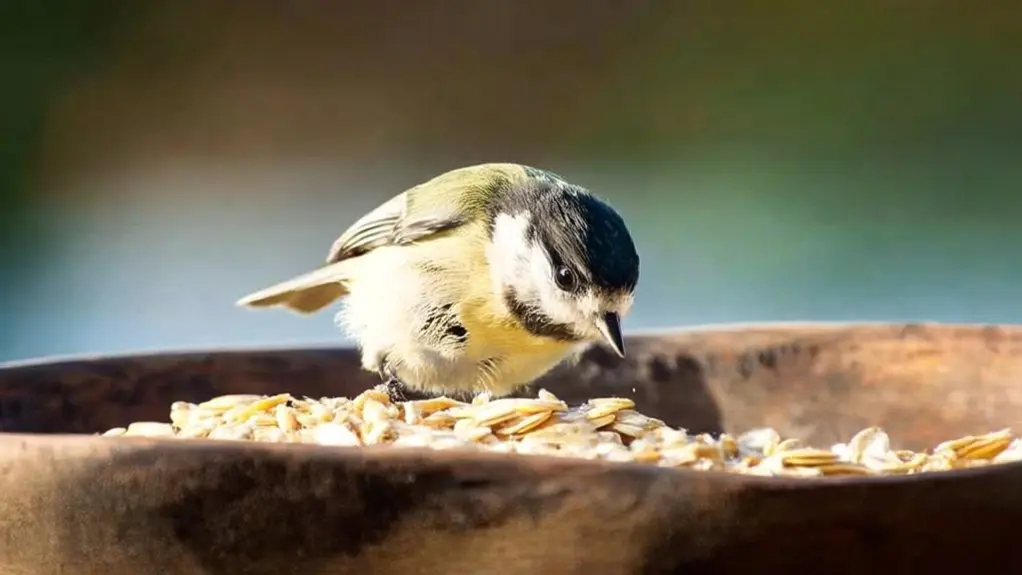
You can safely feed birds quick oats as long as they’re plain and free from additives like sugar, salt, or butter. Quick oats are partially precooked, easy to digest, and packed with essential vitamins and minerals that support bird health and energy.
You can offer them raw or cooked, but always in moderation, about 2-3 times a week. This helps keep their diet balanced. Just make sure to prepare and clean up properly to avoid mold and pests.
Want to know how to get the most out of feeding quick oats? Keep reading to discover tips on optimizing feeding and maximizing benefits for your feathered friends.
What Exactly Are Quick Oats?
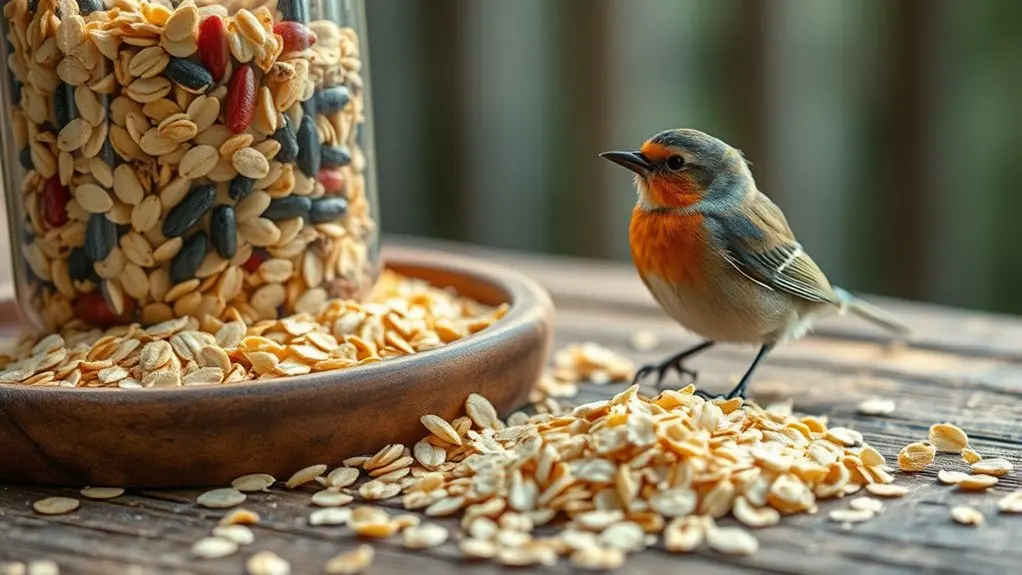
Although you might be familiar with traditional rolled oats, quick oats differ because they’re cut into smaller pieces and partially precooked, allowing you to prepare them much faster.
Unlike rolled oats, quick oats are either chopped or rolled thinner, which reduces their size considerably. This processing includes partial cooking, which breaks down starches and makes them more easily digestible.
As a result, quick oats require only a few minutes of cooking time, compared to the longer duration needed for whole or rolled oats. Their smaller size and precooking make quick oats a convenient option for rapid meal preparation or as feed for animals.
Understanding these differences helps clarify why quick oats function differently in digestion and preparation compared to traditional oat varieties.
Is It Safe to Feed Birds Quick Oats?
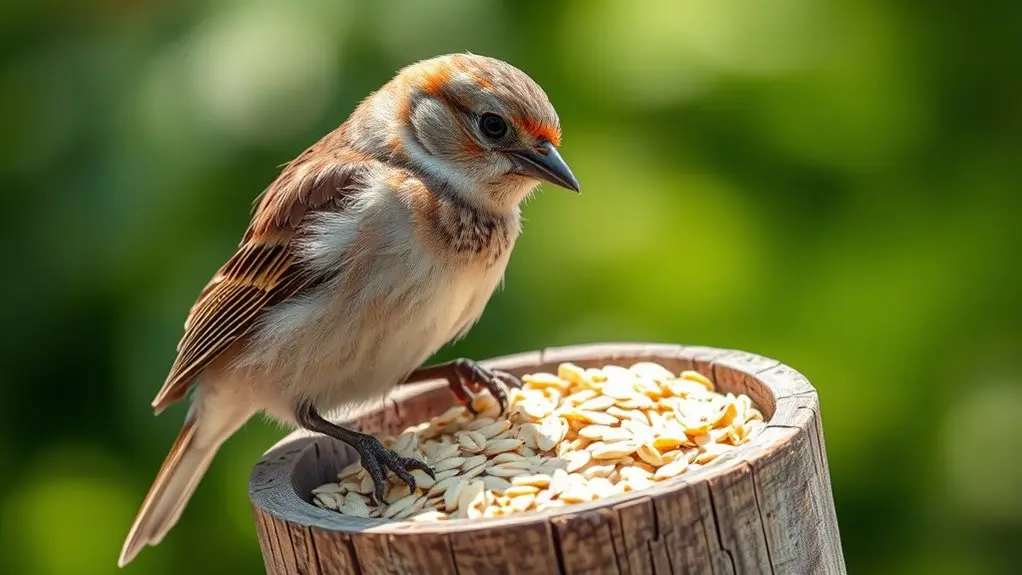
When you feed birds quick oats, you provide a safe and nutritious option as long as the oats are plain and free from additives. Quick oats contain essential nutrients that support birds’ health, but you should offer them only in moderation. Including quick oats as part of a varied diet ensures birds receive balanced nutrition.
It’s important to avoid oats mixed with sugar, salt, butter, or seasonings because these substances can be harmful or toxic to birds. Also, leftover oats should be cleaned up promptly to prevent mold growth and keep pests away from feeding areas.
Can Birds Eat Quick Oats Raw or Cooked? What Ingredients to Avoid
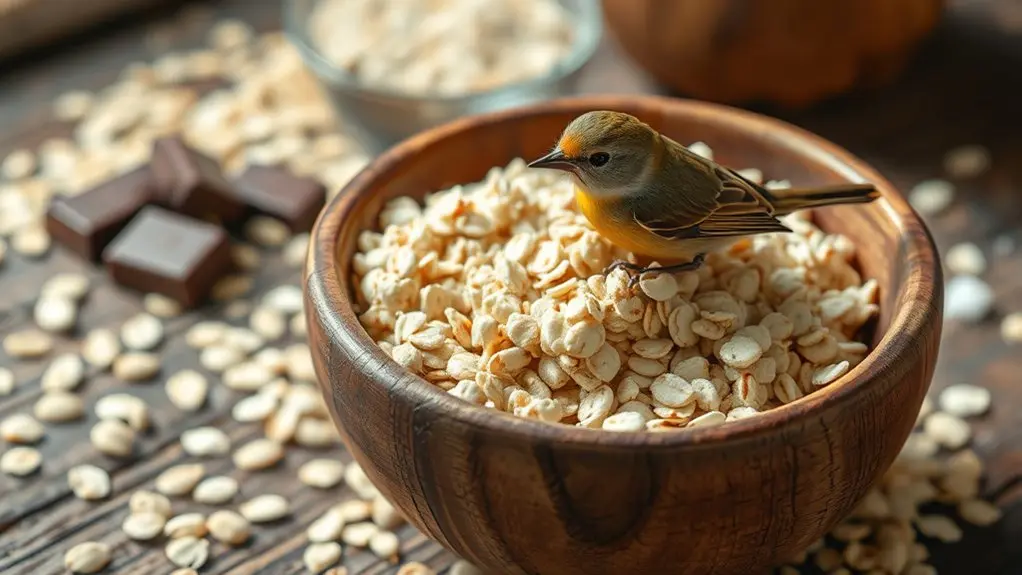
You can offer birds quick oats either raw or cooked, as long as they’re plain and free of any additives. Raw oats should be cooled before serving and mustn’t have any sugars or seasonings.
When you cook oats for birds, make sure they’re plain and don’t contain butter or salt to avoid any digestive problems.
Avoid ingredients that can be harmful to birds, like sugar, syrups, or artificial sweeteners. Also, stay away from salt and butter, as well as flavorings or any chemical additives. These things can upset a bird’s digestive system or even be toxic.
It’s best to keep oats as a moderate supplement within a balanced diet. Serving plain quick oats is a safe way to support your bird’s health without introducing harmful compounds.
Always watch how your bird reacts to new foods, and check out avian nutrition resources for the best advice.
Nutritional Benefits of Quick Oats for Birds
Because quick oats are packed with essential vitamins, minerals, and antioxidants, they offer significant nutritional benefits for birds. They contain B-complex vitamins like B1, B2, B3, B5, B6, and folate, which support metabolic processes and overall health.
Quick oats also provide minerals such as calcium, iron, magnesium, and zinc, vital for bone strength and immune function.
Their high dietary fiber content, approximately 10.1g per 100g, promotes efficient digestion. Additionally, antioxidants like lutein, zeaxanthin, and vitamin E enhance eye health and bolster immune defenses.
Because they’re precooked, quick oats are easily digestible and supply rapid energy. This makes them a valuable food source for birds needing quick nutrient absorption.
Including quick oats in your bird’s diet can really help boost their nutritional well-being. It’s a simple way to add some extra goodness to their meals.
How Often Should You Feed Birds Quick Oats?
Although quick oats provide valuable nutrients, feeding them to birds too frequently can cause nutritional imbalances and health problems. You should limit quick oats to an occasional treat rather than a daily staple.
Quick oats offer nutrients but should only be an occasional treat to avoid health issues in birds.
Generally, feeding birds quick oats 2-3 times per week is advisable to complement their regular diet without risking excess carbohydrates or weight gain.
Keep in mind, frequency depends on species and overall diet quality. Overfeeding can lead to obesity and associated health issues.
It’s important to monitor your birds’ behavior and health to adjust feeding accordingly.
Preparing Quick Oats and Cleaning Up After Feeding
When preparing quick oats for birds, make sure they contain no added sugars, salts, or seasonings. These can harm their health, so it’s best to avoid them. You can serve quick oats raw or soaked in water.
If you cook the oats, just make sure to let them cool completely before offering them to your birds. Serving oats plain keeps things safe and tasty for them.
After feeding, clean up any leftover oats right away to stop mold from growing. Mold can be harmful to birds and might attract unwanted pests like rats and raccoons.
Keep an eye on the feeding area and clean it regularly to maintain good hygiene. This helps reduce spoilage and keeps your flock healthy.
Consistent upkeep of feeding spots is really important for safe and effective bird nourishment. It’s a small effort that makes a big difference!
Frequently Asked Questions
Can Feeding Quick Oats to Birds Attract Unwanted Wildlife?
Yes, feeding quick oats to birds can attract unwanted wildlife like rats and raccoons. You should clean up leftovers promptly and use secure feeders to prevent pests.
This also helps reduce disease risks to birds and local animals. Taking these small steps can make a big difference. It keeps your backyard safer and more enjoyable for everyone.
Are Quick Oats Suitable for All Bird Species?
You won’t find quick oats on every bird’s menu. While hardy species digest them well, delicate or tiny birds may struggle.
Always tailor offerings to specific digestive needs. Avoid additives to keep your feathered friends healthy and thriving.
How Do Quick Oats Compare to Other Bird Feeding Options?
Quick oats offer a cost-effective, easily digestible carbohydrate source but lack the high fat and protein content of seeds like sunflower or millet.
You should mix oats with diverse seeds for balanced bird nutrition and ideal health.
That way, your feathered friends get a bit of everything they need to stay happy and strong.
Can Birds Develop Allergies to Quick Oats?
Sure, your bird might suddenly hate quick oats like a diva at a bland buffet. Scientifically, allergies can develop due to proteins or additives, so watch for symptoms and consult a vet if reactions appear.
It’s pretty common for birds to develop sensitivities over time. So if your feathered friend starts acting weird after eating oats, don’t just brush it off. Keep an eye on things and get professional advice if needed.
What Is the Best Time of Day to Feed Birds Quick Oats?
You should feed birds quick oats early in the morning when they’re most active and naturally foraging. This timing supports their energy needs and digestion, promoting consistent feeding habits.
It also attracts a variety of bird species effectively. Giving them food at this time helps keep their routine steady and reliable. Birds tend to appreciate a morning snack!
Conclusion
Feeding birds quick oats can be a simple, nutritious treat that supports their energy and health. Imagine sprinkling soft, tender oats on a crisp morning, watching birds enthusiastically peck at this wholesome snack.
Just remember to offer oats plain, with no additives, and feed them in moderation to avoid digestive upset. By preparing and cleaning up carefully, you create a safe, inviting space that helps wild birds thrive naturally. It’s a nice way to combine science with the joy of nature.