
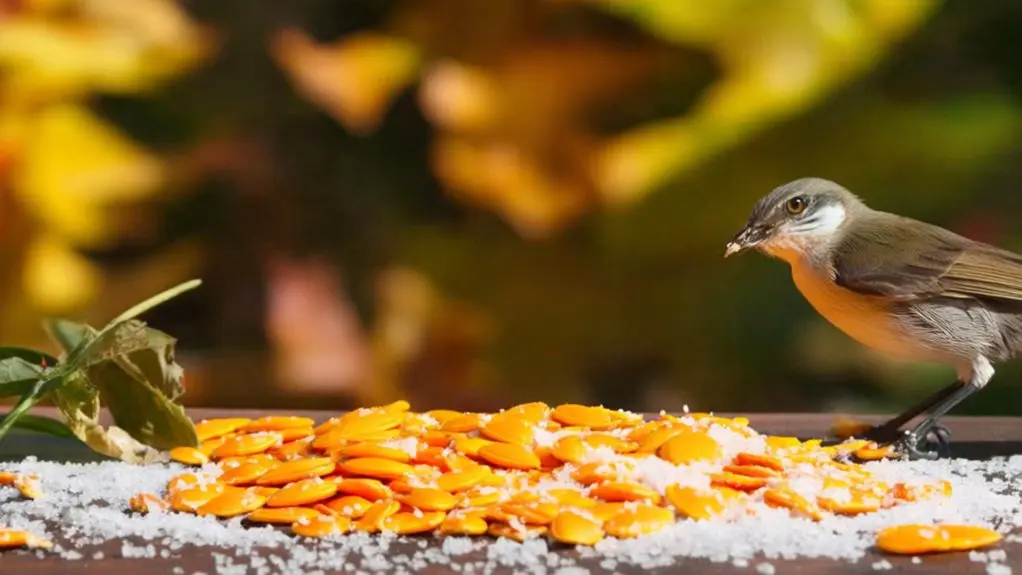
You shouldn’t feed birds salted pumpkin seeds because the high sodium content can disrupt their hydration and electrolyte balance. This can lead to serious health risks like kidney damage and dehydration. Most wild birds instinctively avoid salty foods.
Small or vulnerable species are especially sensitive. To keep birds healthy, offer only plain, unsalted pumpkin seeds and avoid any additives. If you want to guarantee safe feeding practices and explore healthier alternatives, there’s more useful information ahead.
Can Birds Safely Eat Salted Pumpkin Seeds?
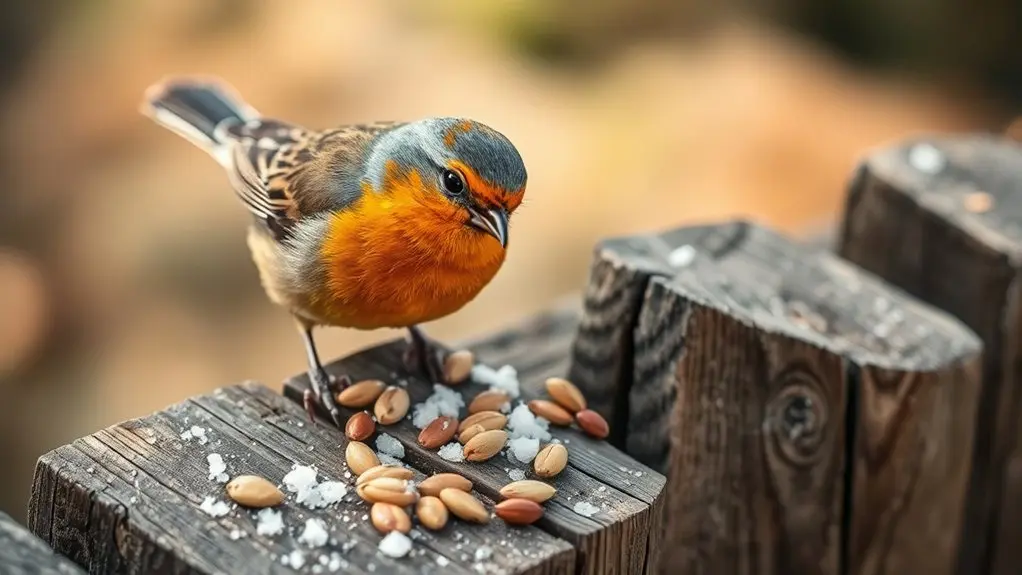
Although it might be tempting to share your salted pumpkin seeds with birds, you should refrain from doing so because the added salt can harm them. Excess salt intake may lead to dehydration and kidney problems in birds.
Salted seeds can disrupt their delicate electrolyte balance, causing serious health issues or even death.
Salted seeds upset birds’ electrolyte balance, leading to severe health problems or fatal consequences.
Wild birds instinctively avoid heavily salted foods, preferring natural, unseasoned seeds instead. Offering salted pumpkin seeds risks causing digestive troubles and weakening their overall health.
To protect the well-being of visiting birds, it’s safest to provide only plain, unsalted pumpkin seeds.
By doing so, you guarantee they receive a nutritious treat without exposing them to harmful substances that could compromise their health or survival.
How Salted Pumpkin Seeds Affect Bird Health and Hydration
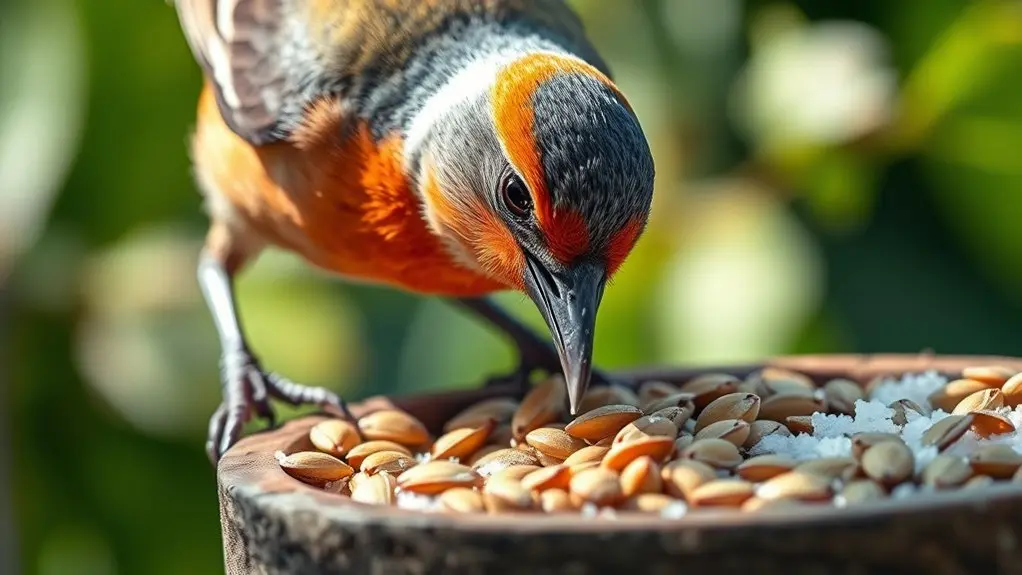
When birds consume salted pumpkin seeds, the high sodium content disrupts their hydration and electrolyte balance, putting their health at serious risk. The excess salt causes birds to drink more water, which may strain their kidneys and potentially lead to kidney failure.
Birds’ kidneys are particularly sensitive to salt, and overexposure impairs their ability to regulate salt and water levels effectively.
Additionally, salted seeds can attract pests and encourage mold growth, which further endangers bird health. To protect birds, it’s best to avoid feeding them salted pumpkin seeds altogether.
Offering unsalted seeds guarantees they maintain proper hydration and electrolyte balance, minimizing the risk of dehydration, kidney stress, and other related complications. Your careful choice supports their overall well-being.
Health Risks of Feeding Salted Pumpkin Seeds and How to Avoid Them
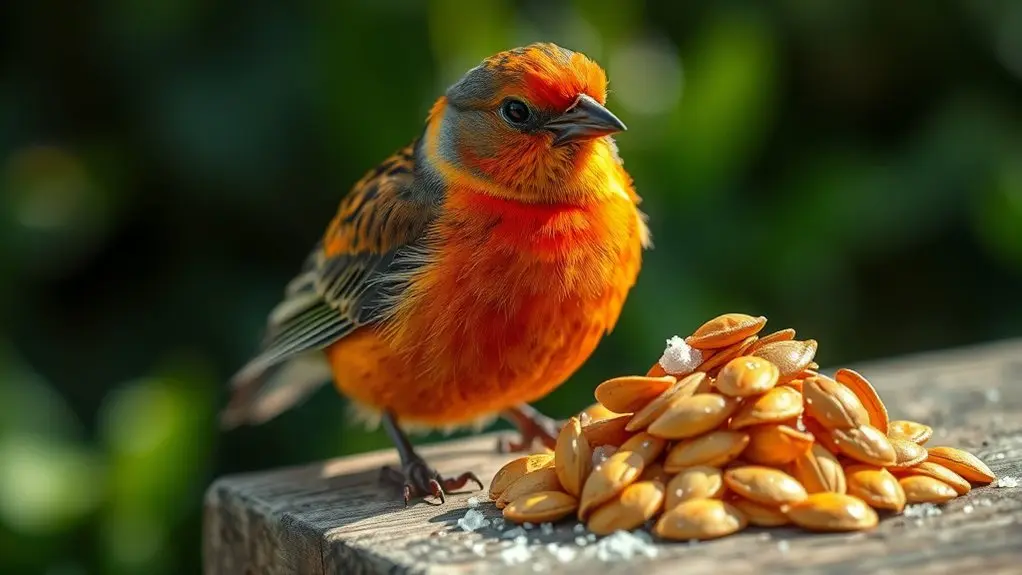
Salted pumpkin seeds pose significant health risks to birds because of their high sodium content. This can lead to dehydration and kidney damage. Birds’ natural diets have very little salt, so salted seeds disrupt their electrolyte balance and may cause serious health problems.
On top of that, salted seeds can attract pests, which increases the risk of disease. The American Bird Conservancy strongly advises against feeding birds any food with added salt or seasonings. To keep birds safe, always offer plain, unsalted pumpkin seeds.
| Risk | How to Avoid |
|---|---|
| Dehydration and kidney damage | Use unsalted seeds only |
| Electrolyte imbalance | Avoid salted or seasoned foods |
| Pest attraction | Clean feeding area regularly |
| Disease transmission | Provide fresh, plain seeds |
Why Birds Prefer Unsalted Pumpkin Seeds
Why do birds show a clear preference for unsalted pumpkin seeds over salted ones? It’s because unsalted seeds closely resemble what they naturally eat.
Birds instinctively avoid salty foods since excess salt can cause dehydration, kidney damage, and impaired organ function.
When you offer salted pumpkin seeds, you risk introducing harmful substances that don’t fit their natural diet. This can lead to health complications.
By providing plain, unsalted seeds, you guarantee birds receive safe, nutritious food that supports their well-being.
Offering unsalted seeds respects their dietary needs and helps maintain healthy wild bird populations.
Birds That Eat Salted and Unsalted Pumpkin Seeds
You should know that most wild birds avoid salted pumpkin seeds because salt can be harmful to them.
Some domesticated birds might be able to handle small amounts, but it’s really best to stick with unsalted seeds.
Knowing which birds prefer unsalted seeds can help you keep them safe and healthy.
Birds Tolerating Salted Seeds
Although most wild birds should steer clear of salted pumpkin seeds due to the risks of dehydration and health complications, some species handle salt better than others. Birds like gulls and certain seabirds naturally consume saltwater and salty foods, so they can tolerate salted seeds more effectively.
That said, even these birds shouldn’t rely on salted seeds regularly. Too much salt can still cause electrolyte imbalances and stress their kidneys.
For many small birds, salted seeds pose significant health risks and should be avoided altogether. If you’re feeding birds, it’s best to offer unsalted pumpkin seeds instead. These match their natural, low-salt diets and help keep them healthy.
Preferred Unsalted Seed Eaters
Since most wild birds thrive on diets low in sodium, they naturally prefer unsalted pumpkin seeds over salted ones. Species like blue jays, cardinals, and woodpeckers especially favor unsalted seeds because their natural diets contain minimal salt.
When you offer salted seeds, these birds risk consuming too much sodium, which can lead to dehydration and other health problems. Small or vulnerable species are particularly sensitive to sodium imbalances, so salted seeds aren’t recommended for them.
How to Prepare Pumpkin Seeds Safely for Wild Birds
Before you offer pumpkin seeds to wild birds, it’s important to remove all salt and seasonings to keep them safe. You don’t want to give them anything that could be harmful.
Next, make sure to clean and dry the seeds thoroughly. This step helps prevent mold from growing, which could be dangerous for the birds.
After that, roast the seeds at a safe temperature, but skip any additives. Roasting them plain helps preserve their nutritional value and keeps the birds healthy.
Removing Salt And Seasonings
How can you guarantee pumpkin seeds are safe for wild birds to eat? The key is to remove all salt and seasonings before offering the seeds. Salt can be toxic, causing dehydration and kidney issues in birds.
Start by thoroughly washing the seeds with water to eliminate any salt or spices. Avoid roasting seeds with any added seasoning. Instead, roast them plain and let them cool completely.
Regularly inspect the seeds to confirm they remain free from harmful additives. By carefully removing all salt and seasonings, you provide a safe, nutritious snack that supports wild birds’ health without risking toxicity.
This cautious approach is essential for responsible feeding and protecting local wildlife. It’s a simple step that makes a big difference for the birds you want to help.
Proper Cleaning And Drying
Removing salt and seasonings is just the first step to guarantee pumpkin seeds are safe for wild birds. Next, you should thoroughly wash the seeds to remove any remaining pulp, debris, or residual salt.
This step is vital because salt can be toxic to birds.
After washing, dry the seeds completely by air-drying or placing them in a warm oven. Proper drying reduces moisture, preventing mold and spoilage that could harm wildlife.
Once dry, store the seeds in a cool, dry place or an airtight container to maintain freshness and avoid pests.
Taking these careful steps ensures the pumpkin seeds are both safe and nutritious for wild birds.
This way, you’re helping support their health responsibly. It’s a simple process that makes a big difference!
Safe Roasting Temperatures
When you roast pumpkin seeds at around 180°C (350°F), you guarantee they’re cooked safely for wild birds without producing harmful compounds. Maintaining this temperature is essential since overheating or burning the seeds can create substances harmful to birds.
To ensure consistent roasting, use a food thermometer, which helps you monitor the heat accurately.
Proper roasting at 180°C also eliminates moisture, considerably reducing the risk of mold growth that could endanger birds’ health.
After roasting, allow the seeds to cool completely before offering them to birds. This step prevents burns and avoids spoilage.
Healthy Alternatives to Salted Pumpkin Seeds
Although salted pumpkin seeds may seem like a tempting treat, you should avoid offering them to birds because of the health risks from too much sodium. Instead, go for healthy alternatives that keep the nutritional value without harming your feathered friends.
Salted pumpkin seeds pose health risks to birds; opt for healthier, low-sodium alternatives instead.
Here are four safe options to think about:
- Plain, unsalted pumpkin seeds. These give essential nutrients without any added sodium.
- Roasted seeds without salt. Roasting brings out the flavor but keeps them safe.
- Dried fruits. They offer natural sugars and vitamins without any harmful additives.
- Unsalted nuts. These provide healthy fats and protein that many bird species find beneficial.
Choosing any of these will help keep your birds happy and healthy!
Year-Round Tips for Feeding Pumpkin Seeds to Birds
To keep feeding pumpkin seeds to birds throughout the year, you’ll need to store them properly in airtight containers after drying. This helps maintain freshness and prevents mold growth. It’s an easy way to make sure the seeds stay good for a long time.
You can also use leftover pumpkin seeds from your fall decorations or meals. This way, you’re providing nutritious snacks beyond just the season. Just remember to roast the seeds without salt or spices to keep them safe for the birds.
Try rotating pumpkin seeds with seasonal foods like berries or suet. This gives birds a balanced diet that matches their changing nutritional needs.
Don’t forget to clean feeders regularly and remove any uneaten seeds. It helps prevent spoilage and keeps pests away.
Frequently Asked Questions
Can Baby Birds Eat Pumpkin Seeds With Salt?
You shouldn’t feed baby birds pumpkin seeds with salt because their developing systems can’t handle excess sodium. Always offer unsalted seeds to keep them safe.
This helps prevent dehydration, kidney issues, and ensures they get the proper nutrition as they grow. It’s better to stick with natural, plain seeds for their health.
Do Pumpkin Seeds With Salt Attract Pests?
Yes, salted pumpkin seeds attract pests like ants, beetles, and rodents.
If you feed or store them around your home, you’ll likely see increased pest activity. This can create health risks and damage seed storage.
How Often Can I Feed Birds Salted Pumpkin Seeds?
You might think feeding salted pumpkin seeds occasionally is fine, but you shouldn’t. Salt stresses birds’ kidneys, so avoid giving salted seeds more than once in a great while to keep them healthy and thriving.
It’s really better to stick with unsalted seeds most of the time. Birds don’t need the extra salt, and it can actually do more harm than good. So, if you want to treat them, make sure it’s a very rare thing.
Are Salted Pumpkin Seeds Safe for Pet Birds?
Salted pumpkin seeds aren’t safe for pet birds because high sodium can cause dehydration and kidney issues. You should only offer unsalted seeds to protect their health.
This helps avoid any long-term complications from salt intake. So, it’s best to stick with seeds that don’t have any added salt. Your bird will thank you for it!
Can Salted Pumpkin Seeds Cause Behavioral Changes in Birds?
Yes, salted pumpkin seeds can cause behavioral changes in birds. You’ll notice increased thirst, lethargy, or reduced foraging. High sodium disrupts their electrolyte balance and overall health.
Conclusion
You shouldn’t feed birds salted pumpkin seeds, as even small amounts of salt can harm their health and hydration. Imagine a backyard where robins started avoiding feeders after salted seeds caused dehydration issues.
To keep birds safe and happy, always offer unsalted, clean pumpkin seeds. Preparing seeds properly guarantees you support their well-being year-round. Stick to natural, salt-free options to enjoy watching healthy, thriving birds visit your feeder.