
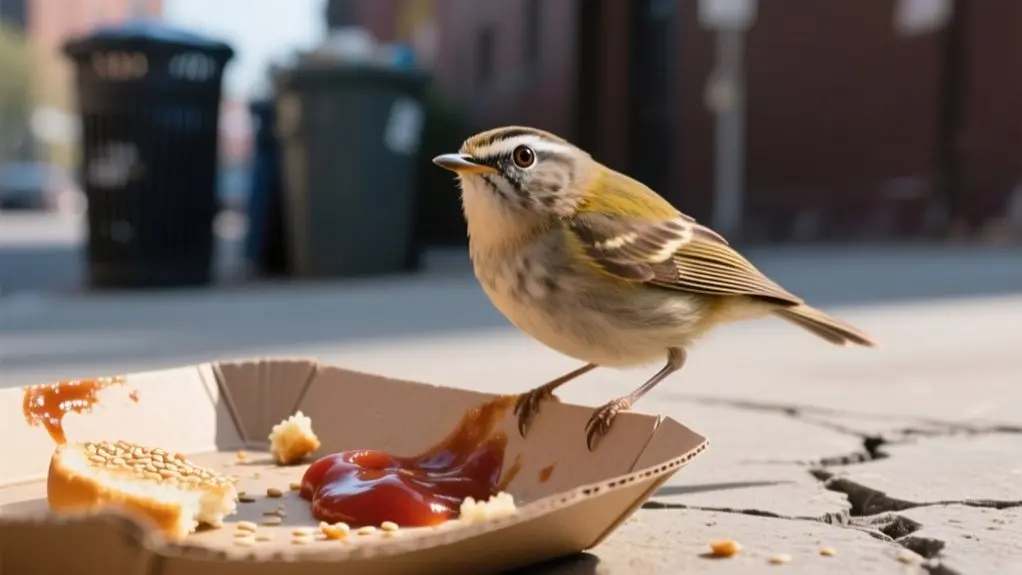
You can offer birds small amounts of fresh, unsalted hamburger grease safely, but only if it’s cool and mixed with bird-friendly foods. This helps avoid harming their feathers or health.
Grease can coat feathers and disrupt insulation, making birds vulnerable to cold and predators. Avoid rancid or salty grease, as these pose serious risks.
Instead, consider safer fats like suet. If you want to protect birds while providing energy-rich treats, understanding these details will help.
What Is Hamburger Grease?
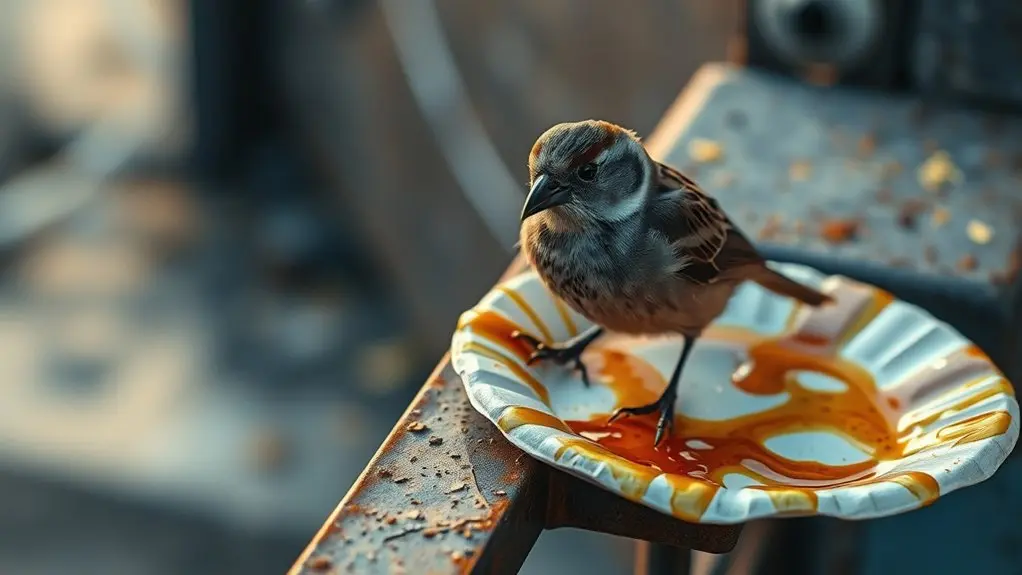
Hamburger grease is the fat rendered from cooking hamburgers, containing beef fat and meat drippings. When you collect this grease, you’re basically gathering a high-energy fat source that some birds can safely consume.
Compared to other cooking fats, hamburger grease is preferable because it offers valuable energy, but you need to be careful. Its melting point is about 95 degrees Fahrenheit, so it can become problematic if it gets too warm and starts to coat birds’ feathers.
Hamburger grease provides valuable energy but can coat birds’ feathers if it melts above 95°F.
To use hamburger grease safely, offer it in moderation and ideally mix it with other bird-safe ingredients.
Also, make sure the grease is unsalted, as salt can harm birds, unlike the salt-free nature of properly prepared hamburger grease.
Why Hamburger Grease Is Harmful to Birds
You mightn’t realize just how dangerous hamburger grease can be for birds, but it’s all because of its high fat content.
When their feathers get coated in grease, it messes up their waterproofing and insulation. This means they can’t stay warm like they normally would, which puts them at serious risk of hypothermia.
And it’s not like birds can clean this grease off by themselves.
So, once they’re covered, they’re stuck with it. That leaves them super vulnerable to harsh weather and even starvation since they can’t keep themselves warm or dry.
It’s a big problem that’s easy to overlook.
High Fat Risks
Although it might seem harmless, greasy fat like that from discarded burger grease can seriously damage birds’ feathers. This makes it tough for them to stay warm and dry. The high-fat risks are significant because saturated fats coat feathers, impairing insulation and waterproofing.
Birds struggle to clean this grease naturally, and the consequences can be severe. When you think about the dangers, it’s clear why you should avoid letting birds come into contact with hamburger grease:
- Feathers become greasy, reducing their ability to repel water and retain heat.
- Exposure to rancid grease can introduce harmful bacteria like salmonella.
- High salt content in grease risks dehydration and toxicity.
- Birds can’t remove grease without soap, which they don’t use naturally.
These high-fat risks make hamburger grease hazardous to birds’ health.
Feather Contamination Effects
Greasy residue on birds’ feathers doesn’t just make them look messy. It seriously disrupts their natural waterproofing and insulation. When hamburger grease contaminates feathers, it impairs birds’ ability to stay dry and maintain body heat.
This feather contamination effect makes them vulnerable to cold and hypothermia. Plus, greasy feathers prevent proper grooming, which only worsens their condition. While hamburger grease might seem like a high-energy food, it’s harmful if ingested and causes digestive issues.
Birds can’t clean grease off without soap, so they rely on external help to recover.
| Effect on Birds | Result |
|---|---|
| Contaminated feathers | Loss of waterproofing and insulation |
| Impaired grooming | Increased vulnerability to cold |
| Ingested grease | Digestive issues, health risks |
How Fats Harm Bird Feathers and Warmth
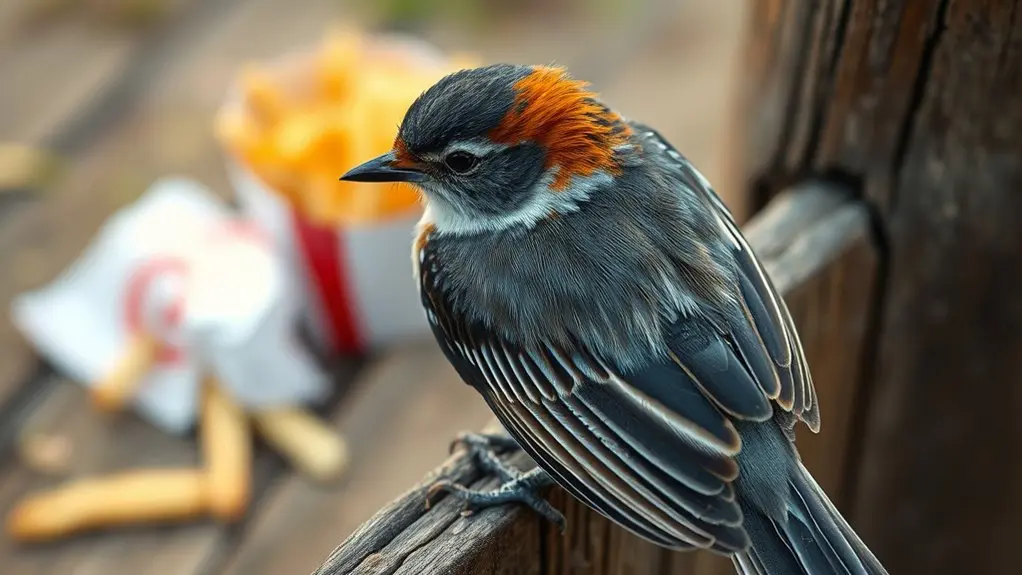
When fats like hamburger grease coat a bird’s feathers, their waterproofing and insulation just don’t work anymore.
This means it’s really hard for birds to stay warm and dry, which is a big problem. If their feathers get greasy, they can quickly become vulnerable to cold—and that can even lead to starvation.
Fat Impact On Feathers
If you’ve ever seen a bird coated in hamburger grease, you know it’s more than just messy. It severely damages their feathers’ ability to repel water and retain heat. Fat found in grease sticks stubbornly to feathers, disrupting their natural structure.
This contamination affects birds in several critical ways:
- Fat impairs feathers’ function, making it tough for birds to stay warm.
- Birds can’t effectively clean off fat, risking hypothermia without soap.
- A greasy layer hinders grooming, leading to further feather damage.
- Prolonged fat exposure weakens insulation, increasing vulnerability to cold and predators.
When fat coats feathers, birds struggle to maintain their warmth and survival. This impact on feathers is a serious threat, showing why hamburger grease poses more than a cleanliness issue. It’s a danger to their health.
Waterproofing And Insulation Loss
Fat from substances like hamburger grease doesn’t just dirty a bird’s feathers, it strips away their natural waterproofing and insulation. When feathers are coated with beef fat, birds can’t keep dry or warm, risking hypothermia.
Since birds can’t clean off fats without soap and water, the grease lingers. It spreads as they groom, making their condition worse. This loss of waterproofing compromises their survival, especially in cold weather.
| Effect | Cause | Consequence |
|---|---|---|
| Waterproofing loss | Beef fat coating | Feathers stay wet |
| Insulation loss | Greasy feathers | Body heat escapes |
| Grooming spread | Fat on feet | More feathers soiled |
Avoiding exposure to beef fat is essential to protect birds’ feather function and warmth.
Risks Of Greasy Plumage
Although birds rely on their feathers to stay warm and dry, greasy plumage severely disrupts these functions, putting them at great risk. When their feathers get coated with fats like hamburger grease, birds lose vital waterproofing and insulation.
This contamination can quickly lead to hypothermia and death, especially in cold weather. You should understand that birds can’t clean these fats themselves; they need soap, which isn’t available outdoors.
Plus, grooming can spread grease from their feet to feathers, worsening the problem.
Here’s what greasy plumage means for birds:
- Loss of waterproofing, increasing exposure to cold and rain
- Inability to maintain body heat, risking starvation or hypothermia
- Spread of harmful bacteria like salmonella from rancid fats
- Permanent feather damage without human intervention
Greasy plumage is a serious threat to bird survival.
Risks of Feeding Birds Rancid or Salty Grease

When you feed birds rancid or salty grease, you put their health at serious risk. Rancid grease encourages harmful bacteria like salmonella, which can cause severe illness. Salty grease leads to dehydration and kidney damage, seriously affecting birds’ well-being.
Birds also struggle to clean grease from their feathers, which harms insulation and waterproofing. This can put them at risk of hypothermia.
| Risk | Cause | Effect |
|---|---|---|
| Bacterial Infection | Rancid grease | Salmonella, illness |
| Dehydration | High salt content | Kidney damage, weakness |
| Feather Damage | Grease coating | Loss of insulation, hypothermia |
| Misleading Disposal | Improper grease waste | Harm to local wildlife |
| Community Harm | Poor feeding habits | Spread of dangerous practices |
Avoid feeding birds rancid grease to protect their health and your local ecosystem.
Why Backyard Birds Prefer Suet
Feeding birds greasy leftovers can harm them, so choosing the right food is important. Backyard birds prefer suet because it offers high-fat nutrition that fuels their energy, especially in colder months when food is scarce.
Using a suet feeder guarantees the suet stays accessible and safe. Here’s why suet is ideal:
- Made from rendered beef fat, it suits species like woodpeckers, chickadees, and nuthatches.
- Placing the suet feeder in shaded areas prevents spoilage and limits pests.
- Birds enjoy suet year-round, with many feeders using it even in summer.
- Homemade suet blends with seeds, nuts, and dried fruits boost nutrition and attract diverse birds.
Safe Fats to Feed Wild Birds Instead of Grease
You’ll want to choose fats like suet because it stays fresh longer and provides essential energy for wild birds.
Unsalted peanut butter and homemade fat balls made with pure lard are also great alternatives to greasy leftovers.
Just make sure to avoid oils that spoil quickly. Always offer fats that keep birds safe and healthy.
Benefits Of Suet
Although it might seem convenient to offer hamburger grease to wild birds, suet provides a safer and more nutritious alternative. Suet, made from rendered beef fat, is a stable, high-energy food source that supports birds during colder months when natural food is scarce.
Unlike hamburger grease, suet doesn’t spoil quickly and won’t harm feathers if it melts.
Here’s why suet benefits wild birds:
- It offers essential fats and energy critical for survival.
- Its melting point (~110°F) keeps it solid longer in warm weather.
- Many species like woodpeckers and chickadees are especially attracted to it.
- You can enhance suet with seeds, nuts, and dried fruit for extra nutrition.
Feeding suet helps you support wild birds safely and effectively.
Alternative Fat Sources
When looking for safe fats to nourish wild birds, you should steer clear of hamburger grease and instead choose options like suet or fresh ground peanut butter without added oils or sugars.
These alternative fat sources provide essential energy without harmful additives.
Suet is ideal because it remains solid at typical outdoor temperatures, making it easy for birds to consume. Fresh ground peanut butter offers a nutritious option, but make sure it’s free from salt and extra oils.
Venison fat is another lesser-known alternative fat source that holds up well in warm weather.
Avoid fats like coconut and palm oils since their low melting points can lead to spoilage, posing risks to birds.
Feeding Safety Tips
Since hamburger grease often contains harmful additives and excessive salt, you should avoid feeding it to wild birds.
Instead, focus on safe fats that provide essential nutrients without risking their health. When offering bird food, keep these feeding safety tips in mind:
Use suet as a reliable fat source, especially in colder months, for crucial energy. Serve fats in appropriate suet feeders to prevent contamination and guarantee safe access.
Avoid oils or fats with low melting points like coconut oil because they can damage feather waterproofing.
Prepare homemade fat balls from pure lard mixed with birdseed, nuts, and dried fruits for a nutritious treat.
How to Prepare Suet Safely
To prepare suet safely, start by rendering beef fat into a clean, liquefied form using a double boiler. Cut the fat into small pieces and heat gently until it melts, preventing rancidity.
Once rendered, mix your homemade suet with safe ingredients like seeds, nuts, and dried fruit to create a nutritious treat that attracts birds. Use suet feeders with cages to keep the suet clean and protected from contamination.
Store any leftover rendered suet in the freezer to extend its shelf life and avoid spoilage.
Finally, place the suet feeder in shaded areas to minimize melting and discourage pests.
Following these steps guarantees your homemade suet is safe, fresh, and appealing to a variety of bird species.
Safe Alternatives to Hamburger Grease
Now that you know how to prepare suet safely, you might wonder about other feeding options besides hamburger grease. The fat found in hamburger grease can be harmful, so consider these safer alternatives to nourish birds effectively:
Suet, with its higher melting point, provides a bird-friendly fat found in specially formulated blocks.
Unsalted nuts and seeds supply essential nutrients without the risks linked to cooking fats.
Mealworms offer protein-rich nutrition many birds enjoy, especially during breeding seasons.
Fresh fruits like apples and berries hydrate birds and deliver crucial vitamins.
You can also try homemade fat balls made from pure lard mixed with seeds and nuts as a safer option.
These alternatives guarantee birds get the fat found in healthy foods without exposure to harmful grease.
How to Safely Use Homemade Suet Blocks
Although homemade suet blocks offer a nutritious treat for birds, you need to handle them carefully to guarantee safety and freshness.
Start by combining unsalted nuts, raisins, and slightly cooled melted grease from meats like hamburgers.
Letting the grease cool before pouring prevents burns and assures the mixture binds well.
Once formed, store your homemade suet blocks in the freezer to avoid rancidity and keep them fresh.
When it’s time to feed, remove the block from its container and place it securely in a suet feeder, protecting it from contamination.
Offer small amounts at a time so birds consume the suet quickly, reducing spoilage risks.
Common Myths About Feeding Birds Grease
While many believe feeding birds any type of grease is harmless, several common myths put your feathered friends at risk. You might hear that all grease is safe or even beneficial, but that’s not true.
Here are some common myths you should know:
- Bacon grease is safe, but its high salt content harms birds.
- Birds can clean grease off their feathers without issues.
- Hamburger grease is always dangerous, regardless of additives.
- Feeding any grease doesn’t affect birds’ waterproofing or survival.
In reality, hamburger grease can be safe if unsalted and additive-free, but grease often damages feathers, leading to hypothermia or starvation.
Knowing the truth behind these common myths helps you protect birds and support their health responsibly.
How to Spot Unsafe Grease Feeding Practices
Understanding the risks associated with feeding birds hamburger grease is only the first step. Recognizing unsafe grease feeding practices helps you protect their health more effectively.
Watch out for grease with high salt content or rancid smell. Both signal danger. Avoid offering grease that’s improperly stored because it can harbor harmful bacteria like salmonella.
If you see birds’ feathers coated in greasy residue, that’s a red flag. They can’t clean it off themselves, which puts them at risk of hypothermia.
Also, beware of feeding methods that encourage birds to ingest excessive fat. This can damage their feathers and waterproofing.
Tips for Safe and Responsible Bird Feeding
When feeding birds hamburger grease, you should always offer it in moderation and guarantee it’s unsalted to protect their health.
Providing fat during a cold winter helps birds maintain energy, but improper feeding can harm them.
Follow these tips for safe and responsible bird feeding:
- Use a suet feeder to enclose the grease, preventing contamination and greasy feathers.
- Place feeders in shaded spots to avoid grease melting and damaging birds’ waterproofing.
- Regularly clean feeders to stop bacteria growth and keep birds healthy.
- Avoid overfeeding fats to prevent health risks associated with excessive grease intake.
Frequently Asked Questions
Can Birds Digest Other Types of Cooking Oils Safely?
Yes, you can feed birds certain oil types safely, but you need to be careful.
Unsaturated oils like vegetable oil are easier for birds to digest than saturated fats, but too much can cause greasy feathers and health issues.
Avoid oils with high salt or additives.
It’s best to stick with bird-safe fats like rendered suet, which provides necessary energy without harming their feathers or digestion.
Always prioritize their safety.
Do Certain Bird Species Tolerate Fats Better Than Others?
Yes, certain bird species have a higher fat tolerance than others.
You’ll find that birds like woodpeckers, chickadees, jays, and nuthatches can handle fats better, especially unsalted beef fat or suet.
Smaller birds, however, are more sensitive and might struggle with high-fat or salty foods.
Knowing each species’ fat tolerance helps you provide safe, nutritious feeding options that keep birds healthy and thriving.
How Can I Tell if a Bird Is Sick From Eating Grease?
You can tell if a bird is sick from eating grease by watching for symptoms like lethargy, fluffed feathers, or difficulty flying.
If the bird’s appetite changes, either eating less or refusing food, that’s another red flag.
Greasy feathers might make it hard for the bird to stay warm, risking hypothermia.
Also, keep an eye out for vomiting or diarrhea.
If you notice these signs, get veterinary help immediately.
Are There Specific Times of Year to Avoid Feeding Any Fats?
You’ll want to be extra mindful of seasonal considerations when feeding fats to birds.
During warmer months, it’s best to avoid fats entirely since they can spoil quickly and harm your feathered friends.
In contrast, winter offers a cozy time when fats provide valuable energy.
Spring and fall call for a gentle approach, as changing temperatures mean you should carefully watch what you offer.
Always prioritize your birds’ well-being throughout the year.
Can Feeding Fats Affect Bird Migration Patterns?
Yes, feeding fats can cause migration disruption in birds. When you provide high-fat foods like hamburger grease, birds might rely on this easy energy source instead of natural foraging.
This can delay their migration timing and alter routes, making them less fit for the journey.
You’ll find that such disruptions not only affect individual birds but also impact overall population dynamics and the ecological balance.
Conclusion
So, you’ve learned that feeding birds hamburger grease isn’t just unwise. It can harm their feathers and health. Think of it like giving a knight rusted armor; it just won’t protect them.
Instead, stick to safe options like homemade suet blocks to keep your feathered friends warm and happy. Remember, responsible feeding means knowing what’s best for birds, not just what’s convenient for you.
Keep their well-being your top priority!