
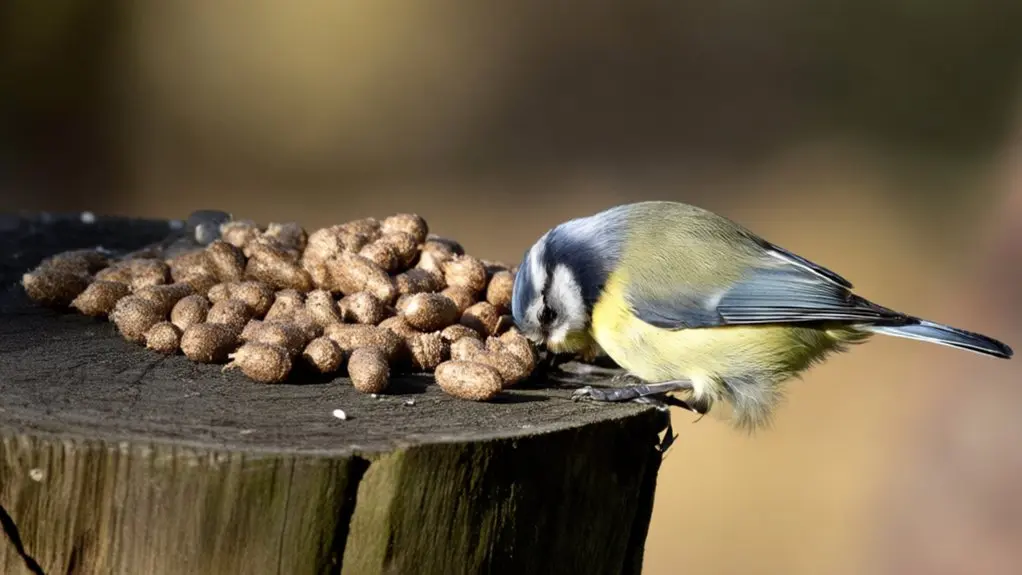
You can let some birds like parrots or finches nibble on rabbit pellets occasionally, but it’s not safe as a regular diet. Rabbit pellets lack key vitamins birds need and may contain harmful additives or cause digestive issues. Always consult an avian vet before offering them, introduce pellets gradually, and monitor your bird’s health closely.
Understanding the composition, risks, and appropriate species is essential if you want to contemplate rabbit pellets as a supplement. Just remember, what’s good for rabbits isn’t always good for birds. So, take it slow and keep an eye on your feathered friends!
Can Birds Eat Rabbit Pellets? A Quick Overview
Although birds can technically eat rabbit pellets, you shouldn’t rely on them as a regular food source. Rabbit pellets are specifically formulated for herbivorous mammals, meaning their nutrient profile caters to rabbits’ unique digestive systems, not birds’.
These pellets often contain high fiber and low fat, which may provide some benefits in small quantities but lack essential vitamins tailored for avian health.
Rabbit pellets have high fiber and low fat but miss key vitamins birds need for optimal health.
Feeding birds rabbit pellets consistently can cause nutritional imbalances or deficiencies because they don’t supply bird-specific nutrients vital for immune function and metabolism. To guarantee your birds thrive, it’s best to offer feed designed explicitly for them.
This type of feed meets their dietary requirements precisely.
What Are Rabbit Pellets Made Of and Why It Matters for Birds
You’ll find that rabbit pellets are mainly made of compressed hay, like Timothy or alfalfa. They also include vitamins, minerals, and other plant-based ingredients that are designed to support herbivore digestion.
Knowing what’s in them can help you figure out if their fiber-rich, low-fat makeup suits the nutritional needs of birds.
This kind of understanding is really important when deciding if rabbit pellets are safe and appropriate to feed to different bird species.
Pellet Ingredients Overview
Since rabbit pellets are made to meet the digestive needs of herbivorous mammals, their composition is quite different from what birds need. These pellets mainly contain compressed hay, like Timothy or alfalfa, mixed with vitamins and minerals specifically for rabbits. The high fiber content (14-20%) helps rabbit digestion but might not be great for birds.
Also, rabbit pellets often have added grains, seeds, and colorful treats, which can be harmful or even toxic to some bird species. The pellets have a low-fat, moderate-protein profile designed to keep rabbits healthy, not omnivorous or insectivorous birds.
| Ingredient | Purpose | Bird Safety Concern |
|---|---|---|
| Compressed Hay | High fiber for digestion | Unsuitable fiber levels |
| Added Grains | Energy source | Potential toxicity/choking hazard |
| Vitamins & Minerals | Nutritional support | Usually safe but species-dependent |
Nutritional Suitability for Birds
How do rabbit pellets measure up nutritionally for birds? Rabbit pellets consist mainly of compressed hay, alfalfa, Timothy grass, and other plant-based ingredients, making them generally suitable for herbivorous birds. Their fiber content ranges from 14-20%, which supports proper digestion in many bird species.
Protein levels, typically 13-16%, align with the needs of both herbivorous and some omnivorous birds. Additionally, rabbit pellets often contain added vitamins and minerals that can benefit birds if no harmful additives are present.
However, you should be cautious because some pellets include dried fruits, seeds, or nuts that may be unhealthy or poorly digested by birds. Understanding the exact composition is essential before offering rabbit pellets to guarantee they meet your bird’s specific dietary requirements safely.
Bird Species That Can Safely Eat Rabbit Pellets
Although rabbit pellets are formulated primarily for herbivorous mammals, certain domesticated bird species like parrots and finches can safely consume small amounts as a dietary supplement. These pellets are rich in plant-based ingredients such as Timothy hay and alfalfa, which align with the herbivorous and omnivorous diets of these birds.
Budgerigars and cockatiels may also nibble on rabbit pellets, but they shouldn’t replace their specialized seed or pellet diets entirely.
When choosing rabbit pellets for your birds, select those with high fiber and low protein content to better match their nutritional needs.
Always introduce rabbit pellets gradually and watch your birds closely for any signs of digestive upset. This cautious approach helps ensure rabbit pellets provide a safe, complementary dietary option for certain bird species.
Health Risks of Feeding Rabbit Pellets to Birds
You should be careful when feeding rabbit pellets to birds because their digestive systems aren’t built for ingredients meant for herbivorous mammals. These pellets might cause digestive upset or even toxicity, especially since they often contain additives like dried fruits or seeds.
On top of that, rabbit pellets can throw off a bird’s nutritional balance, sometimes providing too much calcium, which might lead to serious health problems.
Digestive Concerns
Because birds have distinct digestive systems from herbivorous mammals, feeding them rabbit pellets can cause significant digestive upset. Rabbit pellets contain alfalfa and Timothy hay, ingredients difficult for birds to process, potentially leading to blockages or diarrhea.
Birds’ unique gut flora and enzymes can’t effectively break down the high fiber and protein content, causing fermentation issues and malabsorption. Plus, wild rabbit droppings may harbor parasites harmful to birds.
| Concern | Impact on Birds |
|---|---|
| High fiber content | Gastrointestinal blockage or diarrhea |
| Incompatible enzymes | Fermentation and nutrient absorption problems |
| Parasite exposure | Risk of infections and health decline |
Nutritional Imbalance
Digestive complications from feeding rabbit pellets highlight a broader concern: the nutritional imbalance these pellets can cause in birds. Rabbit pellets are high in fiber and formulated for herbivores, lacking the protein and specific amino acids many birds need.
If you feed rabbit pellets to omnivorous or carnivorous birds, they may suffer from deficiencies in essential vitamins and nutrients. Ingredients like alfalfa and Timothy hay, common in rabbit pellets, can disrupt digestion in birds sensitive to excess fiber or calcium. This can cause malabsorption or impaction.
Relying heavily on rabbit pellets risks metabolic disorders, feather plucking, and weakness due to inadequate nutrition. To guarantee your bird’s health, it’s best to provide a diet tailored to their species’ nutritional requirements rather than substituting with inappropriate pellets.
How to Tell if Rabbit Pellets Are Harmful to Your Bird
Although rabbit pellets are formulated for a different species, you can identify harmful ones for your bird by closely examining their ingredients and condition. Avoid pellets containing dried fruit, seeds, or colored crunchy treats, as these may be toxic or cause digestive issues.
Check for mold, staleness, or signs of insect infestation, since bacteria or fungi can pose serious health risks. Be cautious with pellets that contain excessive or unfamiliar components, as they may lead to choking or gastrointestinal upset.
If your bird exhibits vomiting, diarrhea, lethargy, or unusual droppings after consuming rabbit pellets, these are strong indicators of toxicity or digestive distress. Monitoring these signs promptly helps guarantee your bird’s safety and prevents complications from inappropriate feed.
Best Alternatives to Rabbit Pellets for Bird Diets
When selecting the best alternatives to rabbit pellets for your bird’s diet, prioritize species-specific bird pellets and fresh, nutrient-rich foods tailored to avian nutritional needs. Unlike rabbit pellets, which lack essential avian nutrients, bird pellets are formulated to provide balanced vitamins, minerals, and fatty acids crucial for your bird’s health.
Incorporate a variety of seeds and grains to supply energy and essential fatty acids. Fresh vegetables like spinach, broccoli, and carrots deliver fiber, vitamins, and minerals critical for digestion and immune function.
Fresh fruits in moderation add antioxidants and natural sugars.
Avoid rabbit pellets containing dried fruits, seeds, or artificial additives, as these can disrupt your bird’s nutritional balance and cause health issues.
How to Introduce Rabbit Pellets Safely to Your Bird’s Diet
To safely introduce rabbit pellets into your bird’s diet, start by mixing a small amount with their current food. This way, you can monitor how well they accept it and how their digestion responds.
Make sure to choose high-quality pellets that are uncolored and unflavored. Also, check carefully to ensure they’re free from mold or any contaminants.
Keep a close eye on your bird for any changes in digestion or behavior during the first few days. It’s always a good idea to consult an avian veterinarian before making any changes. They can confirm if the pellets are suitable and advise on the right portion sizes.
| Step | Action |
|---|---|
| 1. Selection | Choose quality, unflavored pellets |
| 2. Mixing | Blend small amounts with regular food |
| 3. Observation | Watch for droppings/behavior changes |
| 4. Vet Consultation | Confirm safety and portion sizes |
Following these steps helps make sure your bird’s diet changes in a safe and controlled way.
Frequently Asked Questions
Can Baby Birds Safely Consume Rabbit Pellets?
You shouldn’t feed baby birds rabbit pellets, as their digestive systems can’t handle them. These pellets may cause digestive issues or blockages.
Instead, provide species-specific diets. And if you’re ever unsure, it’s best to consult an avian vet for safe feeding options.
Do Rabbit Pellets Affect Bird Feather Quality?
Like a painter lacking vibrant colors, rabbit pellets fail to provide birds with essential nutrients, causing dull, weak feathers. You’ll notice poor feather quality because these pellets lack the protein and fatty acids vital for healthy plumage.
Basically, rabbit pellets just don’t have what birds need to keep their feathers looking bright and strong. So, if you want your birds to have healthy plumage, it’s best to look beyond rabbit pellets.
How Do Rabbit Pellets Compare Nutritionally to Bird Seed Mixes?
Rabbit pellets have higher fiber and moderate protein tailored for herbivores, unlike bird seed mixes, which offer lower fiber and variable protein suited for seed-eating birds. You’ll find their nutritional profiles differ markedly, affecting digestion and health.
Basically, rabbit pellets support a rabbit’s digestive system better because of that fiber content. Bird seed mixes don’t quite hit those marks since they’re designed for different dietary needs. So, feeding one instead of the other could impact an animal’s well-being.
Can Feeding Rabbit Pellets Cause Behavioral Changes in Birds?
Yes, feeding rabbit pellets can cause behavioral changes in birds. You’ll notice increased scavenging and a preference for crunchy foods. Birds may also become hyperactive when their diet is altered.
This can disrupt their natural foraging habits, which isn’t great for their overall well-being. Over time, they might develop food fixation and even show aggression. It all comes down to how their diet impacts their behavior.
Are There Specific Rabbit Pellet Brands Recommended for Birds?
You wouldn’t expect rabbits’ Oxbow or Small Pet Select pellets to moonlight as bird food. Yet, these brands’ high fiber, low protein formulas suit birds well. Just check ingredients and don’t swap their species-specific diet entirely.
It’s always good to be cautious and make sure you’re meeting your bird’s unique nutritional needs. So, while these pellets can be a helpful supplement, they shouldn’t replace a proper bird diet.
Conclusion
Feeding rabbit pellets to your bird can be like walking a tightrope. It’s possible but risky. While some bird species might tolerate certain ingredients, rabbit pellets aren’t made for birds’ nutritional needs and could cause harm.
Always prioritize bird-specific diets and check with a vet before trying any unfamiliar foods. If you really want to try rabbit pellets, do it cautiously and watch for any bad reactions.
Your bird’s health depends on precise nutrition that fits their species. So, make sure you choose wisely.