
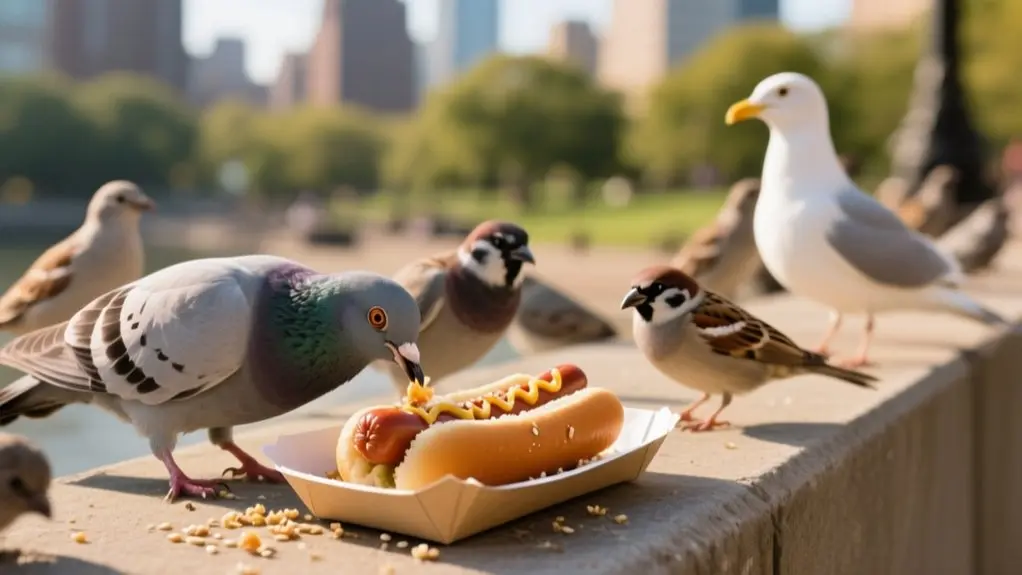
You shouldn’t feed hot dogs to birds because their high salt, fat, and preservative content can seriously harm their health. Hot dogs lack essential vitamins, minerals, and natural proteins birds need for energy and growth.
Regular consumption can cause dehydration, digestive upset, and long-term issues like weakened immunity and poor feather quality. Instead, focus on natural foods like seeds, fruits, and vegetables to keep birds thriving.
Keep exploring to discover better feeding practices and signs of bird health problems.
Are Hot Dogs Safe for Birds?
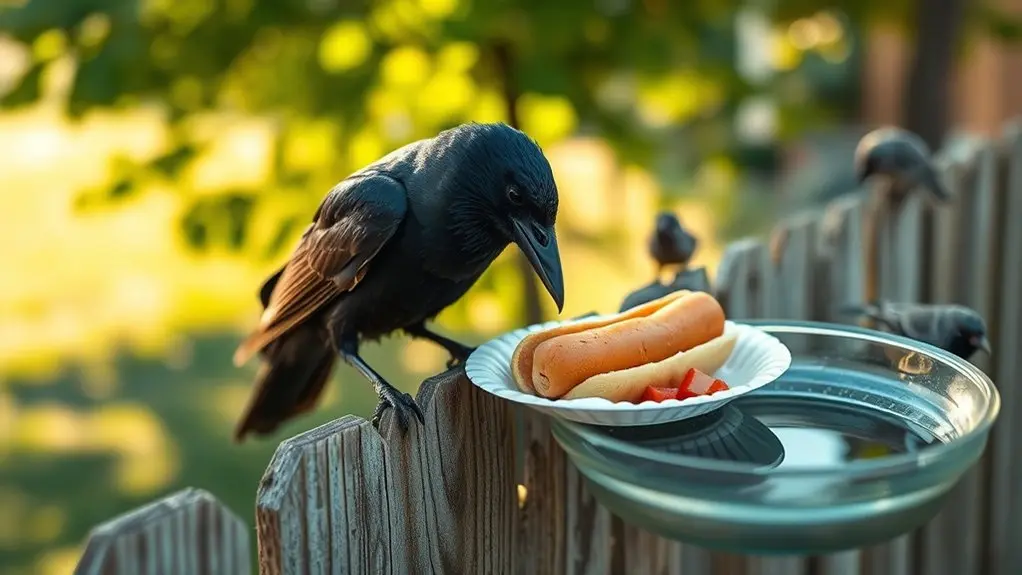
Why should you avoid feeding hot dogs to birds? Hot dogs aren’t a healthy choice for bird health because they lack the essential nutrients birds need.
Birds thrive on a balanced diet rich in seeds, fruits, and natural foods, which hot dogs simply don’t provide.
Birds need a balanced diet of seeds, fruits, and natural foods, not processed items like hot dogs.
Processed meats like hot dogs can cause digestive problems and other health issues, putting birds at risk. While some people might feed hot dogs to birds, bird health experts strongly discourage this practice.
Instead, it’s better to stick with foods that support their well-being and natural dietary needs. Choosing healthy, nutrient-rich options guarantees you’re helping birds stay strong and vibrant, rather than exposing them to potential harm with processed, nutrient-poor hot dogs.
What Nutrients Are Missing in Hot Dogs for Birds?
Although hot dogs might seem like a convenient snack, they lack the essential vitamins and minerals birds need to stay healthy. Hot dogs don’t provide the essential nutrients birds require for proper growth, digestion, and energy.
Without natural proteins, fibers, and a variety of vitamins, hot dogs fall short in supporting birds’ health. Feeding hot dogs regularly can leave birds nutrient-deficient and struggling to thrive.
| Missing Nutrient | Importance for Birds |
|---|---|
| Vitamins (A, D, E) | Support vision, bone health |
| Minerals (Calcium, Iron) | Aid bone strength, oxygen transport |
| Natural Proteins | Provide energy, muscle repair |
| Dietary Fiber | Promote healthy digestion |
| Variety of Nutrients | Guarantee balanced diet and immunity |
Avoid feeding hot dogs to maintain your birds’ essential nutrient intake and overall health.
How Do Processed Meats Hurt Bird Health?

Because processed meats like hot dogs contain high levels of sodium, fat, and harmful additives, feeding them to birds can seriously harm their health. When you offer processed meats, you disrupt the natural bird diet they need to stay healthy.
These foods lack essential nutrients birds require, leading to various health issues such as obesity and weakened immune systems. The additives and preservatives in processed meats can also cause digestive problems since birds can’t properly process these substances.
Processed meats lack vital nutrients, causing obesity, weakened immunity, and digestive issues in birds.
Over time, relying on unhealthy foods like hot dogs can reduce birds’ reproductive success and survival rates, affecting entire populations.
To protect bird health, it’s best to avoid processed meats and stick to natural, nutrient-rich foods that support their well-being.
Can Hot Dogs Cause Digestive Issues in Birds?
You mightn’t realize it, but hot dogs actually lack the essential nutrients that birds need. This means feeding them hot dogs could lead to nutritional deficiencies.
Plus, the processed ingredients and high fat content can really upset a bird’s sensitive digestive system. So, it’s important to understand how these factors can impact your feathered friend’s health.
Nutritional Deficiencies Risk
When birds consume hot dogs, their digestive systems can struggle with the high salt, fat, and preservatives found in these processed meats. This can lead to nutritional deficiencies since hot dogs lack essential vitamins and minerals birds need.
Feeding processed meats disrupts their balanced diet, causing digestive issues and potential long-term health problems.
Here’s what you should keep in mind:
- Hot dogs don’t provide the nutrients birds require for healthy growth and energy.
- Excess salt and fat can upset their digestive system, causing discomfort or illness.
- Preservatives in processed meats may harm gut health, making nutrient absorption difficult.
To keep birds healthy, avoid feeding hot dogs and stick to natural foods like seeds, fruits, and vegetables.
Processed Meat Impact
Although hot dogs might seem like a convenient snack to share with birds, they can cause significant digestive issues due to their high fat and sodium content.
Processed meats like hot dogs aren’t suited for a bird diet because birds lack the digestive tools to properly break down these foods.
Feeding processed meats can lead to discomfort and various health issues, including long-term complications that affect your bird’s well-being.
Since hot dogs lack essential nutrients, they don’t support a balanced bird diet and may disrupt normal digestion.
To keep your feathered friends healthy, it’s best to avoid processed meats altogether and stick to natural, nutrient-rich foods that meet their specific dietary needs.
Digestive System Sensitivity
Since birds have sensitive digestive systems, feeding them hot dogs can quickly lead to problems like upset stomach or diarrhea.
Hot dogs are processed meats filled with salt and preservatives that can irritate your bird’s digestive tract, causing digestive problems.
Over time, regularly offering hot dogs disrupts their natural diet and may result in nutritional deficiencies.
Here are three key points to keep in mind:
- Hot dogs lack essential nutrients birds need for optimal health.
- High salt and additives in hot dogs can harm your bird’s digestion and overall well-being.
- Feeding hot dogs often can interfere with natural foraging, leading to poor nutrient absorption.
To protect your bird, stick to a balanced diet rich in seeds, fruits, and natural foods instead of processed meats like hot dogs.
Why Are Salt and Preservatives Bad for Birds?
Because birds are highly sensitive to sodium, the high salt content in hot dogs can quickly lead to dehydration and kidney problems.
When you feed birds salty foods, you disrupt their delicate nutrient balance, risking serious health issues.
Moreover, preservatives like nitrates and nitrites in hot dogs pose a hidden threat.
Preservatives such as nitrates and nitrites in hot dogs can silently endanger birds’ health.
Birds can’t process these chemicals well, which may cause toxic reactions or harm their digestive systems.
Over time, consuming salt and preservatives not only affects their kidney function but also increases the chances of obesity and metabolic disorders.
To protect a bird’s health, it’s essential to avoid feeding them foods rich in salt and preservatives, as these substances can greatly reduce their lifespan and overall well-being.
How Often Is It Okay to Give Birds Hot Dogs?
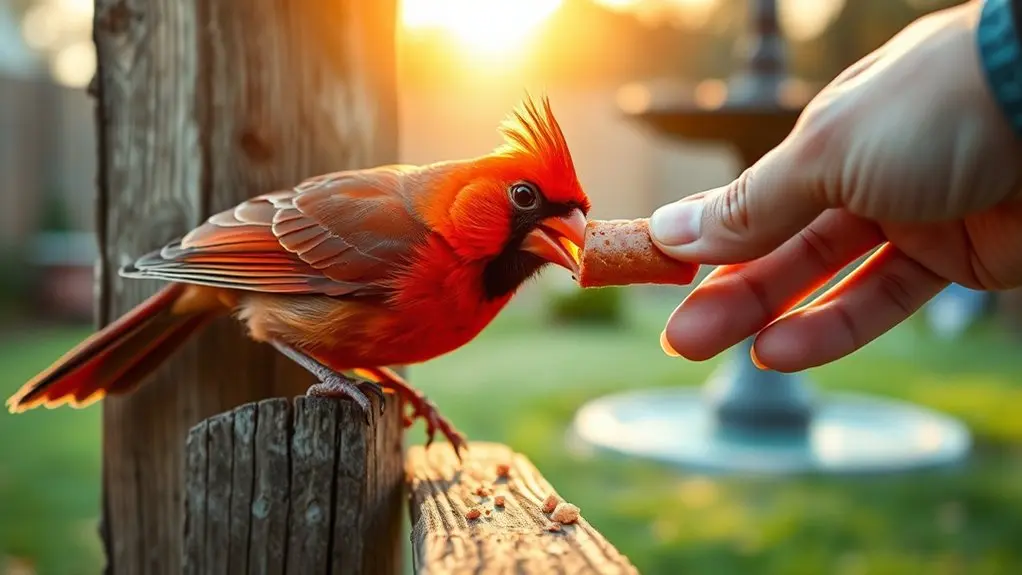
When you consider feeding birds hot dogs, you should limit it to rare occasions since these processed meats lack the nutrients birds need for good health.
While an occasional small piece may not cause immediate harm, regular feeding poses health risks and disrupts balanced nutrition.
To keep your feathered friends safe, follow these guidelines:
- Offer hot dogs only as an infrequent treat, not a regular part of their diet.
- Serve small, manageable portions to minimize digestive issues and long-term health problems.
- Prioritize natural foods like seeds and fruits that provide essential nutrients for overall well-being.
What Do Experts Say About Feeding Birds Processed Human Foods?
You might wonder what experts think about feeding birds processed human foods like hot dogs. Specialists consistently warn against it, emphasizing that hot dogs and other processed foods lack the essential nutrients birds need to stay healthy.
These foods can cause digestive problems and harm a bird’s overall well-being and longevity. Birding organizations strongly advise you to avoid offering processed foods, urging you instead to choose nutritious alternatives that support a balanced diet.
While some people share mixed opinions about feeding birds hot dogs, health concerns remain clear among professionals. If you care about the birds’ health, it’s best to steer clear of processed foods and focus on providing them with options that truly nourish them.
What Are Better Alternatives to Hot Dogs for Birds?
If you want to keep birds healthy, it’s best to offer them nutritious foods like seeds, fruits, and cooked vegetables instead of processed items like hot dogs.
These natural options give birds the vitamins and energy they need to thrive.
You can also provide suet cakes or specialized commercial bird feed, which are designed to offer balanced nutrition.
These healthier choices not only support birds’ overall well-being but also promote safe feeding practices.
Nutritious Bird Food
Although hot dogs might seem like an easy snack to share, they lack the essential nutrients birds need to stay healthy. Instead, you should offer nutritious foods that support their well-being.
Here are three better options:
- Seeds. A natural, energy-rich choice that many birds love, providing crucial fats and proteins.
- Fresh fruits and vegetables. Apples, berries, and even a mild pepper (without seeds) add vitamins and antioxidants.
- Mealworms or nuts. These supply necessary proteins and healthy fats that processed foods can’t match.
Healthy Feeding Practices
Since birds need a balanced diet to thrive, offering seeds, fresh fruits, and cooked grains provides better nutrition than hot dogs. To practice healthy feeding practices, choose a variety of seeds like sunflower and safflower that supply essential fats and proteins.
Fresh fruits such as apples and grapes add vitamins and hydration, boosting bird health. Cooked rice and potatoes are safe, nutritious options that avoid the risks tied to processed meats.
Be cautious with pepper plants and hot peppers; while some birds enjoy mild peppers, avoid spicy varieties that can irritate them.
By steering clear of processed foods like hot dogs and focusing on natural, nutrient-rich alternatives, you’ll support birds’ health and well-being more effectively.
Healthy feeding practices guarantee your feathered friends stay strong and active.
How Do Fruits and Seeds Support Bird Nutrition?
When you offer birds a mix of fruits and seeds, you provide them with essential nutrients that support their health and well-being. Fruits like apples and grapes supply crucial vitamins and minerals, boosting birds’ immune systems and overall health.
Offering birds a mix of fruits and seeds provides essential nutrients that boost their health and immune systems.
Seeds, rich in fats, deliver the energy birds need, especially during migration or colder months. Together, fruits and seeds enhance feather quality and color, which plays a role in reproductive success.
Here’s how fruits and seeds support bird nutrition:
- Fruits provide vitamins and minerals critical for immune health and digestion.
- Seeds offer high-energy fats necessary for sustained activity and survival.
- A varied diet of fruits and seeds prevents digestive issues and promotes vibrant feathers.
Feeding birds fresh, clean fruits and seeds keeps them healthy and thriving.
What Can Community Experiences Teach About Feeding Birds Hot Dogs?
If you’ve ever wondered what feeding birds hot dogs might teach us, community experiences offer valuable insights. Many express concern over hot dogs lacking essential nutrition and not fitting a bird’s balanced diet.
Some, like Lee Claxton, feed hot dogs despite warnings, while others see it as prank material, as Joe Kaufman notes. The community agrees healthier options like seeds and fruits better support bird nutrition.
| Community Viewpoint | Key Insight |
|---|---|
| Health Concerns | Hot dogs lack essential nutrients |
| Anecdotal Practices | Some still feed hot dogs to birds |
| Nutrition Advice | Seeds and fruits promote balance |
You’ll find that these shared experiences highlight the importance of choosing nutritious foods for bird wellbeing.
How Can You Recognize Poor Bird Health From Diet?
Understanding community concerns about feeding birds hot dogs helps you recognize why diet impacts their health so much.
Poor nutrition often leads to noticeable signs of poor feather quality, making birds look scruffy and less vibrant.
Poor nutrition visibly affects birds, resulting in scruffy, dull feathers and a lack of natural vibrancy.
You may also observe digestive issues, such as irregular droppings or discomfort after eating processed foods.
These symptoms can signal deeper health problems.
Watch for these key indicators:
- Dull, brittle feathers indicating nutrient deficiencies.
- Changes in droppings or digestion showing stress on their system.
- Increased vulnerability to disease as weakened immunity lowers their ability to fight infections.
How to Feed Birds Safely Without Processed Foods Like Hot Dogs
Although birds might accept processed foods like hot dogs, you shouldn’t feed them these items because they lack the essential nutrients birds need to thrive.
Instead, choose natural options like fresh bird seed mixes, cut-up fruits, and cooked grains to provide balanced nutrition.
Avoid giving birds anything stale, moldy, or highly seasoned, especially foods with hot pepper or spicy ingredients, which can harm their digestive systems.
You can safely offer fresh kitchen scraps such as cooked rice or unsalted vegetables to keep their diet varied and healthy.
Remember to adjust what you feed based on seasonal bird activity, ensuring they get the right nutrients all year round.
Feeding birds this way helps them stay strong without risking health issues from hot dogs or processed foods.
Frequently Asked Questions
Can Baby Birds Safely Eat Small Pieces of Hot Dog?
You shouldn’t feed baby birds small pieces of hot dog because it doesn’t meet their baby bird nutrition needs and can cause digestive issues.
Instead, focus on hot dog alternatives like mashed fruits, insects, or specially formulated baby bird food to support their growth.
Always follow safe feeding practices by offering appropriate, nutrient-rich foods in the right size to avoid choking and guarantee they develop healthily.
Do Different Bird Species React Differently to Eating Hot Dogs?
You might think all birds gobble hot dogs with the same gusto, but bird preferences vary wildly!
Some larger birds tolerate these processed snacks, yet the poor nutritional value means feeding risks loom large, especially for smaller species.
Your finches and sparrows could suffer digestive distress, while crows might just shrug it off.
Knowing these differences helps you respect each bird’s needs and avoid unintended harm when offering treats.
How Should Hot Dogs Be Prepared Before Offering to Birds?
For safe hot dog preparation, you should always cook the hot dog thoroughly to reduce bacteria risks.
Cut it into small, manageable pieces to avoid choking hazards and guarantee bird safety.
Keep in mind, hot dogs lack nutritional value for birds, so offer them sparingly.
Avoid any with preservatives or additives, as these can harm birds.
Prioritize healthier options instead, but if you do feed hot dogs, prepare them carefully to protect your feathered friends.
Can Feeding Hot Dogs to Birds Attract Unwanted Wildlife?
Feeding hot dogs to birds can attract unwanted wildlife faster than a rocket launch!
When you offer processed meat, you invite raccoons, squirrels, and other critters, causing complicated wildlife interaction.
This disrupts natural feeding habits and raises nutritional concerns since hot dogs are high in salt and fat.
If you want to support healthy bird populations, stick to natural foods. They’ll keep your backyard peaceful and the birds thriving.
Are There Any Seasonal Considerations When Feeding Birds Hot Dogs?
Yes, you need to assess temperature effects and seasonal availability when feeding birds hot dogs.
During warmer months, birds prioritize natural, nutrient-rich foods to maintain dietary balance, so hot dogs can disrupt their feeding habits.
In colder seasons, natural food becomes scarce, but hot dogs still lack essential nutrients.
To support birds healthily, focus on offering foods that match their seasonal dietary needs instead of unhealthy options like hot dogs.
Conclusion
You might think sharing a hot dog with birds is harmless, but it’s really a wolf in sheep’s clothing. Hot dogs lack essential nutrients and pack harmful salt and preservatives that can upset your feathered friends’ health.
Instead, offer fruits, seeds, and natural foods to keep them chirping happily. Remember, feeding birds right is like tuning an instrument. It helps their vibrant song stay strong and sweet for years to come.