
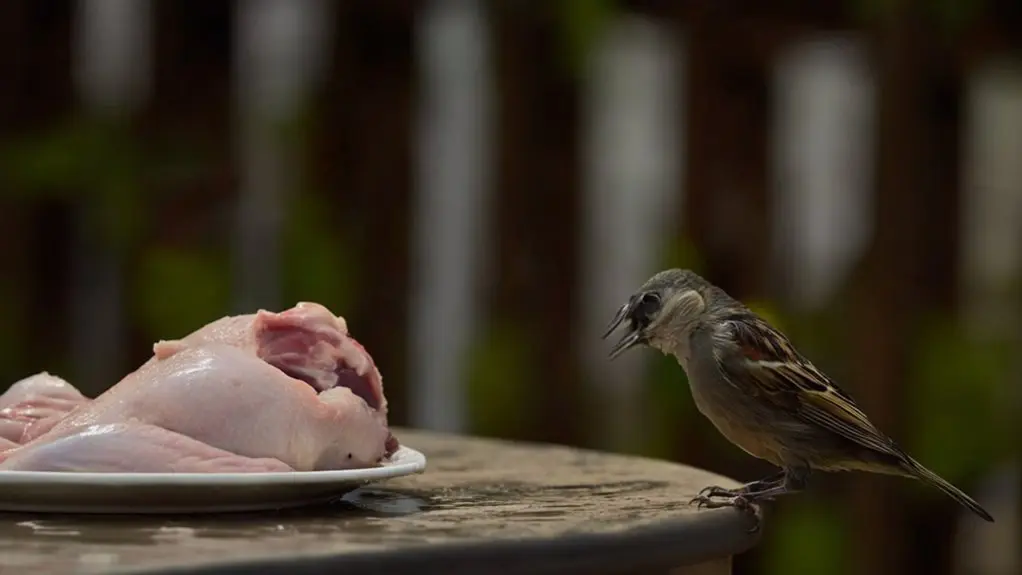
You shouldn’t feed raw chicken to birds because it often carries harmful bacteria like Salmonella and parasites that can cause severe illness or even death. Raw chicken risks spreading infections among bird populations and messing up their natural health.
Cooked chicken is safer but still requires caution and proper preparation. To protect birds and their environment, it’s best to offer natural, unseasoned foods.
If you want to make sure the birds stay healthy, understanding safe feeding practices and seasonal tips is key. It really helps to know what’s best for them!
Why Raw Chicken Is Harmful to Wild Birds
Although it might seem harmless to offer raw chicken to wild birds, doing so exposes them to dangerous bacteria like Salmonella and Campylobacter. These pathogens resist the birds’ immune defenses, often leading to severe infections or death. Unlike cooked poultry, raw chicken hasn’t undergone any safety processing to eliminate harmful microbes.
When you feed raw chicken, you risk introducing parasites and other pathogens into the local environment, which can accelerate disease spread among wild bird populations. This not only compromises individual birds but also threatens the health of entire bird communities.
To protect wild birds, you should avoid offering raw chicken, as it poses significant health risks that could destabilize their natural ecosystems and reduce their chances of survival.
Health Risks of Raw Chicken for Wild Birds
Feeding raw chicken to wild birds introduces several health risks that can severely impact their well-being. Raw chicken often harbors harmful bacteria like Salmonella and Campylobacter, which can infect birds and cause severe illness or death.
Feeding raw chicken to wild birds risks serious illness from bacteria like Salmonella and Campylobacter.
When you feed raw chicken, you increase the risk of disease transmission, especially in crowded or nesting areas where birds gather closely.
Also, wild birds have a delicate gut flora balance that raw poultry can disrupt, leading to digestive and overall health issues. Raw chicken may contain invisible parasites and pathogens that pose serious threats.
Wildlife experts strongly discourage offering raw poultry because it promotes infection spread within bird populations. This not only endangers individual birds but also the broader ecosystem you’re trying to support.
Is Cooked Chicken Safe for Wild Birds?
You can offer cooked chicken to wild birds every now and then, but you should be careful about a few things. For example, harmful seasonings and bones can pose risks to them.
Cooked chicken does provide some nutrients, but it doesn’t have the balanced nutrition that birds get from their natural foods or specially made bird feed.
Risks Of Cooked Chicken
When offering cooked chicken to wild birds, you should consider the potential health risks involved. Cooked chicken often contains seasonings, salt, or oils that can be harmful to birds, affecting their health negatively.
There’s also a risk of bacterial contamination, such as Salmonella, especially if the chicken isn’t properly handled or stored. This contamination can spread diseases within bird populations, posing a broader ecological threat.
Although cooked chicken is less likely to carry parasites compared to raw chicken, the risks tied to seasoning and bacteria make feeding it generally unsafe.
To protect wild birds, it’s best to avoid offering cooked chicken and instead provide natural, uncontaminated food sources that support their health and well-being without unintended harm.
It’s really about keeping things safe and simple for them.
Nutritional Value Concerns
Although raw chicken poses significant health risks to wild birds because of bacteria and parasites, cooked chicken can be a safer option if it’s prepared properly.
When you feed cooked chicken, you reduce those risks while still providing some nutritional benefits. Just remember to keep the portions small and unseasoned so you don’t harm the birds.
Here are some things to keep in mind about cooked chicken and nutrition:
Cooked chicken supplies protein but doesn’t have the essential vitamins and minerals birds really need. Overfeeding chicken can mess with a bird’s natural diet and overall health.
Also, avoid any seasoning or additives since those can be toxic to birds.
It’s best to serve chicken in moderation, and always alongside a variety of natural foods. This way, you’re helping birds get a balanced diet without risking their well-being.
Safe Feeding Alternatives
Since raw chicken carries a high risk of transmitting harmful bacteria like salmonella and campylobacter, offering cooked chicken in small, plain pieces becomes a safer alternative for wild birds.
You should confirm the chicken is unseasoned and free from additives like salt, spices, or sauces, as these can harm birds’ health.
Cooked chicken provides a valuable protein source, especially during winter when natural food is scarce.
Always remove bones to prevent choking or injury.
Additionally, provide fresh meat in moderation to avoid creating dependency or nutritional imbalance.
Safe Natural Foods to Feed Instead of Raw Chicken
If you want to keep wild birds safe, it’s best to offer them safe, natural foods instead of raw chicken.
During winter, you can provide high-energy seeds and suet, which are great for giving birds the fuel they need to stay warm.
Fresh fruits are another excellent choice because they supply essential vitamins that help keep birds healthy.
By choosing these natural foods, you’re not only supporting their health but also lowering the chances of spreading diseases.
Suitable Winter Feeding
What should you feed wild birds during winter to keep them healthy and safe? Raw chicken is unsafe because of bacterial risks, so it’s better to choose high-energy, natural foods that help their metabolism in cold weather. You want to provide clean, fresh items made just for wild birds to avoid any health problems.
Here are some good winter feeding options to consider:
- Unsalted peanuts, which give them essential fats and protein
- Sunflower hearts, a favorite energy-packed seed
- Suet and fat balls, which provide important calories to keep them warm
- Small amounts of grated cheese, as an occasional treat
These foods help birds keep their energy up without the dangers that come with raw poultry. Always make sure the food is fresh and safe for wild birds so they stay well throughout the winter.
Fresh Fruits Benefits
Although raw chicken poses health risks to wild birds due to harmful bacteria, fresh fruits offer a safe and nutritious alternative. You can provide birds with apples, pears, and grapes, which supply essential vitamins, antioxidants, and hydration.
Fruits like raisins and sultanas are rich in natural sugars, giving birds a quick energy boost, especially when they’re active. Many fruit varieties also contain dietary fiber, supporting healthy digestion.
By offering fresh fruits, you encourage natural feeding behaviors that mimic seasonal foraging, promoting the birds’ well-being. Unlike raw chicken, fruits are free from harmful bacteria, making them a safer choice.
Incorporating fresh fruits into your bird-feeding routine ensures they receive crucial nutrients while reducing health risks associated with inappropriate foods like raw chicken. It’s a simple way to keep the birds healthy and happy!
Natural Seed Options
How can you provide safe, nutritious food that meets the natural dietary needs of wild birds? Instead of raw chicken, which poses health risks, focus on natural seed options that align with their natural diet.
Birds thrive on seeds, nuts, fruits, and insects, so offering a variety of seeds supports their health and encourages natural foraging.
Consider these safe, natural seed options:
- Sunflower seeds, rich in fat and energy
- Millet, favored by small bird species
- Cracked corn, a hearty, accessible grain
- Unsalted, dried seeds to guarantee safety and nutrition
Preventing Bacterial Infections From Raw Meat at Feeders
Since raw chicken can carry harmful bacteria like Salmonella and Campylobacter, you need to take careful steps to prevent bacterial infections when offering any raw meat at bird feeders. These bacteria pose serious health risks to wild birds, increasing the chance of disease transmission.
Raw chicken can harbor bacteria like Salmonella, posing serious health risks to wild birds at feeders.
To reduce risks, always clean and disinfect feeders thoroughly and regularly if you choose to use raw meat.
Though experts generally discourage feeding raw chicken, the safest approach is cooking chicken thoroughly before offering it to birds, which eliminates harmful bacteria.
Prioritizing proper hygiene and avoiding raw meat altogether protects bird populations from avoidable illnesses. This ensures their health and safety while enjoying your feeder.
Spotting a Sick Bird? What You Should Do
When you spot a bird showing signs of illness, like lethargy, ruffled feathers, or unusual behavior, it’s important to act cautiously to protect both the bird and yourself. Avoid direct contact and don’t offer food or water because that can spread disease or make the bird’s condition worse.
Instead, try these steps. First, remove feeders temporarily to help limit disease transmission. Then, reach out to local wildlife or bird rescue organizations for expert guidance.
Make sure to keep good hygiene by cleaning feeders regularly. And remember, watch the bird from a distance without disturbing it. This way, you’re helping without causing more stress.
Seasonal Guidelines for Feeding Wild Birds Safely
Although feeding wild birds can be rewarding year-round, adjusting your approach seasonally guarantees their health and safety.
From May to October, during breeding season, it’s best to remove feeders to minimize disease transmission among birds.
In winter, provide high-energy foods like suet, fat balls, and nuts to support their survival in cold temperatures.
Warmer months call for encouraging natural foraging, reducing reliance on artificial feeders.
Always clean your feeders weekly and remove old food to prevent diseases like trichomonosis.
Additionally, offering fresh water and seasonally appropriate foods keeps birds healthy and well-nourished throughout the year.
By following these seasonal guidelines, you’ll help maintain a safe, supportive environment for wild birds in your care.
It’s a simple way to make sure they thrive no matter the season.
Frequently Asked Questions
Can Domestic Pet Birds Eat Raw Chicken Safely?
You shouldn’t feed raw chicken to your domestic pet birds since it carries harmful bacteria.
Instead, stick to species-appropriate foods and cooked meats to keep your birds healthy. This way, you avoid risks to both them and yourself.
How Long Can Raw Chicken Be Left Outside Before It Spoils?
You shouldn’t leave raw chicken outside for more than 1-2 hours at room temperature.
If it’s warmer, like above 90°F (32°C), you need to be extra careful. Keep it refrigerated or toss it within 1 hour.
This helps avoid spoilage and the growth of harmful bacteria. Don’t take any chances with food safety!
Are There Specific Bird Species More Susceptible to Raw Chicken Bacteria?
You should know young or sick birds are up to 50% more vulnerable to bacteria in raw chicken. Predatory and scavenging species also face higher risks due to their feeding habits, so caution is essential when feeding them.
It’s really important to be careful around these birds because their immune systems might not handle the bacteria well. So, if you’re feeding wild birds or even pets that fall into these categories, keep an eye on what they’re eating. Better safe than sorry!
Can Raw Chicken Bones Harm Birds if Ingested?
Yes, raw chicken bones can harm birds if ingested. They splinter easily, which can cause choking, internal injuries, or digestive blockages.
You really shouldn’t feed birds raw chicken bones. It’s just not worth the serious health risks or even the chance of death. Better to keep them safe with bird-friendly foods instead.
What Are Natural Predators of Birds Attracted by Chicken Feeders?
When you place chicken feeders, you invite stealthy shadows like cats, hawks, owls, and foxes to the feast. These natural predators lurk nearby, watching and waiting. So, protect your birds with strategic feeder placement and guards.
It’s important to stay one step ahead of these sneaky visitors. A little planning can go a long way in keeping your birds safe and sound.
Conclusion
Feeding raw chicken to wild birds is like handing them a ticking health time bomb. It poses serious risks because of harmful bacteria. You should avoid it and stick to safer, natural foods like seeds, fruits, and nuts.
Cooked chicken can be an occasional treat, but only if it’s prepared properly. Always keep feeders clean and watch for signs of illness. By following these guidelines, you’ll help protect wild birds and keep their environment safe and healthy year-round.