
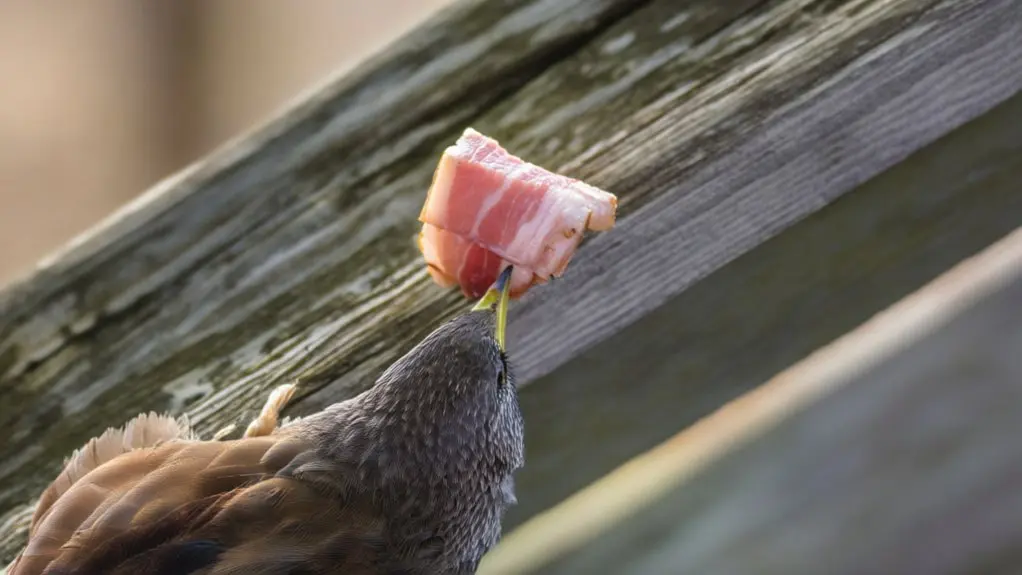
You shouldn’t feed raw bacon to birds because it carries harmful bacteria like Salmonella and Listeria that can cause serious illness. The high salt and fat content can also damage their liver and digestion.
If you want to offer bacon safely, it must be fully cooked and unseasoned, given only in small amounts. Knowing how to spot early signs of sickness and safer treat options will help you keep your bird healthy and thriving.
Is Raw Bacon Safe for Birds?

Although raw bacon might seem like an occasional treat, you should never feed it to birds because it carries harmful bacteria such as Salmonella and Listeria. Birds have sensitive digestive systems that struggle to handle these pathogens, making them highly vulnerable to infections and food poisoning.
Never feed birds raw bacon; it harbors harmful bacteria that their delicate systems can’t handle.
When birds consume raw bacon, they risk gastrointestinal upset, diarrhea, or more severe health complications. To protect their well-being, avoid giving them any raw pork products altogether.
If you want to offer bacon safely, make sure it’s thoroughly cooked to an internal temperature of 145°F, which eliminates harmful bacteria.
Even then, feed bacon only in moderation, as it isn’t a natural or nutritionally balanced food for birds. Prioritize their health by sticking to bird-safe foods and avoiding raw bacon completely.
It’s really better to play it safe and keep their diet simple and healthy.
Harmful Bacteria Found in Raw Bacon
You should know that raw bacon often carries harmful bacteria like Salmonella and Listeria monocytogenes. These nasty bugs can cause serious infections in birds and other animals if they eat it.
Salmonella Contamination Risks
How dangerous can raw bacon be when it comes to Salmonella contamination? Raw bacon can harbor Salmonella bacteria, which poses significant health risks to both humans and animals. The FDA enforces strict zero-tolerance policies for Salmonella in raw pet foods, including bacon, because it can cause foodborne illness.
If you handle or feed raw bacon, you increase the chance of spreading bacteria through contaminated surfaces, utensils, or direct contact with pets. Salmonella infection symptoms include diarrhea, fever, and abdominal cramps. It can be especially severe for vulnerable groups like pregnant women and young children.
To protect yourself and your birds, always cook bacon to an internal temperature of 160°F. This effectively eliminates Salmonella and ensures safety before offering it to any animals.
Listeria Presence Concerns
When handling raw bacon, it’s important to be aware that it can carry Listeria monocytogenes, a harmful bacteria capable of surviving in cold and salty environments. This means raw bacon can harbor Listeria even when refrigerated, posing a serious risk of listeriosis.
People who are especially at risk include pregnant women, newborns, and those with weakened immune systems.
Birds can also be vulnerable to bacterial contamination, so it’s not just humans who need to be careful.
The USDA and FDA recommend cooking bacon to at least 145°F to get rid of Listeria.
Feeding raw or undercooked bacon to birds increases their risk of illness, with symptoms like fever and gastrointestinal distress.
To keep your birds healthy, avoid giving them raw bacon altogether.
Always make sure any bacon you offer is thoroughly cooked to prevent Listeria and the health risks that come with it.
How Raw Bacon Affects Bird Health and Digestion
Although raw bacon might seem like a tempting treat to share with birds, its high fat and salt content can seriously harm their health.
Birds don’t produce the enzymes needed to digest raw pork properly, increasing their risk of bacterial infections such as Salmonella and Listeria.
The rich fat content can cause obesity, liver damage, and metabolic disorders over time.
Additionally, preservatives and curing agents in raw bacon may irritate or poison their digestive systems.
Because raw bacon often carries harmful pathogens, feeding it to birds exposes them to serious health threats that cooking would otherwise reduce.
To protect your birds’ well-being, it’s essential to understand these risks and avoid offering raw bacon as food.
Just stick to safer options and keep your feathered friends healthy and happy!
How to Safely Feed Bacon to Birds
You should always cook bacon thoroughly before offering it to birds. This helps minimize bacterial risks and makes it easier for them to digest.
When you do feed bacon, make sure it’s in very small amounts and only as an occasional treat. Too much can cause health problems because of the fat and salt content.
Also, watch out for any added seasonings. Those can be harmful to birds, so stick to plain, unseasoned bacon only.
Bacon Preparation Guidelines
Since raw bacon poses significant health risks to birds because of its high salt and fat content, as well as potential bacterial contamination, you have to prepare it carefully before feeding. Always cook bacon thoroughly to get rid of harmful bacteria like Salmonella and Listeria. Never feed raw or undercooked bacon to birds.
Once it’s cooked, drain off the excess grease to reduce fat intake. Make sure the bacon is plain—skip any seasonings, preservatives, or additives that might harm the birds.
Cut the bacon into small, manageable pieces so it’s easier and safer for birds to eat.
Portion Control Importance
Proper preparation of bacon is only the first step in safely feeding it to birds. Controlling the portion size plays an essential role in preventing health complications. You should offer bacon in small, carefully measured amounts to limit birds’ fat and salt intake.
Bacon’s high saturated fat content can contribute to obesity and cardiovascular issues if overfed. Additionally, the salt and preservatives in processed bacon pose risks when consumed excessively. By restricting servings, you guarantee bacon remains an occasional treat rather than a dietary staple.
This approach helps minimize digestive upset and exposure to harmful additives. Always keep an eye on the quantity you provide to maintain your bird’s health and well-being. Portion control is really the key to safely including bacon in a bird’s diet without causing long-term health problems.
Health Risks Awareness
Although bacon might seem like a tempting treat, feeding raw bacon to birds poses significant health risks due to its high fat, salt content, and potential bacterial contamination.
Raw bacon can cause digestive issues, toxicity, and expose birds to harmful bacteria like Salmonella or Listeria.
Birds’ sensitive digestive systems struggle with processed meats, so raw bacon may lead to nutrient imbalances or serious health problems.
To feed bacon safely, always cook it thoroughly to reduce fat and salt levels.
Offer only small, unseasoned portions occasionally, never as a regular food source.
Remember, avoiding raw bacon entirely is the safest choice to protect your birds’ health and well-being while still providing occasional treats responsibly.
It’s better to be safe than sorry when it comes to what you feed your feathered friends.
Signs of Illness From Raw Bacon in Birds
When birds eat raw bacon, you should watch closely for signs of illness such as decreased activity, vomiting, and abnormal droppings. These symptoms often indicate bacterial infections like Salmonella or Listeria, which can develop rapidly within 12 to 24 hours.
To protect your bird’s health, monitor for these key warning signs:
Keep a close eye on your bird for these important warning signs to ensure its health and safety.
1. Lethargy and loss of appetite
Your bird may become unusually weak or refuse food.
2. Gastrointestinal distress
Vomiting and diarrhea signal digestive upset from contaminated bacon.
3. Neurological or reproductive symptoms
Listeria can cause tremors, uncoordinated movements, or reproductive issues.
If you notice persistent or severe symptoms, seek veterinary care immediately to prevent serious complications. Early intervention is critical for your bird’s recovery.
Don’t wait too long—getting help early makes a big difference.
Healthy Treat Alternatives to Raw Bacon for Birds
Because raw bacon carries risks like bacterial contamination, you should never offer it to your bird. Instead, provide safer, nutritious alternatives that support their health.
Small amounts of cooked, unseasoned lean meats such as chicken or turkey make excellent protein sources.
Fresh fruits and vegetables also supply essential vitamins and minerals while being safe to consume.
Nutritious seeds, millet sprays, and commercial bird pellets offer balanced nutrition without the dangers associated with processed meats.
Always avoid salt, seasoning, and processed products to prevent health complications.
By choosing these healthy treats, you guarantee your bird enjoys variety without risking their well-being.
Prioritizing safe, wholesome options helps maintain your bird’s vitality and prevents illness linked to contaminated foods like raw bacon.
Frequently Asked Questions
Can Birds Develop a Preference for Bacon Over Natural Foods?
Yes, you can cause birds to develop a preference for bacon over natural foods because its fat and salt appeal to their taste buds. But this shifts their diet away from essential nutrients they’d get from seeds and insects.
How Does Raw Bacon Affect Different Bird Species Uniquely?
You’ll find raw bacon harms birds differently. Parrots risk infections, wild scavengers face bacterial contamination, and domestic poultry can develop obesity or heart issues.
Specialized feeders suffer severe health problems because of their unique dietary needs. So, it’s really important to know which birds you’re feeding and what’s safe for them. Otherwise, you might unintentionally cause harm.
Is There a Difference Between Smoked and Unsmoked Raw Bacon for Birds?
There’s no significant difference between smoked and unsmoked raw bacon for birds. Both carry harmful bacteria and high salt levels, so you shouldn’t feed either type raw to birds to avoid health risks.
It’s really best to steer clear of giving birds any raw bacon. Whether it’s smoked or not, the risks just aren’t worth it. Better to find safer treats for your feathered friends!
Can Feeding Raw Bacon Impact a Bird’s Behavior or Activity Levels?
Feeding raw bacon can boost a bird’s activity by up to 30% because of the high fat and salt content. But this kind of overstimulation isn’t all good news. It can lead to dehydration, illness, and some annoying behavioral issues.
Are There Long-Term Effects of Occasional Raw Bacon Consumption in Birds?
Yes, occasional raw bacon can cause long-term issues like kidney damage, obesity, and digestive problems in birds. You really shouldn’t risk their health by feeding it.
Repeated exposure may reduce their lifespan and organ function. So, it’s best to avoid giving them raw bacon at all. Keeping their diet safe and healthy is the way to go.
Conclusion
Feeding raw bacon to birds is like offering them a hidden storm. Dangerous bacteria lurk beneath its tempting surface. You wouldn’t want to invite illness to perch on their wings, so steer clear of raw bacon and opt for safer treats that nourish without risk.
Protect your feathered friends by choosing foods that keep their health soaring high. This way, their vibrant songs continue to fill the air with life and joy. It’s all about keeping them happy and safe.