
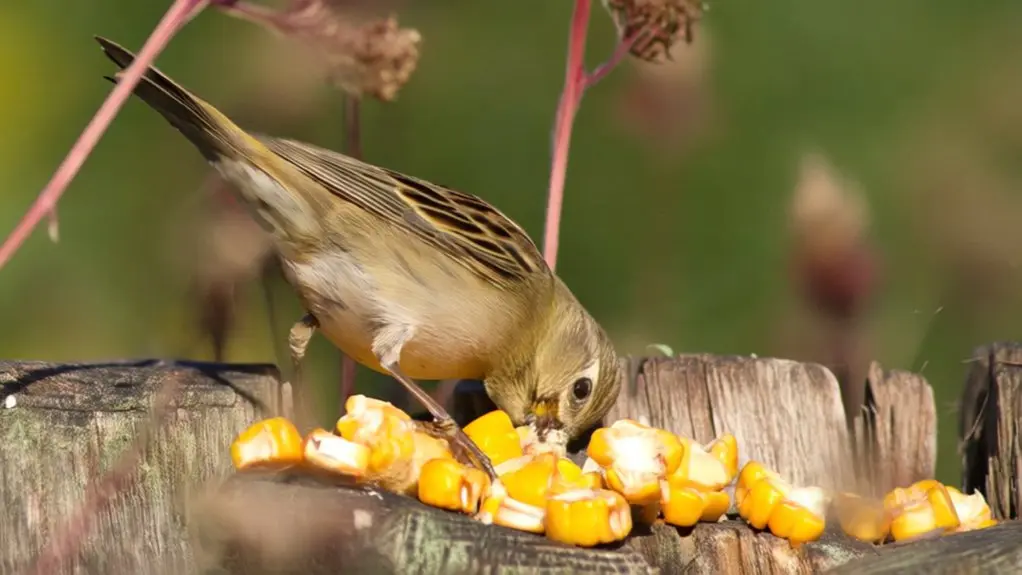
You can safely offer birds raw corn, especially during early spring when natural foods are scarce. Raw corn provides essential carbohydrates, proteins, and moisture, supporting birds’ energy and hydration needs during breeding seasons. Many species like sparrows and blackbirds benefit from its soft texture and nutrients.
Just be sure to avoid additives and large kernels when feeding to prevent choking. Birds also help control corn pests, which affects crop health and yields. It’s pretty cool how these interactions influence your garden and local ecosystems.
Why Birds Eat Raw Corn in Spring and Beyond
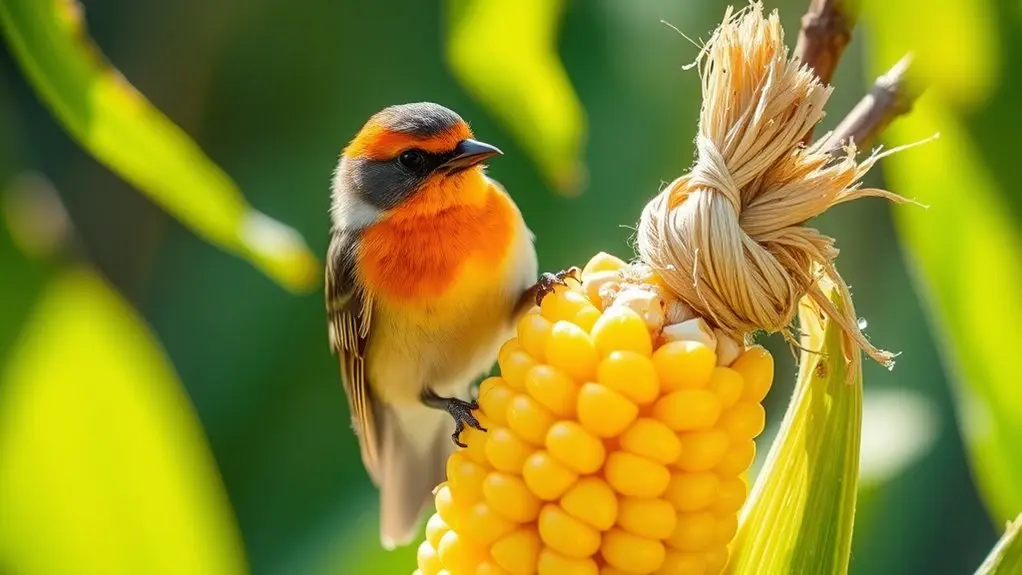
Although natural food sources like insects and seeds are limited in early spring, birds actively consume raw corn because it provides soft, nutritious, and easily accessible energy crucial for breeding and raising their young.
During this critical period, raw corn supplements scarce natural resources, offering essential carbohydrates and moisture to sustain increased metabolic demands.
Raw corn provides vital carbohydrates and moisture, supporting birds’ heightened energy needs during resource-scarce times.
Sweetcorn is favored for its soft texture and high water content. It supports birds when insects and seeds haven’t fully reemerged.
Feeding raw corn, free from salt and seasoning, ensures a safe, cost-effective food source that bolsters bird populations as they recover from winter scarcity.
This nutritional support helps birds allocate energy efficiently toward reproduction and chick development.
It really highlights raw corn’s ecological role beyond just being food. So, next time you see birds munching on corn, you’ll know it’s about more than just a tasty snack.
Which Bird Species Commonly Feed on Raw Corn
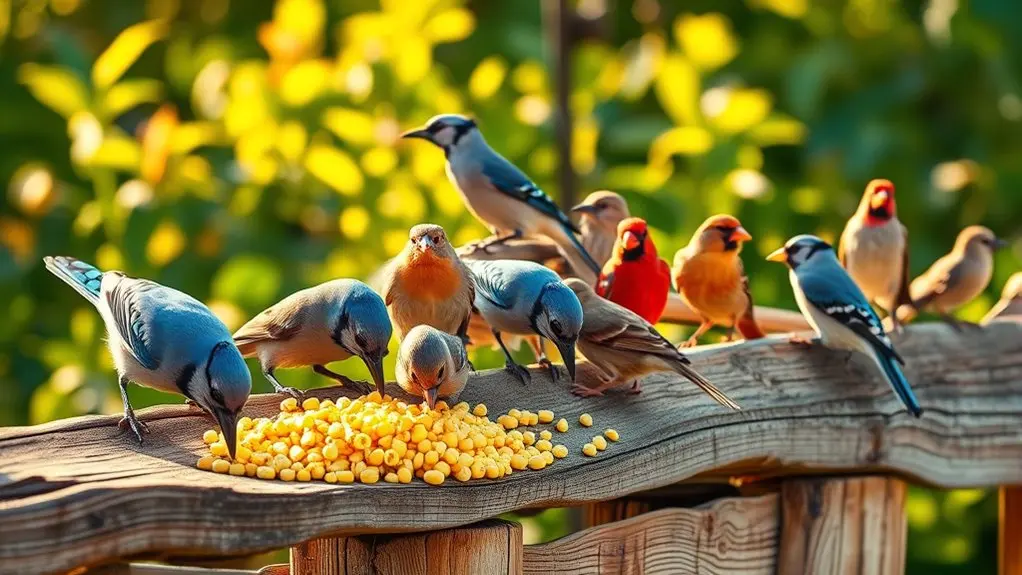
When you observe birds feeding on raw corn, you’ll often notice species such as robins, blackbirds, sparrows, and starlings taking advantage of this food source. These birds prefer raw sweetcorn because it’s soft and easily digestible, especially during spring when other natural foods are scarce.
Song Sparrows, in particular, consume corn rootworms found in cornfields, indicating their dietary reliance on both raw corn and its associated pests.
Garden birds are also attracted to plain, unseasoned sweetcorn, which provides essential carbohydrates, proteins, and vitamins.
By feeding on raw corn, these species meet their increased energy demands during the breeding season while simultaneously contributing to pest control.
Understanding which birds commonly feed on raw corn helps clarify their ecological roles in agricultural and garden environments.
How Raw Corn Benefits Birds Nutritionally
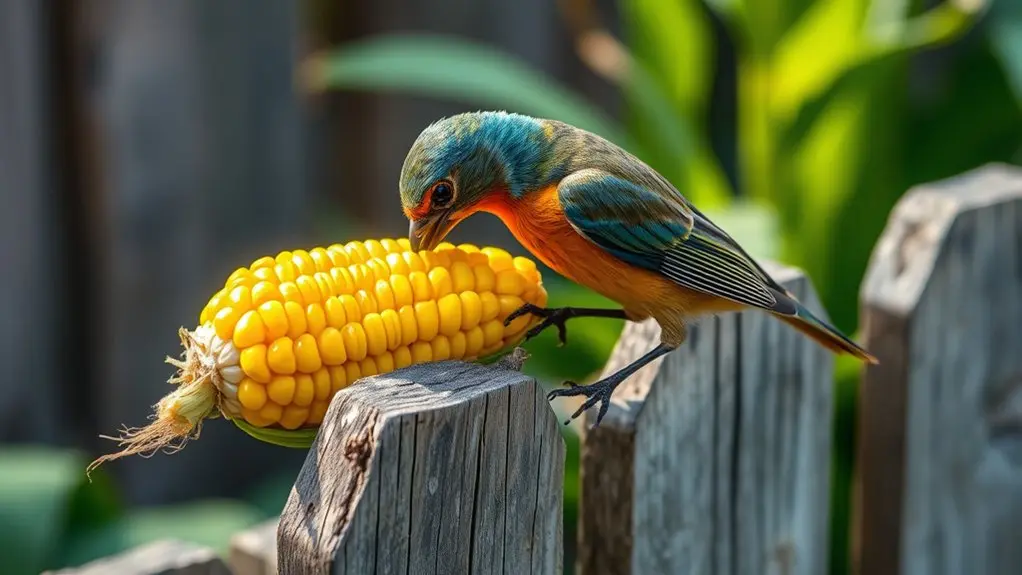
Because raw corn contains a balanced mix of carbohydrates, proteins, and vitamins, it considerably supports birds’ energy needs and overall health. The carbohydrates provide a readily available energy source, while proteins contribute to tissue repair and growth. Moreover, vitamins in raw corn aid metabolic processes essential for vitality.
Its high water content helps keep birds hydrated, which is especially important during warmer periods or dry environments. Soft kernels are easy for species like robins, blackbirds, sparrows, and starlings to eat, making nutrient intake simple without too much effort.
During spring, raw corn offers vital nutrients that support breeding birds in raising their young.
Plus, as a natural and cost-effective food source, raw corn supplements birds’ diets when natural food availability declines. This helps promote sustained health across the seasons.
How to Safely Feed Birds Raw Corn
When you’re getting raw corn ready for the birds, make sure it’s plain—no salt or butter added. Also, cut it into small pieces so the birds don’t choke.
You can either scatter the corn on the ground or put it on bird tables. Just make sure these spots are clean and easy for the birds to get to, which helps keep the corn fresh and reduces the chance of contamination.
And don’t forget to top up the corn regularly. This way, the birds will always have a fresh, safe snack to enjoy in your garden.
Preparing Corn For Birds
Although raw corn is generally safe and digestible for birds, you should take specific precautions to prepare it properly. Feeding corn that’s plain and free of additives is vital to avoid health risks. You’ll also want to guarantee the pieces are manageable to prevent choking.
Regular maintenance of feeding areas is essential to deter mold growth and spoilage, which can harm birds. Use raw corn without salt, butter, or seasoning to guarantee safety. Remove any leftover corn promptly to prevent mold and spoilage.
Scatter corn on lawns or bird tables to promote natural foraging. Avoid offering hard or oversized corn pieces that could cause swallowing difficulties. These steps help maintain the nutritional value and safety of corn as a bird food source.
Safe Feeding Practices
Ensuring the safety of birds while feeding them raw corn requires attention to specific practices that minimize health risks. You should offer plain raw corn, avoiding any salt, butter, or seasoning, as these additives can be toxic to birds.
Softening the kernels by cooking or soaking makes them easier to digest and reduces choking hazards.
If you use leftover corn from meals, confirm it’s unseasoned and free from harmful additives. Always verify the corn’s freshness and inspect it for mold or spoilage, which pose health threats.
Avoid feeding birds hard, dry kernels since they can be difficult to process.
Placement And Replenishment
How should you place and replenish raw corn to maximize safety and accessibility for birds? Scatter plain, unseasoned raw sweetcorn evenly on lawns or bird tables. This way, birds can easily access it without any trouble. Avoid adding salt, butter, or seasoning because these can harm birds.
Regular replenishment is really important to keep a steady food source going. This encourages birds to keep coming back. Using leftover cooked or raw sweetcorn from meals is a smart, economical, and natural choice.
Just remember to only feed soft, digestible corn. Hard vegetables like carrots should be avoided since they can pose choking risks.
- Scatter raw sweetcorn evenly for easy access
- Use plain, unseasoned corn without additives
- Replenish frequently to maintain consistent supply
- Utilize leftover sweetcorn for cost-effective feeding
This approach helps keep birds healthy and feeding safe.
What Foods to Avoid Giving Birds Alongside Corn
When feeding birds corn, you should avoid offering any seasoned or processed varieties. Additives like salt, butter, and preservatives can harm their health. So, it’s best to keep it plain and simple.
Steer clear of cooked corn products such as flavored popcorn because they might have toxic ingredients. Also, don’t give mashed or canned corn if it includes seasoning or preservatives. These can upset a bird’s digestion.
Hard, dried corn kernels are risky too since they can cause choking, especially for smaller birds with weaker beaks.
And never mix corn with dairy products, seasoned vegetables, or leftover human foods that contain salt, spices, or chemicals. These things can really mess with a bird’s health.
The Impact of Birds Eating Raw Corn on Crop Yields
Although birds like song sparrows often feed on raw corn and corn rootworms, their impact on crop yields is nuanced. You’ll find that bird activity in cornfields typically yields net benefits, partly because birds consume pest insects, which helps increase overall crop productivity.
However, their role is complex since they also eat beneficial arthropods.
Economically, bird services in corn cultivation can be valued at about US $275 per hectare. Keep in mind, though, that in other crop systems like soybeans, birds may reduce yields, causing losses.
Consider these points:
- Birds consume both raw corn and pest insects.
- Bird predation can increase corn yield despite some crop damage.
- Economic value of birds in cornfields is positive, estimated at $275/ha.
- Birds’ impact varies by crop type and pest dynamics.
How Birds Help Control Corn Pests Naturally
You might be surprised to learn that birds like song sparrows play a big role in keeping corn pests under control. They eat a lot of troublesome insects, such as corn rootworms, which helps cut down their numbers naturally.
This kind of pest control is great for the health of the crops. Plus, it’s good for farmers’ wallets too—studies show that birds can save about US $275 per hectare in places like Illinois.
Bird Pest Control
How exactly do birds contribute to pest control in cornfields? Birds like song sparrows consume corn rootworms, which are a major pest in corn crops. Studies using fecal analysis confirm that insectivorous birds feed on harmful arthropods, naturally reducing pest populations.
This biological control lessens dependence on chemical pesticides, promoting sustainable farming. Birds’ effectiveness varies by species and crop, but their role remains significant.
Key points include:
- Song sparrows target corn rootworms, reducing pest damage
- Fecal studies show birds consume diverse harmful arthropods
- Natural pest control by birds is valued at about US $275 per hectare
- Birds help decrease the need for chemical interventions in cornfields
Economic Benefits
Three key economic benefits come from birds naturally controlling corn pests, especially through species like song sparrows preying on corn rootworms. This means you can cut down on chemical pesticides, which not only lowers your input costs but also reduces environmental impact.
Birds’ pest control helps boost crop yields, with estimated gains of about US $275 per hectare. Plus, this natural regulation supports sustainable agriculture by keeping ecosystems balanced.
| Benefit | Description | Economic Impact |
|---|---|---|
| Reduced Pesticide Use | Birds consume pests like corn rootworms | Lower chemical expenses |
| Increased Crop Yield | Pest suppression leads to healthier plants | Approx. $275/hectare gain |
| Ecosystem Sustainability | Natural pest control sustains biodiversity | Long-term farm viability |
Why Birds Reduce Soybean Yields
Although birds can provide pest control benefits in some crops, they often reduce soybean yields by feeding directly on the plants and competing for resources.
Unlike corn, where birds consume significant pest species, their diets in soybean fields contain fewer pests, resulting in less predation benefit.
Instead, their feeding behavior damages the soybean plants, lowering productivity.
This activity causes a net economic loss, estimated at $348 per hectare.
Key points to consider:
- Birds consume fewer soybean pests compared to corn pests.
- Direct feeding on soybean plants damages crop structures.
- Competition for resources further stresses soybean growth.
- Bird presence correlates with measurable yield reductions.
Understanding these dynamics is essential if you want to manage bird impacts on soybean production effectively.
How Feeding Birds Corn Helps Local Wildlife
When you provide birds with raw corn, you offer a nutrient-rich food source that supports their energy requirements, especially during important times like the breeding season. Raw corn supplies essential carbohydrates, proteins, and vitamins that are crucial for meeting their high metabolic demands.
By feeding unseasoned, additive-free corn, you ensure it’s safe and easy for many bird species to eat since the kernels are soft enough for them to consume. You can also use leftover or household-cooked sweetcorn to encourage more bird activity in your garden.
This kind of supplemental feeding is especially helpful in early spring when natural food sources are still scarce.
Frequently Asked Questions
Can Baby Birds Digest Raw Corn Safely?
You can safely offer baby birds finely chopped raw corn, as some species digest it well. However, avoid whole kernels since they’re hard to process and pose choking risks.
Cooked or crushed corn guarantees better digestion and safety. It’s always a good idea to prepare their food in a way that’s easiest for them to eat and digest. This helps keep those little birds healthy and happy.
Does Eating Raw Corn Affect Bird Migration Patterns?
You might imagine flocks soaring effortlessly, fueled by energy-rich raw corn. Eating raw corn doesn’t disrupt migration patterns; instead, it supports stamina by supplying essential carbohydrates.
This helps birds maintain health and successfully complete their long migratory journeys. So, raw corn actually plays a positive role in their travel. It’s pretty interesting how something so simple can have such an impact!
How Does Raw Corn Consumption Influence Bird Mating Behaviors?
You’ll observe that raw corn consumption boosts birds’ energy, enhancing courtship displays, territorial defense, and nesting activities. This increased energy supports longer breeding periods and more frequent mating behaviors.
All of this directly influences reproductive success and pair formation. It’s pretty interesting how something as simple as corn can have such a big impact on their mating habits.
Are There Seasonal Changes in Birds’ Preference for Raw Corn?
Yes, you’ll notice birds prefer raw corn more in spring when natural food is scarce and breeding demands rise.
As insect and seed availability increases later, their reliance on raw corn decreases accordingly.
Can Raw Corn Cause Digestive Issues in Wild Birds?
Yes, raw corn can cause digestive issues if birds overconsume it. This can lead to indigestion or even blockages. So, it’s important to be mindful of how much you’re feeding them.
You should feed birds raw corn in moderation. Make sure it’s plain and unseasoned to keep the health risks low. That way, you’re helping them stay safe and healthy.
Conclusion
Feeding birds raw corn can benefit both the birds and local ecosystems, much like a well-oiled machine enhancing overall efficiency. You’ll support their nutritional needs while helping control corn pests naturally. However, be mindful of crop impacts and avoid harmful food pairings.
Understanding these dynamics allows you to make informed choices that balance wildlife support with agricultural productivity. This way, you ensure a sustainable coexistence between birds and your environment. It’s all about finding that sweet spot where everyone wins.