
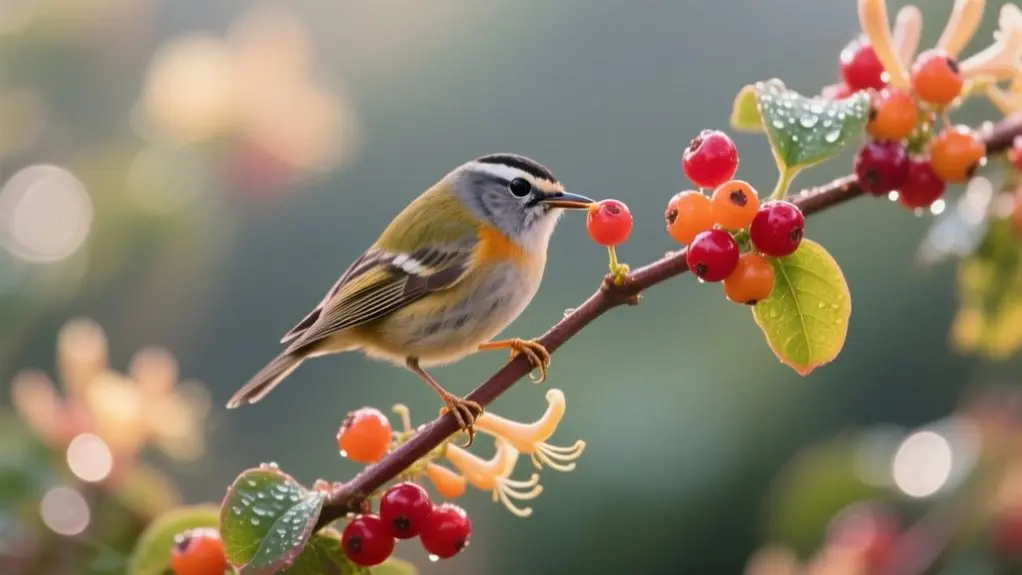
You can let birds eat honeysuckle berries, but they’re not the safest choice for their long-term health. These berries offer quick energy thanks to high sugar, but they lack essential nutrients like protein and fats that birds need.
Relying on honeysuckle can actually harm bird fitness and immune systems while encouraging invasive plant spread. If you want to support healthier birds, there are better native plants to contemplate that provide crucial nutrition and help ecosystems thrive.
What Are Honeysuckle Berries And Why Do Birds Eat Them?
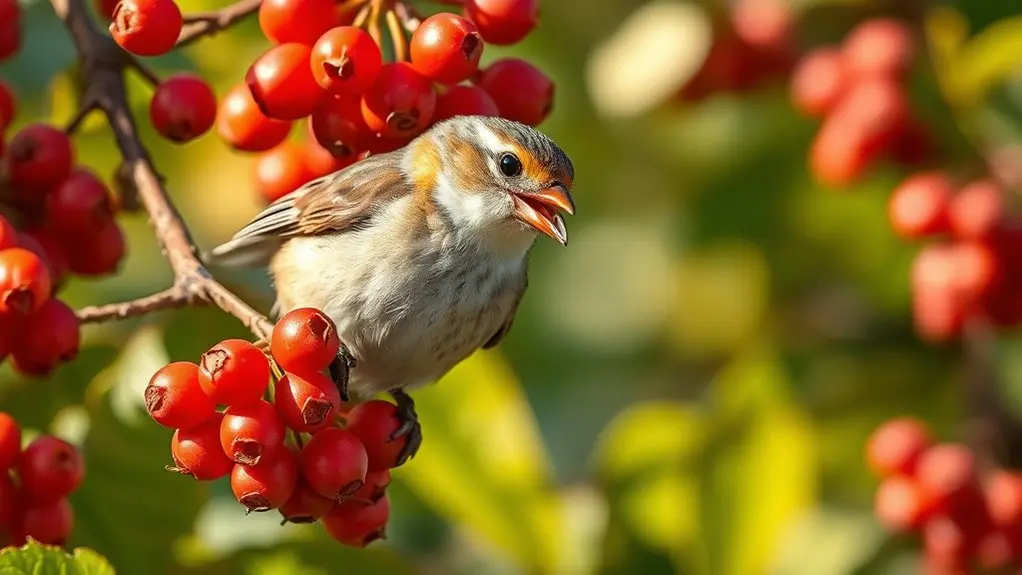
Honeysuckle berries are the colorful fruit produced by various honeysuckle plants, and birds often eat them because they’re easy to spot and access.
You’ll notice many bird species, like thrushes and robins, attracted to these bright berries.
The high carbohydrate content in honeysuckle berries gives birds quick energy, making them an appealing choice.
However, these berries are low in protein and essential nutrients compared to native berry-producing shrubs.
While they provide a readily available food source, relying heavily on honeysuckle berries can affect birds’ overall health.
Furthermore, when birds eat these berries, they help spread invasive honeysuckle plants by dispersing the seeds, which influences local ecosystems.
Are Honeysuckle Berries Nutritionally Safe For All Bird Species?
You’ll notice that honeysuckle berries vary quite a bit in nutritional value. Often, they don’t have enough protein and energy that many birds actually need.
This can really impact bird health, especially for those species that rely on nutrient-rich food during migration.
Nutritional Value Variations
Although many birds eat honeysuckle berries, you should know these fruits don’t provide the balanced nutrition most species need. Honeysuckle berries, especially from non-native plants, are low in protein and essential nutrients, making them a poor dietary choice for many birds.
While their high sugar content offers quick energy, they lack the fats and overall energy birds require, particularly during demanding times like migration. If birds rely too much on honeysuckle berries, they risk missing out on the richer nutrition native berries provide.
Furthermore, invasive honeysuckle can crowd out native plants, reducing the availability of better food sources.
Impact On Bird Health
When birds rely heavily on invasive honeysuckle berries like those from Tatarian and Morrow’s species, they risk nutritional deficiencies that can harm their health.
These berries are low in protein and essential nutrients but high in carbohydrates. That means birds need more balanced diets to stay fit, especially during migration.
Since honeysuckle doesn’t support insect populations, birds miss out on crucial food sources rich in protein and fats.
While you might notice birds looking more colorful from berry pigments, this masks underlying health issues caused by poor nutrition.
Over time, relying on these berries can reduce reproductive success and make birds more vulnerable to nest predation.
To keep birds healthy, you need to guarantee they’ve access to a variety of nutrient-rich foods beyond just honeysuckle berries.
How Do Honeysuckle Berries Affect Bird Nutrition And Health?
Because honeysuckle berries are low in protein and essential fats, they don’t meet the nutritional needs of migratory birds that rely on nutrient-rich diets during their journeys.
While these berries offer a quick carbohydrate boost, they lack crucial nutrients that birds need to thrive.
Honeysuckle berries provide quick energy but fall short of delivering essential nutrients birds require for health.
Relying heavily on honeysuckle berries can lead to poor overall diet quality, lower fitness, and weakened immune systems.
It can also reduce reproductive success and increase vulnerability to predators due to altered feeding behavior.
Plus, these berries create a misleading sense of food abundance that harms ecosystem balance.
What Nutrients Do Birds Miss When Eating Honeysuckle Berries?
You mightn’t realize which key nutrients birds miss out on by eating honeysuckle berries. These berries are low in protein and essential fats, both critical for birds, especially during migration when energy demands soar.
While honeysuckle berries have higher carbohydrates than native options like dogwoods, their lack of protein can hurt birds’ overall health.
Unlike native berry-producing shrubs, honeysuckle berries don’t support insect populations. Insects are an essential food source that provides necessary nutrients for reproductive success and fitness.
When birds rely heavily on honeysuckle berries, they risk nutrient deficiencies that can lower their survival rates and increase nest predation.
Why Honeysuckle Berries Can Be A Trap For Birds
You might think honeysuckle berries are a great food source, but they actually don’t have the nutrients birds need to stay healthy.
Since honeysuckle is invasive, it tends to crowd out native plants that offer much better nutrition.
Nutritional Deficiencies Impact
Although honeysuckle berries might look like an easy meal, they often leave birds nutritionally unfulfilled. These berries are low in protein and essential nutrients, causing nutritional deficiencies that can harm birds’ health.
You might notice that birds relying on honeysuckle experience energy spikes from high sugars but lack crucial fats and proteins. They also have reduced fitness and resilience to environmental stresses.
Plus, these berries attract less fit individuals, affecting mate selection. Birds may overlook native, more nutritious berries, which isn’t great for their diet.
This leads to an increased risk of poor reproduction and survival. When birds consume too many honeysuckle berries, they miss out on balanced nutrition essential for migration and breeding.
Invasive Species Risks
When birds feed on invasive honeysuckle berries, they unintentionally help spread these plants. This can crowd out native species that provide better nutrition.
As an invasive plant, honeysuckle quickly takes over habitats, reducing the availability of nutritious berries critical for birds’ health.
By consuming these low-nutrient berries, you may weaken birds’ fitness, making migration and reproduction tougher. Birds act as seed dispersers, further encouraging the invasive plant’s dominance and disrupting local ecosystems.
This cycle means less food variety and increased competition for birds relying on native plants.
How Invasive Honeysuckles Affect Wildlife And Native Plants
Since invasive honeysuckles emerge earlier in spring and release chemicals that stunt nearby plants, they quickly overtake native vegetation.
Invasive honeysuckles sprout early and inhibit nearby plants, rapidly dominating native vegetation.
When you see invasive honeysuckles spreading, know they:
- Outcompete native plants for sunlight and nutrients
- Produce low-nutrient berries that don’t fully support migratory birds
- Reduce native insect populations, cutting off crucial bird food sources
- Accelerate soil erosion and pollute waterways with sediment
- Disrupt local ecosystems by changing plant and animal balances
These effects make it tough for native plants and wildlife to thrive.
How Do Birds Help Spread Invasive Honeysuckle Plants?
You mightn’t realize it, but birds play a big role in spreading invasive honeysuckle plants. Birds and other wildlife consume the bright red berries, which are plentiful and easy to find, even though these berries offer low nutritional value.
After eating them, birds disperse the seeds through their droppings, often in disturbed soil where they perch. This helps invasive species like Tatarian and Morrow’s honeysuckle establish new growth areas, especially in urban and suburban environments.
As bird populations increase in these areas, the spread accelerates, allowing invasive honeysuckles to outcompete native plants.
How Eating Honeysuckle Berries Changes Bird Appearance
Although honeysuckle berries offer little nutritional value, birds that eat them often develop noticeably brighter plumage. These berries contain pigments like rhodoxanthin, which enhance feather coloration during molting.
When you observe birds feeding on honeysuckle berries, you might notice more vibrant and intense feather colors. They also tend to be more attractive during mating seasons.
Sometimes, birds appear fitter than they really are despite the poor nutrition. This can lead to confusion in mate selection because of the bright plumage.
There are also complex shifts in ecological interactions within bird populations as a result.
Long-Term Effects Of Honeysuckle Berries On Bird Survival
When birds rely heavily on honeysuckle berries for food, their long-term survival can suffer because the berries have low protein and energy content. You’ll notice birds eating mostly honeysuckle berries become less fit. This affects migration, reproduction, and even plumage vibrancy.
That can reduce their chances of attracting mates and surviving harsh conditions. Plus, honeysuckle thickets can increase predation risks and cause habitat loss for native plants and insects. This further limits quality food sources.
| Effect | Impact on Birds |
|---|---|
| Low Nutrition | Decreased fitness & energy |
| Poor Reproduction | Reduced mating success |
| Increased Predation Risk | Higher vulnerability |
| Habitat Loss | Limited native food sources |
Relying on honeysuckle berries long-term isn’t safe for bird survival.
What Native Plants Can Replace Honeysuckle For Birds?
You can support local birds by choosing native berry-producing shrubs instead of honeysuckle.
Plants like serviceberry, elderberry, and eastern red cedar offer nutritious, energy-rich berries that birds rely on throughout the year.
Plus, by planting indigenous species, you’re helping provide better food sources and promoting a healthier ecosystem for your feathered friends.
It’s a simple way to make a big difference right in your backyard.
Native Berry-Producing Shrubs
If you’re looking to support local bird populations, native berry-producing shrubs offer excellent alternatives to honeysuckle.
These native plants supply nutritious fruits that attract and sustain birds throughout the seasons. Consider adding these to your garden:
Serviceberry (Amelanchier spp.): High-energy, protein-rich berries perfect for many bird species.
Eastern red cedar (Juniperus virginiana): Provides essential winter food when options are scarce.
Elderberry (Sambucus canadensis): Clusters of antioxidant-rich berries loved by various birds.
Native dogwoods (Cornus spp.): Berries favored by thrushes and waxwings, boosting wildlife diversity.
Black chokeberry (Aronia melanocarpa): Supports pollinators and offers food through the growing season.
Benefits Of Indigenous Plants
Native berry-producing shrubs do more than just replace honeysuckle. They offer superior benefits for birds and your local ecosystem. Unlike honeysuckle plants, native species like serviceberry, dogwood, and elderberry provide berries richer in protein and energy, which are essential for birds during migration.
By swapping out invasive honeysuckle plants for indigenous ones such as winterberry and black chokeberry, you boost local biodiversity. This supports a wider range of bird species, pollinators, and beneficial insects.
These native shrubs also adapt well to regional climates and soils, reducing your need for chemicals. Plus, planting diverse native species guarantees birds have reliable, nutritious food year-round, especially during nesting and migration.
Choosing native plants helps restore balance and promotes a healthier environment for wildlife and your garden alike.
How Gardeners Can Support Healthy Bird Diets Safely
Although invasive honeysuckle berries are common in many gardens, they don’t provide the nutrients birds need to stay healthy. You can support bird diets safely by focusing on native plants and creating a nourishing environment.
Try these steps:
Plant native berry-producing shrubs like dogwoods and serviceberries that offer essential nutrients.
Reduce invasive honeysuckle to encourage native flora growth, benefiting local insects birds eat.
Provide fresh water sources, such as bird baths, to keep birds hydrated.
Educate neighbors about the importance of native plants for bird health.
Avoid relying solely on honeysuckle berries, as they lack the protein and fats migrating birds require.
Effective Methods To Control Invasive Honeysuckle In Gardens
Controlling invasive honeysuckle in your garden takes consistent effort and a combination of strategies. Start by manually removing plants. Cut them at the base during spring or fall, then apply a systemic herbicide like glyphosate or triclopyr to the cut stumps to prevent regrowth.
After removal, spread a thick layer of mulch over the root zone to block sunlight and suppress new shoots.
Replace invasive honeysuckle with native shrubs and trees to support local wildlife and discourage re-invasion.
Keep monitoring your garden regularly for any new honeysuckle growth, and promptly remove it to stop it from spreading again.
Frequently Asked Questions
Can Pets Be Harmed by Honeysuckle Berries Eaten by Birds?
Yes, pets can be harmed by honeysuckle berries eaten by birds, so you need to prioritize pet safety.
When birds consume these berries, they spread seeds and droppings containing berry remnants in areas your pets frequent.
If your pets ingest these berries or plants, they may suffer gastrointestinal upset or other health issues.
To keep your pets safe, monitor their outdoor activities and limit exposure to honeysuckle plants and berries.
Do Honeysuckle Berries Affect Bird Migration Patterns?
Imagine migration triggers as delicate strings guiding birds on their epic journey. When you rely on honeysuckle berries, those strings can get tangled.
These berries lack the essential nutrients birds need, weakening their energy reserves.
This nutritional gap can throw off your migration triggers, causing you to alter your route or timing.
Are There Any Birds That Are Immune to Honeysuckle’s Negative Effects?
You won’t find any birds completely immune to honeysuckle’s negative effects, but some have bird adaptations that help them tolerate these berries better.
Species like Blue Jays have stronger digestive systems allowing them to process low-nutrient foods more efficiently.
However, even with these adaptations, relying heavily on honeysuckle berries can harm their health over time.
How Do Seasons Influence Birds’ Consumption of Honeysuckle Berries?
Seasons influence your consumption of honeysuckle berries mainly through seasonal availability. In spring and summer, you’ll find plenty of these berries, helping you get quick energy during nesting.
As fall arrives, native fruits dwindle, so you might rely more on honeysuckle berries, even though they offer less nutrition.
This shift happens because seasonal availability pushes you to adapt, especially during migration or molting when your nutritional needs change.
Can Honeysuckle Berries Cause Poisoning Symptoms in Birds?
Imagine a bird pecking at shiny honeysuckle berries. Rest assured, you won’t see toxicity levels spike or poisoning symptoms in these feathered diners.
These berries don’t carry toxic compounds harmful enough to cause illness.
However, their low nutritional value can quietly weaken birds over time.
Conclusion
So, sure, let birds binge on honeysuckle berries because who doesn’t love a diet that’s tasty but nutritionally questionable? Just remember, those sweet berries might have your feathered friends feeling full but not exactly fit.
If you want to keep birds thriving instead of merely surviving, consider swapping invasive honeysuckle for native plants. When it comes to bird diets, you don’t want to be the gardener who’s accidentally serving fast food instead of a balanced meal.