
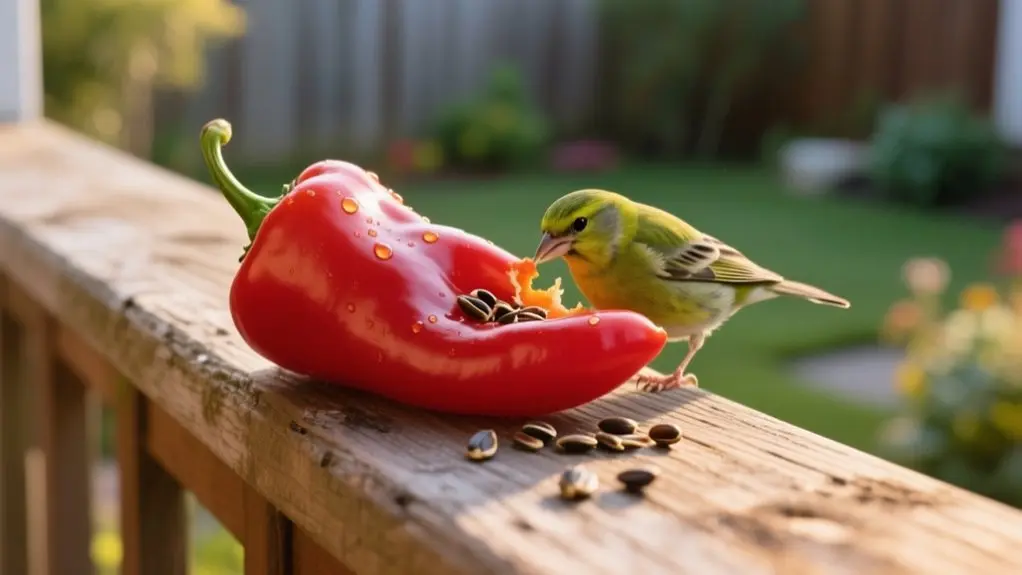
You can safely feed birds hot peppers because their biology lets them enjoy spicy seeds without harm. They don’t feel the heat like mammals do. Capsaicin deters squirrels but won’t irritate birds, making hot pepper bird seed an effective squirrel repellent.
Just introduce it gradually and monitor your birds to guarantee they’re comfortable. If you want to understand why this works and how to use it best in your backyard, there’s plenty of useful info ahead.
Does Hot Pepper Bird Seed Really Deter Squirrels?
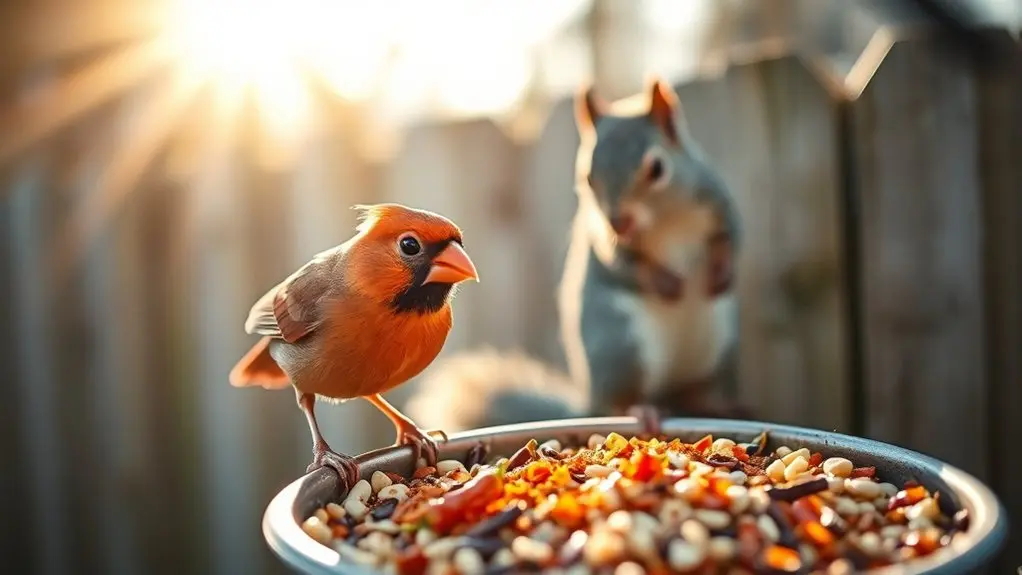
Wondering if hot pepper birdseed really keeps squirrels away? Hot pepper bird seed contains capsaicin, which acts as a deterrent squirrels can’t ignore. A 2000 Cornell study showed that capsaicin-coated seeds considerably reduce visits from Gray Squirrels, letting more birds enjoy your feeder.
Since squirrels sense the heat, they tend to avoid the spicy seed. However, it’s not foolproof. Eastern Chipmunks aren’t bothered by capsaicin and may still raid feeders.
Users report mixed results; some swear by hot pepper seed while others see less success, depending on local wildlife.
To improve results, you might combine hot pepper bird seed with other deterrents or use squirrel-proof feeders. This approach boosts your chances of keeping squirrels away without harming the birds you want to attract.
Why Hot Pepper Bird Seed Is Safe for Birds
While hot pepper bird seed effectively discourages squirrels, it remains completely safe for birds to eat. Birds lack the TRPV1 receptors that mammals have, so they don’t feel the heat from capsaicin in hot peppers. This means you can offer hot pepper bird seed without worrying about harming birds.
Research shows capsaicin doesn’t irritate or damage bird tissues. Birds have evolved to eat wild peppers, helping spread seeds naturally.
| Feature | Effect on Birds |
|---|---|
| TRPV1 Receptors | Birds lack them |
| Capsaicin Sensitivity | No heat or irritation |
| Evolutionary Adaptation | Seed dispersal aid |
How Hot Pepper Bird Seed Affects Birds and Squirrels
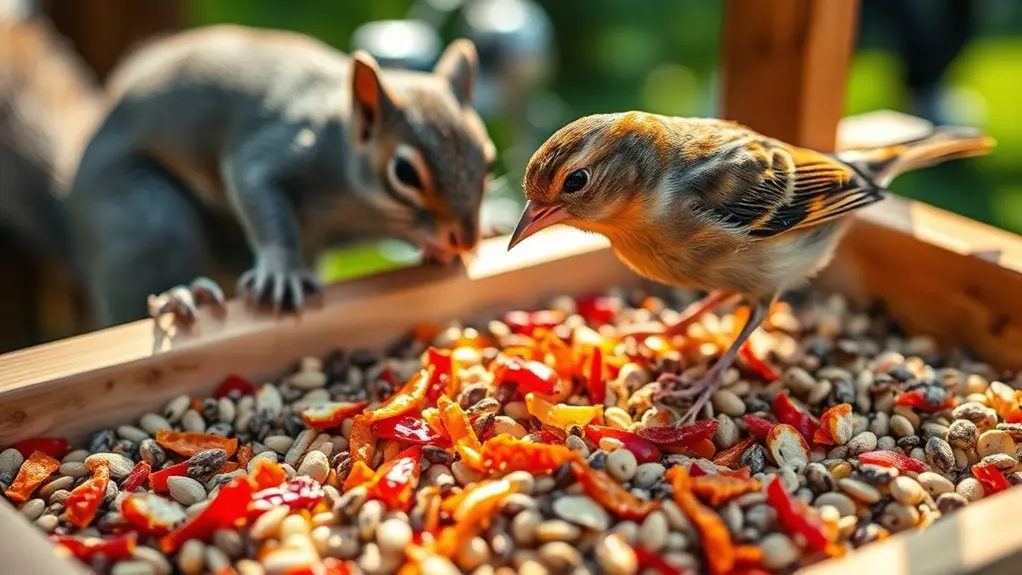
Because hot pepper bird seed contains capsaicin, it keeps squirrels and many other mammals away while remaining harmless to birds.
You’ll notice birds happily eating this hot seed because they lack the receptors that sense capsaicin’s heat, so it doesn’t irritate them.
Birds enjoy hot pepper seeds because they don’t have the receptors to feel capsaicin’s heat.
This natural difference allows birds to feed comfortably while squirrels and most mammals avoid the spicy taste. Capsaicin coats the seeds, deterring animals that might otherwise steal or destroy them.
While hot pepper bird seed effectively reduces squirrel visits, some mammals like Eastern Chipmunks aren’t bothered by capsaicin and may still visit.
What Research Says About Birds and Spicy Seeds
You might be surprised to learn that birds can’t taste capsaicin, so spicy seeds don’t bother them the way they do mammals.
But here’s the thing—research shows that if the spice level gets really high, it can actually cut down on how much birds eat.
Bird Sensitivity To Capsaicin
Although birds can eat spicy peppers without feeling the burning pain humans do, their tolerance has limits. Birds lack the TRPV1 receptors that cause mammals to sense capsaicin’s heat, so they don’t experience irritation when eating pepper plants.
However, research shows that when spice levels exceed 500,000 Scoville Heat Units, birds markedly reduce their consumption. Studies with species like Northern Cardinals reveal they avoid seeds with very high capsaicin concentrations, although moderate amounts found in most hot peppers don’t harm them.
This selective sensitivity helps birds avoid overly spicy seeds while still allowing them to consume and disperse pepper seeds effectively, supporting the plants’ reproduction.
Effects On Feeding Behavior
When birds encounter seeds with extremely high capsaicin levels, their feeding habits shift noticeably. Research shows birds like Northern Cardinals and House Finches tolerate natural spice but reduce seed consumption once heat exceeds 500,000 Scoville Heat Units.
This change in feeding behavior helps plants by deterring mammals while allowing birds to spread seeds unharmed. However, overly spicy seeds may discourage birds from visiting feeders, so balancing spice levels is key to maintaining their activity.
Because birds have less sensitive vanilloid receptors, they don’t feel capsaicin as discomfort, but extreme heat still affects their preferences.
Understanding these effects helps you provide food that attracts birds without pushing them away due to excessive spiciness.
Why Capsaicin Deters Mammals But Not Birds
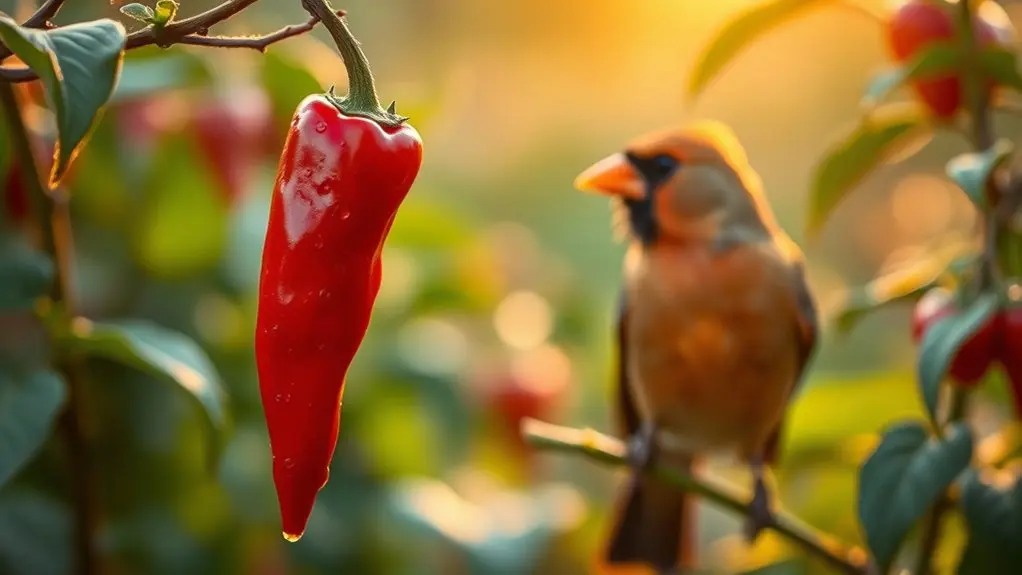
Because mammals have TRPV1 receptors that bind to capsaicin, they experience a burning sensation when eating hot peppers. This discourages them from consuming the fruit. Birds, however, lack these receptors, so they don’t feel this heat.
That’s why birds can eat hot peppers without discomfort. This helps plants spread seeds effectively.
| Aspect | Mammals |
|---|---|
| TRPV1 Receptors | Present |
| Reaction to Capsaicin | Burning sensation |
| Seed Dispersal | Seeds often destroyed |
| Aspect | Birds |
| TRPV1 Receptors | Absent |
| Reaction to Capsaicin | No burning sensation |
| Seed Dispersal | Effective seed dispersers |
This selective deterrence benefits both plants and birds.
Are There Risks to Birds From Eating Spicy Seed?
You might be wondering if spicy seeds could harm birds. The good news is that research shows birds can safely eat capsaicin without feeling pain or irritation.
That said, really high spice levels might put some birds off from feeding, which suggests they’ve their own sensitivity to spice.
Bird Safety Evidence
Although spicy peppers can cause irritation in mammals, birds don’t have the receptors that trigger this reaction. So, they can eat hot peppers without discomfort or harm. When you add pepper to bird feeders, you’re not putting birds at risk.
Studies show capsaicin doesn’t harm bird tissues, suggesting birds evolved alongside spicy plants. Anecdotal evidence supports this safety, though research on all species is limited.
Keep in mind, birds may avoid extremely spicy peppers, but natural levels are fine.
- Birds enjoy spicy seeds without pain or irritation
- Capsaicin is harmless to their digestive system
- Pepper in bird feeders can deter mammals, not birds
- Handling hot pepper products needs care for humans, not birds
You can safely include pepper in feeding setups without worrying about bird safety.
Potential Irritation Risks
While birds don’t feel the burning sensation from capsaicin, eating highly spicy seeds in large amounts might still cause some gastrointestinal irritation in certain species. Though birds lack the VR1 receptor that detects capsaicin’s heat, excessive intake of pepper powder could lead to mild digestive discomfort.
Some birds, like Northern Cardinals, reduce seed consumption beyond 500,000 Scoville Heat Units, highlighting natural moderation. Monitoring your birds’ reactions to spicy seeds helps prevent potential irritation.
| Species | Spice Tolerance (SHU) | Potential Irritation |
|---|---|---|
| Northern Cardinal | < 500,000 | Low |
| House Finch | Moderate | Possible with excess |
| General Wild Birds | Varies | Usually none |
Use pepper powder cautiously to avoid upsetting your birds’ digestive systems.
Safe Ways to Handle Hot Pepper Bird Seed
Since capsaicin can cause skin and eye irritation, handling hot pepper bird seed requires some precautions. When working with hot peppers in bird seed, you’ll want to protect yourself while keeping the birds safe.
Follow these tips for safe handling:
Always wear rubber gloves to avoid skin irritation from capsaicin residue.
Coat seeds in a well-ventilated area to prevent inhaling powder particles.
Choose hot pepper bird seed from reputable sources to guarantee quality and safety.
Regularly clean feeders to prevent capsaicin buildup and keep feeding areas safe.
Hot Pepper Powder vs. Oil for Bird Feeders
When handling hot pepper bird seed, you’ll notice that choosing between powder and oil makes a big difference.
Hot pepper oil is often preferred for seed feeders because it soaks into seeds evenly and reduces the risk of irritating birds’ eyes.
Unlike powder, oil won’t easily blow away with the wind, which helps protect nearby wildlife from accidental exposure.
Using hot pepper oil also cuts down on mess and deters unwanted animals like squirrels more effectively.
While mixing cayenne powder directly into birdseed can work, it requires caution to avoid excessive irritation.
Plus, hot pepper oil is safer and easier to apply without leaving capsaicin residue on your hands, making it a better choice for hobbyists managing seed feeders in their backyard.
Tips for Introducing Hot Pepper Bird Seed to Your Backyard
If you want birds to enjoy hot pepper bird seed without hesitation, start by blending a small amount with their regular seed. This gentle introduction helps birds get used to the spicy flavor without overwhelming them.
When setting up your bird feeding station, keep these tips in mind:
- Use tube or hopper feeders to reduce spillage and keep hot peppers accessible to birds while deterring squirrels.
- Clean feeders regularly to avoid capsaicin buildup, guaranteeing a safe environment and fresh seeds.
- Buy hot pepper bird seed from trusted sources to avoid harmful additives and guarantee quality.
- Watch how birds respond and adjust the spice level based on their preferences to keep them coming back happily.
These steps make bird feeding with hot peppers a rewarding experience for you and your feathered friends.
How Seasonal Bird Activity Affects Hot Pepper Seed Feeding
You’ll notice that birds tend to visit feeders less during early summer. That’s because they’re busy feeding their young with natural foods.
But as the season goes on and those natural options start to dwindle, you’ll usually see more visits to the feeders—and a growing interest in hot pepper seeds.
Knowing these seasonal patterns can really help you adjust your feeding approach and keep those birds coming back for more.
Seasonal Feeding Patterns
Although bird activity at feeders dips during June as they focus on feeding nestlings with natural foods like green worms, this lull is only temporary.
Understanding seasonal feeding patterns helps you anticipate these changes and adjust your seed feeders accordingly.
As natural food sources wane, birds return enthusiastically to your feeders, especially in late summer and fall.
You can make the most of this by remaining patient during quiet months and monitoring local bird food availability.
Try offering varied hot pepper seeds when activity rises and enjoy the vibrant resurgence of feathered visitors.
Impact On Feeder Visits
When birds shift their focus to feeding nestlings with natural foods like green worms in June, you’ll notice a drop in visits to your hot pepper seed feeders.
This seasonal change in bird behavior is common and usually temporary.
As natural food sources dwindle, birds return to feeders, increasing activity once again.
If you find fewer birds at your feeders during this period, don’t worry. It’s just part of their natural cycle.
You can enhance your birdwatching experience by adjusting feeding strategies to match these seasonal fluctuations.
Remember, patience is key when monitoring bird visits to feeders, especially when offering hot pepper seeds.
Understanding this pattern helps you maintain a thriving feeding spot throughout the year.
Comparing Hot Pepper Bird Seed to Traditional Squirrel Deterrents
While traditional squirrel deterrents like barriers and baffles require regular upkeep and can be costly or unreliable, hot pepper bird seed offers a natural, low-maintenance alternative that effectively keeps squirrels away.
By using hot peppers, you deter squirrels without harmful chemicals or constant adjustments.
This method isn’t only safer for your feathered friends but also easier on you.
Safer for birds and hassle-free for you, it’s a win-win solution.
Consider these benefits of hot pepper bird seed:
- Non-toxic and safe for birds
- Requires no frequent maintenance
- Cost-effective compared to squirrel-proof feeders
- Keeps feeding areas cleaner and mess-free
You’ll find hot pepper seed a simple, reliable solution that respects nature while protecting your bird feeder from pesky squirrels.
Where to Buy Hot Pepper Bird Seed and What to Look For
If you’ve decided to try hot pepper bird seed to keep squirrels away, knowing where to buy it and what to look for can save you time and money. Focus on products with a clear capsaicin coating, as this deters squirrels but remains safe for birds.
Specialty bird supply stores and online platforms offer options like Coles FS08 Flaming Squirrel Seed Sauce. Watch prices since factory-coated seeds can cost up to $228.85 for 50 pounds.
Check customer reviews for real-world effectiveness and prioritize reputable brands to guarantee safety.
| Feature | What to Look For | Why It Matters |
|---|---|---|
| Capsaicin Coating | Clearly stated on label | Effective squirrel deterrent |
| Price | Competitive, reasonable | Avoid overpriced products |
| Brand Reputation | Known, trusted manufacturers | Guarantees safety and quality |
| Customer Reviews | Positive feedback | Validates product performance |
| Purchase Location | Specialty stores/online | Convenience and variety |
Frequently Asked Questions
Can All Bird Species Tolerate Hot Peppers Equally?
No, not all bird species tolerate hot peppers equally. Your bird’s digestion and pepper tolerance vary depending on the species.
Some birds, like Northern Cardinals, may avoid peppers with high capsaicin levels because they can cause discomfort.
Others lack the receptors for capsaicin and handle spicy peppers just fine.
You should watch how your birds react to different spice levels and adjust their diet to keep them comfortable and healthy.
Do Hot Peppers Affect the Taste of Birdseed for Humans?
Yes, hot peppers definitely affect the birdseed flavor for humans.
When you mix birdseed with cayenne or other spicy peppers, the capsaicin leaves a lingering heat that might be unpleasant to your taste buds.
While birds don’t mind it, your human preferences may find the seed mix too spicy or off-putting.
How Do Hot Peppers Impact Birdseed Shelf Life?
Hot peppers don’t directly extend or shorten birdseed’s shelf life, but pepper compounds can influence how long your seed stays fresh.
Those oils and moisture in hot peppers might cause rancidity if you don’t store the seed in airtight containers.
However, by deterring pests like squirrels, hot peppers help keep the seed cleaner and reduce spoilage.
Can Hot Pepper Seeds Germinate After Passing Through Birds?
Yes, hot pepper seeds can germinate after passing through bird digestion.
When birds eat the peppers, their digestive systems don’t destroy the seeds. Instead, they help with seed dispersal by excreting viable seeds in new locations.
This process often breaks down the seed coat, boosting germination rates.
Are There Environmental Benefits to Using Hot Pepper Birdseed?
Yes, you’ll find hot pepper benefits in bird feeding by naturally deterring squirrels and other mammals without harmful chemicals. This means you’re promoting a cleaner feeding area and supporting biodiversity, as more bird species are attracted while pests stay away.
Plus, using hot pepper birdseed helps reduce waste and supports healthier ecosystems through natural seed dispersal. It’s an eco-friendly, cost-effective way to enjoy sustainable birdwatching.
Conclusion
You might be surprised to learn that over 90% of birds aren’t bothered by the heat in hot pepper bird seed, making it a safe and effective way to keep squirrels away. By choosing this spicy option, you’re protecting your feathered friends while deterring pesky mammals.
Give it a try in your backyard. You’ll enjoy watching more birds visit without the constant battle against squirrels. It’s a win-win for your garden!