
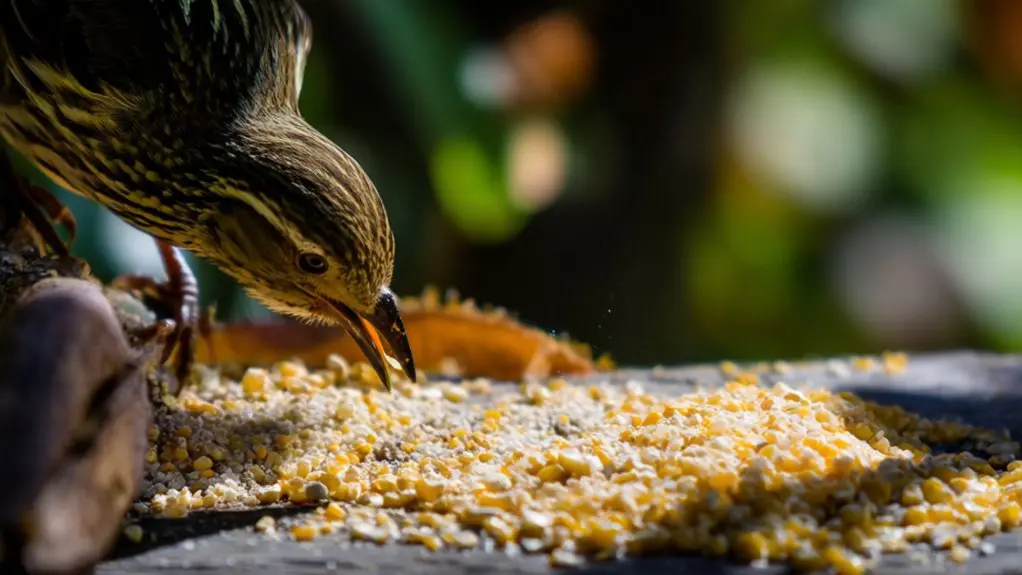
You can safely offer birds small amounts of raw cornmeal as an occasional, energy-rich treat, as long as it’s fresh, free from mold, and stored properly. Raw cornmeal mainly supplies carbohydrates but doesn’t have all the essential nutrients birds need.
So, it’s a good idea to complement it with seeds, fruits, or insects to keep their diet balanced. Just make sure to avoid feeding spoiled cornmeal because it can cause health problems.
If you want to learn about proper feeding practices, storage tips, and potential risks, there’s more useful information to consider.
What Is Raw Cornmeal and Why Do Birds Like It
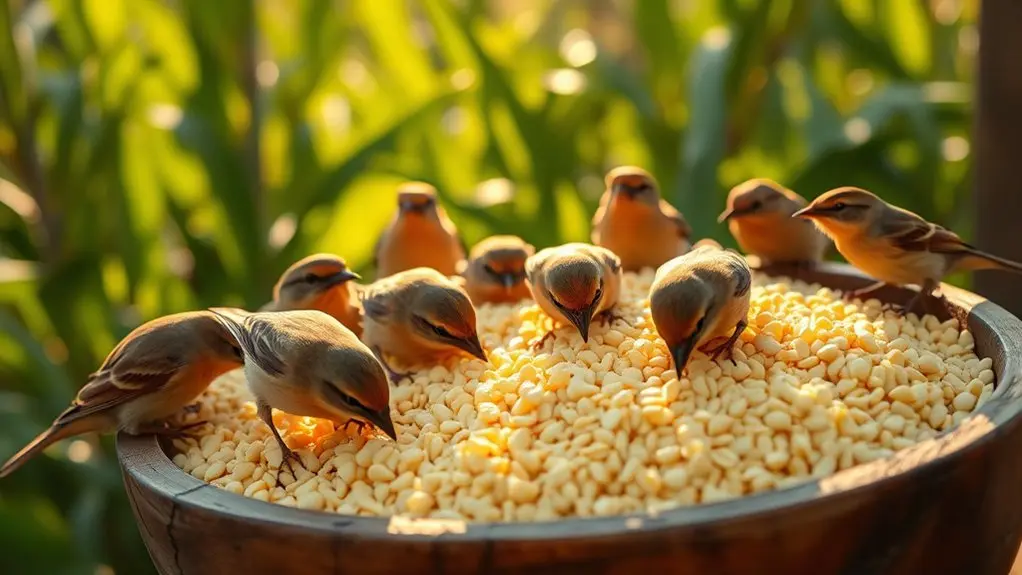
Although raw cornmeal is simply ground dried maize that hasn’t been cooked or processed further, it offers birds a valuable food source. You’ll find birds attracted to it because its coarse, dusty texture closely mimics the natural grains they forage in the wild.
Raw cornmeal supplies essential carbohydrates, providing a critical energy boost, especially during colder months when other food sources may be scarce.
When you offer raw cornmeal, birds can easily pick up and consume it due to its granular consistency.
However, you should provide it in moderation to minimize the risk of mold growth, which can occur if left exposed to moisture.
Understanding these aspects helps you appreciate why birds are drawn to raw cornmeal and how it supports their nutritional needs.
Is Raw Cornmeal Safe for Birds to Eat?
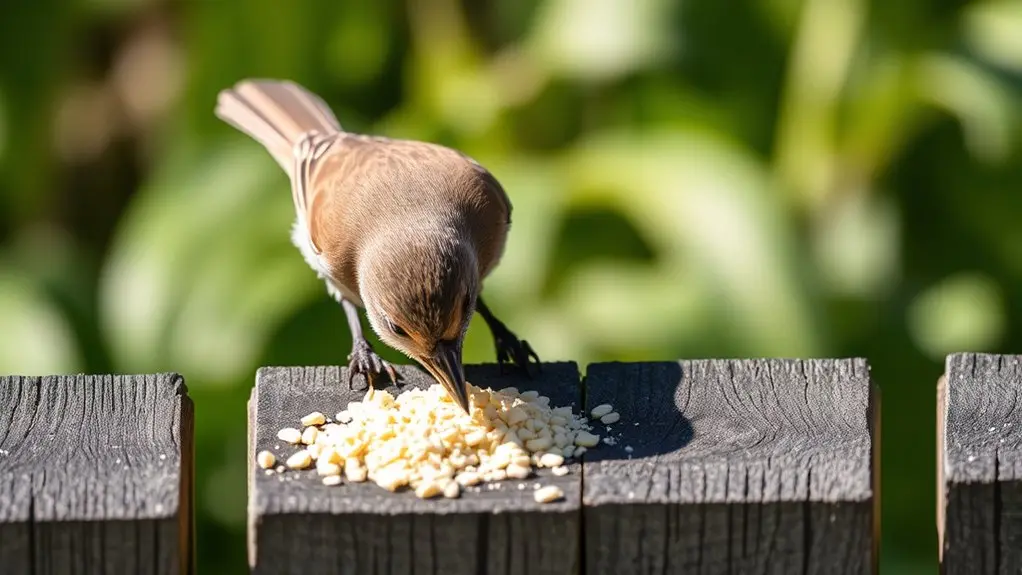
You can safely offer raw cornmeal to birds in small amounts because it provides a natural grain source. However, it’s good to remember that it doesn’t offer a lot of nutritional value.
Also, be careful not to overfeed raw cornmeal since it might cause digestive issues. It’s not a substitute for a balanced diet.
If you cook the cornmeal, it becomes easier for birds to digest and lowers the chance of mold, which makes it a safer choice overall.
Nutritional Value For Birds
When you offer raw cornmeal to birds, you’re providing a source of carbohydrates and some protein that can supply them with energy. Cornmeal is primarily ground dried corn, which delivers these macronutrients in a simple, digestible form. Most bird species can safely consume small amounts, benefiting from the energy boost without adverse effects.
Cornmeal lacks harmful additives, preservatives, or seasonings, making it a clean nutritional option. However, raw cornmeal should complement rather than replace a bird’s regular diet, as it doesn’t provide all essential nutrients. Offering it in moderation can attract species like doves and sparrows, but avoid excess to prevent spoilage.
While raw cornmeal is nutritious, cooking it can enhance digestibility and reduce microbial risks. So, it’s a good idea to think about how you prepare it before feeding it to birds.
Risks Of Raw Cornmeal
Raw cornmeal can provide birds with energy, but it’s important to take into account potential risks before feeding it regularly. While generally safe in small amounts, raw cornmeal has limited nutritional value and may cause issues if overused.
Consider these risks:
- Nutritional Imbalance: Raw cornmeal lacks essential nutrients, leading to deficiencies if fed frequently.
- Digestive Problems: Cornmeal can expand in the bird’s crop, potentially causing discomfort or blockages.
- Contamination Risk: Improperly stored cornmeal might harbor mold or bacteria harmful to birds.
- Reduced Digestibility: Cooking cornmeal lowers contamination risk and aids digestion, making it a safer option.
To protect birds’ health, avoid regular feeding of raw cornmeal and prioritize balanced, nutrient-rich diets. It’s always better to be safe and make sure they get what they truly need.
Checking Cornmeal for Mold and Contamination
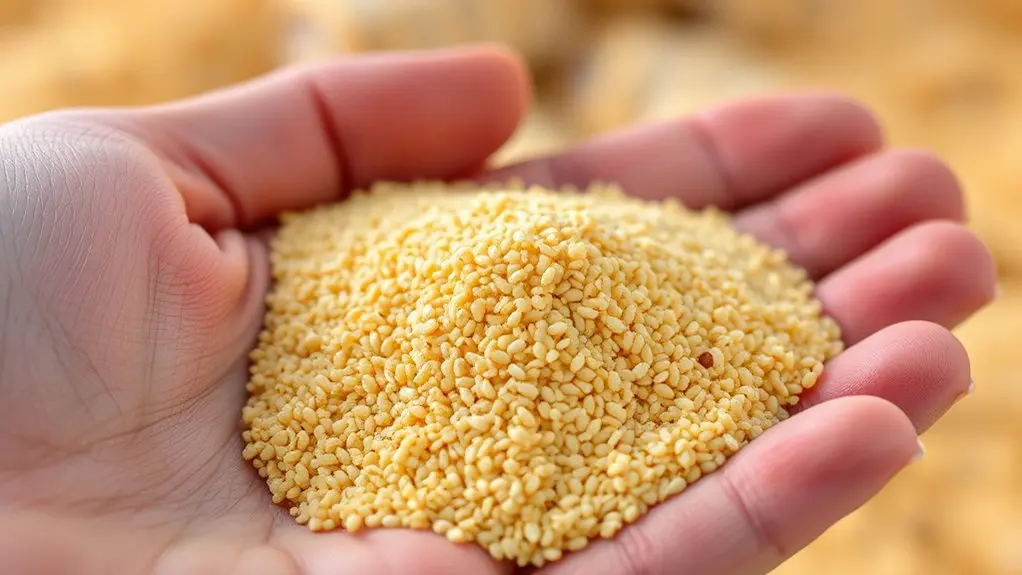
Although cornmeal is a common bird feed ingredient, checking it carefully for mold and contamination is crucial before offering it to your birds.
Visually inspect the cornmeal for mold, discoloration, or clumping, which signal moisture or spoilage. Smell the cornmeal to detect any sour or off odors, indicators of bacterial growth or contamination.
Discard any cornmeal exhibiting visible mold, insect presence, or rancid smell to prevent health risks. Properly stored dry cornmeal in sealed containers resists mold growth if kept cool and dry. However, even without visible mold, prolonged storage may cause contamination.
When uncertain about the cornmeal’s condition, it’s safer to replace it to safeguard your birds’ health and safety. Regular checks are essential for maintaining high-quality feed.
How Much Raw Cornmeal Should You Give Birds?
You should offer raw cornmeal in small amounts—about a teaspoon per bird each time you feed them. Of course, this can change depending on the size of the bird and what else they’re eating.
It’s best to give raw cornmeal only occasionally because too much can cause digestive issues or throw off their nutrition balance. Make sure to mix it in with a variety of other foods, and keep an eye on your birds to see how they’re handling it.
Appropriate Serving Sizes
When feeding birds cornmeal, limit the amount to a teaspoon or less per bird, adjusting for their size and species. Overfeeding raw cornmeal can lead to choking hazards or digestive problems.
To serve cornmeal safely, follow these guidelines:
- Start with a small quantity to monitor the bird’s tolerance and digestive response.
- Keep portions minimal, as excessive cornmeal may cause dehydration or disrupt natural dietary balance.
- Use cornmeal only as an occasional treat, never as a staple food source.
- Adjust the serving size according to the bird’s species and size, ensuring it remains appropriate and safe.
Just remember, a little goes a long way when it comes to cornmeal treats!
Frequency Of Feeding
Since raw cornmeal should only serve as an occasional treat, it’s important to limit its frequency to a few times per week. Offering raw cornmeal more often can disrupt a bird’s balanced diet and potentially cause digestive issues.
You should provide no more than a teaspoon per bird at each feeding to avoid overconsumption and related health risks.
Keep an eye on how the birds respond to the cornmeal and adjust the quantity if you notice any adverse effects such as digestive discomfort or changes in eating behavior.
Remember, raw cornmeal isn’t a substitute for their regular diet but a supplementary treat.
Sticking to this feeding frequency helps make sure the birds get the nutrients they need while still enjoying raw cornmeal safely. It’s all about balance!
When to Avoid Feeding Birds Raw Cornmeal
Although raw cornmeal can be a nutritious food source, you should avoid feeding it to birds if it shows signs of mold or contamination. These conditions can lead to serious illness in birds. So, it’s best to be cautious.
Raw cornmeal may be nutritious, but mold or contamination can cause serious bird illnesses—always exercise caution.
To protect birds’ health, refrain from offering raw cornmeal under these circumstances:
- When the cornmeal is stale or has developed mold, increasing the risk of digestive issues or infections.
- If it has been stored improperly or for a long time, which might let harmful bacteria or fungi grow.
- When feeding species that have trouble digesting uncooked grains, since raw cornmeal can be hard for them to process.
- And whenever safer alternatives like cooked or processed grains are available, it’s better to choose those to minimize health risks for birds.
What Cornmeal Does (And Doesn’t) Do for Birds
Understanding the potential risks of feeding raw cornmeal to birds leads to thinking about what this food actually provides and what it doesn’t in their diet.
Cornmeal mainly offers carbohydrates, which give birds a source of energy. But it doesn’t have essential nutrients like protein and fats that are really important for a balanced diet and keeping their bodies working well.
Also, cornmeal doesn’t contain bird-specific vitamins or minerals that they need for good health. You should keep in mind that raw cornmeal can be hard for birds to digest and might cause stomach problems if they eat too much of it.
If birds only eat cornmeal, they could end up with nutritional deficiencies, which can hurt their overall well-being.
Alternative Foods to Feed Alongside Raw Cornmeal
When you offer raw cornmeal to birds, complementing it with other nutrient-rich foods guarantees a balanced diet that supports their health. Cornmeal supplies mainly carbohydrates but lacks essential proteins, fats, and vitamins.
To guarantee proper nutrition, include these alternatives alongside cornmeal:
- Seeds – Sunflower or millet seeds provide vital fats and proteins.
- Fruits – Small pieces of berries or apples supply vitamins and antioxidants.
- Insects – Mealworms or crickets offer high protein and amino acids.
- Greens – Leafy vegetables contribute fiber and micronutrients.
Feeding a variety of these options helps compensate for cornmeal’s low nutritional value and supports birds’ overall well-being, especially during scarce seasons.
Always avoid flavored cornmeal and offer all foods in moderation.
It’s pretty simple to mix things up and keep your bird friends healthy!
How to Offer Raw Cornmeal to Birds Safely
Since raw cornmeal can serve as an occasional treat, you should offer it in small amounts to avoid disrupting birds’ primary diet. Make certain the cornmeal is fresh and stored properly in a dry, airtight container to prevent mold, which is harmful to birds.
You can mix the cornmeal with water to create a soft, easily digestible consistency or sprinkle it sparingly on bird feeders. Avoid adding sugar, salt, or any additives, as these substances can be toxic.
After offering cornmeal, observe the birds closely for any signs of digestive upset, such as lethargy or diarrhea. If you notice any adverse reactions, discontinue use immediately.
Disposing of Expired Raw Cornmeal Safely
Although raw cornmeal is biodegradable and can benefit soil health through composting, expired or spoiled cornmeal requires careful disposal to avoid health risks. If you notice mold, insect infestation, or an off smell, avoid composting it to prevent spreading contaminants.
Expired cornmeal with mold or odor should not be composted to avoid spreading contaminants and health risks.
Instead, follow these steps:
First, seal the expired cornmeal in a plastic bag to contain odors and pests. Then, dispose of the sealed bag in your regular trash to prevent infestation. It’s best to avoid recycling or donating expired cornmeal, especially if it’s compromised.
You can consider composting only if the cornmeal is free of spoilage signs. When it’s good, composting enriches the soil naturally. But always check carefully before adding it to your compost pile.
Frequently Asked Questions
Can Raw Cornmeal Attract Unwanted Pests to My Bird Feeders?
Yes, raw cornmeal can attract unwanted pests like ants, mice, and cockroaches to your bird feeders. It’s a common issue that many bird lovers face.
You’ll want to store it in sealed, pest-proof containers to keep these critters away. This helps minimize infestations around your feeding areas effectively.
Taking these simple steps can make a big difference in keeping your bird feeders pest-free and enjoyable for the birds.
Is Raw Cornmeal Suitable for All Bird Species?
No, raw cornmeal isn’t suitable for all bird species. Some birds digest it well, while others with sensitive systems may struggle.
Always offer it sparingly and keep an eye out for any adverse reactions. That way, you can make sure it’s safe for your feathered friends.
How Does Raw Cornmeal Affect Wild Birds Versus Pet Birds?
You should know raw cornmeal offers wild birds an occasional energy boost but lacks nutrients.
Pet birds may digest it better when cooked, making it easier on their systems. Just remember, it should be a minor supplement, not a primary diet component.
That way, you avoid any potential health issues for your feathered friends.
Can Birds Develop Allergies to Raw Cornmeal?
Yes, birds can develop allergies to raw cornmeal, though it’s pretty rare. You should watch for symptoms like respiratory issues or itching.
If you notice any of these signs, stop feeding cornmeal right away. Then, consult an avian vet promptly to make sure your bird stays safe.
Does Raw Cornmeal Impact Bird Feather Quality or Coloration?
Raw cornmeal doesn’t impact your bird’s feather quality or coloration because it lacks essential amino acids and vitamins.
To maintain vibrant feathers, you’ll need to provide a balanced diet rich in protein and specific nutrients.
Feathers need more than just basic grains to stay bright and healthy, so think about adding a variety of foods to your bird’s meals.
Conclusion
Feeding birds raw cornmeal can be a safe and nutritious choice if you handle it properly, like a scientist tending to a delicate experiment. Always check for mold and avoid overfeeding to keep their health in balance.
Remember, moderation is key, and pairing cornmeal with other foods guarantees a well-rounded diet. By following these guidelines, you’ll help birds thrive without risking their well-being or your peace of mind.