
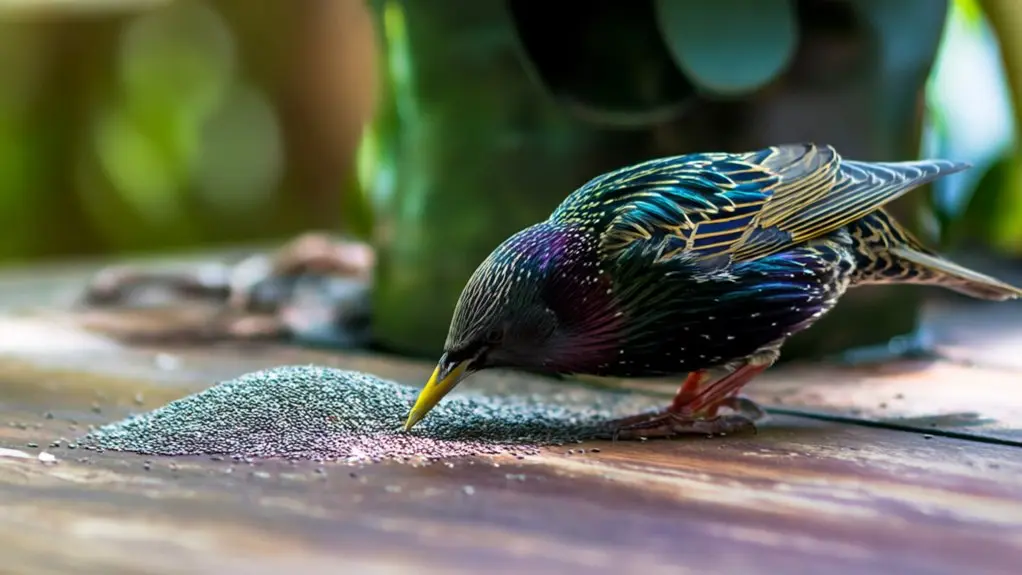
You can safely feed raw chia seeds to birds if you introduce them gradually and in moderation. Always soak the seeds first to reduce choking risk and improve digestibility. Start with small portions while observing your bird for any adverse reactions like digestive upset or allergic signs.
Avoid flavored or additive-laden seeds, and consult a vet for birds with health sensitivities. Understanding these precautions will help you give chia seeds effectively as a nutritious supplement.
Are Raw Chia Seeds Safe for Birds to Eat?
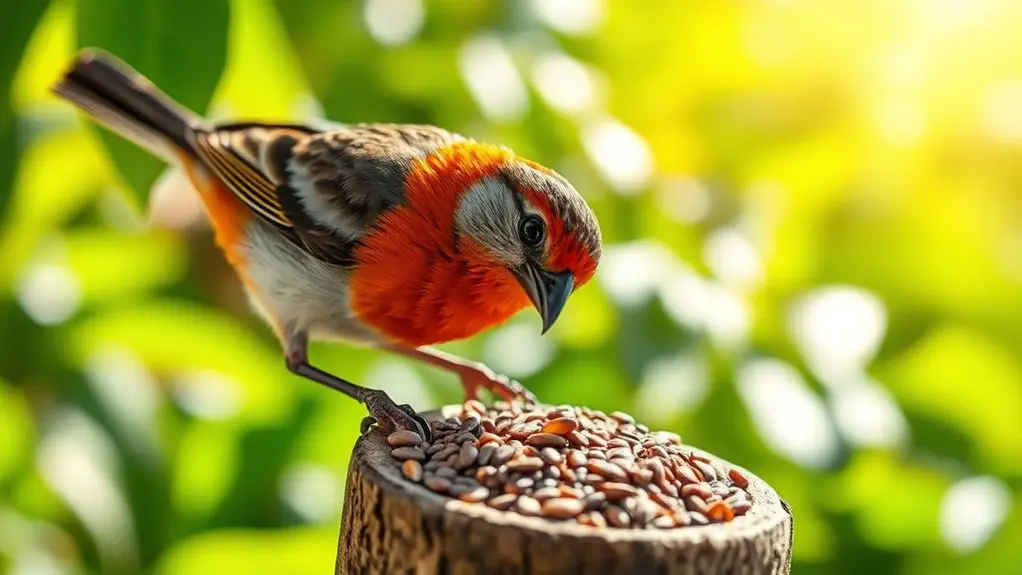
Although raw chia seeds offer beneficial nutrients like omega-3 fatty acids and fiber, you should feed them to birds in moderation to guarantee safety. Introducing chia seeds gradually into your bird’s diet allows you to monitor for any adverse reactions or allergies.
When soaked, chia seeds form a gel-like texture, which can be easier for birds to consume and digest. It’s essential not to rely on chia seeds as the primary food source; instead, include them as part of a balanced diet.
Avoid giving birds chia seeds that have been flavored, seasoned, or mixed with additives, as these substances can be harmful.
Nutritional Benefits of Chia Seeds for Birds
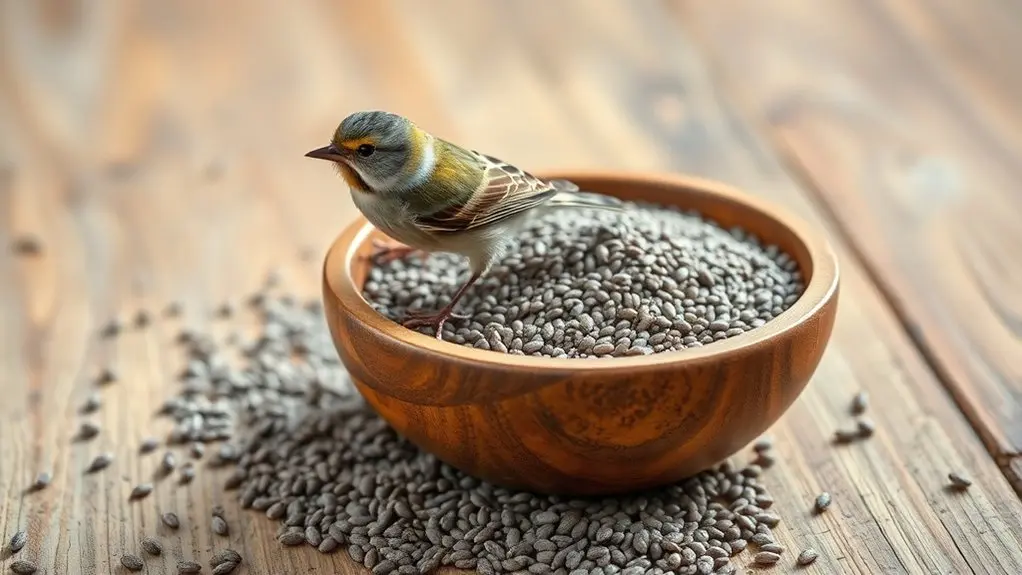
Because chia seeds are packed with essential nutrients, they offer significant health benefits when included in your bird’s diet. They’re rich in omega-3 fatty acids, which support cardiovascular and cognitive functions. The high fiber content promotes healthy bowel movements and helps prevent constipation.
Chia seeds boost your bird’s heart, brain health, and digestion with omega-3s and fiber.
Additionally, chia seeds contain antioxidants that combat oxidative stress, enhancing overall avian health. When soaked, chia seeds develop a gel-like consistency, aiding hydration and improving digestion efficiency.
Important minerals such as calcium, magnesium, and phosphorus contribute to maintaining strong bones and metabolic balance.
Due to this nutrient density, chia seeds serve as a valuable supplement within a balanced diet. They help to meet your bird’s nutritional requirements effectively without replacing primary food sources.
Which Birds Benefit Most From Chia Seeds?
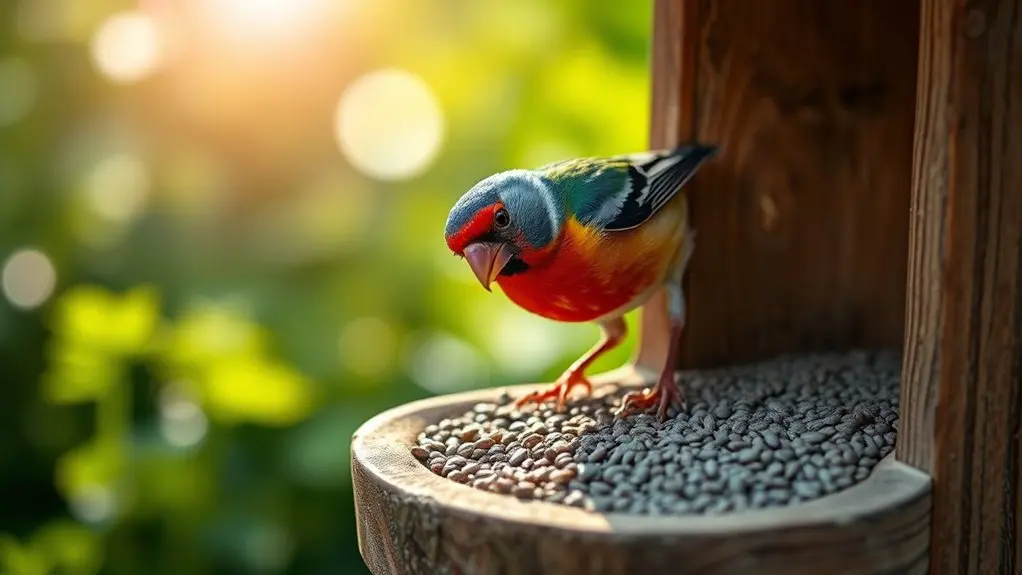
When you include chia seeds in your bird’s diet, certain species benefit more noticeably because of their specific nutritional needs. Parrots, including larger species like cockatoos and macaws, gain from chia seeds’ omega-3 fatty acids. These help support healthy feathers, skin, immune function, and energy.
Finches and canaries use chia seeds as a valuable nutritional supplement that boosts their overall robustness.
Small songbirds such as wrens and sparrows benefit from the fiber and protein content, which aid digestion and growth.
Plus, breeding pairs of birds may see better reproductive outcomes, including enhanced fertility and egg quality, thanks to the nutrient profile of chia seeds.
How to Prepare Chia Seeds: Soaking and Serving Options
To maximize chia seeds’ nutritional benefits and ease digestion, you should soak them in water or juice for at least 15 to 20 minutes. This allows them to develop their characteristic gel-like consistency.
Soaking chia seeds for 15-20 minutes enhances nutrition and aids digestion by creating their unique gel texture.
Before soaking, rinse the seeds thoroughly to remove any residual dirt or dust.
Use 1-2 tablespoons of dry seeds per serving since they expand quite a bit when hydrated.
Once soaked, you can serve chia seeds plain or mix them into smoothies, yogurt, or oatmeal. This adds a nice texture and boosts nutrition.
For added variety, try combining them with fruits, nuts, or natural sweeteners. This way, you can create customized chia puddings or snacks.
This preparation method makes sure your bird gets the best nutrient availability and digestibility.
Introducing Chia Seeds Gradually to Your Bird
How should you introduce chia seeds to your bird to guarantee safety and acceptance? Start by offering a small amount, such as a pinch, to observe your bird’s reaction.
Gradually increase the quantity over several days or weeks, monitoring for any digestive discomfort or allergic responses.
To enhance digestibility, consider soaking the seeds in water before feeding. This softens the seeds, making them easier for your bird to consume.
Careful, incremental introduction helps prevent gastrointestinal upset and promotes acceptance of the new food.
Throughout the process, watch your bird closely for signs of discomfort or adverse reactions.
Risks and Safety Precautions of Feeding Chia Seeds
Although chia seeds offer nutritional benefits, feeding them raw to your bird carries specific risks that need careful attention. Raw chia seeds can pose a choking hazard or cause digestive issues if not prepared properly.
Their high mucilage content expands when hydrated, which might lead to crop impaction if your bird eats too many.
To minimize these risks, soak chia seeds in water before feeding them to reduce expansion and help with digestion.
Also, make sure to give chia seeds in moderation to avoid gastrointestinal upset or nutrient imbalances.
Always introduce chia seeds gradually and keep a close eye on your bird.
If you have any concerns, it’s a good idea to consult an avian veterinarian.
Taking these precautions helps make sure your bird safely enjoys the benefits of chia seeds without any health problems.
Signs Your Bird Might Have an Adverse Reaction
When your bird consumes chia seeds, you should watch for signs that indicate an adverse reaction. Monitor for lethargy, loss of appetite, or changes in droppings, as these are common indicators of intolerance. Respiratory distress or difficulty breathing signals a more severe response and requires immediate attention.
Check for swelling, redness, or irritation around the beak, face, or eyes, which may suggest an allergic reaction. Behavioral changes like unusual feather plucking or excessive grooming can also indicate discomfort or allergy.
Although rare, seizures or abnormal neurological signs represent serious complications.
Observing these symptoms early enables you to manage your bird’s health effectively and prevent worsening conditions. Staying vigilant ensures your bird’s safety when introducing chia seeds into its diet. Just keep an eye out and don’t hesitate to contact a vet if something seems off.
When to Consult a Vet About Chia Seeds
You should definitely reach out to a vet if your bird shows any signs of allergic reactions or digestive problems after eating chia seeds.
For example, if you notice vomiting, diarrhea, or your bird acting unusually, it’s a good idea to get a professional opinion.
A vet can help figure out whether chia seeds are safe for your bird, taking into account its species, overall health, and dietary needs.
Signs of Adverse Reaction
If your bird shows signs like vomiting, diarrhea, or lethargy after eating raw chia seeds, these symptoms could indicate digestive upset or toxicity and warrant immediate attention. You should also watch for difficulty breathing, swelling, or changes in vocalization. These can signal severe reactions requiring prompt veterinary evaluation.
Allergic or intolerant responses may present as skin irritation or feather plucking in some species. Additionally, if your bird exhibits decreased activity or refuses food following chia seed ingestion, consult a vet immediately.
Monitor stool color and consistency closely; persistent abnormalities can indicate adverse effects.
Recognizing these signs early helps assure your bird receives timely care, minimizing the risk of complications related to chia seed consumption. So, if you notice anything unusual, don’t hesitate to get professional advice. Your bird’s health is worth it!
When Seeds Cause Issues
Recognizing adverse reactions to chia seeds is only the first step in guaranteeing your bird’s safety. When fed in large quantities, chia seeds’ high fiber content can cause digestive issues like impaction or constipation.
Because chia seeds absorb water and form a gel-like substance, they can expand in the crop or stomach, leading to blockages if not prepared or portioned properly.
If your bird shows lethargy, loss of appetite, abnormal stool, vomiting, difficulty breathing, or abdominal pain after consuming chia seeds, you should consult a veterinarian promptly.
Birds with gastrointestinal sensitivities or metabolic disorders require close monitoring when introducing chia seeds or any new food.
Early veterinary intervention can prevent complications and guarantee your bird’s health remains stable. So, it’s always better to be cautious and watch your feathered friend closely when trying out chia seeds for the first time.
Vet Consultation Triggers
Although chia seeds offer nutritional benefits, certain signs in your bird warrant prompt veterinary consultation. If your bird shows digestive upset such as vomiting or diarrhea after consuming chia seeds, seek veterinary advice immediately. Allergic reactions or unusual behavior following chia seed ingestion also require professional evaluation.
Before introducing raw chia seeds, consult your vet, especially if your bird has preexisting health conditions or sensitivities. A veterinarian can recommend appropriate portion sizes and preparation methods to guarantee safe feeding.
Also, if your bird eats a large quantity of chia seeds, urgent veterinary attention is necessary because of the risk of gastrointestinal blockages or other complications.
Timely vet consultation helps prevent health issues and supports your bird’s well-being when adding chia seeds to its diet.
Tips for Adding Chia Seeds to Your Bird’s Diet
You should start by offering small portions of soaked chia seeds to prevent choking and digestive issues. Just soak the seeds in water until they form a gel-like consistency.
This not only makes them safer but also helps your bird absorb the nutrients better. Keep a close eye on your bird’s reactions, so you can adjust the amount and make sure they’re handling the new addition well.
Portion Size Guidelines
When introducing chia seeds to your bird’s diet, start with small portions to see how your bird responds and to avoid digestive issues. For small birds, offer about a pinch (1/8 teaspoon) daily. Larger species can safely consume up to 1 teaspoon.
Limit chia seeds to no more than 10% of your bird’s total daily food intake to keep a balanced diet. Gradually add chia seeds while watching for any adverse reactions.
Always check with an avian veterinarian to customize portion sizes based on your bird’s species, age, and health. Avoid feeding too much since chia seeds are nutrient-dense, and overfeeding might cause digestive upset or nutritional imbalance.
Following these guidelines helps make sure chia seeds benefit your bird safely and effectively.
Preparation Methods Recommended
Since chia seeds can be tough and dry, soaking them in water or juice for at least 15 minutes softens their texture. This makes them easier for your bird to eat and digest.
You can also grind chia seeds into a fine powder, which helps your bird absorb the nutrients better and lowers the risk of choking, especially for small or picky birds.
Mixing soaked seeds with bird-safe fruits, vegetables, or cereals creates a nutritious and tasty option. Just remember to serve chia seeds in moderation, about one teaspoon daily, to avoid digestive upset or overfeeding.
Also, make sure the seeds are fresh and free from any additives or sweeteners before offering them.
Monitoring Bird Reactions
Although chia seeds offer nutritional benefits, careful monitoring is essential when introducing them to your bird’s diet. Start by offering a small amount and observe your bird’s reaction closely to guarantee tolerance.
Chia seeds swell into a gel-like consistency when soaked, which may aid digestion but requires supervision to prevent choking hazards.
Keep an eye out for any signs of allergic reactions or gastrointestinal distress, like changes in droppings or discomfort.
Gradually increase the chia seed quantity while maintaining a balanced diet, but avoid excessive fiber intake.
Introducing chia seeds in moderation helps minimize health risks.
If your bird shows any adverse effects, don’t wait—consult an avian veterinarian promptly to ensure safety and proper dietary adjustments.
Taking this step-by-step approach really supports your bird’s well-being during dietary changes.
Frequently Asked Questions
Can Chia Seeds Help Improve a Bird’s Feather Quality?
Yes, chia seeds can improve your bird’s feather quality by providing omega-3 fatty acids, protein, and antioxidants. These nutrients support feather growth, repair, and protect against damage.
Feeding chia seeds appropriately can really enhance your bird’s overall plumage health. They’re a simple addition that makes a noticeable difference. Just be sure to include them as part of a balanced diet.
Are Chia Seeds Suitable for Baby Birds or Only Adults?
Think of feeding baby birds raw chia seeds like giving a toddler spicy food. It’s too harsh for their developing systems. You shouldn’t offer raw chia to baby birds.
Only adult birds handle them safely. Ideally, the seeds should be soaked and given in moderation.
How Do Chia Seeds Compare to Flax Seeds for Birds?
You’ll find chia seeds offer more calcium and soluble fiber than flax seeds, enhancing hydration and bone health. Unlike flax, chia seeds don’t require grinding, making them easier for birds to digest and absorb nutrients efficiently.
Can Wild Birds Safely Eat Chia Seeds From Feeders?
Yes, you can safely offer wild birds chia seeds from feeders, but soak them first to reduce choking risk.
Feed them moderately, as chia seeds provide beneficial nutrients but shouldn’t replace birds’ natural diet entirely.
It’s a nice treat, but keep their regular food variety going to keep them healthy and happy.
Do Chia Seeds Affect a Bird’s Behavior or Energy Levels?
Like a spark igniting a fire, chia seeds can temporarily boost a bird’s energy and activity levels due to omega-3 fatty acids and fiber.
You’ll want to feed them in moderation to avoid hyperactivity or digestive issues. It’s all about finding the right balance to keep your bird happy and healthy.
Conclusion
Feeding your bird raw chia seeds is like planting a tiny seed of health that can grow into vibrant energy. With their rich nutrients, chia seeds offer a natural boost. But you should introduce them carefully and watch for any signs of distress.
Like tending a delicate garden, monitoring and moderation guarantee your feathered friend thrives. When in doubt, consulting a vet helps keep this superfood a safe part of their balanced diet.