
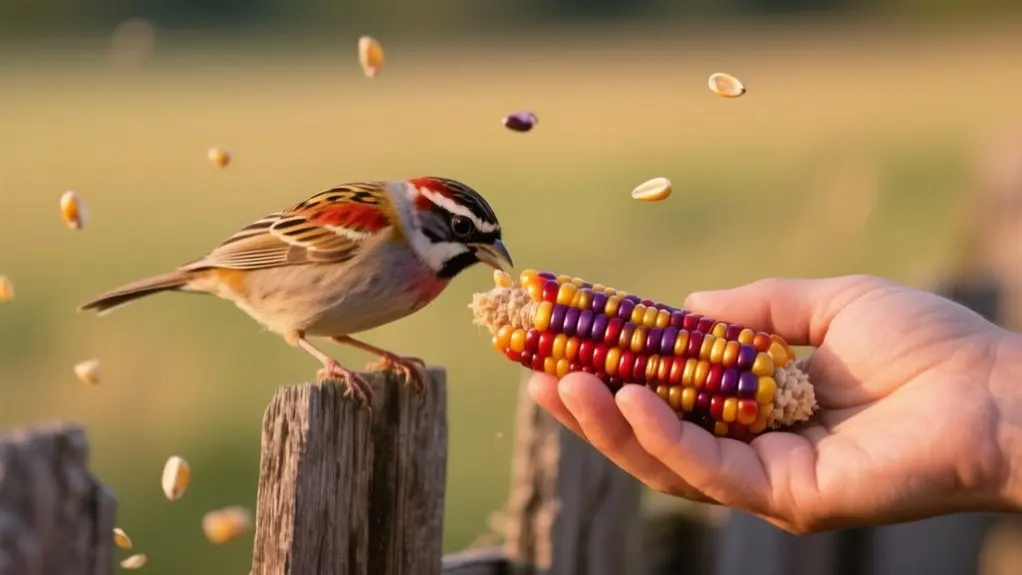
Yes, you can safely feed Indian corn to many birds, as its hard, colorful kernels provide essential calories and attract species like crows, jays, and turkeys. Some smaller birds prefer cracked corn for easier eating, and waterfowl enjoy whole kernels during migration.
Just make sure the corn is fresh and mold-free to avoid health issues. You’ll also want to take into account timing and feeding methods to keep your feathered visitors happy and healthy while managing pests effectively.
What Is Indian Corn and Why Birds Like It
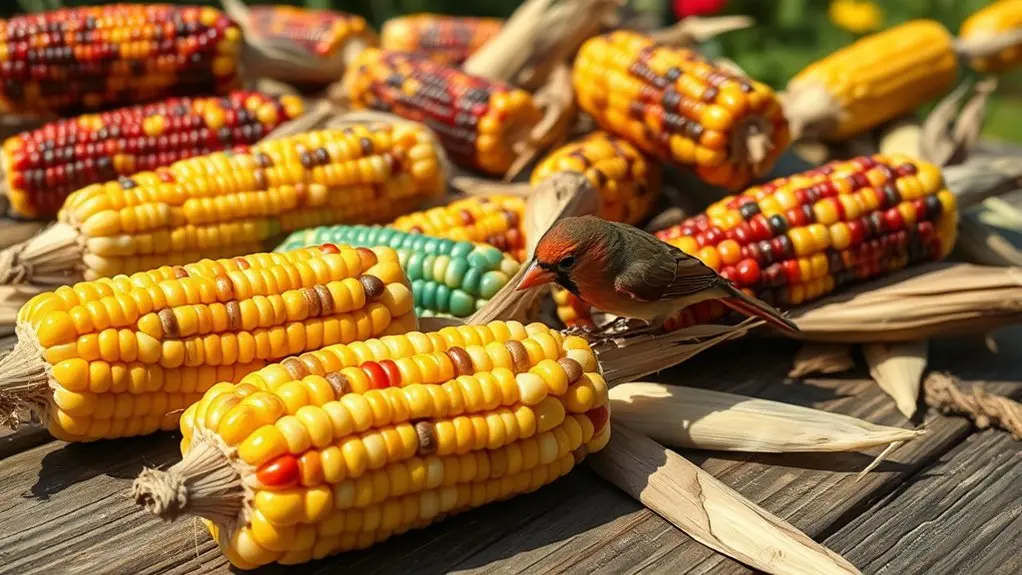
Indian corn, also called flint corn, stands out with its hard, colorful kernels that many birds find irresistible. You’ll notice that birds can eat these kernels easily because they provide essential calories and carbohydrates, especially during migration and colder months.
The tough texture makes Indian corn less likely to spoil compared to softer corn varieties, so it lasts longer when you hang it in feeders or display it in your garden. This durability encourages birds to peck at it frequently.
Plus, its vibrant colors attract a wide range of birds, inviting them to forage actively. If you want to support local wildlife, Indian corn is a great, energy-rich option birds can eat while enhancing your backyard birdwatching experience.
Bird Species That Eat Indian Corn
You’ll notice that crows, jays, and wild turkeys are some of the most common birds eating Indian corn. Each one has its own unique way of feeding.
It’s interesting to see how ground feeders like doves and quail forage differently compared to waterfowl. This can really help you customize how you feed them.
Plus, if you know which birds respond to deterrents, you can make your corn feeding more effective and selective. That way, you attract the birds you want while keeping others away.
Common Corn-Eating Birds
Many bird species can’t resist the vibrant colors and rich energy found in corn. When you set out Indian corn for bird feeding, you’ll notice several common visitors keen to feed on it.
Here are three types of birds you’ll often see enjoying Indian corn:
- Native sparrows and doves: These ground feeders forage for kernels, easily consuming the corn.
- Crows, jays, and blackbirds: Larger birds attracted by the corn’s colorful appearance and energy content.
- Waterfowl like ducks and geese: Particularly during migration, they appreciate the nutrient-rich corn.
While some smaller birds avoid the hard outer shell, many birds find Indian corn an excellent food source.
Including it in your bird feeding routine can attract a diverse range of feathered friends.
Feeding Habits By Species
Although different bird species have varied feeding styles, several are drawn to the nutrient-rich kernels of Indian corn. You’ll find that quail, turkeys, and doves enjoy the high energy content, while ground-feeders like sparrows and blackbirds prefer cracked corn for easy foraging.
Waterfowl such as ducks and geese often eat whole kernels, especially during migration when extra fuel is essential.
Crows and jays, known for their adaptability, dig up seeds, including Indian corn, to satisfy their appetite.
If you provide Indian corn in feeders, you’ll attract a diverse range of birds to your yard. Understanding which birds eat corn helps you cater to their feeding habits and enhances your birdwatching experience.
Bird Sensitivity To Deterrents
When managing birds that eat Indian corn, understanding their sensitivity to deterrents is essential.
Species like crows and jays quickly adapt to common scare tactics. Bird sensitivity to deterrents varies widely, so you’ll need tailored strategies.
Crows are clever and often ignore auditory or visual scare devices after a while.
Blackbirds, such as red-winged blackbirds, tend to damage husks but can be deterred with physical barriers.
Ground-feeding birds like doves respond differently, sometimes avoiding treated areas altogether.
To protect your Indian corn effectively, try these approaches:
- Rotate deterrents frequently to prevent crows from habituating.
- Use netting or physical barriers to block blackbirds.
- Scatter corn strategically to distract ground-feeding birds.
Combining methods improves success in managing diverse bird species.
How Indian Corn Benefits Wild and Pet Birds
Because Indian corn offers colorful, nutrient-rich kernels, it attracts a variety of wild and pet birds like quail, doves, and sparrows. You’ll notice backyard birds enthusiastically pecking at the whole kernels, which provide essential energy thanks to their high carbohydrate content.
This makes Indian corn a great food source, especially during colder months or migration periods when wild bird energy needs increase.
Indian corn supports wild birds by boosting their energy during cold seasons and migration times.
Besides nutrition, the hard kernels help maintain beak health and aid digestion by providing necessary grit.
You can also offer cracked corn to make feeding easier for smaller birds.
Best Forms of Indian Corn to Feed Birds
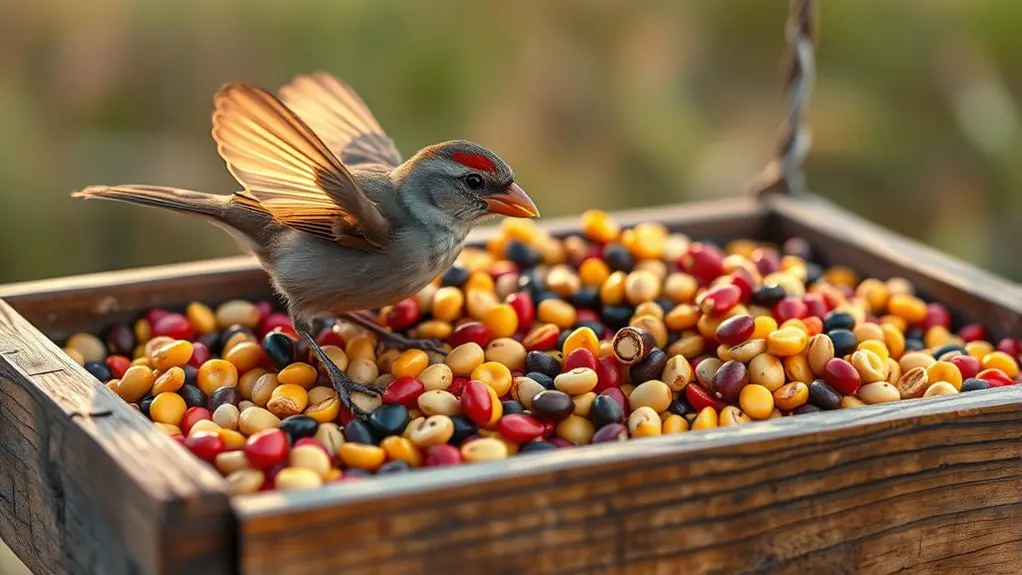
You can feed birds Indian corn in three main forms: whole cobs, kernels, or cracked corn. Each form attracts different bird species and offers unique benefits.
Here’s how to choose the best form of Indian corn for your feathered visitors:
- Whole cobs: Ideal for larger birds like crows and jays. Whole cobs provide easy access to nutritious kernels.
- Kernels: The colorful kernels appeal visually and nutritionally to many birds. They offer essential carbohydrates and calories.
- Cracked corn: Smaller ground-feeding birds prefer cracked corn since it’s easier to eat in small pieces.
Offering Indian corn in these forms helps attract a variety of birds to your yard.
It enhances your birdwatching experience with vibrant, healthy treats.
How to Safely Offer Indian Corn to Backyard Birds
Feeding Indian corn to backyard birds can brighten your yard and attract a variety of species, but it’s important to do so safely. Always check that the Indian corn is free from mold or spoilage since contaminated corn can harm birds.
You can offer it whole or as kernels, but keep portions small to avoid waste and discourage pests. Hang the corn from trees or use specialized feeders to keep it off the ground. This helps prevent spoilage and keeps unwanted wildlife away.
Offer small portions of whole or kernel corn, hanging it to prevent waste and deter pests.
Regularly monitor the feeding area and promptly remove any uneaten Indian corn to maintain cleanliness and a safe environment for your feathered visitors.
Following these steps guarantees your backyard birds enjoy a nutritious and colorful treat without any risks.
Choosing the Right Feeders for Indian Corn
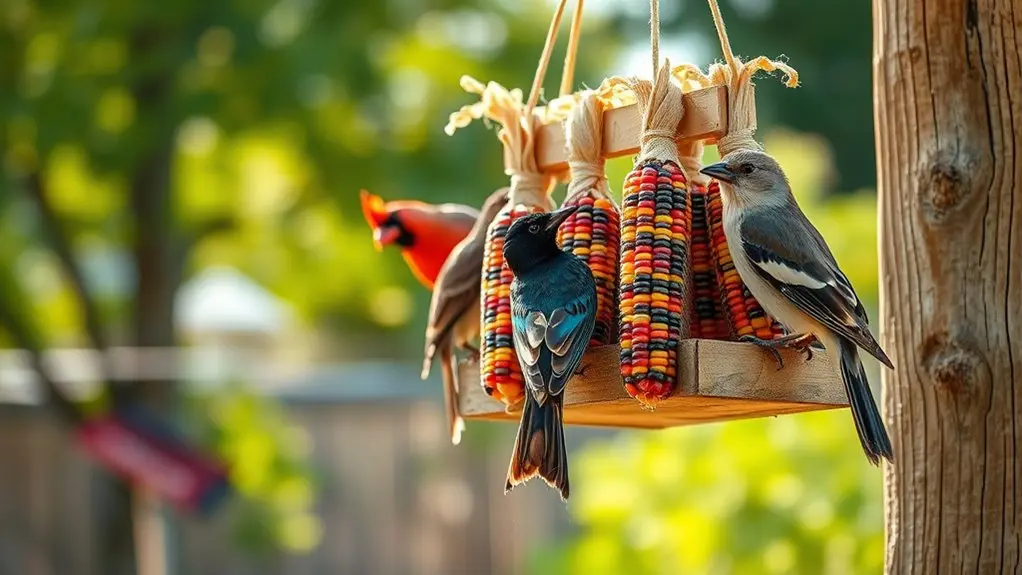
When you’re picking feeders for Indian corn, think about using platform feeders for ground birds.
For bigger birds, specialized corn holders work best.
Try to hang your feeders where the birds can feed safely but keep them out of reach of squirrels.
It also helps to place feeders near some cover—this way, the birds feel more secure while they enjoy their corn.
Feeder Types Suitable
Although selecting the right feeder might seem simple, choosing one tailored for Indian corn guarantees you attract the birds you want while minimizing waste.
When considering feeder types, focus on options that offer easy access and keep the corn fresh. Here are three excellent choices:
- Platform Feeders – Perfect for larger birds like crows and jays, these allow drainage to prevent spoilage.
- Ear Corn Feeders – Designed to hold whole ears securely, reducing waste by keeping corn off the ground.
- Squirrel Bungee Feeders – Fun for squirrels and beneficial for attracting birds that forage cracked corn.
You can also explore chair-shaped or DIY feeders to add variety.
Picking the right feeder types guarantees your backyard visitors enjoy the corn safely and effectively.
Placement Tips
Since the right placement can make all the difference, you should position feeders where birds can feed safely and comfortably.
Platform feeders are ideal for Indian corn because they offer easy access for larger birds like crows and jays.
Make certain to place these feeders in stable spots to avoid tipping when birds land. Elevate the feeders to keep them out of reach from ground predators but still accessible to ground-feeding birds.
Avoid placing Indian corn directly on the ground, as this encourages spoilage and attracts unwanted visitors like rodents and squirrels.
Using secured ear corn feeders also helps keep the corn in place, preventing it from being knocked down or scattered.
These placement tips will guarantee your feathered friends enjoy their treat safely and conveniently.
Preventing Indian Corn Spoilage When Feeding Birds
To keep Indian corn fresh and safe for birds, you should offer it in small amounts and store it properly before use. Corn spoils quickly when exposed to moisture, so managing it carefully is key.
Offer Indian corn in small amounts and store it well to prevent moisture-related spoilage.
Here’s how you can prevent spoilage:
- Only put out what birds can eat within a few days to avoid leftover corn spoiling.
- Store Indian corn in a cool, dry place to maintain freshness before feeding.
- Use feeders with good drainage to let moisture escape and keep corn dry.
Also, remove any uneaten corn promptly and check regularly for mold or spoilage signs. Keeping uneaten corn off the ground prevents pests and contamination.
Following these steps helps guarantee your feathered friends enjoy fresh, safe Indian corn every time.
Health Risks of Feeding Indian Corn to Birds
You should be careful when feeding Indian corn to birds. Its hard texture can sometimes cause digestive problems, especially for birds that aren’t used to it.
Also, mold and bacterial contamination might develop on the corn, which can lead to toxic reactions and harm their health.
Potential Digestive Issues
Although Indian corn’s vibrant colors make it an attractive treat, its hard kernels can cause digestive problems for birds. You should be aware of potential digestive issues when offering Indian corn. Its tough outer shell is difficult for birds to break down, which can lead to blockages, especially in smaller species.
You might notice signs like lethargy or a loss of appetite if they overconsume it without enough water or softer foods.
To protect your feathered friends, keep these tips in mind:
- Offer Indian corn in moderation to avoid overwhelming their digestive system.
- Crack or cook the kernels to make them easier to digest.
- Monitor your birds closely for any adverse reactions after feeding Indian corn.
Mold and Contamination Risks
Since Indian corn can easily develop mold, especially when stored in damp conditions, you need to be extra careful before feeding it to birds.
Mold, particularly aflatoxins, poses serious health risks, causing respiratory issues and liver damage in birds.
You should always inspect the corn for discoloration, unusual odors, or visible mold before offering it.
Corn stored improperly or exposed to moisture is more likely to harbor harmful fungi producing mycotoxins.
To keep birds safe, provide only fresh Indian corn and avoid feeding any leftovers after one or two days.
When to Offer Indian Corn: Seasonal Timing Tips
When fall arrives and Indian corn is harvested, it’s the perfect time to offer it to birds preparing for winter. You’ll notice many birds, such as crows, jays, and sparrows, attracted by the colorful kernels.
To make the most of Indian corn in your backyard, keep these seasonal tips in mind:
- Start offering Indian corn in late summer to early autumn, matching the natural availability for migratory birds.
- Continue through fall into winter when other food sources dwindle, providing essential nutrients during colder months.
- Securely place or hang Indian corn in feeders to prevent spoilage and keep pests like squirrels away.
Following this timing guarantees you support birds’ energy needs during critical seasonal changes.
Incorporating Indian Corn Into a Healthy Bird Diet
If you want to provide a nutritious and engaging treat for your backyard birds, incorporating Indian corn into their diet is a great choice. Indian corn offers essential nutrients similar to other corn types, making it a healthy option.
To accommodate smaller birds, crack or shell the kernels, as the hard outer layer can be tough to eat. Freshness is key. Always verify your Indian corn is free from mold to avoid health risks.
Birds like quail, grouse, and doves especially enjoy the colorful kernels, which add visual interest to your feeder. Offering Indian corn on the cob encourages natural foraging behaviors, boosting both mental stimulation and physical activity.
Avoiding Pests When Feeding Indian Corn
Although Indian corn makes a nutritious treat for birds, it can also attract unwanted pests like squirrels and raccoons. To keep your feeders pest-free, follow these tips:
- Use feeders designed to block larger animals, like platform feeders with screens, so only small birds can access the corn.
- Offer smaller amounts of Indian corn at a time, reducing leftovers that attract pests.
- Regularly clean feeding areas and remove spilled corn to eliminate food sources for unwanted visitors.
Additionally, planting herbs or flowers that repel pests around feeders can further protect your bird feeding setup.
Alternatives to Indian Corn for Corn-Loving Birds
Since Indian corn may not always be the best choice for every bird feeder, you can try several alternatives that attract corn-loving birds while offering varied nutrition.
Cracked corn is a popular option, drawing in blackbirds, sparrows, and doves due to its digestibility and high energy.
Whole sweet corn kernels appeal to larger birds like crows and waterfowl, providing essential calories during active foraging.
Shelled corn works well for ground feeders such as quail and grouse, making it an excellent backyard substitute.
You can also offer dried corn or popcorn in small amounts for a safe, affordable treat.
Finally, a mixed birdseed containing corn meal or corn flour caters to many corn-loving birds, ensuring a balanced diet rich in carbohydrates.
Frequently Asked Questions
Can Birds Digest Indian Corn if It’s Cooked or Raw?
Yes, birds can digest Indian corn whether it’s cooked or raw, but cooking methods matter.
Raw kernels are easier for birds to digest because they keep their natural texture and nutrients intact.
Cooking might soften the corn, which can make it less appealing but still safe to eat.
You should focus on providing fresh corn, as spoiled or moldy kernels can harm birds regardless of how you prepare them.
Does Indian Corn Attract Unwanted Wildlife Besides Birds?
Yes, Indian corn does attract unwanted wildlife besides birds, like squirrels, raccoons, and deer.
These animals are drawn to its high energy content and sweet taste, which can create competition for your bird feed.
For effective wildlife management, you’ll want to monitor your feeding area regularly and place the corn strategically.
This way, you’ll minimize visits from larger animals and keep the feeding space mostly for the birds you want to attract.
How Does Indian Corn Affect Bird Migration Patterns?
You know what they say: “Birds of a feather flock together.”
Indian corn plays a key role in shaping migration strategies by providing a rich food source that attracts migratory birds.
When you see fields full of Indian corn, birds often adjust their routes to take advantage of this energy boost.
This reliable resource influences timing and stopover locations, helping birds conserve energy and optimize their long journeys.
Can Baby Birds Safely Eat Indian Corn?
Yes, baby birds can safely eat Indian corn if you prepare it properly.
Cut the kernels into small pieces to avoid choking hazards and consider cooking the corn to make it easier to digest.
Indian corn offers nutritional benefits like carbohydrates that provide energy for growing chicks.
Always make certain it’s pesticide-free and watch your birds closely when introducing this new food to verify they handle it well without any issues.
Is Indian Corn Safe for Birds With Allergies?
Indian corn can be risky for birds with allergies, so you should watch closely for allergy symptoms like digestive upset or feather plucking.
If you notice any signs, stop feeding it immediately.
It’s best to introduce Indian corn gradually and consult an avian vet before offering it to sensitive birds.
You’ll also want to provide a balanced diet to reduce the chance of allergic reactions and keep your bird healthy.
Conclusion
You might think feeding Indian corn to birds is just a seasonal treat, but it turns out it’s a year-round delight for many species. As you offer those colorful kernels, you’re not only brightening your backyard but also supporting wild and pet birds with valuable nutrition.
It’s a happy coincidence that something so vibrant also helps keep pests at bay, making your bird-feeding efforts both enjoyable and smart. Keep corn handy and watch the feathered fun unfold!