
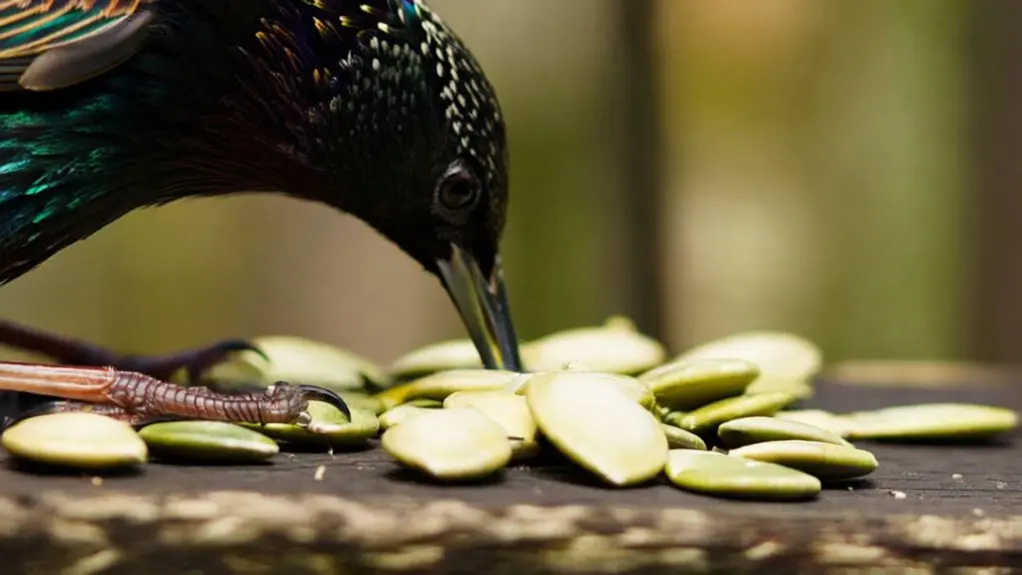
You can feed birds raw pumpkin seeds in moderation because they offer proteins, healthy fats, vitamins, and minerals that support beak health, metabolism, and immune function. Birds enjoy the crunchy texture and natural oils. But large or unshelled seeds may pose choking or digestive risks.
While raw seeds contain mild antiparasitic compounds, they aren’t effective for deworming. Proper preparation and portion control are key to safety. Understanding these factors helps you provide better care and nutrition.
Why Birds Love Raw Pumpkin Seeds
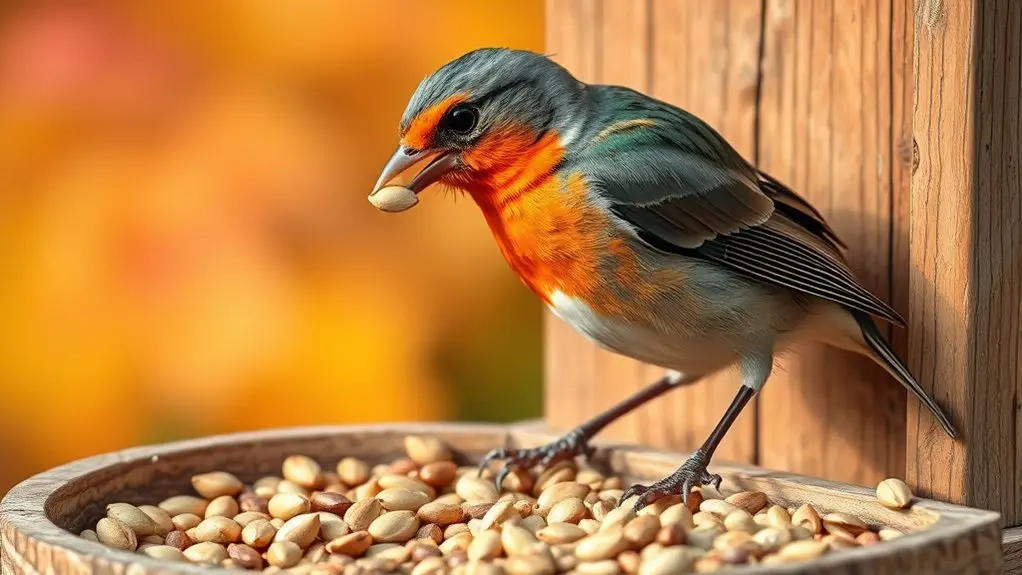
Although birds have diverse diets, many species like parrots and geese actively seek out raw pumpkin seeds because these seeds provide a concentrated source of protein, healthy fats, and essential minerals. You’ll notice that raw pumpkin seeds contain natural oils and flavor compounds that attract birds, making the seeds a tempting snack.
Birds often consume these seeds either directly from the shell or after extracting the seed, gaining nutritional benefits. The seeds’ crunchy texture also helps birds exercise their beak muscles, contributing to beak health and strength.
When you feed raw pumpkin seeds in moderation, you support a bird’s overall health by providing a natural treat that encourages both physical activity and nutrient intake without overfeeding. It’s a simple way to keep your feathered friends happy and healthy.
What Nutrients Do Raw Pumpkin Seeds Provide to Birds
You’ll find that raw pumpkin seeds offer birds essential vitamins like vitamin E and B-complex. These vitamins help support feather quality and metabolism.
Plus, they contain important minerals such as magnesium, zinc, iron, and phosphorus. These minerals play a big role in boosting immune function and keeping cells healthy.
Altogether, these nutrients give birds a balanced nutritional boost that promotes their overall well-being.
Essential Vitamins Overview
How do raw pumpkin seeds contribute to a bird’s nutritional needs? They provide essential vitamins and nutrients that support various physiological functions.
Specifically, raw pumpkin seeds supply B Vitamins like Niacin and Riboflavin. These help with energy metabolism, so birds can stay lively and their cells work properly.
There’s also Vitamin E, which acts as an antioxidant. It protects cells and promotes healthy skin and feathers, which are super important for a bird’s overall condition.
And let’s not forget Zinc. This mineral supports the immune system, helping birds fight off infections and stay healthy.
Together, these nutrients play a crucial role in keeping metabolic processes, cells, and immune defenses in good shape. Adding raw pumpkin seeds to a bird’s diet can boost health by providing these nutrients naturally and efficiently.
Key Mineral Content
When you incorporate raw pumpkin seeds into a bird’s diet, you provide a rich source of key minerals essential for physiological health. Raw pumpkin seeds contain about 168 mg of magnesium per ounce, supporting muscle and nerve function.
They offer approximately 2.2 mg of zinc, which is essential for immune response and enzymatic activity.
The iron content, around 2.5 mg per ounce, assists in oxygen transport, enhancing vitality. Phosphorus is also abundant at roughly 330 mg per ounce, promoting bone integrity and cellular repair.
Additionally, potassium, present at about 180 mg per ounce, helps maintain fluid balance and nerve signaling.
These minerals collectively contribute to maintaining the bird’s overall metabolic and physiological functions. So, adding raw pumpkin seeds to their diet is a simple way to boost their health and well-being.
Nutritional Benefits Summary
Although raw pumpkin seeds are small, they pack a diverse array of nutrients that markedly benefit birds’ health. When you feed birds these seeds, they receive essential components that support crucial physiological functions.
First up, pumpkin seeds are rich in healthy fats, protein, and fiber. These macronutrients supply energy and help keep a bird’s digestive system running smoothly.
They also contain B vitamins, vitamin E, and carotenoids. These vitamins boost the immune system and help maintain beautiful, strong feathers.
On the mineral side, pumpkin seeds offer magnesium, zinc, iron, and phosphorus. These minerals play a big role in metabolism and building strong bones.
Plus, the seeds have water content that helps keep cells hydrated. All in all, pumpkin seeds are a great little package of nutrition for birds!
Do Raw Pumpkin Seeds Really Deworm Birds?
While raw pumpkin seeds contain compounds with mild antiparasitic properties, they don’t provide the concentrated doses needed to effectively deworm birds.
Raw pumpkin seeds have mild antiparasitic effects but lack the strength to effectively deworm birds.
Scientific research mainly looks at pumpkin seed extracts or oils, which have higher concentrations of the active compounds than raw seeds.
When you feed birds raw pumpkin seeds, the antiparasitic agents are too diluted to reliably eliminate existing parasitic infections.
Instead, these seeds work better as a preventative dietary supplement rather than a treatment.
To actually deworm birds effectively, you’d need properly prepared herbal formulations like tinctures or decoctions that concentrate the bioactive molecules.
Risks of Feeding Raw Pumpkin Seeds to Birds
Even though raw pumpkin seeds don’t effectively treat parasitic infections in birds, feeding them still carries certain risks you should consider.
First, raw seeds can pose a choking hazard, especially if they’re large, hard, or unshelled. These qualities make them difficult for small birds to chew safely.
Second, their high fat content and tough outer shell may cause digestive issues or impaction. This can potentially lead to gastrointestinal distress.
Third, improperly stored raw pumpkin seeds can harbor mold or bacteria. That means there’s a risk of health problems from contamination.
Additionally, eating too many raw pumpkin seeds might cause nutritional imbalances because of the concentrated oils they contain.
To summarize, the main risks of feeding raw pumpkin seeds to birds include:
- Choking or injury from hard, unshelled seeds
- Digestive complications and impaction
- Exposure to harmful microbes from poor storage
How to Safely Offer Pumpkin Seeds to Different Bird Species
When offering pumpkin seeds to birds, you should guarantee the seeds are clean, unsalted, and preferably roasted or dried to minimize the risk of mold and spoilage. Smaller birds require seeds cut or crushed to prevent choking, while larger birds can handle whole seeds. Always remove spoiled seeds and offer pumpkin seeds only as an occasional treat to avoid nutritional imbalance.
| Bird Species | Seed Preparation |
|---|---|
| Small seed-eaters | Crushed or cut seeds |
| Medium-sized birds | Whole or halved seeds |
| Large birds | Whole seeds |
| All species | Clean, unsalted seeds |
| All species | Roasted/dried preferred |
This approach ensures safety and nutritional suitability across species.
Using Pumpkin Seed Extracts for Deworming Birds (Advanced Tips)
Because raw pumpkin seeds alone rarely deliver the concentrated antiparasitic compounds necessary for effective deworming, you should utilize pumpkin seed extracts such as tinctures or decoctions. These extracts concentrate the bioactive compounds responsible for targeting parasitic worms in birds.
To optimize their use, consider the following:
- Prepare extracts correctly. Alcohol-based tinctures or hot water decoctions ensure maximal concentration of antiparasitic agents.
- Administer the extract regularly over a two-week period to achieve a consistent reduction in parasite load.
- Monitor the specific parasite type, as efficacy varies with extraction method and worm species.
Using these advanced tips will enhance the medicinal impact of pumpkin seeds. This way, deworming is more reliable than feeding raw seeds alone.
Frequently Asked Questions
Can Birds Eat Roasted Pumpkin Seeds Safely?
Yes, you can safely feed birds roasted pumpkin seeds if they’re unsalted and free from oils or seasonings. Roasting preserves nutrients, which is great for the birds.
Just make sure to avoid any added salt or spices. Those can cause dehydration or other health problems in birds.
How Often Should I Feed Pumpkin Seeds to Pet Birds?
Think of pumpkin seeds as golden tokens of health; you should offer them to your pet birds only once or twice weekly. This controlled frequency prevents overfeeding, helping maintain balanced nutrition and avoiding digestive or weight issues.
It’s all about balance, really. Too many pumpkin seeds can upset your bird’s diet, so keeping it occasional is the way to go. Just a little treat now and then keeps things healthy and happy.
Are Pumpkin Seeds Suitable for Baby Birds or Chicks?
You shouldn’t feed baby birds raw pumpkin seeds. Their digestive systems can’t properly process the oils and compounds, which could lead to choking or impaction.
Instead, try giving them finely chopped, cooked pumpkin or a puree made especially for chicks’ nutrition. This way, they get the nutrients they need without any risk. It’s a much safer and easier option for their little tummies.
Can Pumpkin Seeds Cause Allergies in Birds?
About 2% of birds may develop allergies to pumpkin seeds. You should monitor your bird closely, as allergic reactions like itching or respiratory distress can occur.
If you notice any symptoms, it’s important to act fast. Prompt veterinary care is essential to keep your feathered friend safe and healthy. Just keep an eye out and don’t hesitate to get help if something seems off.
Do Wild Birds Naturally Consume Pumpkin Seeds in Their Habitat?
Yes, wild birds occasionally consume pumpkin seeds when available, especially near pumpkins or cultivated areas. While not a primary food source, these seeds provide high fat and protein.
They help supplement their natural diet of native seeds and grains. So, if you see birds around pumpkin patches, it’s not surprising they might snack on the seeds now and then.
Conclusion
Feeding raw pumpkin seeds to birds isn’t just a casual treat. It’s a nutritional boost packed with essential nutrients and potential deworming benefits.
However, you need to weigh these benefits against possible risks like choking or digestive upset. It’s kind of like a double-edged sword—pumpkin seeds can offer both healing and harm depending on how you use them.
By understanding species-specific needs and safe preparation, you can make sure your feathered friends thrive without any unintended consequences.