
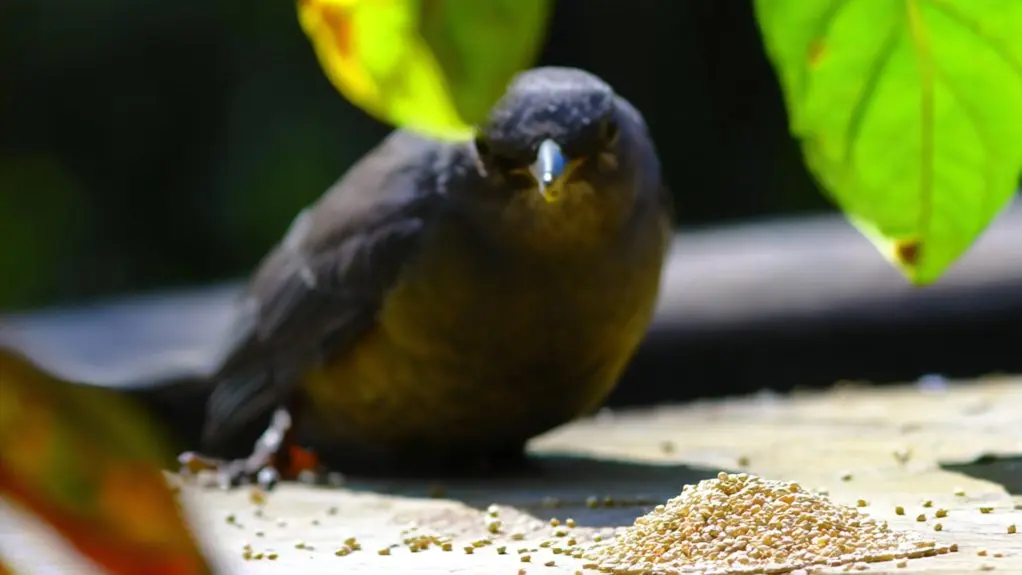
You can feed raw quinoa to birds safely, but only if you thoroughly rinse it to remove bitter saponins. These saponins can cause digestive upset and even toxicity. So, rinsing is really important before offering quinoa to your feathered friends.
Soaking or cooking quinoa makes it even easier for birds to digest and lowers any risks. It’s a good idea to offer quinoa in moderation and introduce it gradually. This way, you help prevent any digestive issues or nutrient imbalances.
Certain small to medium-sized birds handle quinoa well when it’s prepared the right way. To keep things safe and beneficial, it’s important to know how to handle quinoa properly, which bird species it suits best, and the right feeding guidelines.
Is Raw Quinoa Safe for Birds to Eat?
Although raw quinoa contains saponins that can be mildly toxic, you can safely feed it to birds after thoroughly rinsing to remove these bitter coatings. Proper rinsing eliminates the saponins, making raw quinoa suitable for bird consumption.
Thoroughly rinsing raw quinoa removes saponins, making it safe and suitable for birds to eat.
Birds can digest raw quinoa, but cooking it enhances digestibility and nutrient absorption.
Additionally, sprouted raw quinoa is safe and provides increased nutritional benefits due to enzyme activation and improved nutrient availability.
When feeding raw quinoa, moderation is essential; excessive amounts may lead to digestive upset in birds.
By controlling portion sizes and ensuring proper preparation, you provide a nutritious, safe food source.
Why You Should Always Rinse Raw Quinoa Before Feeding Birds
You should always rinse raw quinoa before feeding it to birds because it helps get rid of harmful saponins. These saponins can cause digestive problems, like upset stomachs or vomiting. So, giving the quinoa a good rinse makes sure those toxins are washed away.
Plus, when the quinoa is clean, birds can absorb the nutrients better. This means they get more of the good stuff, which supports their overall health.
It’s a simple step that makes a big difference for your feathered friends!
Removing Harmful Saponins
Since raw quinoa naturally contains saponins, bitter compounds that can be toxic to birds, it’s essential to rinse the seeds thoroughly before feeding them. These saponins serve as a natural defense but pose health risks if consumed in large amounts.
By rinsing quinoa under cold water, you effectively remove these harmful substances, ensuring the seeds are safe and palatable for birds.
Neglecting this step could result in adverse symptoms like vomiting, diarrhea, or lethargy. Also, the bitterness from saponins might discourage birds from eating unwashed quinoa.
Key considerations for removing saponins include:
- Use cold running water to rinse quinoa thoroughly.
- Rub seeds gently to dislodge saponins.
- Continue rinsing until water runs clear.
- Drain quinoa well before feeding.
- Confirm absence of bitter taste before offering to birds.
Preventing Digestive Upset
Properly rinsing raw quinoa removes saponins, preventing digestive upset that can harm birds. Saponins are a bitter coating that irritates the gastrointestinal tract and may cause vomiting or diarrhea if ingested.
When you rinse quinoa thoroughly under cold water, you effectively eliminate these compounds, making the seeds safe for birds to consume.
The natural bitterness of saponins deters birds from eating unwashed quinoa, signaling their potential harm. By removing saponins, you guarantee birds can enjoy quinoa without adverse reactions.
Skipping this step risks gastrointestinal irritation and toxicity.
Enhancing Nutrient Absorption
Although rinsing raw quinoa primarily removes saponins to prevent digestive upset, it also plays an essential role in enhancing nutrient absorption in birds. Saponins are bitter compounds that can interfere with the digestive process, reducing the bioavailability of essential nutrients.
By rinsing quinoa thoroughly, you eliminate these antinutritional factors, allowing birds to absorb proteins, vitamins, and minerals more efficiently. This simple step guarantees the quinoa is both safe and nutritionally beneficial.
Consider these key points:
- Saponins inhibit enzyme activity fundamental for digestion
- Removal improves protein and mineral uptake
- Rinsing reduces gastrointestinal irritation
- Enhances palatability, promoting better consumption
- Supports overall bird health by maximizing nutrient efficiency
Rinsing quinoa is essential for optimizing its nutritional value and safeguarding your birds’ well-being. It’s an easy habit that makes a big difference.
Which Bird Species Can Safely Eat Raw Quinoa?
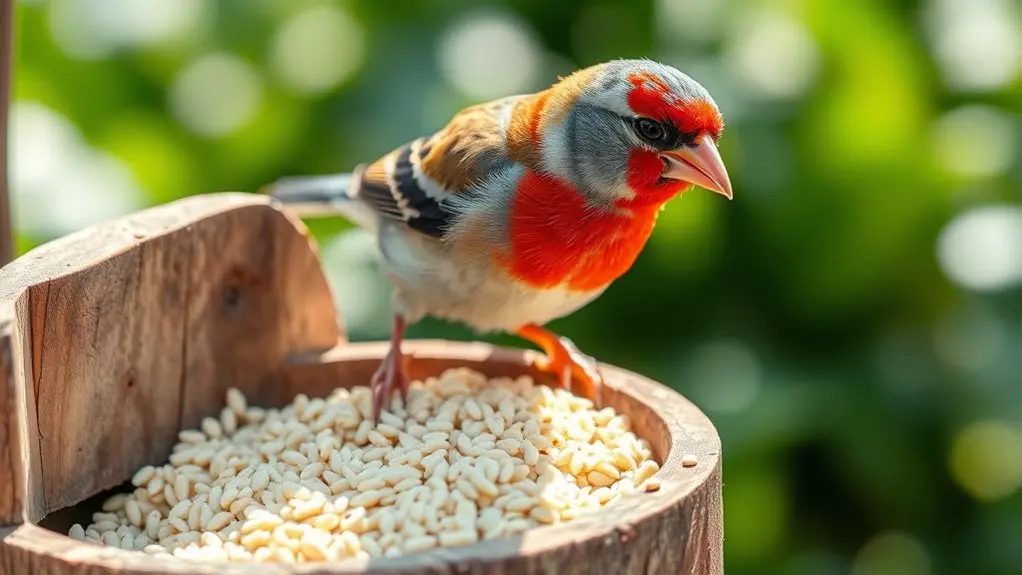
You’ll find that many small to medium-sized birds, like finches and orioles, can handle raw quinoa pretty well—just make sure it’s properly rinsed first.
Then, there are larger birds, like bluebirds and some parrots, that can eat it safely too, but in moderation.
If you have birds with sensitive digestive systems, it’s best to introduce quinoa slowly to avoid any tummy troubles.
Taking it easy helps them adjust without any issues.
Bird Species Preferences
When offering raw quinoa to birds, it’s important to know which species can safely consume it. Many small to medium-sized birds, like finches, tolerate raw quinoa well, provided the saponins are removed through rinsing.
Larger birds such as jays and orioles may also include raw quinoa in their diet.
However, some species with delicate digestive systems might prefer cooked quinoa for easier digestion. Observing individual bird reactions is vital, as not all birds respond positively.
- Finches and other small to medium birds safely eat rinsed raw quinoa
- Jays and orioles incorporate raw quinoa into varied diets
- Wild birds accept plain, unseasoned raw quinoa from feeders
- Some species favor cooked quinoa due to digestive sensitivity
- Monitor birds for adverse reactions or disinterest when feeding raw quinoa
Raw Quinoa Tolerance
Understanding which bird species tolerate raw quinoa helps you provide safe and appropriate feed. Small birds like finches and canaries can safely eat small amounts of raw, rinsed quinoa if introduced gradually.
Larger birds such as parrots and jays tolerate raw quinoa better when thoroughly rinsed to remove saponins but should receive it in moderation.
Wild species like sparrows and chickadees may naturally accept clean, seedless raw quinoa as part of their diet.
Birds with sensitive digestive systems, including cockatiels, require cautious introduction with close monitoring for adverse effects.
How to Introduce Raw Quinoa Into Your Bird’s Diet
Although raw quinoa offers valuable nutrients for birds, it needs proper preparation before feeding. To safely introduce raw quinoa into your bird’s diet, follow these steps carefully. This will help prevent digestive upset and guarantee nutrient absorption.
First, rinse raw quinoa thoroughly under cold water to remove saponins. These can be mildly toxic. Then, soak quinoa for about 8 hours to encourage sprouting, which makes it easier to digest.
Rinse quinoa well to remove saponins, then soak for 8 hours to promote sprouting and aid digestion.
Start with small amounts, like a teaspoon for small birds or a tablespoon for larger species. This allows your bird to adjust gradually. Keep a close eye on your bird during this introduction phase to watch for any adverse reactions.
If you notice signs of digestive distress or if you have any concerns about feeding quinoa, consult an avian veterinarian. Following these steps will help you add raw quinoa to your bird’s diet safely and effectively.
Benefits of Feeding Raw Quinoa to Birds
Properly preparing raw quinoa sets the stage for your bird to reap its nutritional benefits. Thorough rinsing removes saponins, the naturally occurring compounds that can be mildly toxic, making quinoa safe for consumption.
Raw quinoa provides a complete plant-based protein profile, including essential amino acids crucial for your bird’s muscle development and overall health. When sprouted, quinoa’s digestibility and nutrient absorption improve markedly, enhancing its value as a dietary supplement.
Feeding small quantities supports energy levels, promotes vibrant feather condition, and contributes essential nutrients that aid metabolic functions.
Mistakes to Avoid When Feeding Raw Quinoa
If you feed raw quinoa to birds without rinsing it thoroughly, the saponins on the seed surface can cause digestive upset or toxicity. These naturally occurring compounds irritate the mouth and digestive tract, potentially leading to vomiting or diarrhea.
Avoid these common mistakes when offering raw quinoa to birds:
Don’t serve unwashed quinoa to prevent saponin ingestion. Never provide raw quinoa without soaking or cooking; it’s hard to digest and may cause choking. Avoid quinoa seeds with residual bitter compounds harmful to birds.
Also, don’t rely exclusively on quinoa for nutrition because it lacks certain essential nutrients.
And try to avoid feeding quinoa in large amounts to minimize exposure to anti-nutritional factors.
Tips for Feeding Raw Quinoa Safely and Effectively
When feeding raw quinoa to birds, you should always rinse the seeds thoroughly to remove saponins. These can cause toxicity if ingested in large amounts.
After rinsing, consider soaking the quinoa for about eight hours to encourage sprouting. This boosts digestibility and nutrient absorption.
Offer raw, rinsed quinoa in moderation, about a teaspoon for small birds and up to a tablespoon for larger species. This helps avoid digestive issues.
While cooking quinoa reduces bitterness and improves digestibility, it’s not essential if you rinse and soak properly.
Introduce quinoa gradually into your bird’s diet and keep an eye out for any adverse reactions like digestive upset.
Following these steps helps you feed raw quinoa safely and effectively. This way, you support your bird’s health without risking toxicity or digestive problems.
Frequently Asked Questions
Can Birds Eat Cooked Quinoa Instead of Raw Quinoa?
Yes, you can feed birds cooked quinoa instead of raw. Cooking breaks down saponins, making it safer and easier to digest. It also reduces bitterness and digestive risks.
Just make sure to serve it in moderation and cooled properly. This way, it’s a tasty and safe treat for your feathered friends.
How Often Should I Feed Quinoa to My Pet Bird?
You should feed quinoa to your pet bird once or twice a week, offering small portions. This helps prevent digestive issues and nutrient imbalances while keeping their diet interesting.
Always serve cooked, cooled quinoa. This makes it safer and easier for your bird to digest.
Are Quinoa Sprouts Safe for Birds to Eat?
Yes, quinoa sprouts are safe for birds to eat. Sprouting makes them easier to digest and increases their vitamin content by up to 30%.
Just make sure to rinse them thoroughly before offering. Fresh, clean sprouts make a nutritious treat for your feathered friends every now and then.
Can Quinoa Cause Allergies in Birds?
Yes, quinoa can cause allergies in birds, especially those sensitive to seeds or grains. You should introduce it gradually and watch for symptoms like sneezing or itching.
If you notice any allergic reactions, it’s best to stop feeding it right away. Just keep an eye on your bird and take things slow. That way, you can make sure quinoa is safe for them.
Is Quinoa Suitable for Baby Birds or Chicks?
Feeding quinoa to baby birds isn’t a walk in the park; you shouldn’t give raw quinoa due to saponins and hardness. Cooked quinoa offers safer digestion and nutrients, but always check with an avian vet first.
It’s better to be safe than sorry when it comes to their diet. So, don’t just toss quinoa at them without a bit of caution. A quick chat with a vet can make all the difference.
Conclusion
So, you want to toss raw quinoa to your feathered friends without a second thought? Think again. While quinoa packs a nutritional punch, serving it raw and unwashed is like offering your bird a science experiment gone wrong.
Rinsing is non-negotiable, and not all birds can handle the quinoa craze. Play it smart, introduce it gradually, and avoid turning mealtime into a digestive disaster. Your birds will thank you, probably with fewer feathers ruffled.