
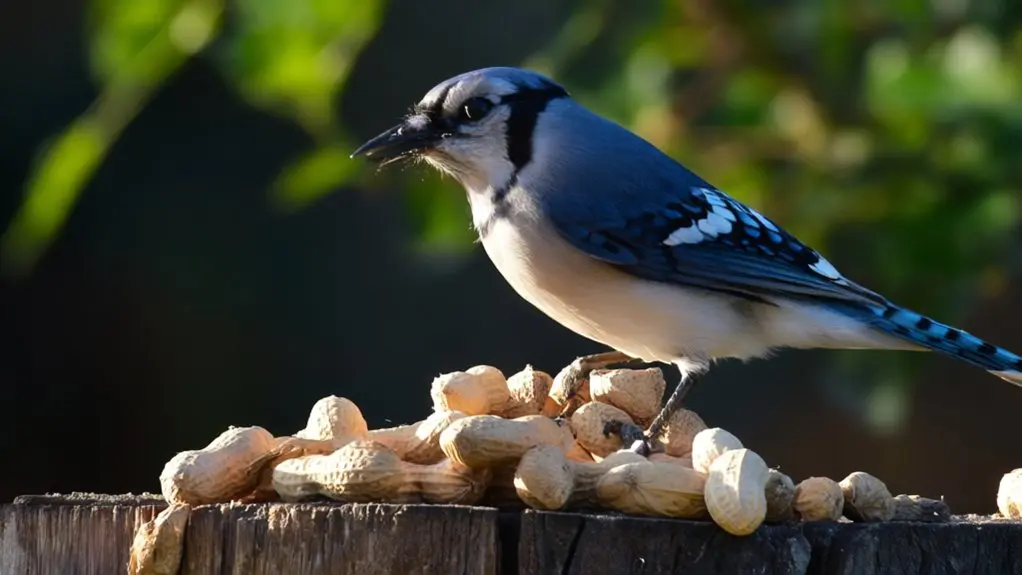
You can safely feed wild birds raw peanuts as long as they’re unsalted, unseasoned, and properly prepared to reduce potential toxins. Many birds enjoy raw peanuts, whether shelled or unshelled. They benefit from their protein, healthy fats, and minerals.
Roasting peanuts further enhances safety by lowering inhibitors. To protect birds and encourage natural foraging, serve peanuts thoughtfully. Also, store them well and keep feeders clean.
Want to know which birds prefer peanuts and how to serve them best? Explore more to find out!
Are Raw Peanuts Safe for Wild Birds?
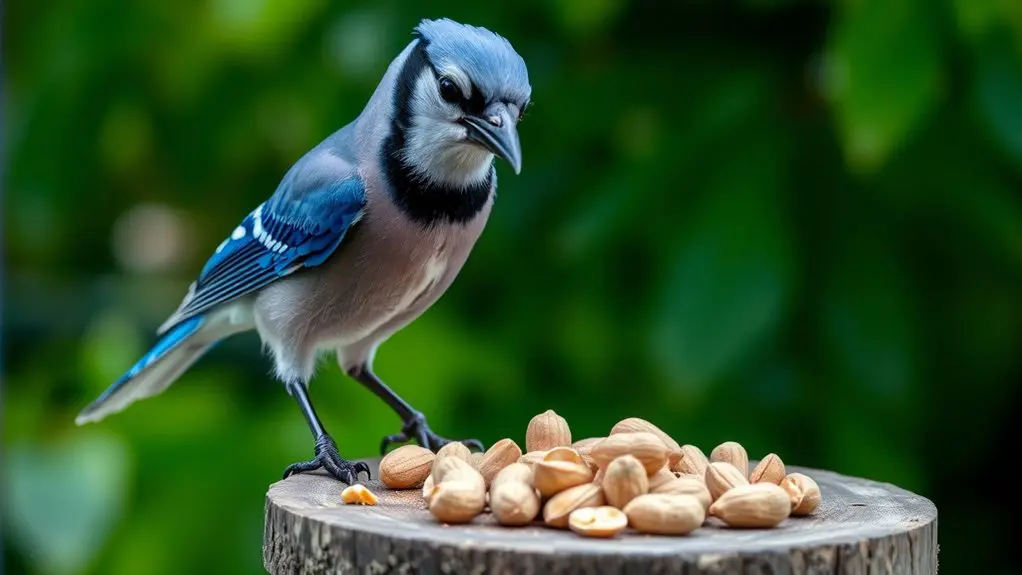
Although raw peanuts contain trypsin inhibitors that can affect digestion, experts agree they’re generally safe for wild birds when offered unsalted and unseasoned.
No scientific research confirms any harm from feeding raw peanuts to wild birds, and studies, including citizen science projects, haven’t documented health issues linked to their consumption.
While roasting raw peanuts reduces trypsin inhibitors and is recommended to enhance safety, most bird species can tolerate raw peanuts without problems.
Larger birds often prefer peanuts in shell, while smaller species may favor chopped or shelled versions, so you can cater to different preferences.
By providing raw peanuts free from salt and seasoning, you offer a safe treat that supports a diverse range of wild birds without posing known health risks.
It’s a simple way to help out your feathered friends!
What Nutritional Benefits Do Raw Peanuts Offer Birds?
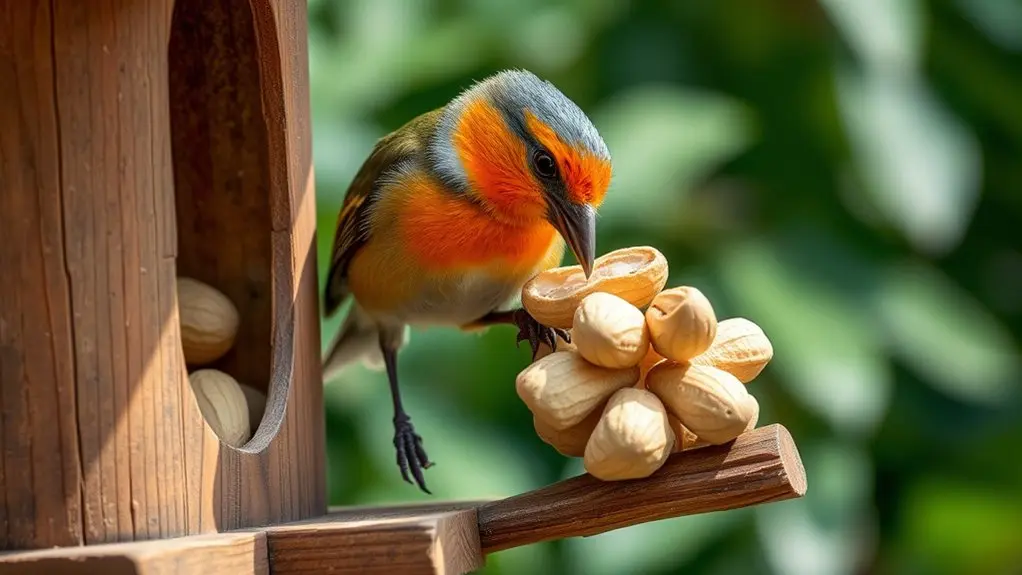
You’ll find that raw peanuts are packed with healthy fats and protein, which are super important for birds’ daily energy needs. These nutrients help support their growth and keep their feathers looking great.
Plus, knowing what’s inside raw peanuts shows why they’re such a valuable snack for birds.
Nutrient Content Overview
Raw peanuts provide birds with several key nutrients that support their energy needs and overall health. Including raw peanuts in a bird’s diet offers essential nutritional benefits that complement their natural food sources.
Here’s what you should know about the nutrient content of raw peanuts: they’re rich in healthy fats and protein, which are crucial for bird health. They also contain potassium and iron, both important for supporting bodily functions.
Raw peanuts provide dietary fiber, which helps with digestion. They offer a high calorie count, making them especially useful during cold or migration periods. Plus, they serve as a natural, unprocessed food option that enhances diet quality.
Energy and Growth Support
When birds consume peanuts, they get a dense source of healthy fats and protein that fuels their daily activities and long migrations. These nutrients provide essential energy, especially during cold months or breeding seasons when energy demands go up.
Raw peanuts also offer vital minerals like potassium and iron, which support overall growth and health. The high fat content is especially good for young and growing birds, helping them build reserves needed for development.
Plus, the dietary fiber in peanuts helps digestion and promotes nutrient absorption. By adding raw peanuts to their diet, you’re helping birds keep up their energy and grow strong.
This concentrated energy source makes sure they’ve the stamina needed to survive and reproduce, making raw peanuts a great addition to their natural diet.
Which Bird Species Eat Raw Peanuts?
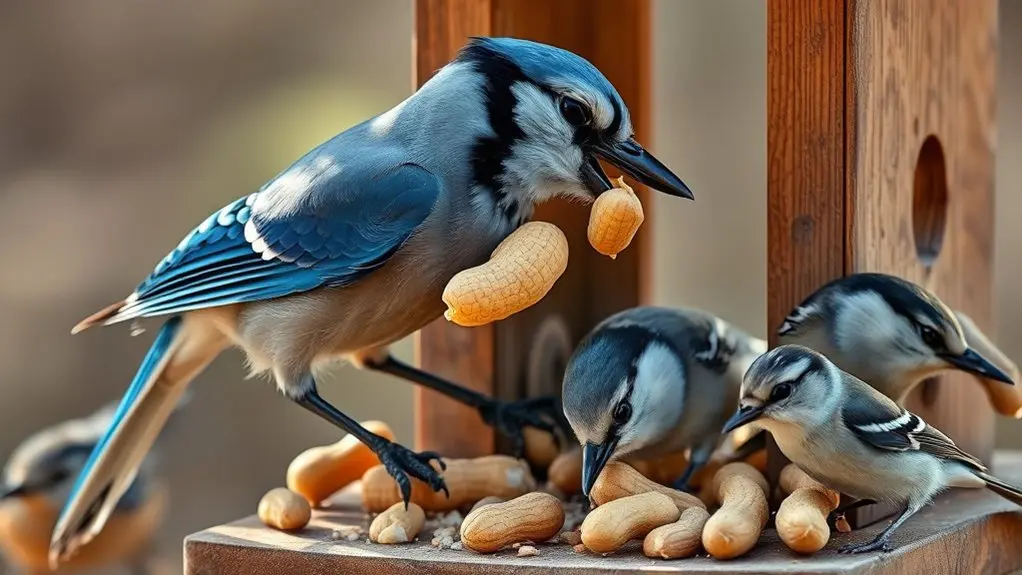
Although many bird species enjoy a variety of nuts, certain birds show a particular preference for raw peanuts. If you want to attract these peanut-loving birds, consider these species:
Many birds enjoy nuts, but some have a special fondness for raw peanuts.
Blue jays are known for enthusiastically eating and storing raw peanuts. Woodpeckers, from downy to pileated, consume peanuts whole or shelled. Small songbirds like chickadees, titmice, and nuthatches especially enjoy peanuts when they’re chopped.
Northern cardinals favor whole or chopped peanuts at feeders.
Ground feeders such as sparrows, juncos, and doves peck at peanuts that have fallen to the ground.
Understanding which birds prefer raw peanuts helps you provide the right food and create a welcoming environment in your backyard. Just knowing their preferences makes feeding time more rewarding for both you and the birds.
Should You Serve Raw Peanuts Shelled or Unshelled?
Deciding whether to serve peanuts shelled or unshelled depends on the birds you want to attract and their feeding behaviors.
Most birds can shell peanuts themselves, so offering shelled peanuts often makes feeding easier, especially for small or less dexterous species. Shelled peanuts are generally preferred as they reduce the effort birds must expend and lower the risk of mold or contaminants that may hide in shells.
However, unshelled peanuts provide enrichment by encouraging natural foraging and problem-solving as birds crack open the shells.
Both forms are safe, but if you want to make peanuts more accessible and minimize health risks, shelled peanuts are the better choice.
Ultimately, consider the species’ abilities and your goal, whether it’s ease of feeding or stimulating natural behavior.
Why Are Unsalted Raw Peanuts Best for Bird Health?
Because birds are highly sensitive to sodium, offering unsalted raw peanuts is essential for maintaining their health. Salted peanuts contain added sodium, which can be toxic and lead to dehydration and kidney stress in birds.
Birds are sensitive to sodium; unsalted raw peanuts help keep them healthy and prevent kidney stress.
By selecting unsalted raw peanuts, you provide a safe source of nutritious fats and proteins without the harmful effects of salt.
Consider these reasons to use unsalted raw peanuts for birds:
- Prevents dehydration caused by excess sodium
- Avoids kidney and organ stress
- Reduces risk of chronic health problems
- Aligns with bird safety guidelines
- Supports overall avian well-being and longevity
Choosing unsalted raw peanuts ensures you’re caring responsibly for your feathered friends’ health and nutrition. It’s a simple way to keep them happy and healthy!
How Can You Offer Raw Peanuts Safely to Birds?
Providing unsalted raw peanuts supports bird health, but you also need to offer them in a way that keeps your feathered visitors safe. Use squirrel-proof feeders or place peanuts where birds can reach but squirrels cannot.
Offer peanuts in moderation and store them in a cool, dry place to prevent mold, which can harm birds. Choose unsalted, unflavored raw peanuts or roasted peanuts without added salt or seasonings.
Breaking large peanuts into smaller pieces or using peanut hearts and chips makes them easier for small birds to handle.
Regularly clean feeders and replace peanuts to stop mold and bacteria growth. These steps help guarantee your birds enjoy raw peanuts safely without health risks.
Can Squirrels Eat Raw Peanuts Without Harm?
Although squirrels naturally eat a variety of nuts and seeds, you might wonder if raw peanuts are safe for them. The good news is that squirrels can consume raw peanuts without immediate harm, as part of their diverse diet. Here’s what you should know:
Squirrels eat various nuts, seeds, berries, and insects in the wild. No scientific evidence shows raw peanuts harm squirrel health. Moderation is essential to avoid dietary imbalances.
Overfeeding peanuts or exclusive feeding can cause issues. Small amounts of raw peanuts are generally safe for squirrels. Just remember to keep it balanced with their natural diet.
What Are Common Myths About Feeding Raw Peanuts?
When you consider feeding raw peanuts to birds, you might hear several persistent myths that can cause unnecessary worry. Many people say raw peanuts are unsafe because of substances like trypsin inhibitors, or that they lead to health problems and population declines. But the truth is, scientific evidence and expert opinions don’t back up these concerns.
Both raw and roasted peanuts are generally safe when prepared properly.
| Myth | Fact |
|---|---|
| Raw peanuts contain harmful toxins | Roasting reduces inhibitors; raw peanuts are safe |
| Raw peanuts cause bird health issues | No documented harm in studies or citizen science |
| Raw peanuts increase disease spread | No scientific evidence supports this claim |
Frequently Asked Questions
How Should Raw Peanuts Be Stored to Keep Them Fresh for Birds?
You should store raw peanuts in an airtight container and keep them in a cool, dry place away from direct sunlight. It’s also a good idea to avoid strong odors around them since peanuts can absorb those smells.
If you want to extend their freshness even more, consider refrigeration or freezing. Just remember to regularly check the peanuts for any signs of mold or spoilage to keep them safe for the birds.
Can Raw Peanut Shells Cause Choking Hazards for Birds?
Yes, raw peanut shells can cause choking hazards for birds. Studies show that up to 30% of small birds risk impaction from swallowing large shell pieces.
Are There Any Seasonal Restrictions on Feeding Raw Peanuts to Birds?
You don’t have to worry about seasonal restrictions when feeding raw peanuts to birds. You can offer them year-round. Just make sure to adjust storage to prevent spoilage in summer.
Raw peanuts are especially valuable during breeding seasons and times of winter scarcity. Birds really benefit from the extra nutrition when food is harder to find. So, feel free to keep offering peanuts anytime!
How Often Can Birds Be Given Raw Peanuts as Treats?
You should give birds raw peanuts a few times weekly, not daily, to avoid health risks. Always store peanuts properly and keep an eye on your bird’s health.
It’s important to adjust how often you feed them peanuts to keep their diet balanced and safe. Just a little goes a long way when it comes to treats!
Can Raw Peanuts Attract Unwanted Pests to My Bird Feeder?
If you’ve noticed ants swarming your feeder after adding raw peanuts, it’s no surprise. They attract pests like ants and squirrels.
You’ll want to store peanuts properly and clean feeders regularly to keep unwanted visitors at bay. It helps to stay on top of it so your bird feeder stays a pest-free zone.
Conclusion
Feeding raw peanuts to birds can be a real feather in your cap for supporting their diet, as long as you stick to unsalted, shelled options. You’ll provide valuable nutrients without risking their health. Just remember to offer peanuts safely and avoid myths that muddy the waters.
By doing so, you’ll create a bird-friendly environment that benefits both feathered friends and you. It shows that good intentions really do go a long way in wildlife care. So, go ahead and enjoy watching your feathered visitors thrive!