
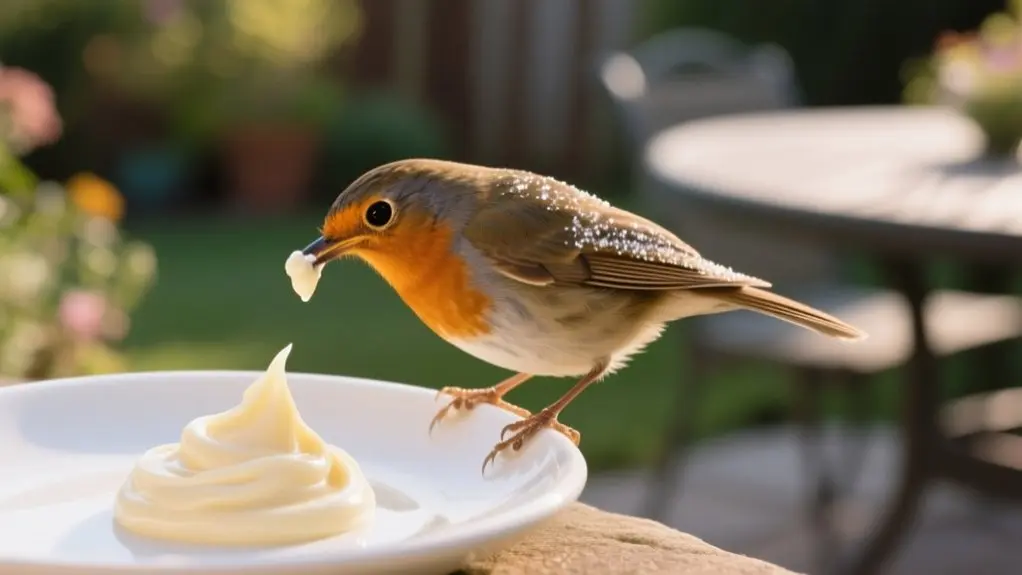
You shouldn’t feed birds icing because its high sugar, artificial ingredients, and toxic sweeteners like xylitol can seriously harm their health. Icing disrupts their natural diet, causing obesity, diabetes, and digestive problems.
Even small amounts can lead to lethargy, vomiting, or worse. Instead, offer birds fresh fruits, seeds, and unsalted nuts for better nutrition. If you want to know how to protect birds and support their well-being, keep going for helpful tips and signs to watch for.
Why Icing Is Harmful to Birds
Although icing may look harmless and tempting, it can seriously harm birds when they consume it. You mightn’t realize that icing is loaded with sugar and artificial ingredients, which disrupt a bird’s natural diet and lead to health issues like obesity and diabetes.
Birds can’t properly digest the complex sugars in icing because they lack the necessary enzymes, making it tough for them to absorb nutrients. When birds eat icing, it often replaces healthier foods, causing malnutrition.
Plus, the high fat content in some icings can cause fatty liver disease, compromising their health even further.
Which Icing Ingredients Are Toxic to Birds
What makes icing dangerous to birds goes beyond just its sweetness. Several toxic ingredients in icing can harm your feathered friend. For instance, artificial sweeteners like xylitol are highly toxic and can cause severe health issues in birds.
Icing’s dangers to birds extend beyond sweetness, with toxic ingredients like xylitol posing serious health risks.
Butter and cream, often found in icing, are high in fat and don’t fit birds’ dietary needs, potentially leading to obesity.
Furthermore, food colorings and flavorings may contain chemicals harmful to birds, disrupting their health.
These toxic ingredients combined with high sugar content can throw off a bird’s nutritional balance.
So, even small amounts of icing with these harmful components can pose significant risks to your bird’s wellbeing.
Avoid giving your birds any icing to keep them safe and healthy.
How Sugar and Sweeteners Affect Bird Health
Since birds have a limited ability to process sugar, feeding them sweet treats like icing can quickly harm their health.
When you give birds sugary foods, you risk disrupting their natural diet and depriving them of essential nutrients they need to thrive.
Sugar doesn’t provide the vitamins or minerals birds rely on, so it offers no real benefit.
Furthermore, many sweeteners, especially artificial ones like xylitol, are toxic and can cause serious health complications.
While occasional small amounts mightn’t cause immediate harm, regular sugar intake can stress a bird’s metabolism and lead to long-term issues.
To keep birds healthy, avoid feeding them icing or any sugary treats.
Stick to a balanced diet designed for their nutritional needs instead.
How Icing Causes Obesity and Nutrition Problems in Birds
When you feed birds icing regularly, the high sugar and fat content can quickly lead to obesity and serious nutrition problems. Birds struggle to process excessive sugar, which disrupts their natural diet and energy balance. This can cause health issues like fatty liver disease and diabetes.
Regularly feeding birds icing leads to obesity and serious health issues like fatty liver and diabetes.
Plus, icing’s empty calories replace essential nutrients, resulting in vitamin and mineral deficiencies. Over time, this affects their ability to forage and survive.
Here’s how icing impacts your bird’s health:
- Causes obesity, reducing mobility and increasing predator risk
- Leads to nutritional deficiencies by displacing healthy foods
- Impairs natural foraging behavior, fostering dependency on unhealthy treats
Feeding icing risks your bird’s overall well-being, making it imperative to avoid this harmful treat.
Signs a Bird Has Eaten Harmful Foods
Although birds can’t tell you when something’s wrong, you can spot signs that they’ve eaten harmful foods like icing by watching for changes in their behavior, appetite, or droppings.
If your bird vomits, becomes lethargic, or shows unusual vocalization, it may have consumed something toxic.
Digestive issues such as diarrhea or loss of appetite often indicate harmful foods have upset their system.
Also, keep an eye out for excessive thirst, panting, or breathing difficulties, as these can suggest a negative reaction.
Unusual preening or feather plucking may signal distress caused by inappropriate foods.
Monitoring droppings for changes in color or consistency is another vital way to detect problems early.
If you notice any of these signs, act quickly to protect your bird’s health.
Myths About Feeding Sugary Treats to Birds
Noticing signs that your bird has eaten harmful foods like icing is important, but understanding why sugary treats pose a risk helps prevent these issues altogether.
When feeding birds, you might hear myths claiming that sugary treats like icing are harmless or even beneficial. However, these are misconceptions that can jeopardize their health.
Here’s what you need to know:
Birds lack enzymes to digest refined sugars, causing potential obesity and health problems.
Icing often contains artificial ingredients and preservatives toxic to birds.
Feeding sugary foods disrupts natural foraging, leading birds away from their nutritious, natural diet.
Better Bird Treats Than Icing and Sweets
Since sugary treats like icing can harm birds, you should choose healthier options that support their well-being. Opt for better bird treats than icing and sweets by offering fresh food and natural snacks rich in nutrients. These foods help birds stay healthy and energized without the risks associated with sugar.
| Treat Type | Benefits |
|---|---|
| Fresh Fruits | Provide essential vitamins |
| Suet | High-energy, especially in winter |
| Unsalted Peanuts | Nutritious and safe |
| Seeds | Varied diet, preferred snack |
Why Bread Is Still a Poor Treat for Birds
Even if bread seems like an easy snack to share with birds, it doesn’t provide the nutrients they need to stay healthy.
Bread lacks the essential vitamins and minerals found in seeds and fruits, making it an inadequate food source. Feeding bread can lead to health issues like malnutrition and obesity because of its high carbohydrate content and poor nutritional value.
Moldy bread can be toxic and cause serious illness. Birds also struggle to digest bread properly, which can lead to digestive problems.
Here’s why bread is still a poor treat for birds:
- It offers little nutritional benefit compared to natural foods.
- Moldy bread contains harmful toxins.
- Digestive difficulties can cause health complications.
Avoid bread to keep your local birds thriving.
Tips for Feeding Birds Natural, Nutritious Foods
When you feed birds natural, nutritious foods, you help them stay healthy and energetic throughout the year. Focus on offering a varied diet including seeds, fruits, and suet rather than processed treats like icing.
Prioritize fresh, dry birdseed, avoiding clumpy or rancid seeds to guarantee they get the best nutrition. You can feed birds unsalted peanuts and high-energy suet balls, especially during colder months when they need extra fuel.
Adding sunflower hearts and Nyjer seeds will attract a diverse range of species to your garden.
Don’t forget to clean feeders and water sources regularly to prevent disease spread.
How to Keep Birds Away From Human Desserts
Although birds may seem charming when they investigate your outdoor treats, you should keep them away from human desserts, especially those with icing. High sugar and artificial ingredients in these sweets can harm birds.
To protect your good quality desserts and keep birds safe, take proactive steps.
Try these tips: Cover desserts with lids or store them indoors to block sweet scents that attract birds. Use bird-proof containers or netting during outdoor events to prevent access.
Place shiny objects or decoys near food areas to visually deter birds.
Also, clean up crumbs regularly to avoid inviting birds and other wildlife.
When to Contact a Vet About Bird Feeding Concerns
If you notice signs like lethargy, vomiting, or changes in your bird’s droppings after feeding, it’s a good idea to contact a vet right away. These symptoms can be a sign that something isn’t quite right.
Also, if your bird starts showing unusual eating habits or has prolonged feeding issues—things like feather plucking or noticeable weight loss—you should definitely get professional help. Don’t wait too long.
Catching these problems early with a vet visit can make a big difference and help prevent serious health issues down the line.
Signs Of Illness
Because birds can quickly deteriorate after eating harmful foods like icing, you should watch closely for signs of illness and contact a vet without delay.
Early recognition of symptoms can save your bird’s life.
Key signs of illness include lethargy, fluffed feathers, or decreased appetite, which indicate general distress.
Vomiting, diarrhea, or abnormal droppings can signal digestive upset.
Respiratory problems such as wheezing or labored breathing may result from toxic ingredients.
If your bird shows neurological symptoms like disorientation or circling, or isolates itself unusually, seek veterinary care immediately.
Prompt action is critical to address potential poisoning or severe health issues caused by ingesting icing.
Don’t wait. Monitor your bird closely and consult a vet as soon as you notice any signs of illness.
Unusual Eating Behavior
When you notice your bird refusing its usual food or suddenly eating something unusual like icing, it’s a clear sign to consult a veterinarian. Unusual eating behavior can indicate underlying health problems or distress.
Birds shouldn’t consume sugary foods like icing, as these may cause digestive issues, obesity, or liver disease. If your bird shows signs like vomiting, lethargy, or changes in droppings after eating something inappropriate, seek immediate veterinary advice.
Maintaining a balanced diet of seeds, fruits, and specialized bird foods is essential to prevent these problems. Regularly monitoring your bird’s eating habits helps you spot unusual eating behavior early, ensuring prompt care.
Don’t ignore sudden shifts in feeding patterns—they’re your best clue that your bird needs professional attention.
Prolonged Feeding Issues
Although occasional dietary indiscretions might seem harmless, prolonged feeding issues in birds demand your immediate attention. If your bird consumes icing or other sugary foods and later shows signs of distress, you need to act quickly.
Be vigilant for symptoms that indicate a problem requiring veterinary care. Contact your vet if you notice lethargy, abnormal droppings, or significant appetite changes.
Vomiting or diarrhea can also be serious, as they may lead to dehydration. Weight loss or failure to thrive over time are other warning signs. Prolonged feeding issues can indicate serious health risks from dietary imbalances or toxicity.
Monitoring your bird’s behavior and feeding habits regularly will help you catch these problems early and guarantee your feathered friend stays healthy.
Don’t hesitate to seek professional advice when in doubt.
Supporting Birds With a Healthy, Balanced Diet
If you want to support birds effectively, offering a varied diet rich in seeds, fruits, and suet is essential for their health and energy.
Avoid processed foods like icing, which contain harmful sugars and artificial ingredients.
Instead, focus on providing quality bird food tailored to local species. For example, sunflower seeds for finches and mealworms for blackbirds. Hummingbirds benefit from unsalted peanuts and sugar water, matching their specific nutritional needs.
Keep feeders clean and offer fresh, dry birdseed to reduce disease risks.
Observing the birds visiting your feeder helps you adjust the food you provide, ensuring a balanced diet that supports their wellbeing.
Frequently Asked Questions
Can Birds Develop a Preference for Sweet Foods Like Icing?
Yes, birds can develop sweet cravings if they’re exposed to sugary foods like icing regularly.
You’ll notice they start preferring these sweet treats over their natural diet.
However, indulging those sweet cravings isn’t healthy. They lack essential nutrients and can cause health problems.
Instead, you should offer natural sweets like fruits or nectar to satisfy their cravings safely, keeping their diet balanced and their feeding habits natural.
Are Some Bird Species More Sensitive to Icing Than Others?
You might imagine a tiny finch nibbling on sweet icing, but not all birds handle it the same way. Yes, species sensitivity plays a huge role here.
Some birds, like hummingbirds, can tolerate small amounts of sugar, while others, such as parrots and seed-eaters, are far more vulnerable to the harmful effects of icing’s additives and sugar.
How Does Icing Affect Wild Birds Versus Pet Birds?
Icing ingredients like high sugar and artificial additives affect wild and pet birds differently.
Wild birds might occasionally nibble icing but generally avoid it since their natural diet keeps them healthy.
Pet birds, however, rely on you for food, so icing ingredients can disrupt their digestion and cause serious health issues.
You should avoid giving icing to both, but especially pet birds, to protect their well-being and maintain a balanced diet.
Can Icing Cause Immediate Allergic Reactions in Birds?
Yes, icing can cause immediate allergic reactions in birds. You’ll notice allergic symptoms like swelling, difficulty breathing, and lethargy right after they consume it.
You’ll see vomiting, changes in behavior, and distress too. You’ll want to act fast if you spot these signs.
You shouldn’t let birds eat icing because these allergic symptoms can escalate quickly, putting their health at serious risk.
What Are the Long-Term Environmental Impacts of Feeding Birds Sugary Treats?
You risk serious ecological consequences by feeding birds sugary treats.
Over time, birds may rely on these unnatural food sources, disrupting their natural foraging behavior and causing nutritional imbalances.
This shift can lead to population changes, disease spread, and a decline in native plant species, throwing local ecosystems off balance.
Conclusion
You might be surprised to learn that just a small amount of icing can cause serious health issues for birds, including obesity and nutritional deficiencies. Since over 80% of common icing ingredients are harmful to them, it’s best to avoid feeding birds any human desserts.
Instead, stick to natural, bird-safe foods to keep them healthy and thriving. If you ever notice unusual behavior or signs of illness, don’t hesitate to contact a vet for help.