
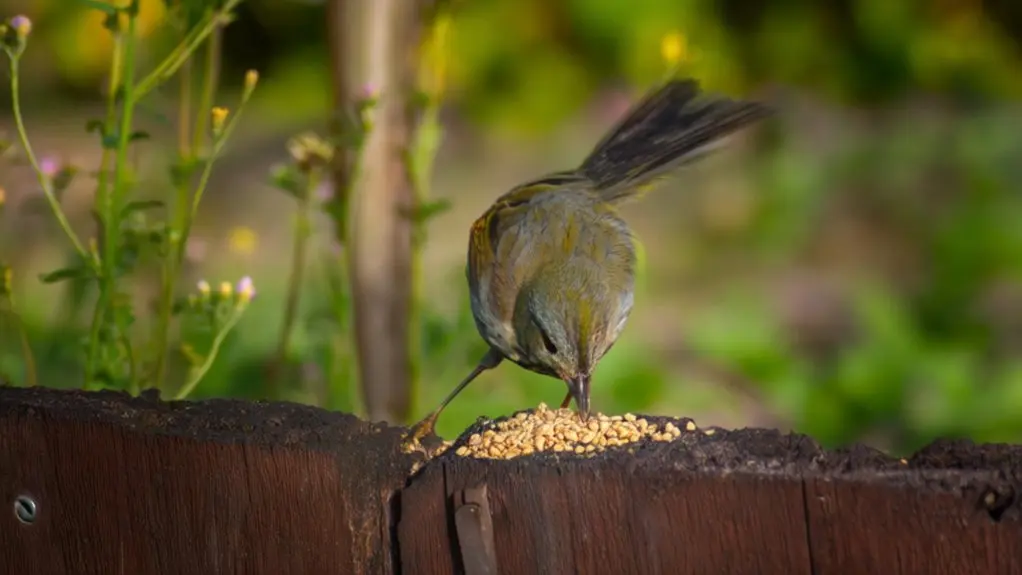
You can safely feed mustard seeds to certain birds like mourning doves and sparrows. These seeds offer protein, healthy fats, and essential nutrients. Just remember to give them in moderation.
Make sure the mustard seeds are clean and free from pesticides or additives. Overfeeding or giving wild, untreated seeds might cause toxicity because of oxalates and nitrates. It’s important to know which bird species you’re feeding.
Understanding their beak types and seed preferences really helps optimize feeding. If you want to learn more, there are detailed safety guidelines and best practices to explore.
What Are Mustard Seeds?
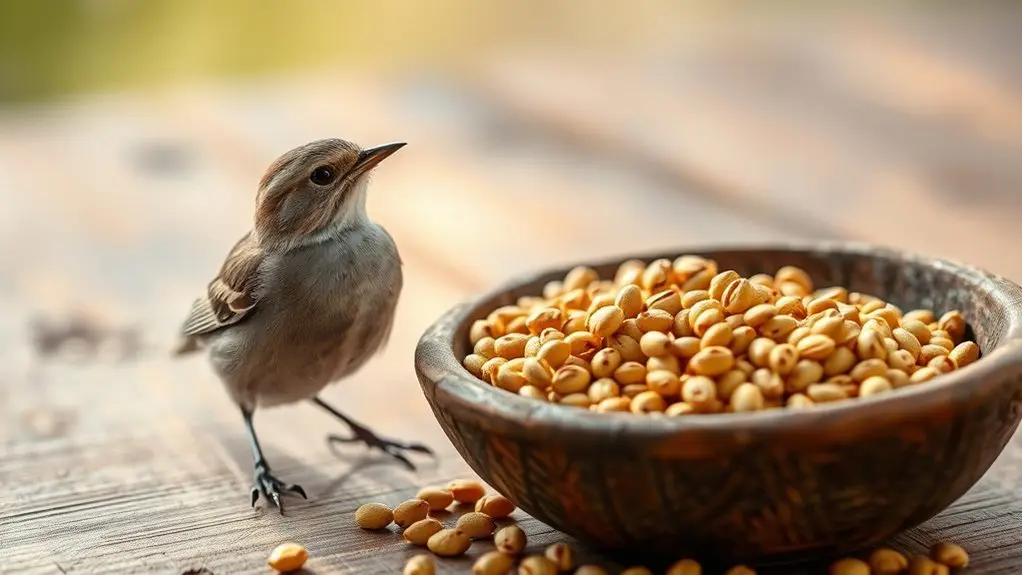
Although you might encounter mustard seeds in various culinary contexts, these small, round seeds come from plants in the Brassicaceae family, including black, brown, and yellow (or white) mustard species. Typically measuring 1 to 2 millimeters in diameter, mustard seeds vary in color—light brown, yellow, or black—depending on their variety.
These seeds contain glucosinolates, sulfur-containing compounds responsible for their characteristic pungent flavor when ground or processed.
Mustard seeds owe their sharp, pungent flavor to sulfur-rich glucosinolate compounds released when crushed.
Globally, mustard seeds serve as a spice and condiment, and they play a key role in producing mustard oils.
Nutritionally, they provide selenium, magnesium, and omega-3 fatty acids, which contribute to dietary health.
Understanding these properties helps clarify the biological and chemical nature of mustard seeds, which is essential for evaluating their interactions within ecosystems or dietary applications.
Which Birds Eat Mustard Seeds?
You’ll find that several bird species, like mourning doves, American sparrows, and woodcocks, eat mustard seeds as part of their diet.
These birds often go for mustard seeds because they’re packed with oil, which gives them a good energy boost.
Knowing what seeds these birds prefer helps us understand the role mustard seeds play in different ecosystems.
Bird Species Consuming Seeds
When you observe birds foraging, you’ll notice that several species actively consume mustard seeds as part of their diet. Mourning doves rely on these seeds during migration and winter when food is scarce.
American sparrows, including song sparrows, frequently forage for mustard seeds on the ground, integrating them into their diet.
American woodcocks may incidentally ingest mustard seeds while searching for earthworms and invertebrates in soil.
Additionally, many seed-eating songbirds, such as finches and chickadees, consume mustard seeds when available within their habitats.
These birds generally tolerate mustard seeds well, but it’s essential to ensure seeds are free of pesticides or contaminants to avoid adverse effects.
Understanding which species consume mustard seeds helps clarify their role in avian diets and ecology. It’s pretty interesting to see how these seeds fit into the bigger picture of bird feeding habits and their environment.
Seed Preferences Among Birds
Because mustard seeds provide essential fats and nutrients, many bird species have developed preferences for consuming them when available. You’ll find that birds with beaks adapted for cracking small, hard seeds, such as American sparrows and mourning doves, target mustard seeds in natural habitats. These seeds are accessible in fields or roadsides where mustard plants grow.
However, you should ensure seeds are uncontaminated before feeding birds.
| Bird Species | Beak Type | Seed Preference |
|---|---|---|
| Mourning Dove | Short, stout | Prefers small seeds like mustard |
| American Sparrow | Conical, sharp | Consumes mustard seeds readily |
| American Woodcock | Long, slender | Forages for seeds on ground |
| House Finch | Strong, conical | Eats a variety of small seeds |
| Dark-eyed Junco | Small, pointed | Occasional mustard seed eater |
Can Birds Safely Eat Mustard Seeds?
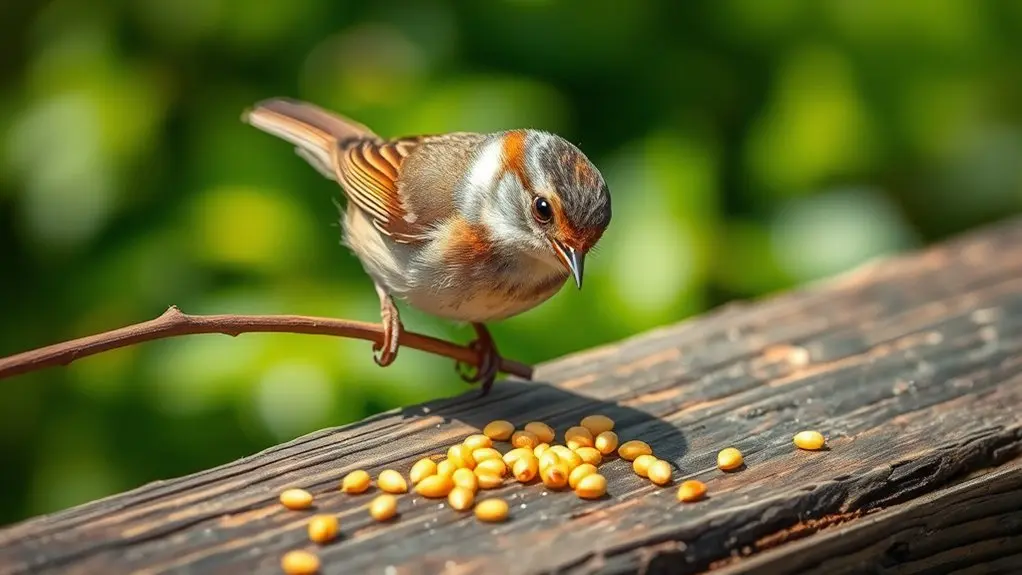
You can offer mustard seeds to certain birds like mourning doves and American sparrows because they provide nutritional benefits, including proteins and oils.
That said, you do need to be cautious about potential toxicity from compounds such as oxalates and nitrates, especially if the seeds are wild or untreated.
Nutritional Value Overview
Although mustard seeds contain compounds that may irritate a bird’s digestive tract if consumed in large amounts, they provide a rich source of protein, healthy fats, and essential nutrients that many species can safely utilize.
When you include mustard seeds in a bird’s diet in moderation, you deliver valuable energy and nourishment. Here’s what you should know about their nutritional profile:
- Protein Content: Supports muscle development and overall physiological functions.
- Healthy Fats: Offer a dense energy source vital for migratory and active birds.
- Essential Nutrients: Include vitamins and minerals important for immune health.
- Species Adaptation: Birds like doves, sparrows, and woodcocks can digest small quantities safely.
Potential Toxicity Risks
When birds consume mustard seeds in excessive amounts, they risk exposure to toxic compounds such as oxalates and nitrates. These can lead to serious health problems, including hemolytic anemia. These compounds interfere with normal red blood cell function, causing damage similar to what’s observed in livestock.
Wild or untreated mustard seeds generally contain higher concentrations of these harmful substances compared to cultivated varieties. The cultivated ones are selectively bred to reduce toxicity. So, while moderate feeding of properly cleaned mustard seeds tends to be safer, overfeeding increases the risk significantly.
You should exercise caution, especially when sourcing wild-harvested seeds. To guarantee the safety of your birds, it’s a good idea to consult avian health experts or trusted resources before introducing mustard seeds into their diet. This way, you can confirm the appropriate quantities and minimize potential toxic effects.
Suitable Bird Species
Understanding which bird species can safely consume mustard seeds helps clarify their role in avian diets despite potential toxicity concerns. Birds like mourning doves and American sparrows naturally include mustard seeds in their diets. They benefit from the seeds’ essential fats, proteins, and vitamins.
However, you should verify the seeds are free from chemical residues to prevent harm. Also, avoid overfeeding, as high oxalate or nitrate content in some wild mustard seeds could negatively affect bird health.
Here are key bird species suitable for mustard seed consumption:
- Mourning doves – frequent natural foragers of mustard seeds
- American sparrows – adapt well to seeds in their diet
- Finches – can utilize mustard seeds as a nutritious supplement
- Pigeons – known to consume various seeds including mustard
Feed mustard seeds responsibly to support bird health.
Risks of Feeding Mustard Seeds to Birds
Because mustard seeds contain compounds that can be toxic to birds in large amounts, you should be careful when including them in bird diets.
Wild mustard seeds might build up nitrates and oxalates, which can mess with digestion and overall health.
Eating too many can cause symptoms like vomiting, diarrhea, and lethargy. The risk gets higher with frequent or large feedings, which might lead to toxicity.
Also, some wild mustard varieties have more harmful compounds, so it’s important to identify them properly.
Since there isn’t much research on how different bird species react, it’s best not to rely heavily on mustard seeds as a food source.
Keep an eye on how much your birds eat and watch for early signs of toxicity. Doing this will help keep them safe from the negative health effects linked to mustard seed consumption.
How to Feed Mustard Seeds to Birds
Although mustard seeds can be a nutritious addition to certain birds’ diets, you should introduce them cautiously and in controlled amounts. Start by confirming the seeds are dry and free from mold or contaminants to avoid health risks.
Introduce dry, clean mustard seeds carefully in small amounts to ensure birds’ health and safety.
Then, offer small quantities to prevent overfeeding and monitor the birds’ reactions carefully. Follow these guidelines:
- Select clean, dry mustard seeds without additives or coatings.
- Scatter seeds on the ground or place them in a feeder accessible to birds like mourning doves or American sparrows.
- Avoid any seeds with salt, seasoning, or chemicals, as these can harm birds.
- Observe birds closely for any adverse effects after introducing mustard seeds.
This method guarantees safe feeding while supporting dietary variety for wild birds. Just keep an eye on them and adjust as needed.
Reliable Resources on Mustard and Bird Feeding
After carefully introducing mustard seeds to birds, it’s important to check trustworthy sources to confirm they’re safe and nutritious. Trusted databases like the USDA PLANTS Database and the Canadian Poison Plants Information System offer detailed, scientifically-vetted info on mustard seed safety for birds.
These resources show that mustard seeds are generally safe for birds like mourning doves and sparrows when fed in moderation.
They also recommend making sure you’ve correctly identified the plant and that the seeds are free from pesticides or contaminants.
Scientific studies and wildlife guides recognize mustard seeds as a healthy supplement but warn that wild or unprocessed seeds might be toxic.
Conservation groups suggest looking at established bird diet guides and plant safety references to see if mustard seeds are right for your specific bird species before feeding them regularly.
It’s always best to be cautious and informed!
Frequently Asked Questions
Can Mustard Seeds Affect a Bird’s Digestion or Gut Flora?
Yes, mustard seeds can affect your bird’s digestion and gut flora by altering bacterial balance and increasing fat intake. You should feed them sparingly to avoid gastrointestinal upset and monitor your bird’s response carefully.
It’s always a good idea to start with small amounts and see how your bird reacts. If you notice any changes in digestion or behavior, it might be best to cut back or stop feeding mustard seeds altogether. Your bird’s gut health is important, so keeping an eye on their diet is key.
Do Mustard Seeds Have Any Nutritional Benefits for Birds?
You’ll find mustard seeds provide protein, fiber, antioxidants, and essential vitamins to boost immunity. They also supply carbohydrates, calcium, magnesium, and potassium to enhance energy, skeletal health, and metabolic function.
Are There Specific Seasons When Birds Prefer Mustard Seeds?
You’ll notice birds prefer mustard seeds mainly in late summer and fall, when seed pods dry and mature. During migration, they seek these high-energy seeds, especially in agricultural areas abundant with wild mustard plants.
It’s pretty interesting how the timing works, right? These seeds give birds a great energy boost just when they need it most. So, if you’re watching birds during these seasons, keep an eye out for them feeding on mustard seeds.
Can Mustard Seeds Help in Deterring Pests From Bird Feeders?
Yes, you can use mustard seeds to help deter pests from bird feeders. Their strong odor repels insects like ants and aphids, creating an olfactory barrier. This reduces smaller pest presence around feeding areas effectively.
It’s a simple and natural way to keep your bird feeder cleaner. Plus, it doesn’t harm the birds or the environment. Just sprinkle some mustard seeds around the feeder and see the difference!
How Do Wild Birds Find Mustard Seeds in Their Natural Habitat?
You’ll observe wild birds use their sharp eyesight to spot mustard’s bright yellow flowers and seed pods.
This is especially true since studies show up to 70% of sparrows rely on visual cues to locate seeds during winter foraging.
It’s pretty fascinating how much they depend on what they see to find food.
Conclusion
Now that you know which birds can safely eat mustard seeds and the potential risks involved, you might wonder if feeding them is worth it. Given that some species tolerate mustard seeds well while others may face digestive issues, it’s essential to feed these seeds cautiously.
Always monitor bird reactions and opt for moderation. Isn’t ensuring their health worth a bit of extra care and attention when offering unfamiliar foods like mustard seeds?