
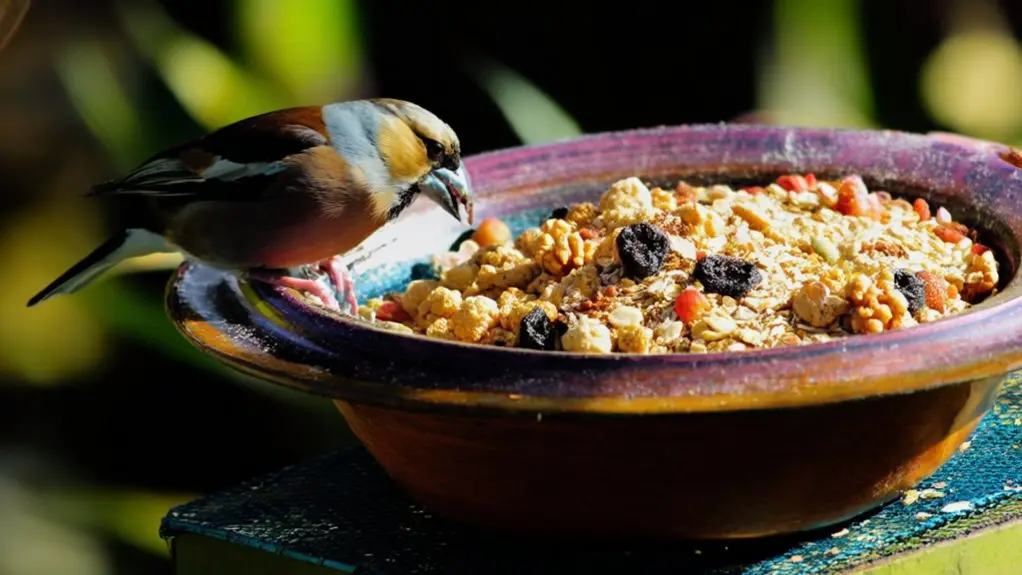
You can safely offer birds plain, unsweetened muesli as an occasional supplement, avoiding added sugars, salt, and artificial ingredients. It provides beneficial fiber, energy, and nutrients found in oats, nuts, and dried fruits.
However, muesli shouldn’t replace their natural diet since it lacks certain essential nutrients and carries risks if overused. Proper portion control and clean feeding practices are key to bird health.
Explore how to balance muesli with natural foods and maintain a safe feeding environment. It’s all about giving them a little variety without overdoing it.
What Is Muesli and Why Feed It to Birds?
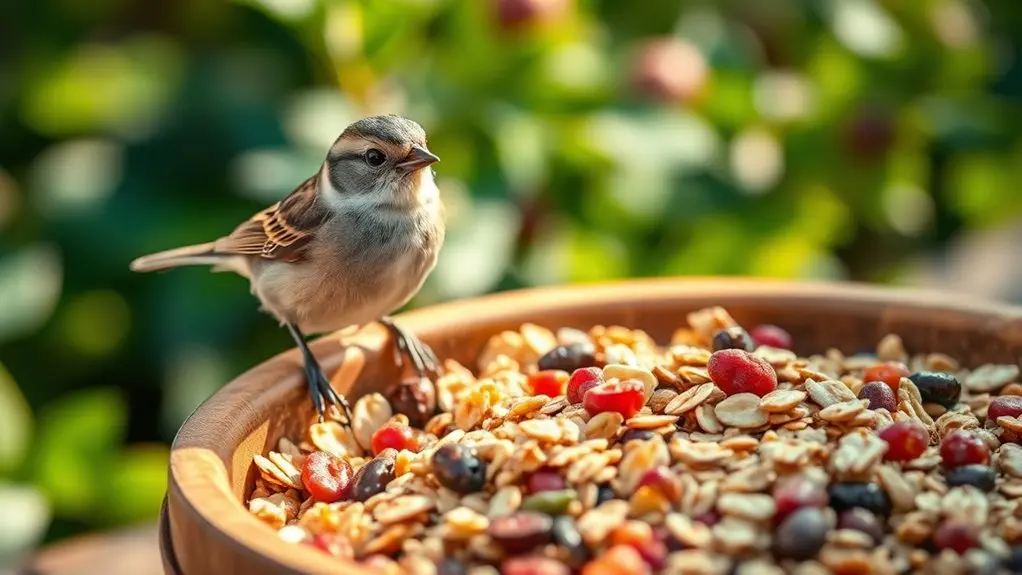
What makes muesli a suitable food for birds? Muesli consists of rolled oats, nuts, dried fruits, and grains, offering a complex nutrient profile rich in fiber and essential nutrients.
When you feed muesli to birds like tits, robins, and blackbirds, it provides a valuable source of energy, especially if it contains seeds, dried fruits, or nuts.
To guarantee safety, choose unsweetened muesli without added sugars or artificial additives, as these could harm birds.
Offering muesli in moderation can supplement traditional birdseed, supporting birds’ dietary needs with varied nutrients.
Its fiber content aids digestion, while the natural components mimic elements of their wild diet.
This makes muesli a practical, nutritious alternative for wild birds in need of energy during colder months or breeding periods.
Is Muesli Safe for Wild Birds?
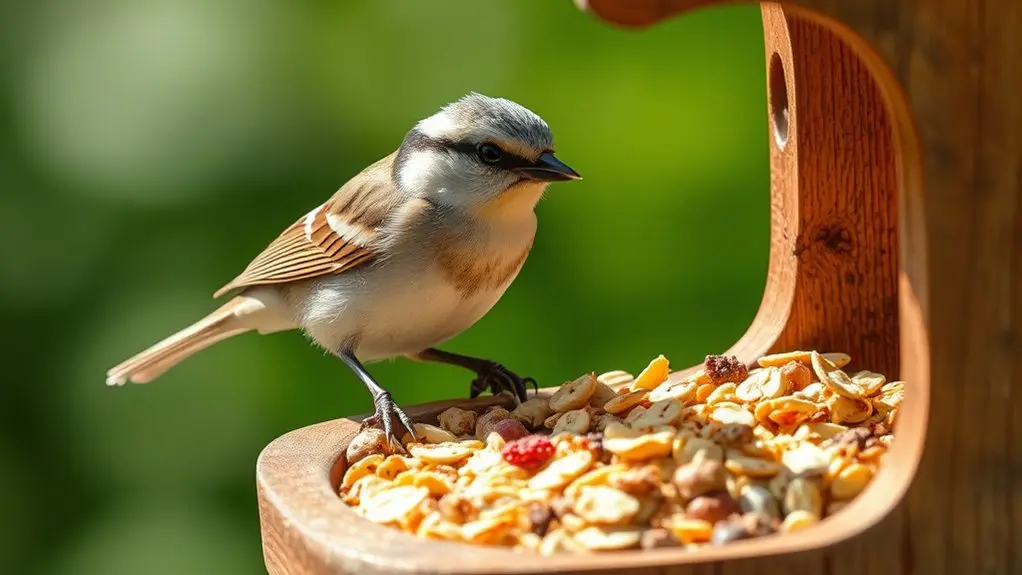
You should definitely take a good look at muesli’s nutritional content before offering it to wild birds. It’s important that it contains natural ingredients like oats and dried fruits, without any added sugars or harmful additives.
Some things, like chocolate or artificial flavorings, can be risky for certain bird species. So, always make sure to check the mix carefully.
Just remember, muesli can be a nice supplement, but it should never replace their natural diet.
And it’s best to offer it in moderation to avoid any nutritional imbalances or health problems.
Nutritional Value Considerations
Although muesli contains ingredients like oats, nuts, dried fruits, and grains that can provide energy and essential nutrients to wild birds, not all components are safe or suitable for their dietary needs.
Nuts and dried fruits offer beneficial fats and vitamins, but overfeeding can disrupt birds’ natural diet balance.
Commercial muesli often includes added sugar, salt, or artificial flavors that may harm birds if consumed in excess.
Plus, muesli lacks the specific nutrient ratios wild birds require, making it an inadequate primary food source.
To support bird health, you should prioritize plain, unsweetened oats or bird-specific foods over regular muesli.
This way, you’re providing appropriate nutrition without risking imbalances or exposure to harmful additives.
Potential Risks for Birds
How safe is muesli for wild birds? Muesli often contains added sugars, salt, and artificial ingredients that can harm them. Ingredients like dried fruits or nuts may cause choking or digestive problems in certain species.
Wild birds rely on a natural diet of insects, seeds, and berries, which muesli doesn’t provide adequately. Feeding muesli regularly risks malnutrition if it replaces their balanced natural foods.
So, it’s best to avoid offering muesli to wild birds.
Instead, choose plain, unsweetened, and unprocessed foods made specifically for their dietary needs. This helps keep them healthy and supports their natural feeding habits.
Why Choose Plain, Unsweetened Muesli?
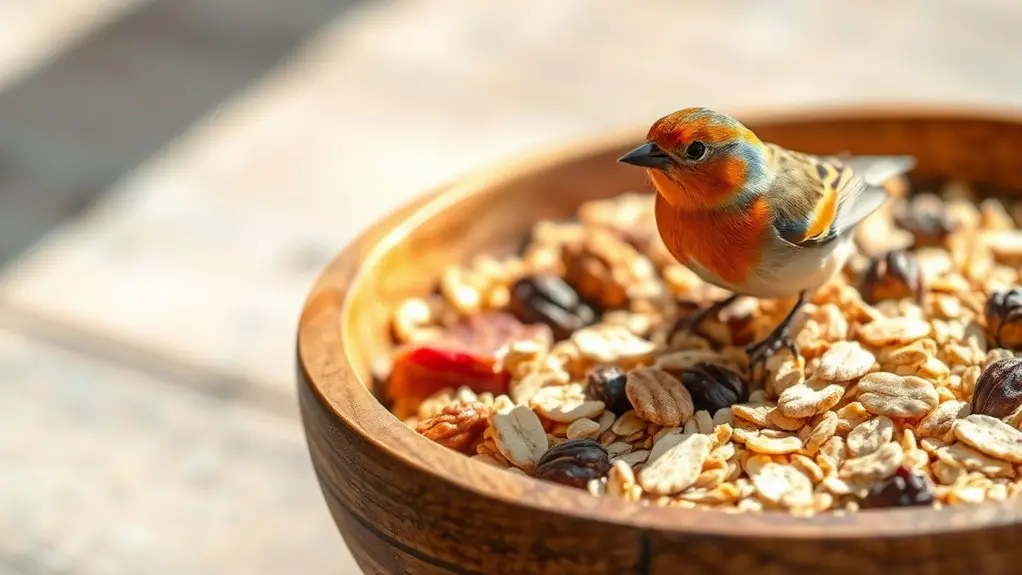
When selecting food for birds, choosing plain, unsweetened muesli provides a natural and nutritious option free from added sugars and artificial ingredients. This type of muesli primarily contains oats, nuts, seeds, and dried fruits without sweeteners, ensuring it’s safe and beneficial for avian digestion.
Birds efficiently metabolize these natural grains and seeds, gaining essential energy without the risks associated with sugar overload. Unsweetened muesli also helps you avoid feeding birds potentially harmful preservatives and artificial additives that can cause distress or health complications.
Which Bird Species Enjoy Eating Muesli?
Choosing plain, unsweetened muesli is a safe and nutritious option that appeals to various bird species in your garden. Many small birds find it especially attractive when it contains oats, seeds, and dried fruits. You’ll notice different species respond well to muesli, especially if softened for easier digestion.
Plain, unsweetened muesli with oats, seeds, and dried fruits is a nutritious treat birds love, especially softened for digestion.
Three common types of birds that enjoy muesli include:
- Tits, finches, and sparrows. These small birds actively consume muesli components and benefit from the energy-rich oats and seeds.
- Robins and blackbirds. While they may be less frequent visitors, they sometimes nibble on muesli when it’s accessible and presented properly.
- Other garden birds. Various species might try muesli as an occasional treat, which helps add variety to their diet.
Just remember to avoid added sugars or artificial ingredients to keep it safe and nutritious for the birds.
How to Offer Muesli Without Attracting Pests
Although feeding muesli to birds can enrich their diet, you need to take specific measures to prevent attracting unwanted pests. Serve muesli in a shallow, enclosed feeder to minimize spillage, which otherwise attracts rodents and larger birds. Using a seed tray or tray feeder with a mesh bottom helps restrict access to spilled food.
Place feeding stations away from dense shrubbery or cluttered areas to limit pest access and reduce mess. Offer only small quantities of muesli at a time, and promptly remove any uneaten portions after feeding.
Regular cleaning of feeders and surrounding areas is essential to discourage rodents from foraging. These steps maintain garden hygiene and guarantee that only the intended bird species benefit from your muesli offering.
It’s really all about keeping things tidy and making sure the right visitors come to your feeder.
Common Mistakes to Avoid When Feeding Muesli
Since muesli can vary widely in ingredients and nutritional content, feeding it to birds requires careful consideration to avoid common mistakes that could harm their health. To guarantee safety and nutritional balance, avoid these errors:
- Don’t offer muesli containing added sugars, preservatives, or artificial ingredients, as these can damage birds’ health.
- Avoid feeding muesli with high oat content exclusively; instead, mix it with other bird-friendly foods to provide a balanced diet suitable for varied species.
- Prevent spills and messes when offering muesli to reduce attracting rodents and pests, which can pose health risks.
Also, never rely solely on muesli without fresh water or other nutritious foods.
Be cautious with nuts or dried fruits too, since they might cause choking or digestive issues.
How to Manage Birds That Eat Too Much Muesli
Careful portion control becomes necessary once you understand the risks of overfeeding birds with muesli. To manage birds that consume too much, use feeders equipped with adjustable lids or perches to limit access. Schedule feeding times instead of providing constant availability, which helps prevent overeating.
It’s also a good idea to incorporate a variety of natural foods alongside muesli. This diversifies their diet and reduces their reliance on just one food source.
Regularly clean feeders and remove leftover muesli to minimize excessive consumption and discourage dependency.
By regulating quantity and timing, you maintain birds’ health and prevent obesity or other related issues. Keep an eye on their feeding habits and adjust as needed.
This way, you ensure a balanced approach that supports the birds’ nutritional needs without promoting unhealthy eating patterns.
Healthy Alternatives to Muesli for Wild Birds
When feeding wild birds, you should consider healthy alternatives to muesli that better align with their nutritional needs. While plain, unsweetened muesli can serve as an occasional energy boost, other options may provide more balanced nutrition without risks from additives.
Try these three alternatives:
- Fresh fruit – Offer berries, apple slices, or grapes. These mimic natural diets and provide essential vitamins.
- Mealworms – These high-protein insects support birds’ muscle development and energy requirements, especially during breeding or cold seasons.
- Native seed mixes – Tailored to local species, these blends supply appropriate fats, carbohydrates, and micronutrients without harmful additives.
Tips for Keeping Your Feeding Area Clean and Safe
It’s a good idea to regularly clean around your bird feeders to get rid of spilled seeds and husks since these can attract rodents.
When picking out feeders, try to choose ones with removable parts—this makes it way easier to clean them thoroughly and helps prevent mold or bacteria from building up.
Also, try not to overfill your feeders; this way, you’ll minimize spillage and lower the chances of pests showing up in your feeding area.
Preventing Rodent Attraction
Although feeding birds can be really rewarding, spilled seeds and husks around feeders often attract rodents. This can create potential health risks and disturbances. So, to prevent this, you should:
- Regularly sweep and clean the area around feeders to remove spilled seeds and debris that lure rodents.
- Use feeders equipped with drainage and catch trays to minimize seed spillage, and avoid overfilling to reduce excess waste.
- Store birdseed in sealed, rodent-proof containers to block access when seeds aren’t in use.
Also, keeping your garden tidy by clearing fallen seeds and debris lowers food availability for rodents. These simple steps help maintain a safe environment for birds while reducing the risk of rodent infestation around your feeding station.
Regular Feeder Maintenance
Maintaining bird feeders regularly prevents the buildup of mold, bacteria, and leftover seeds that can endanger bird health. You should clean feeders weekly with a diluted vinegar solution or mild soap to disinfect surfaces and inhibit disease transmission.
Remove spilled seeds and husks from the feeding area by sweeping or raking, which helps reduce pest attraction. Monitor feeders often and refill them promptly to minimize seed spillage and keep the area clean.
Also, don’t forget to remove old or damaged feeders without delay. This prevents mold growth and pest infestation.
Balancing Muesli With Birds’ Natural Diets
When feeding birds muesli, it’s essential to balance this supplement with their natural diet to support ideal health. Muesli can provide beneficial grains, seeds, and dried fruits if it’s free from sugars and additives.
To keep things balanced, offer muesli in moderation. Make sure it complements natural foods like insects, berries, and native seeds rather than replacing them.
Also, choose bird-safe muesli formulations without preservatives or high sugar content to avoid any health risks. Keep an eye on how often you feed muesli to prevent the birds from becoming dependent on it.
This helps them maintain their natural foraging habits and nutrient intake.
Frequently Asked Questions
Can Baby Birds Safely Eat Muesli?
You shouldn’t feed baby birds muesli because it lacks essential nutrients and contains harmful additives.
Instead, provide high-protein foods like insects or specialized formulas to support their growth and digestion safely and effectively.
How Often Should I Offer Muesli to Birds?
Offer muesli once or twice weekly, especially during the colder months, and always in moderation.
Keep an eye on the birds’ activity to make sure they’re staying active and healthy. It’s a good idea to encourage natural foraging alongside offering muesli.
Choose whole, minimally processed muesli to give them balanced nutrition without the risk of relying too much on processed foods. This way, you’re supporting their natural diet and overall well-being.
Does Muesli Affect Bird Migration Patterns?
No, muesli doesn’t affect bird migration patterns. You should know migration depends on environmental cues like daylight and temperature, not specific foods.
Offering muesli won’t change their instinctual timing or routes in any big way. Birds follow their natural rhythms, so a little extra snack doesn’t throw them off.
Can Muesli Cause Allergies in Birds?
Yes, muesli can cause allergies in birds, especially if it contains nuts, seeds, or preservatives. Some birds tolerate it well, but others might not be so lucky.
If a bird has sensitivities, it might develop itching, swelling, or respiratory issues after eating muesli. So, it’s always a good idea to keep an eye on how your bird reacts to new foods.
Is It Okay to Mix Muesli With Birdseed?
Yes, you can mix muesli with birdseed, but only if the muesli is plain and unsweetened.
Use it sparingly to avoid nutritional imbalances or obesity. You want to make sure your birds stay healthy and well-nourished.
Conclusion
Now that you know muesli can be a nutritious treat for wild birds, you can offer it wisely, just like a Victorian naturalist observing nature’s delicate balance. Stick to plain, unsweetened varieties to avoid harming their health.
Remember to manage portions and keep feeding areas clean to prevent pest problems. By combining muesli with their natural diet, you’ll support bird wellbeing while respecting their ecological needs. This way, your garden stays a thriving habitat.