
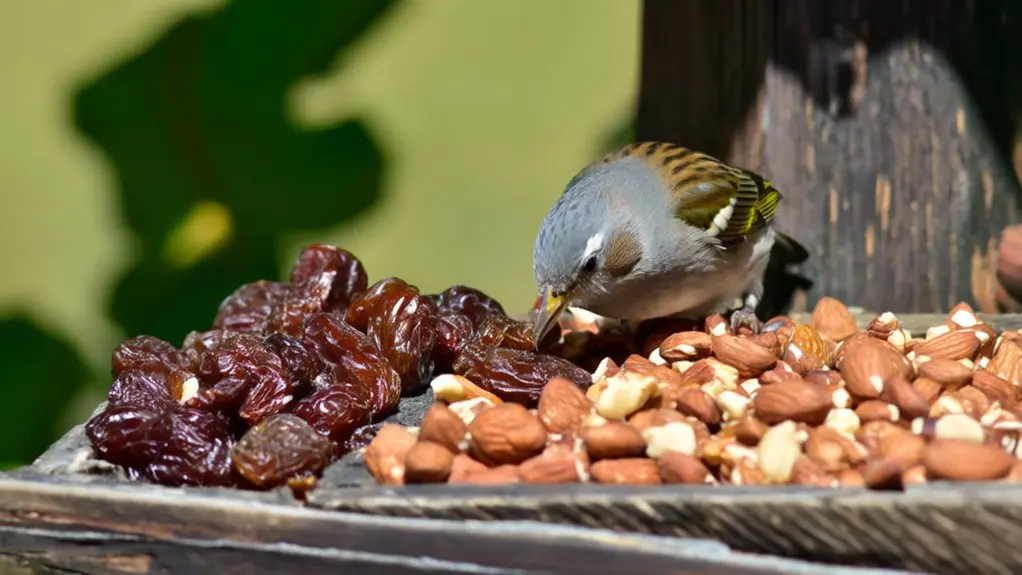
You can safely feed your bird nuts and raisins in moderation. Just make sure to choose unsalted, additive-free options to avoid dehydration and organ stress. Nuts offer essential fats and minerals, and raisins provide energy and antioxidants.
However, overfeeding can lead to obesity, metabolic issues, and nutritional imbalances, especially in smaller or less active species. Treats should stay under 10% of the diet and complement pellets and vegetables. It’s all about balance.
Understanding proper portions and signs of excess helps keep your bird healthy and happy. So, treat your feathered friend wisely and enjoy watching them thrive!
Is It Safe to Feed Nuts and Raisins to All Birds?
Although many birds can safely eat small amounts of nuts and raisins, you should be cautious because some species are sensitive to their high fat and sugar content. Nuts contain concentrated fats and oils, which may cause obesity and liver complications, particularly in smaller or less active birds.
Raisins have dense sugar levels that risk inducing diabetes and fatty liver disease if overconsumed.
Species such as seed-eaters and cavity nesters often benefit from these energy-rich treats, while others might naturally avoid them.
To guarantee safety, you must provide nuts and raisins in moderation, selecting varieties that are unsalted, unprocessed, and free from added sugars or preservatives. This approach minimizes health risks while supporting the dietary needs of suitable bird species.
What Nutrients Do Nuts and Raisins Give Your Bird?
Nuts and raisins offer a range of nutrients that can benefit your bird when provided appropriately. Nuts deliver healthy fats, protein, and essential fatty acids that support your bird’s energy levels and maintain feather health. They also supply minerals like magnesium, calcium, and phosphorus, which are fundamental for bone strength and metabolic processes.
Raisins contain natural sugars, vitamins, and antioxidants that provide quick energy and help bolster the immune system. They also contribute small amounts of iron and potassium, which are important for blood oxygenation and muscle function.
Keep in mind that both nuts and raisins are calorie-dense, so moderation is essential to prevent obesity. By understanding these nutrient profiles, you can better tailor your bird’s diet to support overall health and vitality. It’s all about balance!
Why Should You Use Unsalted, Additive-Free Nuts for Birds?
Because birds have sensitive systems, providing unsalted, additive-free nuts is essential to avoid harmful effects from preservatives and excess salt. Salt and additives in processed nuts can cause dehydration, kidney damage, and cardiovascular issues in birds.
Providing unsalted, additive-free nuts is crucial to protect birds from dehydration, kidney damage, and heart problems.
When you offer natural, plain nuts, you eliminate these risks and prevent potential toxicity.
Unsalted, additive-free nuts also guarantee your bird only receives beneficial nutrients without exposure to artificial flavors or chemicals.
Plus, birds tend to prefer nuts free from added salt and preservatives, which encourages healthier eating habits aligned with their natural foraging behaviors.
By choosing unsalted, additive-free nuts, you support your bird’s overall health and well-being.
It minimizes the chance of adverse reactions and promotes a diet that closely resembles what they’d encounter in the wild.
How Much Nuts and Raisins Should You Feed Your Bird?
You should feed your bird nuts and raisins, but in controlled portions. For example, about 1-2 tablespoons of nuts daily works well.
As for raisins, just a few pieces a few times a week are enough.
Keeping these treats in moderation is really important because it helps prevent health problems like obesity and nutritional imbalances.
Plus, balancing nuts and raisins with fresh vegetables and pellets supports your bird’s overall dietary health.
Appropriate Portion Sizes
Although nuts and raisins offer valuable nutrients, feeding them in appropriate amounts is essential to maintain your bird’s health. You should limit servings to about a teaspoon or less per day to avoid excessive fat and sugar intake.
Overfeeding can lead to obesity and related health issues, given the high caloric density of these treats.
It’s best to provide nuts and raisins as occasional treats rather than daily staples, ideally 2-3 times per week. Offering smaller, measured portions ensures your bird receives nutritional benefits without risking imbalances.
By controlling portion sizes carefully, you support your bird’s overall well-being.
This helps prevent potential adverse effects associated with overconsumption of energy-dense snacks. Taking this measured approach keeps your bird’s diet balanced and suitable for ideal avian health.
Frequency And Moderation
Controlling portion sizes naturally raises questions about how often nuts and raisins should be offered to your bird. To prevent excessive fat and sugar intake, you should provide these treats only a few times per week, avoiding daily feedings. Limiting each serving to a teaspoon or less helps minimize the risk of overconsumption.
Overeating can lead to obesity, fatty liver disease, and other health complications. Moderation is really essential because high-fat nuts and sugary raisins, if given too frequently or in large amounts, can disrupt your bird’s health.
Nutritional Balance Considerations
When incorporating nuts and raisins into your bird’s diet, maintaining nutritional balance requires careful portion control to avoid excessive fat and sugar intake. You should limit nuts to about 1-2 pieces per day. They provide healthy fats and proteins but can overwhelm your bird’s dietary needs if overfed.
Raisins, being high in sugar, should be offered only a few times a week as a treat to prevent metabolic disturbances. Overfeeding these foods increases risks of obesity, fatty liver disease, and diabetes.
By restricting portions, you help maintain a balanced nutrient profile and avoid health complications. Always confirm these items supplement a varied diet rather than replace essential nutrients.
This supports your bird’s overall metabolic health and longevity. It’s all about balance and making sure your feathered friend stays happy and healthy.
What Risks Come With Feeding Too Many Nuts or Raisins?
Because nuts and raisins are rich in fats and sugars, feeding them excessively to birds can pose significant health risks. Overconsumption of nuts may lead you to cause obesity and fatty liver disease in your bird due to their high fat content.
Raisins’ concentrated sugars can promote weight gain and dental issues if fed too often.
You might also cause nutritional imbalances by letting nuts and raisins displace more appropriate foods like vegetables and pellets, resulting in dietary deficiencies.
Moreover, excessive raisins intake can cause diarrhea and dehydration because of their sugar and fiber levels.
To maintain your bird’s health, it’s essential to limit nuts and raisins and provide a balanced diet that guarantees essential nutrients without overloading fats or sugars.
Can Raisins Upset Your Bird’s Stomach?
How do raisins affect your bird’s digestive system? Raisins contain high sugar levels that can disrupt digestion and cause stomach upset if overfed. The concentrated sugars may induce diarrhea, bloating, or gastrointestinal irritation, especially in birds unaccustomed to them.
Small or sensitive species risk obesity and fatty liver disease from excessive intake. To prevent adverse effects, feed raisins sparingly and monitor your bird’s reaction closely.
- High sugar content can lead to digestive upset or diarrhea
- Excessive feeding risks obesity and fatty liver disease
- Overconsumption disrupts natural digestion, causing discomfort
- Some birds experience gastrointestinal irritation from unfamiliar raisins
- Observing for adverse reactions helps prevent stomach issues
Careful moderation ensures raisins remain a safe, occasional treat. Just keep an eye on your bird and don’t go overboard!
How Do Nuts Affect Bird Health Compared to Seeds and Pellets?
Although nuts provide a concentrated source of healthy fats and calories that can benefit active or cold-weather birds, they differ quite a bit from seeds and pellets in nutritional makeup. Nuts offer essential fatty acids and higher protein levels than seeds, which are usually rich in carbohydrates.
However, nuts don’t have the balanced nutrient profile that pellets do. Pellets are scientifically formulated to supply complete and consistent nutrition.
Overfeeding nuts can cause problems like obesity, fatty liver disease, and joint issues because of their high fat content.
Seeds, on the other hand, are less fatty but often don’t provide enough vitamins and minerals.
Pellets are generally the best choice for a bird’s main diet since they ensure nutritional balance.
Nuts should only be given as occasional treats or supplements to avoid nutritional imbalances and keep your bird healthy overall.
How to Introduce Nuts and Raisins Without Overfeeding
When introducing nuts and raisins to your bird, it’s best to start slowly with small portions. This way, you can keep an eye on how much your bird is eating and avoid overfeeding.
Try to keep these treats to no more than 10% of their daily diet. It’s a good idea to offer them alongside other balanced foods like vegetables and pellets.
Pay attention to how your bird responds and adjust the portion sizes accordingly. Remember, nuts and raisins should be occasional treats, not a regular part of their diet.
Balanced Nut And Raisin Portions
When introducing nuts and raisins to your bird’s diet, it’s best to do it gradually and in small portions. This helps minimize the risk of overfeeding and nutritional imbalances.
Aim for about a teaspoon of these treats per bird, given two to three times a week.
It’s important to balance nuts and raisins with fresh vegetables and pellets. This way, your bird gets all the essential nutrients without too much fat or sugar.
Overfeeding can lead to obesity and fatty liver disease, so keeping portion sizes in check is really important.
Try to use these treats mainly for training or enrichment, not as a regular part of their diet. That helps maintain a healthy balance for your feathered friend.
Key points to remember:
- Limit nuts and raisins to a teaspoon per serving
- Offer treats 2-3 times a week only
- Complement with fresh vegetables and pellets
- Avoid using nuts and raisins as main food
- Monitor for signs of overfeeding or health issues
Gradual Feeding Strategies
Since nuts and raisins are rich in fats and sugars, introducing them gradually into your bird’s diet helps prevent overfeeding and allows their digestive system to adjust.
Begin by offering small portions, just a few raisins or nut pieces once or twice weekly, alongside their regular food. Gradually increase both the frequency and quantity based on your bird’s acceptance and health status.
Make sure to monitor closely for signs of obesity or nutritional imbalance caused by eating too much. It’s a good idea to combine nuts and raisins with balanced foods like vegetables and pellets to keep the diet steady during this progression.
Keep a consistent feeding routine and watch your bird’s preferences carefully.
This way, you encourage acceptance without causing dietary stress or overindulgence. That ensures your bird benefits from these treats safely and effectively.
What Are the Best Practices for Offering Nuts and Raisins as Treats?
Although nuts and raisins offer valuable nutrients, you should provide them only as occasional treats to prevent excessive fat and sugar intake. To maintain your bird’s health, keep treats to 10% or less of its total diet. Serve fresh, unsalted nuts and raisins without added sugars or preservatives.
Offering small portions helps avoid overfeeding and related health risks. You can encourage natural foraging by scattering treats or using enrichment toys, which promotes mental and physical stimulation.
Limit nuts and raisins to occasional treats, not daily staples. Provide small, manageable portions to prevent overfeeding. Use fresh, unsalted nuts and preservative-free raisins.
Encourage foraging behavior through scattering or enrichment devices. Keep treats under 10% of the bird’s overall diet to ensure balance.
Signs Your Bird Is Eating Too Many Nuts or Raisins
Excessive consumption of nuts and raisins can negatively impact your bird’s health, showing up in various physical and behavioral signs. You might notice your bird feeling sluggish or having trouble flying. Sometimes, they could even experience gastrointestinal upset.
Eating too many nuts and raisins can also lead to nutritional imbalances and fatty liver disease. Keeping an eye on these signs helps you prevent serious health issues from developing.
| Sign | Explanation |
|---|---|
| Sluggishness | Indicates possible obesity or lipid buildup |
| Diarrhea | Caused by high sugar content in raisins |
| Nutritional Imbalance | Deficiencies in vitamins and minerals |
| Decreased Interest in Food | Overreliance on nuts and raisins |
| Poor Plumage Condition | Reflects overall nutritional health decline |
Knowing these signs means you can make sure your bird’s diet stays balanced and healthy.
Frequently Asked Questions
Can Birds With Allergies Safely Eat Nuts or Raisins?
You shouldn’t let birds with allergies eat nuts or raisins without vet guidance, as they might trigger allergic reactions or digestive issues.
Introduce these foods cautiously and monitor closely for any adverse symptoms to guarantee safety. Better safe than sorry when it comes to your feathered friend’s health!
Do Different Bird Species Prefer Specific Types of Nuts or Raisins?
You’ll find that bird species prefer specific nuts or raisins based on their beak morphology and dietary needs. Jays favor pinyon nuts, finches like Nyjer seeds, while robins seek sweet raisins for energy-rich nutrition.
It’s pretty interesting how their preferences match what they can easily eat and what helps them most. So, when feeding birds, it helps to know what each species likes best. This way, you can attract a variety of feathered friends to your yard!
How Should Nuts and Raisins Be Stored for Bird Feeding?
You wouldn’t want nuts and raisins sunbathing in your pantry. They spoil fast, so it’s best to store them airtight, in a cool, dry place away from strong odors.
If you’re keeping them for a long time, refrigerate or freeze them. And hey, always check for mold or pests before feeding your birds.
Can Feeding Nuts and Raisins Affect a Bird’s Behavior?
Yes, feeding nuts and raisins can affect your bird’s behavior by increasing alertness and activity. Overfeeding may cause hyperactivity, restlessness, or aggression.
Also, high-fat nuts can lead to obesity, which reduces agility and natural foraging tendencies. So, it’s important to offer these treats in moderation to keep your bird healthy and happy.
Are There Any Seasonal Considerations for Feeding Nuts and Raisins?
You might see birds thrive in winter but struggle in summer if you don’t adjust nuts and raisins. Feeding these seasonally balances energy needs and prevents obesity. It supports health through colder inactivity and warmer, active periods.
Conclusion
So, you want to spoil your bird with nuts and raisins like they’re royalty? Remember, even avian monarchs need a balanced diet, not a sugar and fat feast. Nuts offer nutrients, and raisins add antioxidants.
But overindulgence risks obesity and digestive woes. Use unsalted, additive-free options and moderate portions. You’re not running a bird buffet.
Keep it scientific: treat wisely, or your feathered friend might just stage a health protest. Balance beats binge every time.