
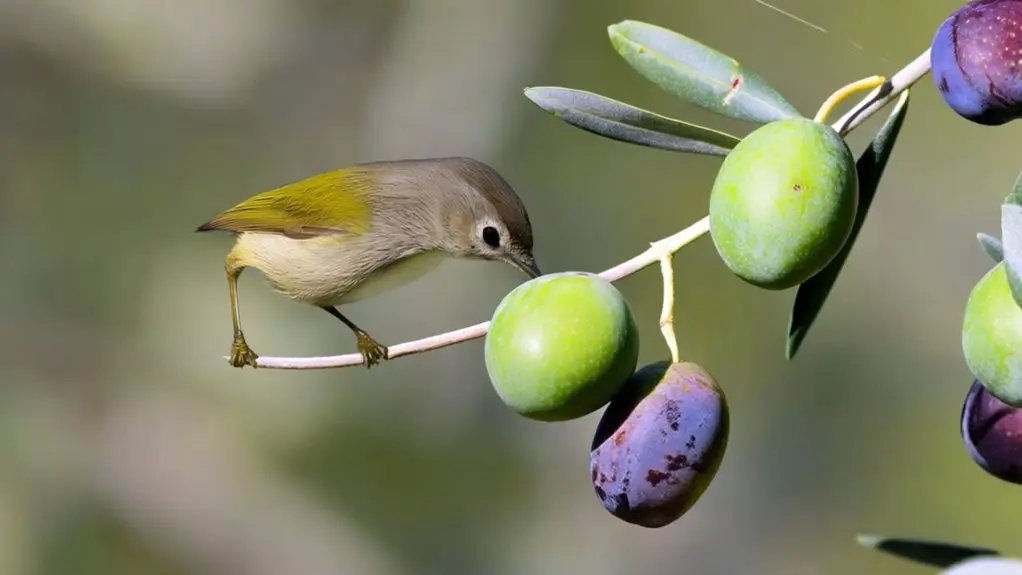
You can safely offer birds plain, pitted olives in moderation, just make sure they’re free from salt, spices, oils, and preservatives because those can harm their health. Always remove the pits to prevent choking, especially for small birds.
Olives provide beneficial nutrients like vitamin E and healthy fats, but they should only be given occasionally to avoid toxicity or digestive upset. Different species and seasons affect feeding needs, so it’s important to understand the proper preparation and limits for bird safety and nutrition.
There are more insights available about which bird types are suitable for olives, the risks involved, and how often you should feed them. Taking these into account will help keep your feathered friends healthy and happy.
Are Olives Safe for Birds to Eat?
Although olives contain beneficial fats that can give birds a quick energy boost, you should only offer them plain, pitted olives in moderation. Olives must be free from salt, spices, or preservatives because those additives can harm birds.
The high fat content helps support energy needs, especially during demanding times, but feeding too many can lead to obesity and nutritional imbalance. Always remove the pits to prevent choking hazards and keep things safe for your feathered friends.
Olives are best given as an occasional treat rather than a regular part of their diet to keep their nutrient intake balanced. By controlling how much and how you prepare olives, you reduce health risks while letting birds enjoy their flavor and texture safely.
This careful approach matches what birds need nutritionally and keeps their wellbeing in mind.
Which Birds Can Safely Eat Olives?
You’ll find that many birds, like jays, pigeons, and certain raptors, can safely eat olives in moderation. They actually benefit from the healthy fats and antioxidants olives provide.
But, it’s important to avoid giving olives with pits to smaller birds because those can cause choking or digestive issues.
Also, never offer salted, pickled, or processed olives since the high salt content and preservatives can be harmful to birds.
Bird Species Eating Olives
When identifying which bird species can safely eat olives, it’s important to focus on those naturally adapted to consuming fatty fruits. Jays, thrushes, and pigeons are examples that can digest olives well in moderation. You should only offer plain, unprocessed olives without salt or additives to avoid harming birds.
Many native and garden birds forage olives where available. But olives must remain an occasional treat to prevent digestive issues.
| Bird Species | Olive Consumption Notes |
|---|---|
| Jays | Naturally consume fatty fruits |
| Thrushes | Adapted to fruit-based diets |
| Pigeons | Can safely digest olives |
| Native birds | Forage wild or cultivated olives |
| Garden birds | Occasionally eat olives in region |
Olive Nutritional Benefits
Understanding which birds can safely consume olives means looking at the nutritional benefits these fruits offer. Many bird species, like jays, crows, and some thrushes, can tolerate olives in moderation because of their nutritional makeup.
Olives provide essential nutrients such as vitamin E and iron, which help support immune function and metabolic processes in birds. Plus, their high monounsaturated fat content gives birds a dense energy source. This is super important during colder months or migration when birds need extra energy.
The antioxidants in olives also help keep cells healthy by reducing oxidative stress. When feeding birds, make sure the olives are plain and pitted—no added salt or preservatives, as those can be harmful.
It’s interesting to note that native omnivorous birds naturally eat olives, especially in areas where these fruits grow abundantly.
Safety Considerations For Birds
Although olives offer nutritional benefits to certain bird species, it’s important to take safety factors into account before feeding them to birds. Many species like pigeons, house finches, and some songbirds can safely consume small amounts of plain, unsalted olives.
However, you must avoid olives that are pickled, brined, or contain added salt or preservatives, as these substances can be toxic. Feeding olives should be occasional to prevent digestive issues.
Consider these safety guidelines:
- Only offer plain, unsalted olives in moderation.
- Avoid any olives with additives such as salt, spices, or preservatives.
- Consult an avian veterinarian to confirm suitability for your specific bird species.
Following these measures guarantees you provide a safe, nutritious treat.
How to Prepare Olives for Birds
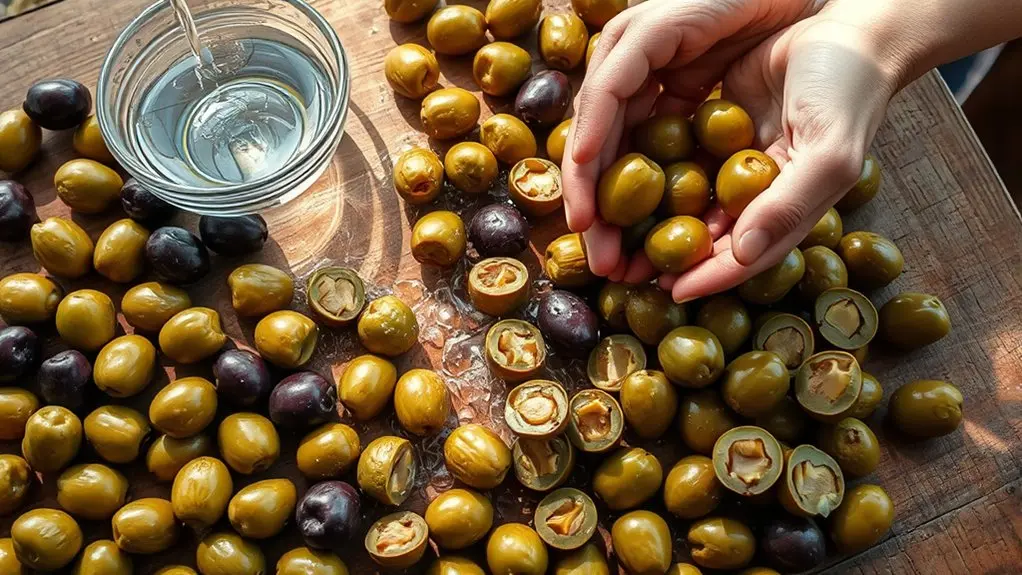
Since olives contain the bitter compound oleuropein, you need to pit them before offering them to birds to guarantee safety and palatability. After removing the pits, rinse the olives thoroughly to eliminate excess salt or preservatives that could harm birds.
Offer only ripe, fresh olives cut into small, manageable pieces to ensure easy consumption and digestion.
Avoid olives marinated in garlic, spices, or oils, as these additives may be toxic.
Incorporate olives as part of a varied diet alongside other bird-friendly foods to maintain nutritional balance and prevent overreliance on a single food source.
What Risks Should You Watch Out for When Feeding Olives to Birds?
After properly preparing olives for birds, you should also be aware of the potential risks involved in feeding them. While olives can provide some nutrients, their high salt content and preservatives may pose health hazards if given excessively or in processed forms.
Properly prepare olives for birds and be mindful of risks from salt and preservatives in processed forms.
Here are three key risks to watch out for:
- Salt Toxicity and Dehydration: Excess salt can lead to toxicity and dehydration. This can impair kidney function and affect overall health.
- Chemical Additives: Pickled or processed olives often contain preservatives and additives. These may cause digestive distress or long-term health issues.
- Digestive Upset: The strong flavor and oil content might disrupt normal digestion. This can cause diarrhea or gastrointestinal discomfort.
To minimize risks, always offer natural, unsalted, and unprocessed olives in moderation. It’s better to be safe than sorry when feeding birds!
How Often Should You Feed Olives to Birds?
You should feed olives to birds no more than 2-3 times per week to keep them healthy and avoid any nutritional imbalances. Just offer small, unsalted portions as occasional treats—this way, you’re supporting their diet without any risk.
It’s also a good idea to adjust how often you feed them olives depending on the season and how the birds respond. That way, you can make sure you’re giving them the best care possible.
Frequency of Olive Feeding
Although olives can provide nutritional benefits, feeding them to birds requires careful moderation to prevent digestive issues or imbalances. To guarantee safe feeding, follow these guidelines:
Offer olives as an occasional treat, ideally no more than once or twice weekly. This helps avoid nutritional imbalances. Use only unsalted olives without added spices or preservatives. These additives can harm birds.
Provide small portions to minimize choking risk and digestive upset. Keep an eye on your birds’ reactions and adjust how often you feed them olives accordingly. This way, you can make sure they enjoy the treat safely.
Bird Health Considerations
Since olives contain high fat and salt levels, feeding them to birds requires careful moderation to prevent digestive issues and dehydration. You should give olives no more than once or twice weekly, ensuring they’re fresh and unsalted.
Avoid processed or salted olives, as these can cause severe health complications. Always monitor your bird’s response after feeding olives and consult an avian vet for tailored advice.
| Olive Type | Feeding Frequency | Health Impact |
|---|---|---|
| Fresh, unsalted | 1-2 times per week | Safe in moderation |
| Salted/processed | Not recommended | Risk of dehydration, toxicity |
| Overfeeding | Avoid | Digestive upset, obesity risk |
| Observation | Continuous | Detect adverse reactions early |
Seasonal Feeding Guidelines
When feeding olives to birds, it’s important to take into account seasonal variations in their natural diet and nutritional needs. Olives should be given in moderation to avoid disrupting their balanced nutrition.
Consider these guidelines:
During peak foraging seasons, like fall and winter, offer fresh, unprocessed olives once every few days to supplement their diet effectively.
Limit olive feeding to a few times per week to prevent dependency and ensure birds consume a diverse range of nutrients.
Always provide olives without added salt, preservatives, or brine, as these additives can harm birds and cause digestive issues.
Observe the birds closely. If they show refusal or digestive upset, discontinue olive feeding immediately.
This approach ensures you support their health without compromising natural dietary requirements.
What Are Good Alternatives to Olives for Birds?
If you want to provide your bird with a balanced diet without relying on olives, consider offering a variety of fruits and vegetables that supply essential nutrients without excess fats.
Fruits such as berries, apples, and grapes serve as safe, naturally sweet alternatives rich in vitamins and antioxidants. These support overall avian health.
Berries, apples, and grapes offer safe, sweet, vitamin-rich options that promote your bird’s health.
Vegetables like bell peppers and leafy greens offer essential vitamins and minerals while maintaining low fat content. This helps prevent nutritional imbalances linked to eating too many olives.
Since olives contain healthy fats and antioxidants, substituting them occasionally with these alternatives ensures your bird gets diverse nutrients without risking digestive issues.
Frequently Asked Questions
Can Baby Birds Eat Olives?
Yes, you can feed baby birds olives if you prepare them properly. Make sure the olives are unsalted, rinsed, and finely chopped.
Introduce olives gradually and keep an eye out for any reactions. It’s always a good idea to check with an avian specialist to make sure it’s safe and nutritionally balanced.
Do Wild Birds Eat Olives Naturally?
You’ll find wild birds enthusiastically savor olives like nature’s hidden treasure, as they regularly consume them. These fruits provide essential fats and nutrients, especially when other food is scarce. It really shows how birds adapt and take advantage of what’s available.
They’re pretty opportunistic eaters, making the most of olives whenever they can. So yeah, olives are definitely part of their natural diet.
How Do Olives Benefit a Bird’s Diet?
Olives benefit your bird’s diet by providing essential monounsaturated fats for energy, vitamin E to support cellular health, and antioxidants that enhance immune function. These nutrients help maintain strong feathers, skin integrity, and overall well-being.
Just remember to offer olives in moderation. Too many can upset your bird’s digestive balance. But in small amounts, they make a tasty and nutritious treat your feathered friend will enjoy!
Can Olives Cause Allergies in Birds?
Yes, olives can cause allergies in birds, triggering symptoms like swelling, respiratory distress, itching, and gastrointestinal upset.
You should avoid feeding olives to sensitive species, as compounds like oleuropein and salt may provoke adverse reactions.
It’s always better to be cautious and monitor your bird if you decide to introduce olives to their diet. Some birds might be more prone to reactions than others.
Are Olive Pits Toxic if Accidentally Ingested?
If you imagine a tiny, locked treasure chest inside a bird’s throat, that’s what an olive pit is. It’s hard to digest and can be potentially toxic.
Accidental ingestion risks cyanide release and choking. So, it’s best to avoid feeding birds whole pits.
Conclusion
You can safely offer olives to certain birds like parrots and cockatiels, but always prepare them by removing pits and excess salt. For example, a study on captive cockatiels showed improved vitamin intake when given fresh, pitted olives in moderation. However, avoid overfeeding to prevent digestive issues.
Remember, balance is key. Supplement olives with safer alternatives like berries or seeds to maintain your bird’s ideal health and nutrition.