
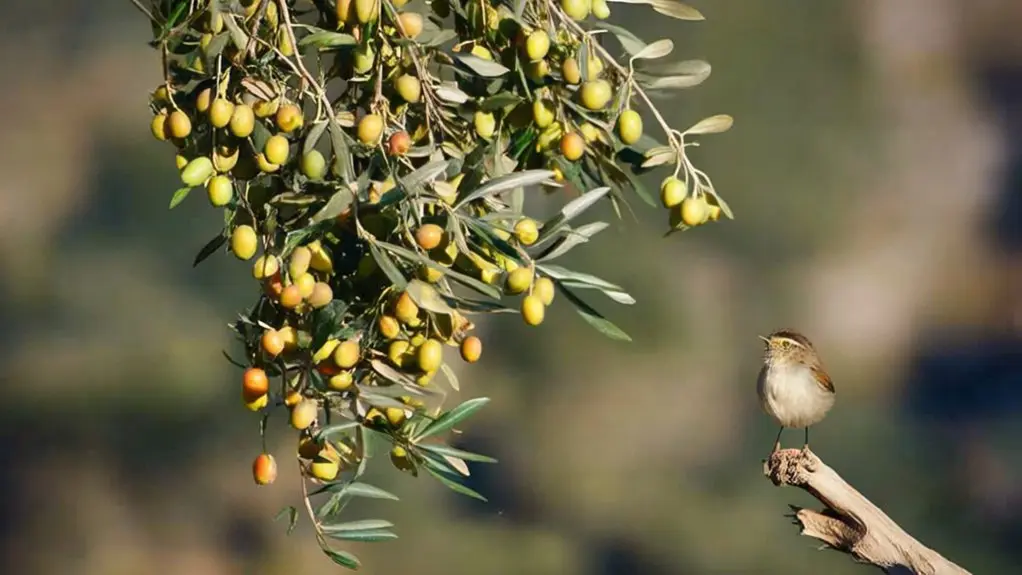
Yes, you can safely give your bird small amounts of high-quality, pure olive oil, like extra virgin and organic. Just make sure to introduce it gradually and check with an avian vet first.
Use it sparingly, only a few times a week, to support feather health and provide antioxidants. This way, you avoid digestive issues or obesity.
Keep an eye out for any adverse reactions. Also, avoid using olive oil when your bird is sick or nesting.
Stick with this approach, and you’ll find the best way to enjoy olive oil’s benefits while keeping your bird safe.
Is Olive Oil Safe for Birds? How Much Can They Have?
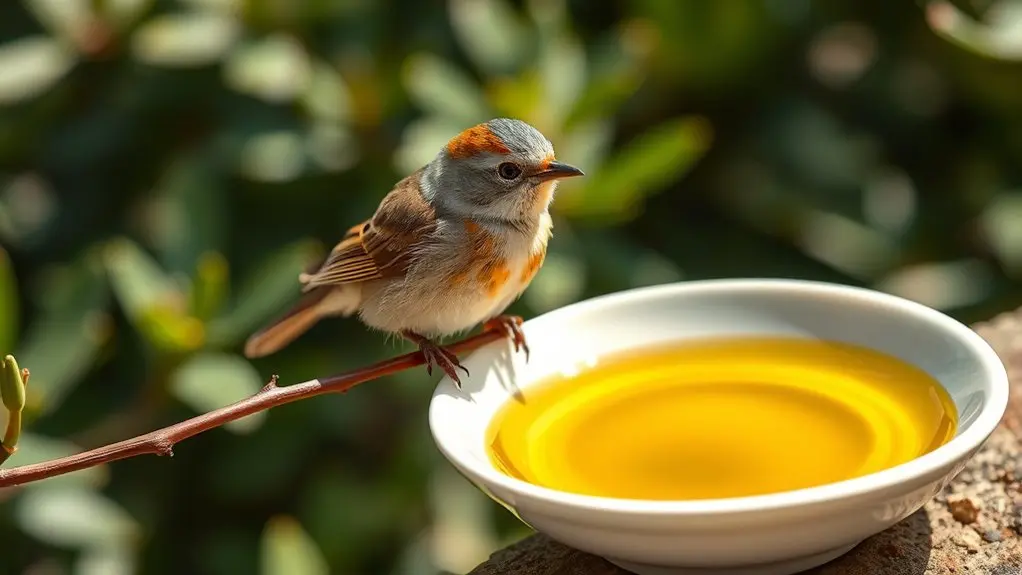
While olive oil can offer health benefits to birds thanks to its healthy fats, you should only give it in small amounts and as an occasional treat. Too much olive oil can cause obesity and digestive problems, so moderation is essential.
Olive oil benefits birds in small, occasional amounts—excess can lead to obesity and digestive issues.
Always select high-quality, pure olive oil without additives or preservatives to guarantee your bird’s safety.
Introduce olive oil gradually and observe your bird’s response. It’s vital not to make olive oil a regular part of their diet, as birds require balanced nutrition from varied sources.
Before adding olive oil or any new food, consult an avian veterinarian to confirm it suits your bird’s specific health needs.
This approach helps maintain your bird’s well-being and prevents potential health complications.
How Olive Oil Can Help Your Bird’s Health
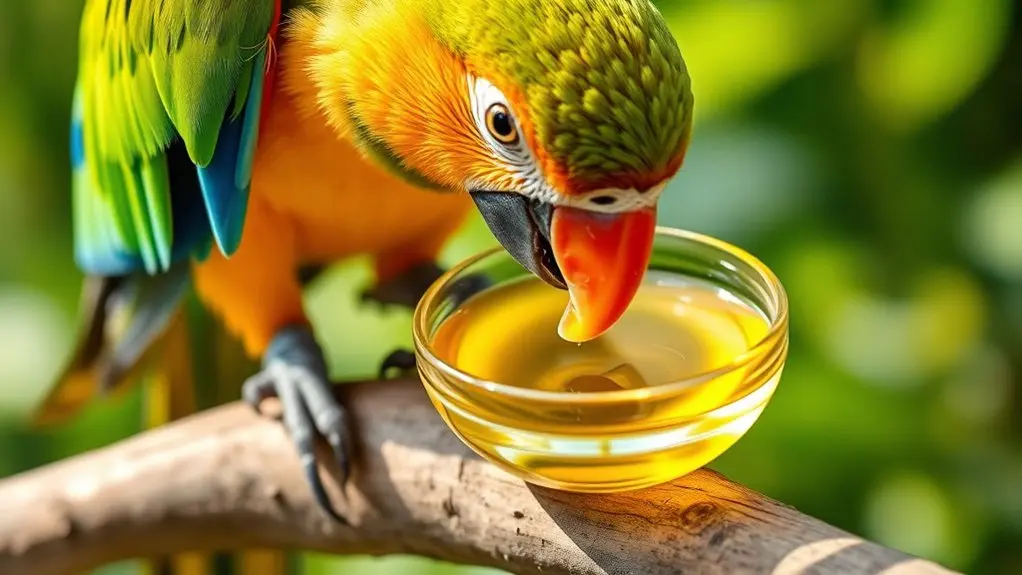
Once you’ve verified that olive oil is safe for your bird and introduced it cautiously, you can begin to appreciate the specific health benefits it offers.
Olive oil contains healthy monounsaturated fats that support cardiovascular health when given in moderation. Small amounts may improve your bird’s feather condition and skin hydration, enhancing overall appearance and comfort.
Additionally, olive oil provides antioxidants that help reduce oxidative stress, promoting cellular health. However, to maximize benefits and prevent adverse effects, use olive oil sparingly. Overuse can lead to weight gain and digestive issues, so moderation is key.
Always consult an avian veterinarian before adding olive oil or any supplement to your bird’s diet to make certain it meets your bird’s specific health needs safely. It’s always better to be safe and get professional advice!
What Risks Does Olive Oil Pose to Birds?
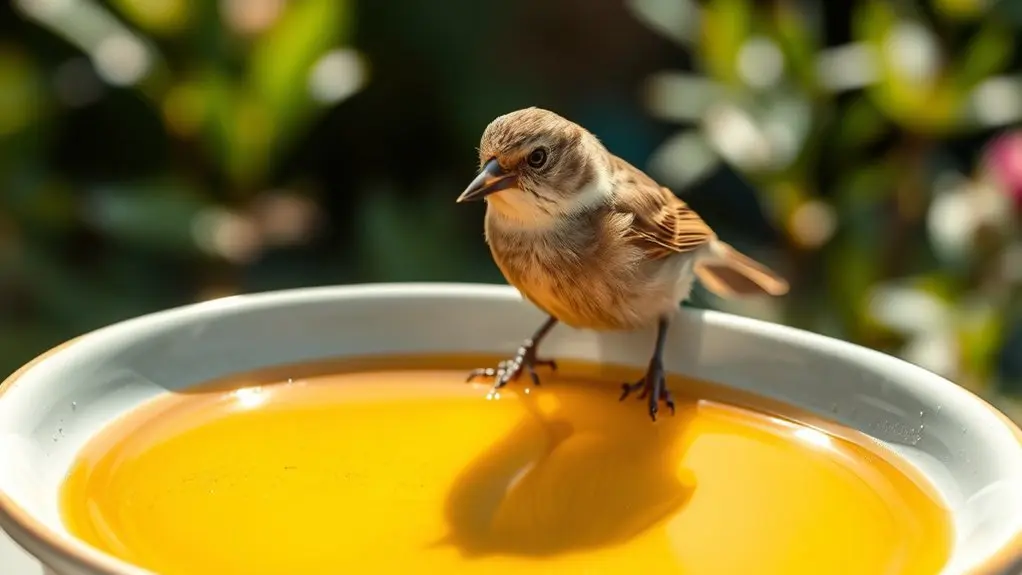
Even though olive oil can benefit birds in small amounts, you need to be aware of the risks associated with its misuse. Excessive consumption may lead to obesity, digestive issues, and serious conditions like fatty liver disease or pancreatitis.
If olive oil contaminates their food or environment, birds might accidentally ingest large quantities, causing gastrointestinal upset. You should guarantee any olive oil given is free from additives such as garlic or spices, which are toxic to birds.
Applying olive oil directly to feathers or skin is also discouraged because it disrupts their natural cleaning and temperature regulation.
When Should You Avoid Giving Olive Oil to Your Bird?
Because certain conditions can increase risks, you should avoid giving olive oil to your bird when it contains harmful additives like garlic or onion. These ingredients can be toxic and pose serious health threats.
Also, refrain from feeding olive oil to birds during illness or digestive upset, as it might worsen their condition.
Avoid olive oil sourced from night-time harvesting, which may carry contamination risks.
Additionally, don’t offer olive oil near active nests or nesting seasons, as it can disturb or harm resting birds.
Finally, be cautious about frequency and quantity; excessive olive oil can lead to obesity and other health complications.
Use olive oil sparingly and only when you’re confident it’s safe and appropriate for your bird’s specific situation.
How Can You Tell if Olive Oil Affects Your Bird Negatively?
If your bird eats olive oil, keep an eye out for any digestive problems like diarrhea or vomiting. These can be signs that something’s not agreeing with them.
Also, watch how your bird is acting. If they seem unusually tired or start plucking their feathers, it might mean they’re feeling uncomfortable.
Don’t forget to check for other signs too, like trouble breathing or irritated skin. These could also point to a negative reaction from the olive oil.
Watch For Digestive Issues
Although olive oil can offer health benefits, it’s important to watch for signs that it may be causing digestive issues in your bird. Monitor your bird closely for symptoms like diarrhea, vomiting, or changes in stool consistency. Lethargy or loss of appetite can also indicate gastrointestinal discomfort.
Excessive gas, bloating, or abdominal pain are additional warning signs. Keep an eye on droppings for abnormal color, texture, or frequency. If you notice any of these signs, consult a veterinarian immediately.
| Symptom | What to Watch For |
|---|---|
| Stool Changes | Diarrhea, vomiting, abnormal texture |
| Behavior | Lethargy, loss of appetite |
| Physical Discomfort | Gas, bloating, abdominal pain |
| Droppings | Color, texture, frequency changes |
Monitor Behavioral Changes
When olive oil affects your bird negatively, behavioral changes often serve as early warning signs. You should watch for lethargy, decreased activity, or unusual vocalizations, as these may indicate discomfort or adverse reactions.
Sudden aggression or feather-plucking can also suggest that your bird is stressed or experiencing health issues linked to dietary changes, including olive oil consumption.
Changes in nesting or sleep patterns are additional indicators of stress or negative effects from dietary fats.
Furthermore, monitoring for signs like vomiting or diarrhea can help confirm if olive oil is causing gastrointestinal distress.
Check Respiratory Symptoms
How can you tell if olive oil is affecting your bird’s respiratory health? Watch for sneezing, nasal discharge, labored breathing, or wheezing. These signs often indicate respiratory irritation.
Open-mouth breathing and tail bobbing are clear indicators your bird is struggling to breathe. Sudden nasal congestion paired with lethargy or reduced activity also suggests respiratory distress linked to oil exposure.
Additionally, pay attention to changes in your bird’s vocalization, such as coughing or unusual respiratory sounds. If you notice any of these symptoms after your bird comes into contact with olive oil, seek veterinary evaluation immediately.
Prompt attention can prevent further complications and ensure your bird’s respiratory health remains intact.
Monitoring these signs helps you act quickly for your pet’s well-being. It’s always better to be safe and get your bird checked out if something seems off.
Choosing the Right Olive Oil for Birds
Selecting the right olive oil for your birds requires careful attention to quality and purity to guarantee their health and safety. You should choose extra virgin olive oil, as it’s the safest and most nutritious option when given in moderation.
Opt for organic varieties to minimize exposure to harmful pesticides or chemicals.
Make sure the olive oil is pure, free from additives, preservatives, or flavorings that could harm your birds. Cold-pressed olive oil is preferable because it retains the maximum health benefits essential for your bird’s well-being.
Remember to use small amounts since excessive consumption may cause digestive issues.
How Should You Introduce Olive Oil to Your Bird’s Diet?
You’ll want to introduce olive oil to your bird’s diet slowly. Try mixing just a tiny bit into their regular food or treats. Start with a drop or even less, and keep a close eye on your bird.
Watch out for any signs of digestive issues or allergies. By monitoring how they respond, you can easily adjust the amount or stop using it altogether if needed to keep them safe.
Gradual Olive Oil Addition
When introducing olive oil to your bird’s diet, start with a small amount, just a drop or a tiny teaspoon mixed into their food. This helps their digestive system adjust gradually. Use high-quality, extra-virgin olive oil to avoid harmful additives.
Add olive oil a few times a week rather than daily to prevent fat overconsumption. Always consult an avian vet beforehand to make sure it’s safe for your bird.
| Step | Description |
|---|---|
| 1. Start Small | Add a drop or 1 tsp to food |
| 2. Mix Well | Guarantee even distribution |
| 3. Frequency | Offer 2-3 times weekly |
| 4. Quality Check | Use extra-virgin, pure olive oil |
| 5. Vet Consultation | Confirm suitability for your bird |
This gradual addition helps you safely incorporate olive oil while keeping an eye on your bird’s tolerance. It’s all about making sure they’re comfortable with the change.
Monitor Bird’s Reaction
Although introducing olive oil to your bird’s diet can offer health benefits, you’ll need to monitor their reaction carefully to guarantee safety. Start by mixing a tiny amount, just a fraction of a teaspoon, into their regular food. Use high-quality, extra virgin olive oil to avoid additives or contaminants.
After the initial introduction, watch your bird closely for 24 to 48 hours. Look out for any signs of discomfort, behavioral changes, or allergic reactions.
If you notice anything unusual, stop giving olive oil right away.
It’s a good idea to consult an avian veterinarian for professional advice before reintroducing it or adjusting the dosage.
This careful monitoring helps make sure your bird benefits from olive oil without risking digestive upset or other health issues.
Frequently Asked Questions
Can Olive Oil Replace Other Fats in a Bird’s Diet?
You shouldn’t replace other fats with olive oil in your bird’s diet. While it offers healthy fats, olive oil lacks essential fatty acids birds need.
Does Olive Oil Affect Different Bird Species Differently?
Imagine a tiny finch hosting an olive oil spa day. Some birds handle it smoothly, others gag.
You’ll find species react differently to olive oil because of their unique digestive quirks. So always proceed with caution and knowledge.
Can Olive Oil Help With a Bird’s Beak Condition?
You shouldn’t rely on olive oil to treat your bird’s beak condition. It might temporarily moisturize, but only a veterinarian can provide proper care, trimming, or medication to address the underlying issue safely and effectively.
If you notice something wrong with your bird’s beak, it’s best to get professional help. Just putting olive oil on it won’t fix the problem in the long run. A vet knows exactly what to do to make sure your bird stays healthy and comfortable.
Is It Safe to Mix Olive Oil With Birdseed or Pellets?
Think of olive oil as a gentle breeze. Mixing small amounts with birdseed or pellets is safe and beneficial.
You should introduce it gradually, make sure it’s pure, and keep an eye on your bird for any adverse reactions. It’s all about taking it slow and paying attention.
How Should Olive Oil Be Stored for Bird Feeding Purposes?
You should store olive oil in a cool, dark place, using an airtight, dark glass container.
Keep it away from heat and sunlight to maintain freshness and nutritional quality. This is important for safe and effective bird feeding.
Conclusion
You can safely add olive oil to your bird’s diet in small amounts, as it supports feather health and boosts immunity. Studies show that just 1-2% of a bird’s daily intake as olive oil can improve nutrient absorption without causing harm. However, always monitor your bird for any adverse reactions and avoid overuse.
By choosing high-quality, extra virgin olive oil and introducing it gradually, you’ll help your feathered friend thrive safely and healthily. It’s all about balance and paying attention to how your bird responds. Just take it slow, and you’re good to go!