
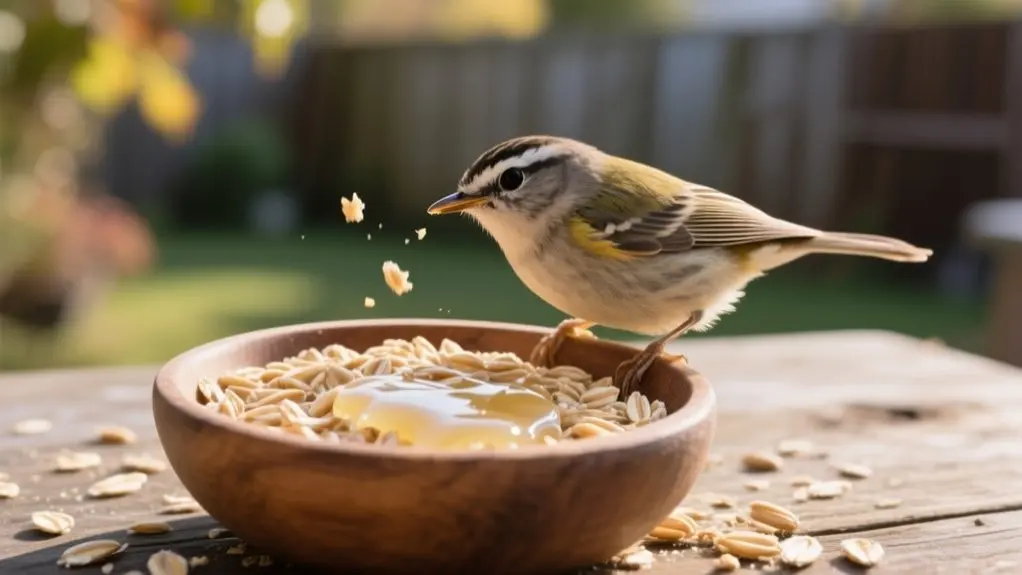
You can feed birds fat soaked oats safely by mixing oats with hard, unsalted fats like suet to give them an essential energy boost, especially in colder months. Avoid meat fats with salt or additives, as they can harm your birds.
Oats provide good carbs and fiber, helping digestion and warmth. Keep portions small and feeders clean to prevent problems.
If you want to understand the best fats, feeding tips, and signs to watch for, keep exploring these helpful insights.
What Are Fat Soaked Oats? Why Feed Birds Them?
Although fat-soaked oats offer birds a high-energy boost during cold months, you should understand what they’re before feeding them. Fat-soaked oats are simply oats mixed with animal fat, designed to provide birds with extra energy when food is scarce.
Feeding oats alone is safe since they offer carbohydrates, protein, and fiber. However, adding fat increases the calorie content, which helps birds maintain warmth and energy in cold weather.
When you prepare fat-soaked oats, it’s best to use hard fats like suet, as these provide concentrated energy without harming birds. Avoid soft fats that may contain unhealthy substances.
Knowing the right kind of fat and how to feed oats properly guarantees you help birds thrive during tough conditions without risking their health.
Safety of Fat Soaked Oats for Wild Birds
When you feed birds fat-soaked oats, it’s important to pay attention to the type of fat you use. Meat fats, for example, can actually be harmful to their health.
Oats themselves are pretty nutritious, but if you use the wrong kind of fat, it might damage their feathers and make it harder for them to stay warm.
So, it’s a good idea to go for safer options like homemade suet.
This way, you’re helping wild birds stay healthy and cozy through the colder months.
Risks of Meat Fat
If you feed wild birds oats soaked in meat fat, you expose them to several health risks. This is mainly because of the high sodium levels and seasonings often present in cooked fats.
Meat fat, especially soft fats drained from cooked meats, can harm birds by contaminating their feathers during preening. This contamination compromises feather waterproofing and insulation, which are vital for their survival.
The greasy nature of soft fats disrupts feather integrity, making birds more vulnerable to cold and wet conditions. Many bird enthusiasts advise against using meat fat in bird feed due to these health risks and the potential for harmful additives.
Instead, you should opt for hard fats like natural suet. These provide safer, essential energy without the dangers linked to soft, seasoned meat fats.
Nutritional Value of Oats
You should be cautious about the type of fat you mix with oats for wild birds, as not all fats are safe. Oats offer excellent nutritional value, supplying birds with carbohydrates, fiber, and protein. These are essential nutrients birds need for energy and overall health.
When fed in moderation, oats don’t swell dangerously in a bird’s crop, making them a safe food choice. However, the fat paired with oats matters greatly. Birds require hard fats like suet, which have a high melting point and support feather insulation.
Avoid fats containing additives or preservatives, especially those from cooked meats that can have harmful sodium levels.
Safe Feeding Alternatives
Although fat-soaked oats can seem like a convenient treat, using meat fat or soft fats puts birds at risk of health issues and feather damage.
Instead, you should opt for hard fat like suet, which has a higher melting point and won’t compromise a bird’s feathers or insulation.
Homemade suet made from safe, properly rendered ingredients is even better, providing concentrated energy without the dangers linked to meat fat.
You can also offer uncooked porridge oats or plain rolled oats in moderation to supply essential carbohydrates and fiber safely.
By choosing these alternatives, you guarantee the birds get nutritious food without risking their health or well-being.
Avoid soft fats and always prioritize safe feeding practices for wild birds.
How Fats in Fat Soaked Oats Affect Birds
When birds consume fat-soaked oats, the type of fat involved plays an essential role in their health and feather condition.
Fat-soaked oats made with soft fats can cause feathers to become greasy, damaging their waterproofing and insulation. This leaves birds vulnerable to cold and rain, risking serious health complications.
Hard fats, like true suet, are much safer since they don’t compromise feather integrity or cause greasiness.
If birds ingest soft fats, they may transfer harmful substances to their feathers while preening, further impairing their ability to regulate temperature.
To protect birds, avoid feeding them fat-soaked oats with soft or spreadable fats.
Instead, opt for oats combined with healthy, hard fats or natural ingredients such as peanut butter for better nutrition and feather health.
Why Cooking or Salted Meat Fat Is Harmful
You mightn’t realize it, but cooking or salted meat fat can be pretty risky for birds because of the high sodium content.
Too much salt isn’t just a minor issue—it can actually lead to dehydration and cause damage to their kidneys. This can seriously affect their overall health.
So, it’s really important to understand these harmful effects of salt.
When you keep this in mind, you’re more likely to choose safer feeding options that are better for wild birds.
Sodium Risks For Birds
Because cooked meat fat often contains added salt, feeding it to birds can pose serious health risks. Sodium risks arise when birds consume hard fat that’s been salted or cooked, as their bodies can’t handle the high sodium levels.
Even small amounts of salted fat can lead to dehydration and elevated blood pressure, which harms their health over time.
When you feed birds drained, seasoned meat fat, you expose them to dangerous sodium levels they’re ill-equipped to process. Birds have a low tolerance for sodium, so avoiding hard fat from cooked or salted meats is essential.
To protect their wellbeing, never feed birds salted or cooked meat fat; it’s safer to choose natural, unsalted alternatives instead.
Harmful Effects Of Salt
Salted or cooked meat fat poses serious health risks to birds because it has a high sodium content. Birds don’t tolerate sodium well, so eating salted fat can quickly harm them.
Sodium in fat can cause dehydration, raise blood pressure, and damage kidneys, which might be fatal. Cooking often adds salt, which makes drained fat unsafe for birds.
Even small amounts of sodium can upset their fluid balance, affecting their feathers and insulation. To keep birds safe, avoid feeding them salted fats and pick unsalted options like true suet.
Here’s why salted fat is harmful:
- High sodium causes dehydration and spikes in blood pressure.
- Too much sodium harms kidneys and can be deadly.
- Sodium throws off fluid balance, which hurts feather quality and insulation.
Nutritional Benefits of Fat Soaked Oats
How do fat-soaked oats benefit birds, especially during colder months? Fat-soaked oats provide a concentrated source of energy that’s essential for birds in winter feeding. The oats supply carbohydrates for steady fuel, while the added fat offers necessary calories to maintain body heat and support survival.
This combo not only sustains energy levels but also aids in feather maintenance and tissue repair, important for tough conditions.
However, you need to choose the right fat. Hard fats like suet work best, as they support insulation and health. Avoid soft or processed fats, which can harm birds.
Furthermore, the fiber in oats helps digestion, making fat-soaked oats a balanced, nutrient-rich option that boosts birds’ resilience during chilly seasons.
How to Prepare Fat Soaked Oats at Home
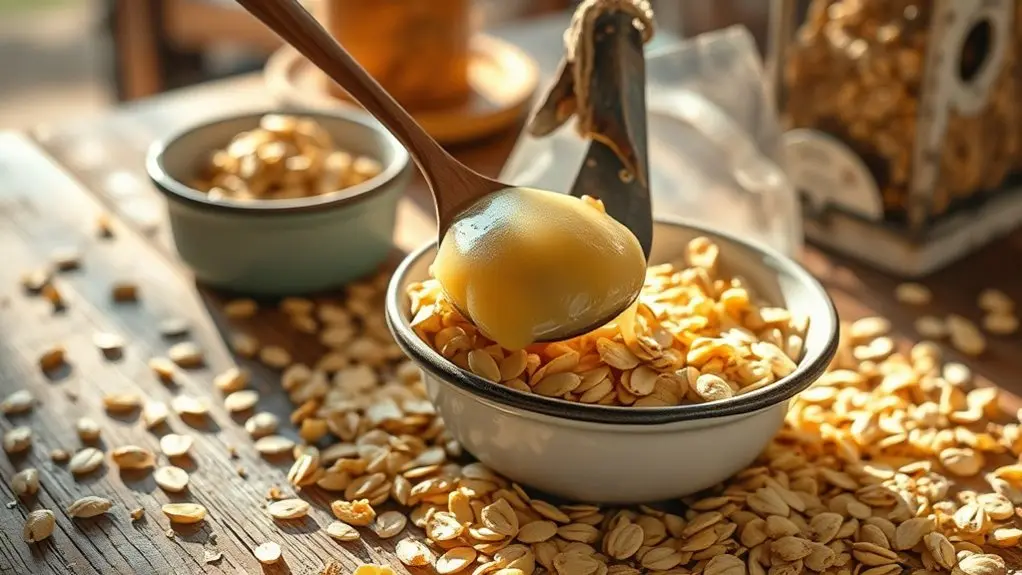
When you want to nourish birds during colder months, preparing fat-soaked oats at home is simple and rewarding.
Start by mixing equal parts rolled oats and unsalted peanut butter, making sure the peanut butter has no harmful additives. You can add honey or molasses for extra sweetness and energy, which also helps the mixture stick better.
Shape the mixture into small balls or use cookie cutters to create fun shapes. These are easy to place in your bird feeder or on a platform feeder.
Here’s how to prepare fat soaked oats:
- Mix oats and unsalted peanut butter evenly.
- Add honey or molasses for stickiness and energy.
- Shape into balls or fun forms for easy feeding.
Use squirrel-proof bird feeders to keep your bird food safe and clean.
Best Fats to Use for Soaking Oats
Although many fats might seem suitable for soaking oats, choosing the right type is essential for your birds’ health and energy. The best fats to use for soaked oats are hard fats like beef suet and lard. They re-solidify, reducing bacterial growth and providing concentrated energy.
Avoid soft fats such as vegetable oils and margarine, as they can cause health issues and damage feathers. Also, steer clear of meat fats high in sodium.
| Fat Type | Suitability for Soaked Oats |
|---|---|
| Beef Suet | Ideal – high melting point, safe |
| Lard | Good – re-solidifies well |
| Vegetable Oil | Poor – may cause health issues |
| Salted Meat Fat | Unsafe – high sodium harmful |
Choosing appropriate fats supports your birds’ health and boosts their energy efficiently.
How to Serve Fat Soaked Oats Without Attracting Pests
If you want to keep squirrels away, try using feeders that block their access but still let birds feed safely. It’s a simple way to make sure the right visitors get to enjoy the oats.
Also, be sure to keep the feeding area clean by regularly removing any leftover scraps. This helps prevent pests from being drawn in.
Another tip is to serve smaller portions. That way, the food doesn’t spoil quickly, and you’re less likely to attract unwanted guests.
Preventing Squirrel Intrusion
Since squirrels are notorious for raiding bird feeders, you’ll want to take steps that keep fat-soaked oats accessible to birds but off-limits to these persistent pests.
Preventing squirrels is key to ensuring your feathered friends enjoy their treats without interruption. Here’s how to protect your bird feeders:
- Use squirrel-proof feeders or install baffles to block their access to fat-soaked oats.
- Position feeders at least 10 feet away from trees or structures that squirrels can jump from.
- Offer fat-soaked oats in small amounts to reduce waste and avoid attracting squirrels.
Hygienic Feeding Setup
Keeping squirrels away from your fat-soaked oats is just one part of maintaining a successful feeding station. A hygienic feeding setup is essential to keep birds safe and pests at bay. Use squirrel-proof feeders with protective cages or elevated platforms to limit access.
Always offer fat-soaked oats in small portions to reduce spoilage. Remember to keep feeding areas cleaned regularly with hot water and soap, removing any leftover food promptly. This prevents mold, decay, and unwanted visitors.
Make it a habit to monitor feeding stations closely for signs of contamination or pests. By combining these steps, you’ll provide a clean, safe environment that encourages birds to feed happily without attracting unwanted critters.
Mistakes to Avoid When Feeding Fat Soaked Oats
Although fat-soaked oats can be a nutritious treat for birds, you need to avoid common mistakes that could harm them.
Fat-soaked oats offer nutrition but require careful handling to keep birds safe and healthy.
When feeding birds, understanding the pros and cons of fat-soaked oats helps you make safe choices.
Here are three key mistakes to avoid:
- Using meat fats for soaking oats. High sodium can seriously harm birds.
- Letting birds land on fat-soaked oats. This can damage their feathers and insulation.
- Choosing soft or flavored fats. These often contain additives unsafe for birds.
Always opt for hard fats like true suet.
Birds That Eat Fat Soaked Oats
When you offer fat-soaked oats, birds like blackbirds, doves, and sparrows enthusiastically take advantage of this energy-rich treat. This is especially true during cold months when food is scarce.
Granivorous bird species such as finches and chickadees also appreciate oats mixed with seeds or fats.
Fat-soaked oats are a popular choice among various birds. However, you should avoid using soft or salted fats since they can harm birds’ health. Instead, hard fats like suet are safer and better for their nutrition.
While feeding fat-soaked oats, moderation is key to prevent greasy feathers that impair insulation and waterproofing.
Energy-Rich Alternatives to Fat Soaked Oats
Besides fat-soaked oats, you can offer several energy-rich alternatives to support birds during colder months. These high-energy options guarantee birds get the nutrients they need without risking feather health.
Homemade suet made from hard fats provides concentrated energy and keeps feathers intact. You can offer suet cakes in squirrel-proof feeders for safe access.
Rolled oats mixed with natural peanut butter create a protein-rich treat that attracts many bird species while avoiding harmful additives.
Seed mixtures with high-oil seeds like black sunflower seeds effectively supplement energy needs.
Incorporating dried fruits or nuts into homemade bird treats also boosts energy and appeals to a wider range of birds.
These options complement fat-soaked oats for a well-rounded feeding strategy.
How to Monitor Your Birds’ Response to Fat Soaked Oats
To guarantee fat-soaked oats benefit rather than harm your birds, you’ll need to carefully watch for any signs of distress or changes in behavior.
Monitor your birds for excessive preening or feather loss, which could mean the oats affect their feather health.
Pay attention to how birds eat. If they avoid the fat-soaked oats or visit the feeding site less often, it might indicate they find it unappealing or that health issues are developing.
Also, watch for lethargy or changes in activity levels, as high fat content can impact their energy.
Gastrointestinal problems like diarrhea are another red flag.
Frequently Asked Questions
Can Fat Soaked Oats Be Stored for Long Periods?
You can’t store fat-soaked oats for very long without proper care. To extend their shelf life, focus on storage methods that control moisture.
Keep them in an airtight container in a cool, dry place. Using hard fats like suet helps maintain freshness longer. Always check for spoilage signs before use.
Freezing is a great option to preserve fat-soaked oats, letting you thaw only what you need while maintaining quality.
Do Fat Soaked Oats Attract Rodents or Other Wildlife?
Yes, fat-soaked oats do cause rodent attraction and can impact other wildlife, like squirrels and raccoons.
If you want to keep your bird feeding area rodent-free, follow feeding guidelines carefully.
Use squirrel-proof feeders and clean up spills promptly to reduce wildlife impact.
Otherwise, rodents might take over, deterring birds from visiting.
Sticking to these tips helps you enjoy feeding birds without unwanted guests.
How Often Should I Offer Fat Soaked Oats to Birds?
Think of feeding fat-soaked oats like giving birds a cozy blanket in winter. You don’t want to overdo it.
You should offer them 1–3 times a week to balance feeding frequency with their nutritional benefits.
Pay attention to bird preferences; some species may enjoy them more than others. This way, you provide extra energy without overwhelming their diet.
Always mix with other foods and adjust based on weather and activity levels.
Can Fat Soaked Oats Be Fed to Pet Birds Safely?
You shouldn’t feed fat-soaked oats to pet birds because the greasy fats can harm their feathers and insulation.
Instead, focus on preparation methods that keep oats plain or mixed with safe ingredients like suet.
Birds prefer oats without added fats. These offer better nutritional benefits without risking health issues.
Are There Specific Bird Feeders Best Suited for Fat Soaked Oats?
Think of bird feeders as castles protecting precious treasures. For fat-soaked oats, you’ll want bird feeder types like caged or hanging feeders that keep grease off birds and out of reach from squirrels.
Use feeding techniques that involve sturdy, hard fats mixed with oats to prevent mess.
Proper oat preparation means soaking oats in suet, then placing them in feeders designed to offer safe, clean access, ensuring your feathered friends stay healthy and happy.
Conclusion
Feeding fat soaked oats to birds can be a great way to boost their energy, especially in colder months. Just remember to avoid salted or cooked fats, as these can harm your feathered friends.
Keep an eye on their response, you’re not a Victorian birdwatcher with a monocle, after all! By choosing safe, nutritious options and understanding their needs, you’ll help your backyard visitors thrive and keep coming back for more.