
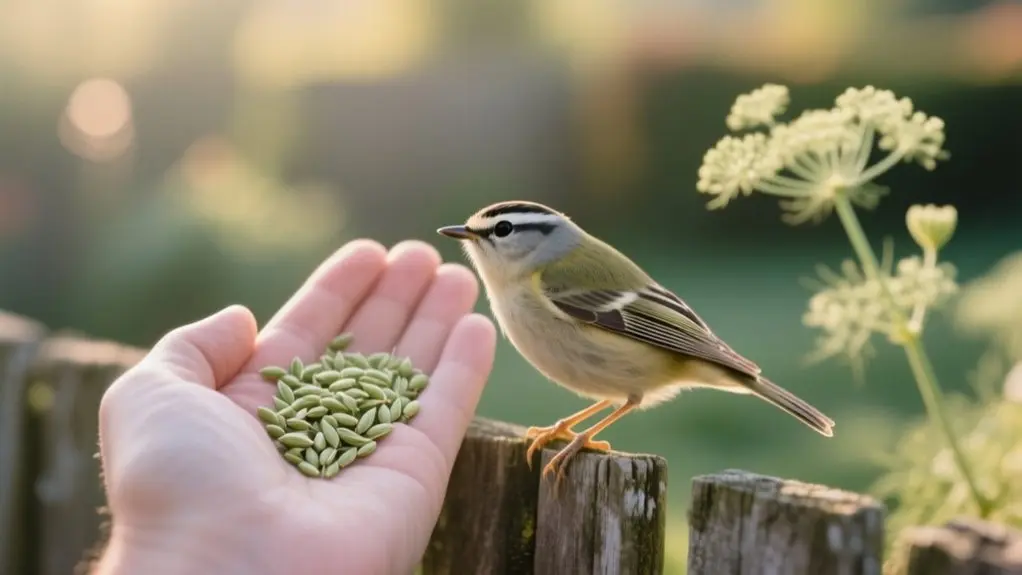
You can safely offer fennel seeds to many birds in moderation. They aid digestion and support respiratory health while appealing to their natural foraging instincts.
Start with small amounts, especially for sensitive species like budgies. Avoid giving them to young or recovering birds. Overfeeding may cause digestive issues, so serve fennel seeds as an occasional treat rather than a staple.
If you want to optimize serving and spot potential risks, there’s more useful info to explore.
What Are Fennel Seeds and Why Do Birds Like Them?
Fennel seeds come from the fennel plant and have a sweet, licorice-like flavor that many birds find irresistible. These aromatic seeds add variety to a bird’s diet, attracting different bird species to your feeder.
Fennel seeds’ sweet, licorice-like flavor attracts many bird species, adding variety to their diet.
Birds enjoy their small size and crunchy texture, which appeals to their natural foraging instincts. Fennel seeds are rich in essential oils, antioxidants, and dietary fiber, supporting digestive health.
However, it’s important to offer fennel seeds in smaller amounts to prevent excessive oil intake, which could cause health problems.
By including fennel seeds carefully, you can enrich your bird’s diet and encourage healthy snacking without overwhelming their system.
Are Fennel Seeds Safe and Beneficial for Birds?
How safe are these seeds for your feathered friends? Fennel seeds are generally safe when given in small amounts, making a nice, healthy addition to your bird’s diet. They contain essential oils and antioxidants that may support digestive health and overall well-being.
To keep your bird safe, offer no more than about 0.5 teaspoon per kilogram of body weight. Always make sure the fennel seeds are fresh and free from contaminants to avoid health issues.
When introducing fennel seeds, start gradually and observe your bird closely for any adverse reactions. If you notice anything unusual or have concerns, consult your avian vet promptly.
With proper care, fennel seeds can be a beneficial treat in moderation for your feathered companion.
Which Birds Should Avoid Fennel Seeds?
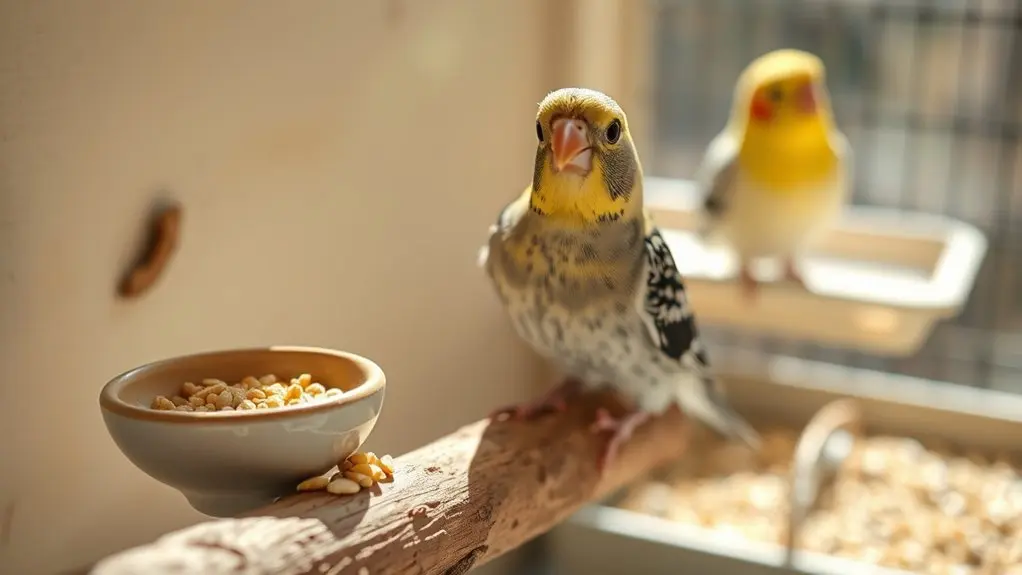
Although fennel seeds can offer health benefits, some birds shouldn’t have them due to potential digestive or metabolic issues.
If you’re feeding bird food to sensitive species like budgies or canaries, it’s best to avoid fennel seeds, as their digestive systems may react poorly.
Parrots, especially larger ones with fast metabolisms, might also have adverse reactions if they’ve never seen fennel seeds before.
Seed-eating birds that rely heavily on a seed-based diet could face nutritional imbalances from adding fennel.
Furthermore, avoid giving fennel seeds to young or recovering birds under one year old, as their digestive systems aren’t ready for new foods.
Prioritize your bird’s health by recognizing which types should steer clear of fennel seeds to prevent unnecessary complications.
Risks of Overfeeding Fennel Seeds to Birds
When you feed birds too many fennel seeds, they can develop digestive problems like diarrhea or an upset stomach because of the seeds’ high fiber content. Overfeeding may also cause weight gain and nutrient imbalances, especially if fennel seeds replace other essential foods.
Remember to use fennel seeds sparingly and never as the main food source. Here’s a quick overview of risks per day:
| Risk Type | Cause | Impact on Birds |
|---|---|---|
| Digestive Issues | High fiber content | Diarrhea, upset stomach |
| Nutrient Imbalance | Displaced foods | Malnutrition |
| Weight Gain | Calorie-dense seeds | Obesity, poor health |
Limit fennel seeds to avoid these risks and keep a balanced diet for your bird.
How Much Fennel Seed Should You Give Your Bird?
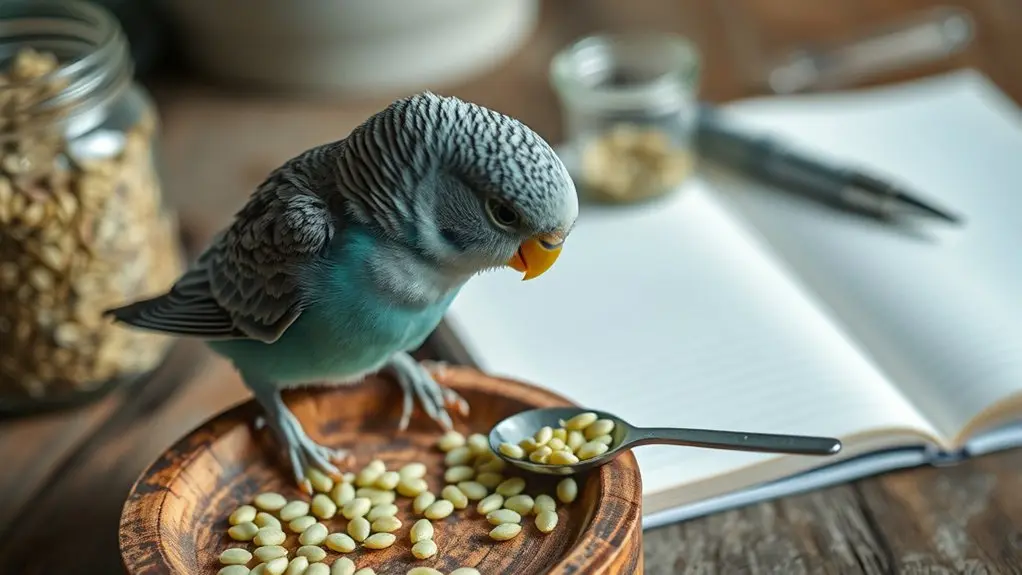
You can start by giving your bird around half a teaspoon of fennel seeds for every kilogram it weighs each day.
Just keep an eye on how your bird reacts to it. If you notice anything off, feel free to adjust the amount.
Checking in regularly on how much they’re eating is a good idea—it helps make sure they get all the benefits without any problems.
Recommended Serving Size
A good starting point is about half a teaspoon of fennel seeds per kilogram of your bird’s body weight each day. You can’t thank moderation enough when introducing fennel seeds to your feathered friend.
Stick to this serving size to avoid overwhelming their digestive system. Overfeeding might cause imbalances, so keeping fennel seeds to a limited amount per week guarantees your bird enjoys benefits without risk.
Always watch how your bird reacts and adjust accordingly. Fresh, preferably organic fennel seeds maximize nutrition and minimize harmful pesticides.
Gradually incorporating fennel seeds helps your bird get used to new flavors and textures. Remember, variety in their diet is key; fennel seeds should complement, not replace, their regular food.
Frequency Of Offering
Maintaining the right balance in your bird’s diet means not only controlling the amount of fennel seeds but also how often you offer them.
Follow frequency guidelines by limiting fennel seeds to 2-3 times a week to prevent digestive issues and overconsumption.
Serving variations depend on your bird’s size; generally, 0.5 teaspoons per kg of body weight per day is safe, but spreading this across a few days works better.
Since fennel seeds have a strong flavor, introduce them gradually to accommodate bird preferences and avoid overwhelming their palate.
Always make certain the seeds are fresh and free from additives.
Tailor the frequency and serving size based on how your bird responds, keeping their health and enjoyment in mind.
Monitoring Bird Intake
Although fennel seeds offer health benefits, it’s important to monitor how much you give your bird to avoid digestive upset or nutrient imbalances. Start with about 0.5 teaspoon per kg of your bird’s body weight daily, paying close attention to seed preference variations and any signs of intolerance.
Limit fennel seed servings to a few times a week to maintain a balanced diet and respect your bird’s natural foraging behavior. Observe changes in bird feeding habits closely, as these can indicate whether your bird is adjusting well.
Gradually increase the amount only if no discomfort appears. Always pair fennel seeds with diverse, safe foods to guarantee your bird receives a variety of nutrients and doesn’t rely too heavily on one food source.
Introducing Fennel Seeds to Your Bird Gradually
When you introduce fennel seeds to your bird’s diet, start slowly to watch for any reactions or preferences. Use gradual introduction by offering a small pinch first.
Employ observation techniques to monitor your bird’s behavior and acceptance carefully.
Mixing strategies help too. Blend fennel seeds with familiar foods to ease your bird into the new taste and texture.
Remember, offer fennel seeds occasionally as a treat, not a staple, to keep your bird’s diet balanced.
Consulting an avian vet beforehand is wise if your bird has health issues.
Health Benefits of Fennel Seeds for Birds
Because fennel seeds offer several health benefits, including them in your bird’s diet can support digestion and boost immunity.
You’ll find fennel seed uses go beyond flavor, contributing to your feathered friend’s overall wellness. This natural flavoring benefits your bird by making meals more appealing while promoting health.
Here’s how fennel seeds aid bird diet enhancement:
- Provide antioxidants that strengthen the immune system
- Supply essential vitamins and minerals for bone and health support
- Reduce inflammation, helping joint and feather condition
- Encourage acceptance of new foods with their appealing taste
How Fennel Seeds Help Bird Digestion and Breathing
You’ll find that fennel seeds actually help stimulate digestive enzymes, which means your bird can process food more efficiently.
Plus, they’ve a soothing effect on the respiratory system, making it easier for your bird to breathe and reducing any irritation.
So, by including fennel seeds in your bird’s diet, you’re naturally supporting both their digestion and respiratory health.
It’s a simple addition that can make a big difference!
Digestive Enzyme Stimulation
Although birds have sensitive digestive systems, fennel seeds can play a valuable role in supporting their digestion and respiratory health. These seeds stimulate enzyme activity, which boosts digestive health in avian species by promoting efficient breakdown of food.
When you include fennel seeds in your bird’s diet, you help reduce common digestive discomforts like bloating and gas.
Here’s how fennel seeds aid digestion:
- Stimulate digestive enzymes for better nutrient absorption
- Alleviate gastrointestinal bloating and gas in birds
- Support healthy gut flora with antioxidants
- Enhance overall digestive health in avian species
Respiratory Soothing Effects
When you add fennel seeds to your bird’s diet, you tap into their natural ability to soothe respiratory passages. Fennel properties, especially anethole, work to reduce the inflammatory response in your bird’s respiratory system, easing irritation and promoting better respiratory health.
These seeds also help relax smooth muscles, which can alleviate breathing difficulties and support overall lung function.
Beyond the respiratory benefits, fennel seeds aid digestion by relieving gas and bloating, contributing to your bird’s comfort and well-being.
Their antioxidant properties further support the immune system, helping your bird fend off respiratory infections.
Comparing Fennel Seeds With Caraway Seeds for Birds
While both fennel and caraway seeds can be safe additions to your bird’s diet, they offer different benefits and guidelines.
Understanding these differences helps you cater to your bird’s dietary preferences effectively.
Fennel seed benefits include soothing digestion by reducing gas and bloating, thanks to their carminative properties.
Caraway seeds support liver health and have a well-documented role in avian diets.
Caraway seeds have a recommended serving size of 0.5 teaspoon per kg of body weight, but fennel seeds lack established guidelines.
Both seeds should be introduced gradually to prevent digestive upset.
Preparing and Serving Fennel Seeds for Birds Safely
Understanding how to prepare and serve fennel seeds properly helps you maximize their benefits and keep your bird safe.
Begin fennel seed preparation by crushing or grinding the seeds to improve digestibility and nutrient absorption.
Introduce them gradually, considering your bird’s dietary preferences and watching for any reactions. Always use fresh, uncontaminated seeds, and follow seed storage tips like keeping them in a cool, dry place to maintain freshness.
Consult your veterinarian to determine the right serving size based on your bird’s species and nutritional needs.
Signs of Fennel Seed Overconsumption to Watch For
You’ll want to watch out for digestive issues like diarrhea or vomiting if your bird eats too many fennel seeds.
Also, pay attention to any changes in behavior—things like lethargy or loss of appetite can be a sign that something’s wrong.
And don’t forget to keep an eye on physical signs, such as dehydration or unusual vocalizations, which might mean your bird is feeling uncomfortable.
Digestive Distress Symptoms
Anyone feeding fennel seeds to their birds should watch for signs of digestive distress. While fennel seed benefits support bird digestive health, overconsumption can cause discomfort. You need to practice safe feeding practices to avoid issues.
Look out for these digestive distress symptoms:
- Diarrhea or loose droppings
- Lethargy or unusual tiredness
- Refusal to eat or decreased appetite
- Bloating or gas causing visible discomfort
These signs indicate that too many fennel seeds may have disrupted your bird’s gut flora. If symptoms persist, consult an avian veterinarian promptly.
Monitoring your bird’s droppings and overall condition helps you balance the fennel seed benefits with preventing digestive upset.
Always feed fennel seeds in moderation to maintain your bird’s ideal digestive health.
Behavioral Changes Noted
While fennel seeds can benefit your bird’s digestion in small amounts, overfeeding may cause noticeable behavioral changes. If you observe shifts in your bird’s fennel seed preferences or feeding habits, it could signal overconsumption.
Behavioral signs like increased irritability, aggression, lethargy, or unusual vocalizations often indicate discomfort or potential toxicity. You might also notice a lack of appetite, which further suggests your bird isn’t feeling well.
Keep an eye out for signs of dehydration, as fennel seeds have a diuretic effect when eaten in excess.
Monitoring these behavioral changes closely helps you intervene early and adjust your bird’s diet accordingly, ensuring fennel seeds remain a safe, beneficial treat rather than a health risk.
Physical Health Indicators
Behavioral changes can often signal deeper physical issues caused by eating too many fennel seeds. If your bird’s dietary preferences shift or their physical activity declines unexpectedly, it might be due to overconsumption.
Environmental factors can also influence how your bird reacts to fennel seeds.
Watch closely for these signs: diarrhea, bloating, or abnormal droppings indicating digestive distress; lethargy or loss of appetite signaling possible toxicity; increased thirst or urination, which may show renal stress; difficulty breathing or unusual vocalizations requiring urgent care.
If you notice these, reduce fennel seed intake and consult a vet immediately. Monitoring your bird’s health guarantees their safety while enjoying new foods.
When to Consult a Veterinarian About Fennel Seed Issues
If your bird shows signs of distress like lethargy or digestive issues after eating fennel seeds, you should consult a veterinarian immediately. These symptoms could indicate adverse fennel seed interactions or potential toxicity.
Consult a veterinarian immediately if your bird shows lethargy or digestive issues after eating fennel seeds.
Pay close attention to any unusual behavior or changes in appetite, as these may signal that fennel seeds don’t agree with your bird’s dietary preferences.
Veterinary consultation importance can’t be overstated, especially if your bird has pre-existing health conditions.
Before introducing fennel seeds, discuss potential risks with your vet to guarantee safety.
Always report any suspected adverse reactions, including vomiting or diarrhea, to your veterinarian promptly.
Timely veterinary advice helps protect your bird’s health and guarantees proper care if fennel seed issues arise.
Frequently Asked Questions
Can Fennel Seeds Help Improve a Bird’s Plumage Color?
Yes, fennel seeds can help with plumage enhancement by supporting your bird’s overall health.
You’ll notice improved color vibrancy because the seeds contain antioxidants that protect feather cells from damage.
Their dietary benefits also boost digestion and nutrient absorption, which indirectly supports brighter feathers.
While fennel seeds alone won’t dramatically change plumage color, they complement other nutrients, making your bird’s feathers look healthier and more vibrant over time.
Do Fennel Seeds Affect a Bird’s Reproductive Health?
Fennel seed benefits can impact your bird’s reproductive health, but you need to be careful. Moderate amounts may support digestion, indirectly boosting reproductive function.
However, excessive intake might disrupt hormone balance, causing issues.
Always weigh dietary considerations and avoid overfeeding fennel seeds.
To guarantee your bird stays healthy, consult an avian vet before adding fennel seeds to their diet, so you can protect their reproductive health effectively.
Are Fennel Seeds Safe for Baby or Fledgling Birds?
You should treat introducing fennel seeds to baby birds like planting a delicate seed in a garden. It needs care.
Fennel seed toxicity is low, so small amounts are generally safe for baby bird nutrition.
However, you must balance fledgling dietary needs with fresh fruits and veggies to ensure they get all essential nutrients.
Always introduce fennel seeds gradually, watch for reactions, and consult an avian vet to keep your little ones healthy and thriving.
Can Fennel Seeds Be Used as a Natural Bird Repellent?
Yes, you can use fennel seeds as a natural bird repellent. Their strong scent offers fennel seed benefits by deterring birds without harming them, making it a great option for natural pest control.
However, bird repellent effectiveness varies by species and concentration, so you’ll want to combine fennel seeds with other methods.
Over time, birds might get used to the smell, so rotating repellents helps keep your garden protected.
How Should Fennel Seeds Be Stored to Maintain Freshness?
Did you know fennel seeds can lose up to 50% of their potency within six months? For ideal freshness, focus on proper fennel seed storage by keeping them in an airtight container to block moisture and air.
Store the container in a cool, dark place away from heat to extend seed shelf life. Freezing the seeds can also help maintain flavor longer.
Always check for off smells or discoloration to verify freshness.
Conclusion
Think of fennel seeds like a tiny gift basket for your bird, full of flavor but easy to overwhelm. Just like one too many sweets can spoil your day, overfeeding fennel seeds can upset your feathered friend’s health.
Remember, moderation is key. By offering small amounts and watching for any signs of discomfort, you’re ensuring your bird enjoys this treat safely. When in doubt, don’t hesitate to check with your vet. They’re your best ally in keeping your bird happy and healthy.