
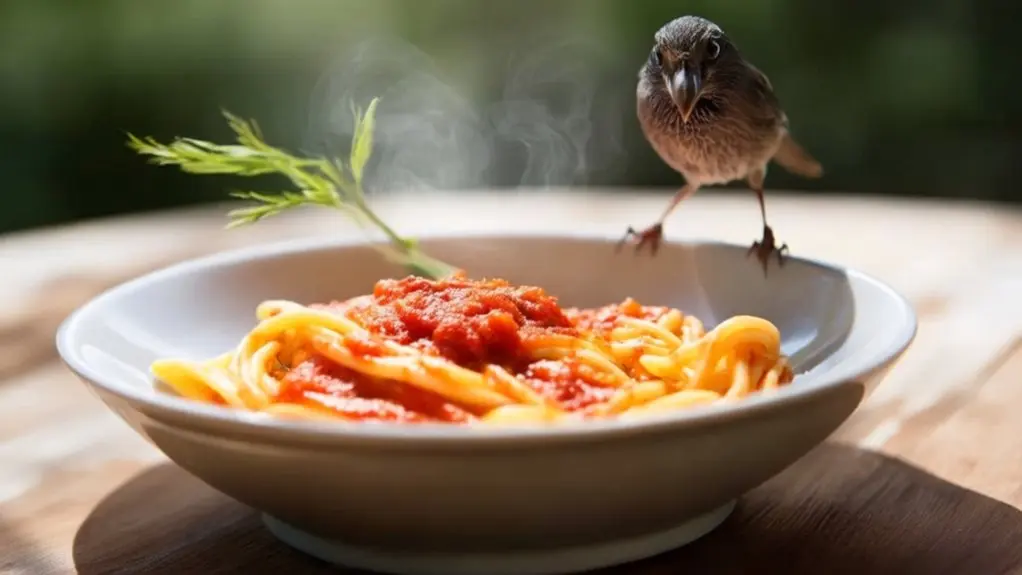
You can safely offer your bird plain cooked pasta, but avoid pasta with sauce. Sauces often contain harmful ingredients like onions, garlic, salt, and spices that can upset your bird’s digestive system and cause serious health issues. Stick to simple, unsalted pasta to prevent risks like anemia or gastrointestinal irritation.
Introducing plain pasta gradually helps you monitor your bird’s response. This way, you can make sure they’re handling it okay before giving them more. Learn how to share this treat properly and keep your feathered friend safe and healthy.
Why Plain Cooked Pasta Is Safe for Birds
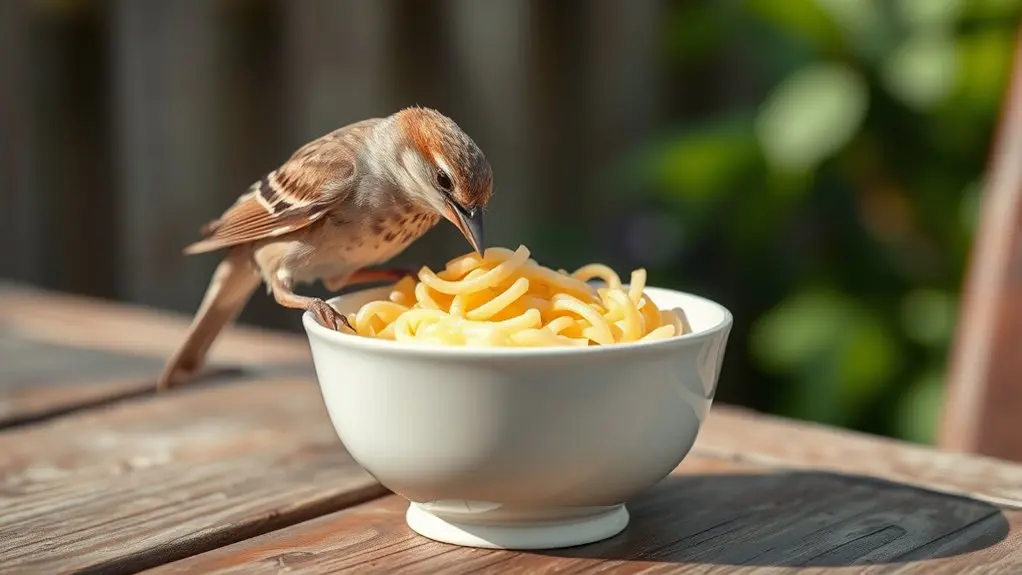
Why is plain cooked pasta considered safe for birds? Because it lacks added salt, spices, and harmful ingredients, plain pasta poses minimal risk. When you cook pasta thoroughly, it becomes easier for birds to digest and reduces choking hazards.
Unsalted and unspiced pasta serves as a safe carbohydrate source, provided you offer it in moderation. Choosing whole grain pasta, like brown rice or spelt, can enhance nutritional value and remain suitable for birds.
Serving pasta plain also lets you control portion sizes carefully, ensuring your bird doesn’t consume excessive amounts. By avoiding sauces or seasonings, you prevent exposure to potentially toxic additives.
Ingredients in Pasta Sauce That Can Harm Birds
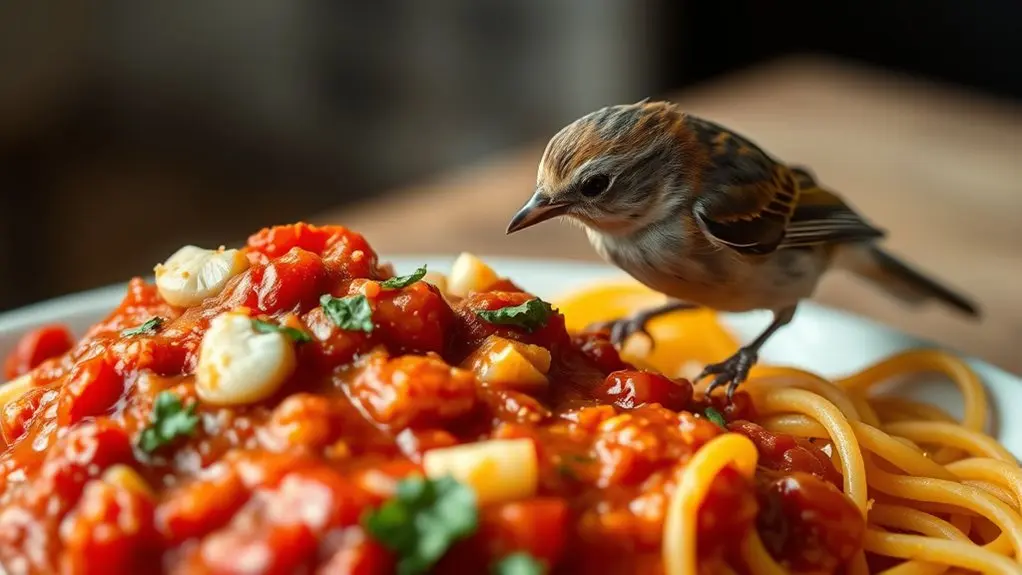
You need to be careful with pasta sauces because many contain ingredients that can harm birds. Onions and garlic, for example, are common toxins that can cause serious health issues.
Salt and spicy additives can also be dangerous.
Harmful Sauce Ingredients
Although pasta sauces may seem harmless, several common ingredients can pose serious risks to birds. You need to be cautious about what’s included in the sauce before offering any to birds.
Here are three harmful ingredients to watch out for:
- Onions and garlic. These cause anemia and digestive problems in birds, making them highly toxic.
- Salt, sugar, and preservatives. Excess salt and sugar can dehydrate birds, while preservatives may trigger health issues.
- Spices and additives. Spicy peppers or unknown commercial additives can irritate or harm avian digestive systems and respiratory health.
Avoid sauces with these ingredients to keep birds safe.
Common Toxic Additives
When selecting pasta sauce for birds, it’s crucial to recognize common toxic additives that can severely harm their health. Ingredients like onions and garlic cause hemolytic anemia. Added salt, sugar, and artificial preservatives may lead to dehydration or digestive issues.
Commercial sauces often contain harmful spices and hidden additives such as xylitol or artificial sweeteners. These pose serious risks to your feathered friend. Some mushrooms and herbs can also trigger allergic reactions or toxicity in birds.
| Toxic Additive | Potential Harm |
|---|---|
| Onions & Garlic | Hemolytic anemia |
| Salt & Sugar | Dehydration, digestive issues |
| Xylitol & Sweeteners | Severe toxicity |
Always check ingredient lists carefully to protect your bird’s health. It’s better to be safe than sorry when it comes to what your bird eats.
Avoiding Unsafe Flavors
Since many pasta sauces contain ingredients harmful to birds, it’s essential to avoid unsafe flavors like onions, garlic, and spicy seasonings that can cause serious health problems. These ingredients can lead to anemia, digestive issues, or toxicity.
When offering pasta with sauce, keep these points in mind:
- Avoid onions and garlic, as they’re toxic and can harm your bird’s blood cells.
- Skip sauces with added salt, sugar, or artificial preservatives, which disrupt your bird’s metabolism.
- Steer clear of spicy ingredients such as chili peppers or hot spices because they irritate your bird’s digestive system.
Commercial sauces often hide harmful additives, so it’s safest to serve plain pasta or prepare a homemade, bird-safe sauce without these hazardous ingredients.
Your bird’s health really depends on careful ingredient choices.
Why Pasta Sauces Can Upset Your Bird’s Tummy
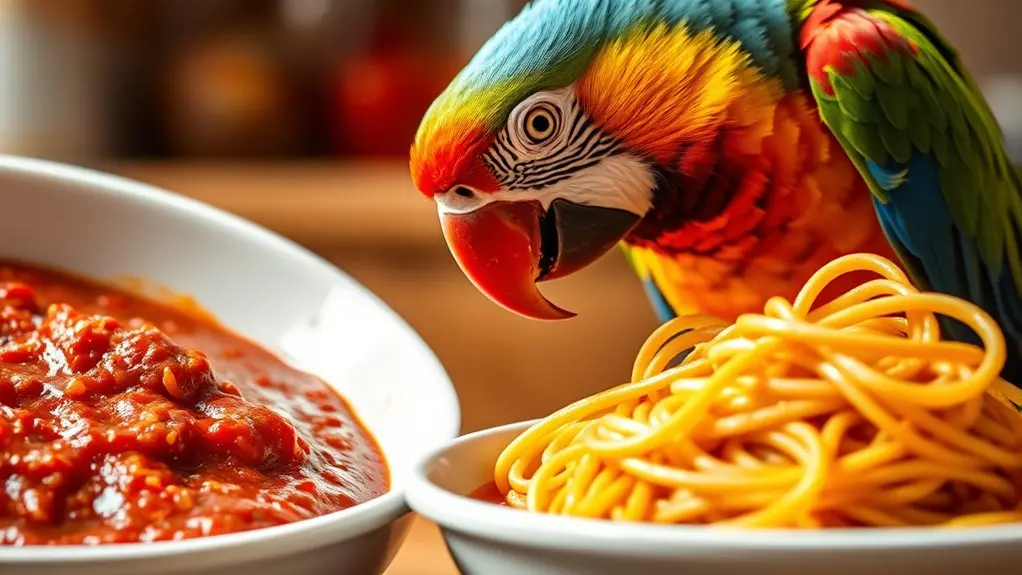
Because pasta sauces often contain ingredients like onions, garlic, and salt, they can quickly upset your bird’s digestive system. These components are toxic or harmful and may cause digestive distress.
Moreover, many commercial sauces include preservatives, artificial flavors, and additives that irritate your bird’s sensitive gut. Spicy or heavily seasoned sauces can make gastrointestinal discomfort worse, leaving your bird feeling unwell.
Tomato-based sauces, with their high acidity, might trigger stomach upset or acid reflux in some bird species. Plus, sauces often contain thickening agents or unknown ingredients that are hard for birds to digest safely.
To protect your bird’s health, it’s best to avoid giving them pasta with sauce. Even small amounts can lead to digestive problems or more serious health issues. So, it’s really not worth the risk!
Ingredients and Foods to Avoid When Feeding Pasta to Birds
Although pasta itself can be safe in moderation, you need to be very careful about the ingredients and foods you pair with it when feeding your bird. Many pasta sauces contain harmful components that can upset or even poison your feathered friend.
Here are three key ingredients to avoid:
- Onions and garlic. Both are toxic to birds and can cause serious digestive distress.
- Salt and spices. Excessive salt and heavy seasonings disrupt your bird’s delicate system.
- Preservatives and additives. Found in pre-packaged sauces, these chemicals can be harmful and unpredictable.
Always check ingredient labels thoroughly before offering pasta with sauce. Making sure of these ingredients ensures your bird stays safe and healthy while enjoying a small pasta treat.
Just a little care goes a long way!
How to Safely Share Pasta With Your Bird
When sharing pasta with your bird, start by making sure the pasta is plain and cooked without any added salt or spices. Use small portions mixed with bird-safe ingredients like vegetables or unsalted nuts. Avoid sauces that contain onions, garlic, or salt.
Serve the pasta in a bird-safe area such as a shallow dish on a tile floor to help control mess and contamination. Always remove leftovers promptly to prevent spoilage and pests. Keep an eye on your bird’s reaction and check avian health resources if you’re unsure about safety or portion size.
| Safety Step | Reason |
|---|---|
| Plain, unsalted pasta | Prevents toxicity |
| Bird-safe mix-ins | Adds nutrition, avoids harm |
| Clean serving area | Controls contamination |
How to Introduce Pasta Treats Safely to Your Bird
After ensuring the pasta you share with your bird is plain and served safely, the next step is to introduce pasta treats carefully. Start by offering small portions, like a teaspoon, to see how your bird reacts. Always serve pasta that’s thoroughly cooked without salt or seasoning, and mix it with bird-safe fruits or vegetables.
Introduce small, plain pasta portions mixed with bird-safe fruits or veggies to ensure a safe treat experience.
Avoid any sauces with harmful ingredients. Follow these steps:
- Serve cooled pasta in a clean environment to prevent burns and contamination.
- Monitor your bird closely for any adverse reactions or refusal.
- Remove any uneaten pasta promptly to maintain hygiene and avoid spoilage.
Frequently Asked Questions
Can Birds Eat Gluten-Free Pasta Safely?
You can safely feed your bird gluten-free pasta if it’s fully cooked, plain, and served in small amounts.
Just make sure to avoid sauces or seasonings. They can harm your bird’s health and cause digestive problems.
It’s always best to keep things simple when it comes to your feathered friend’s diet!
Is Cold Pasta Better or Worse for Birds?
Cold pasta isn’t inherently better or worse for birds; you should focus on proper storage and hygiene. Some birds may prefer cold pasta’s texture, but always monitor their reaction and avoid any spoiled or improperly handled food.
It’s really about making sure the pasta is safe and fresh. Birds can be pretty picky, so keeping an eye on how they respond is key. Just remember, food that’s gone bad can be harmful, no matter the temperature.
How Often Can Birds Have Pasta Treats?
Think of pasta treats as occasional guests at your bird’s feast. Welcome them once or twice a week, but don’t let them overstay. Keep portions small, watch for reactions, and maintain a balanced, varied diet for healthy wings.
It’s all about balance, really. Your bird will thank you with lots of energy and happy chirps!
Are There Bird-Safe Pasta Alternatives?
Yes, you can offer bird-safe pasta alternatives like whole grain, legume-based, or vegetable spiralized pastas.
Just make sure to serve them plain. Avoid sauces, salts, and preservatives to keep your bird safe and healthy.
It’s a simple way to mix things up and still care for your feathered friend’s diet!
Can Pasta Help Birds During Molting Season?
Pasta can be a helpful piece of the puzzle during molting, but you shouldn’t rely on it alone. It provides energy, yet needs pairing with protein and nutrients to truly support feather regrowth and overall bird health.
Think of it like a little boost rather than the whole meal. Birds need a balanced diet to get through molting strong and healthy. So, pasta is just one part of that bigger picture.
Conclusion
You can safely share plain cooked pasta with your bird, but always skip the sauce. For example, Jenny’s cockatiel loved nibbling on plain pasta, but when she gave him marinara, he got an upset tummy. Remember, sauces often contain garlic, onions, and salt, ingredients harmful to birds.
Introduce pasta treats gradually, watch for any reactions, and keep their diet balanced. By being cautious, you’ll keep your feathered friend happy and healthy.