
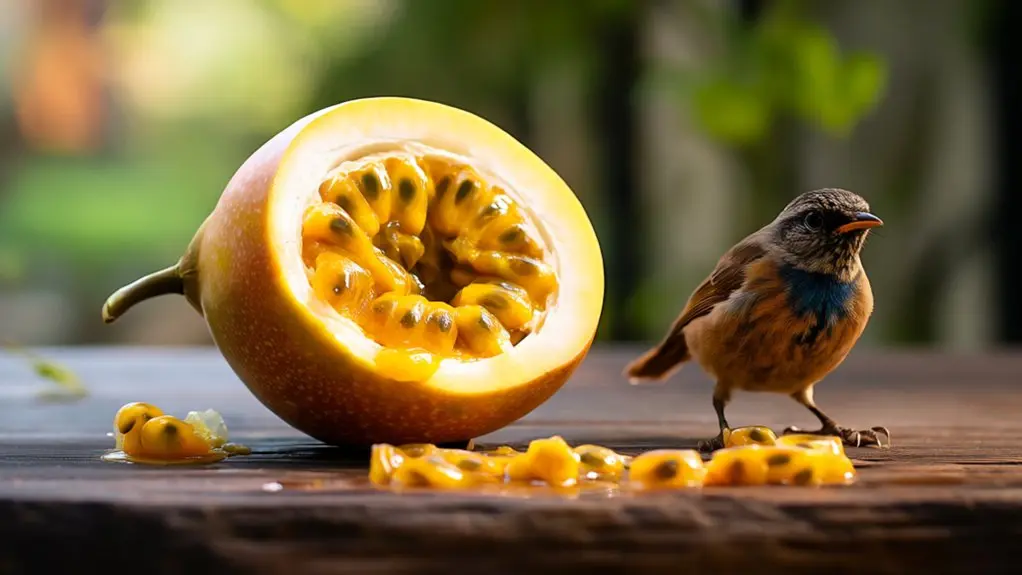
You can safely offer passion fruit to your bird as an occasional treat if you remove the seeds and prepare it properly. The fruit provides vitamins and antioxidants that support your bird’s health. But its acidity and seeds can cause choking or digestive upset if fed too often or in large amounts.
Always consult your vet before introducing passion fruit to verify it suits your bird’s diet. Also, monitor for any adverse reactions. It’s better to be safe when trying new foods.
Learn what else you should consider to keep your feathered friend safe. Taking a little extra care goes a long way in keeping your bird happy and healthy.
Is Passion Fruit Safe for Different Bird Species?
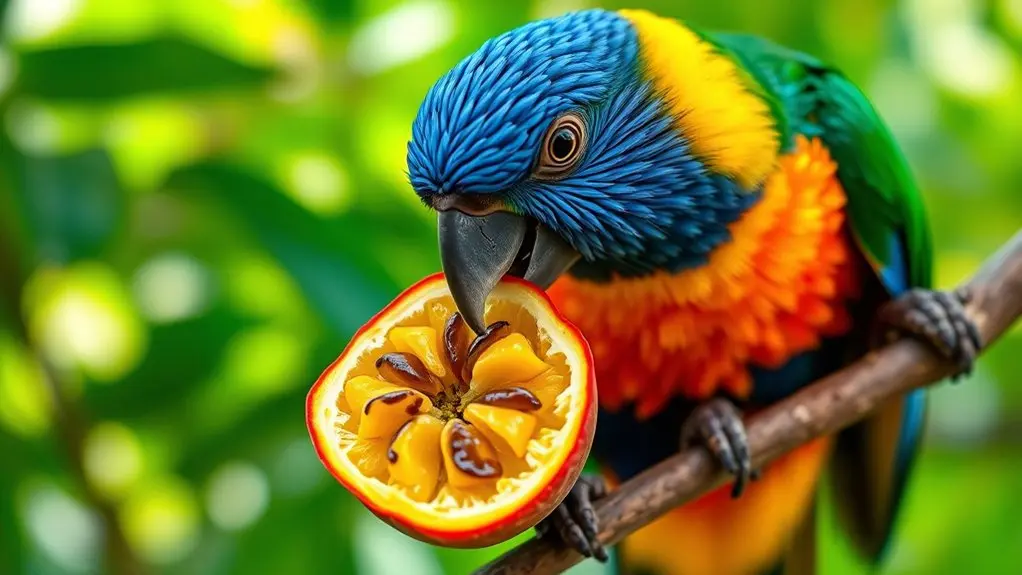
Although passion fruit can be a tasty treat for many birds, you should only offer it occasionally and in small amounts.
Birds like parrots, finches, and canaries can safely enjoy ripe passion fruit, but you must remove the seeds first. Those seeds contain cyanogenic compounds, which, if ingested in large quantities, may be toxic to your feathered friend.
Parrots, finches, and canaries can enjoy ripe passion fruit safely if seeds are removed to avoid toxicity.
Additionally, the fruit’s high acidity and sugar content might upset some birds’ digestive systems if given too often.
By limiting passion fruit to a rare treat and carefully removing seeds, you reduce risks and keep your bird healthy.
Remember, passion fruit isn’t a staple food but an occasional supplement to a balanced diet tailored to your bird’s specific nutritional needs.
How to Prepare Passion Fruit for Your Bird
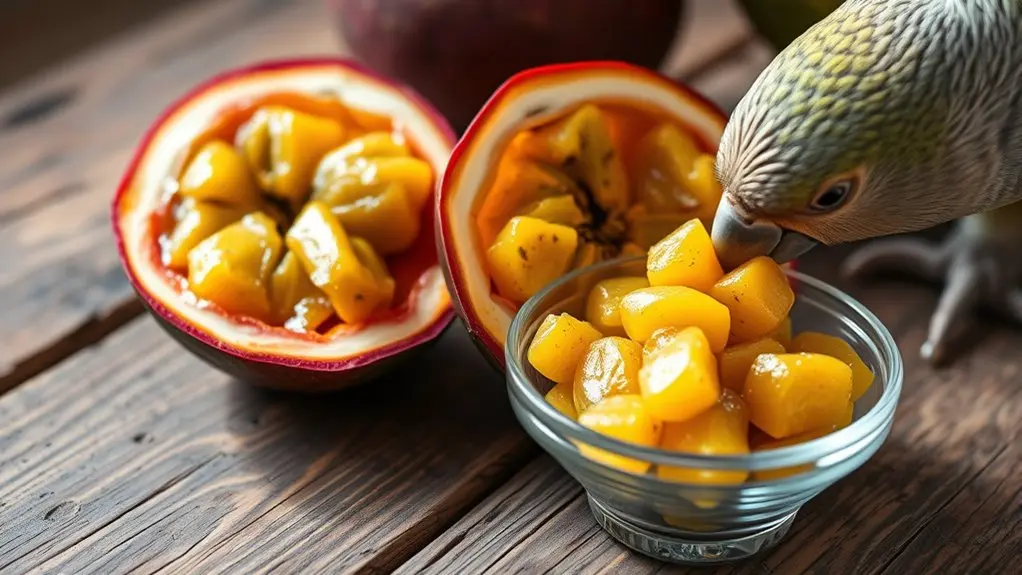
Once you decide to offer passion fruit as an occasional treat, preparing it properly guarantees your bird enjoys it safely and comfortably. Start by washing the fruit thoroughly to remove pesticides and contaminants.
Cut it in half, then scoop out the pulp and seeds, making sure to discard any overly hard or unripe parts.
If your bird tends to swallow large seeds or you’re concerned about choking hazards, remove the seeds entirely. Offer small, manageable portions of pulp to avoid digestive upset.
Always watch your bird carefully after introducing passion fruit for the first time.
If you notice any adverse reactions or have doubts, consult an avian veterinarian to assure your feathered friend’s safety and well-being. It’s better to be safe than sorry when trying new foods with your bird.
Nutrients in Passion Fruit for Birds
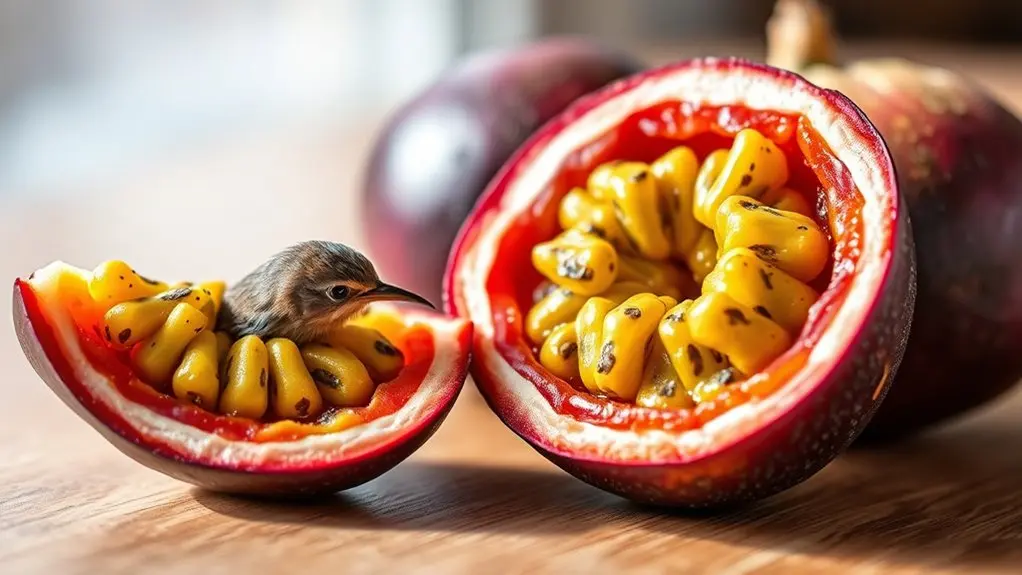
Why should you consider adding passion fruit to your bird’s diet? This vibrant fruit offers valuable nutrients that can boost your bird’s health. Here are four key benefits passion fruit provides:
Vitamins A and C help strengthen your bird’s immune system and support overall wellness. Dietary fiber aids digestion, promoting a healthy gut when given in moderation. Antioxidants protect your bird’s cells from oxidative stress, contributing to longevity.
Small amounts of seeds are generally safe but should be removed to prevent choking. So, it’s a good idea to keep an eye on those seeds when you offer passion fruit to your feathered friend.
Potential Risks of Feeding Passion Fruit to Birds
You’ve got to be careful when giving passion fruit to your birds. The natural acids and sugars in the fruit can sometimes upset their digestion.
Some birds might even have allergic reactions or be sensitive to certain toxic parts, especially if the fruit hasn’t been washed properly.
Also, watch out for the seeds because they can be a choking hazard.
It’s a good idea to keep an eye on your bird’s health after feeding them passion fruit, just to be safe.
Toxic Components In Passion Fruit
Although passion fruit may seem like a healthy treat, it contains several toxic components that could harm your bird. You need to understand these risks before offering this fruit. Key concerns include:
- Seeds and pulp can cause choking or digestive issues if eaten in large amounts.
- The fruit’s high acidity may irritate your bird’s gastrointestinal tract.
- Alkaloids and phenolic compounds present in passion fruit can be toxic or trigger adverse reactions.
- Seeds contain cyanogenic compounds that release cyanide when broken down, posing a serious threat.
Given these factors and the lack of thorough safety studies, it’s best to avoid feeding passion fruit to your bird. Protecting your feathered friend means choosing safer, well-researched treats instead.
Allergic Reactions In Birds
Since birds can develop sensitivities to certain foods, feeding passion fruit carries the risk of triggering allergic reactions. You might notice symptoms like swelling, itching, or respiratory issues in your bird after introducing this fruit.
Some birds show skin irritation or mild digestive upset as signs of sensitivity.
It’s vital to introduce passion fruit gradually and watch closely for any adverse reactions.
Some allergic responses can be severe, causing difficulty breathing or lethargy.
If you observe any such symptoms, stop feeding the fruit immediately and consult an avian veterinarian without delay.
Your careful monitoring ensures your bird’s safety and well-being when offering new foods like passion fruit.
Always prioritize your bird’s health by recognizing and responding swiftly to allergic reactions.
Digestive Issues And Risks
When feeding passion fruit to your bird, be aware that its high acidity can irritate the digestive system, potentially causing discomfort or upset. You need to pause to evaluate these risks carefully to keep your bird healthy.
- Excessive passion fruit may cause diarrhea or gastrointestinal discomfort, especially in parrots and small birds.
- The seeds contain cyanogenic compounds, which can be harmful if your bird eats too many.
- Overfeeding passion fruit can disrupt your bird’s natural digestive balance.
- Birds with existing digestive issues are more vulnerable to adverse effects from passion fruit.
Feed passion fruit sparingly and monitor your bird for any signs of digestive distress. Prioritize moderation and consult a vet if you notice any problems.
Recommended Serving Size of Passion Fruit for Birds
How much passion fruit should you offer your bird to keep it safe and healthy? The recommended serving size is small, about one to two teaspoons of pulp per feeding. This moderate amount helps prevent digestive upset or potential toxicity from the fruit’s natural sugars and acidity.
For larger birds, you can offer a slightly bigger portion, but still limit it to avoid overfeeding. Always remove the seeds before serving, as they pose a choking risk and may contain trace toxins.
Introducing passion fruit gradually into your bird’s diet is a good idea so you can watch for any adverse reactions.
Signs to Watch After Feeding Passion Fruit
After offering your bird a small serving of passion fruit, keep a close watch for any signs of digestive upset such as diarrhea or vomiting. It’s important to detect any adverse reactions early to assure your bird’s safety.
Here are four key signs to monitor:
- Changes in behavior, like lethargy or loss of appetite.
- Unusual droppings or changes in stool consistency.
- Allergic reactions such as swelling or difficulty breathing, though rare.
- Persistent digestive issues beyond initial mild symptoms.
Introducing passion fruit gradually and in small amounts helps you spot problems quickly. If you notice any of these signs, remove the fruit immediately and observe your bird closely.
Your vigilance can prevent complications and keep your feathered friend healthy and happy.
When to Consult Your Vet About Passion Fruit
Although passion fruit can be a healthy treat for many birds, you should consult your vet immediately if you notice any signs of illness such as vomiting, lethargy, or unusual behavior after your bird eats it.
Your vet can quickly determine if passion fruit’s sugar or acidity is causing harm.
Veterinarians can swiftly identify if passion fruit’s sugar or acidity affects your bird’s health.
If your bird has underlying health issues or known sensitivities, seek professional advice before offering passion fruit.
Even if symptoms seem mild, contacting your vet guarantees your bird’s safety and prevents complications.
When in doubt about passion fruit’s suitability for your specific bird species, don’t hesitate to ask your veterinarian.
Prompt veterinary consultation is key to protecting your feathered friend’s health and well-being.
Frequently Asked Questions
Can Birds Eat Passion Fruit Seeds Safely?
You can safely give your bird passion fruit seeds in small amounts, but don’t overdo it. Always watch for any digestive issues or choking risks, especially with smaller birds, to keep them healthy and comfortable.
It’s really about moderation. Keep an eye on how your bird reacts after eating the seeds, and if you notice anything unusual, it’s best to stop and consult a vet. Better safe than sorry!
Does Passion Fruit Affect Bird Feather Coloration?
Yes, passion fruit can influence your bird’s feather coloration by providing carotenoids that enhance vibrant hues.
But you’ll want to feed it moderately to avoid dietary imbalances that might harm overall feather health.
It’s all about balance to keep those feathers looking their best!
How Often Can Birds Have Passion Fruit as a Treat?
You can offer your bird passion fruit once or twice a week as a treat. Just remove the seeds and peel first.
Keep an eye out for any digestive issues after they eat it. And it’s always a good idea to check with your avian vet to keep your bird safe and healthy.
Is Passion Fruit Suitable for Baby Birds or Chicks?
Feeding passion fruit to baby birds is like giving them spicy chili. It’s too harsh for their delicate systems. You shouldn’t offer it.
Instead, choose gentler fruits and consult an avian vet to keep chicks safe and healthy.
Can Passion Fruit Help Improve a Bird’s Immune System?
Yes, passion fruit can help improve your bird’s immune system by providing vitamins A and C and antioxidants.
Just feed it in small, seedless portions to avoid digestive issues. This way, you can boost their overall health effectively.
Conclusion
You might think feeding passion fruit to your bird is just a tasty treat, but it’s actually a careful balance of safety and nutrition. Since some birds thrive on it while others don’t, you’ll want to prepare it properly and watch for any signs of discomfort.
Coincidentally, the very fruit that offers health benefits can also pose risks if mishandled. So always consult your vet to keep your feathered friend happy and healthy.