
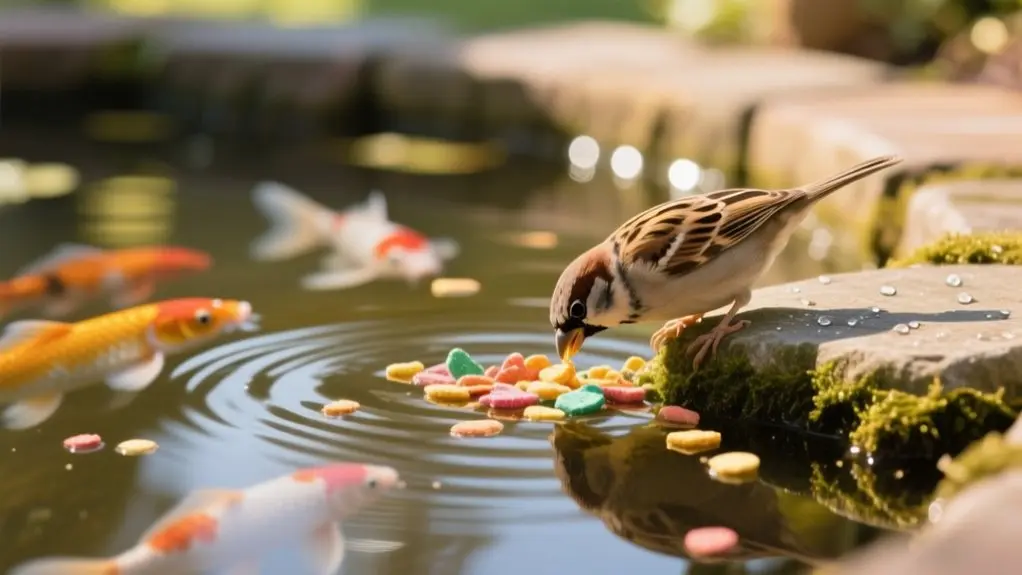
You can feed birds fish food occasionally, but it’s not ideal or safe as a regular diet for most species. Some birds like Blackbirds handle it fine, but many native birds risk nutritional imbalances or attract unwanted non-native species.
Fish food also may contain additives that aren’t healthy for birds. If you want to keep your feathered visitors healthy and happy, it’s best to understand the risks and learn how to feed them properly before offering fish food regularly.
What Is Fish Food Made Of And How It Affects Birds
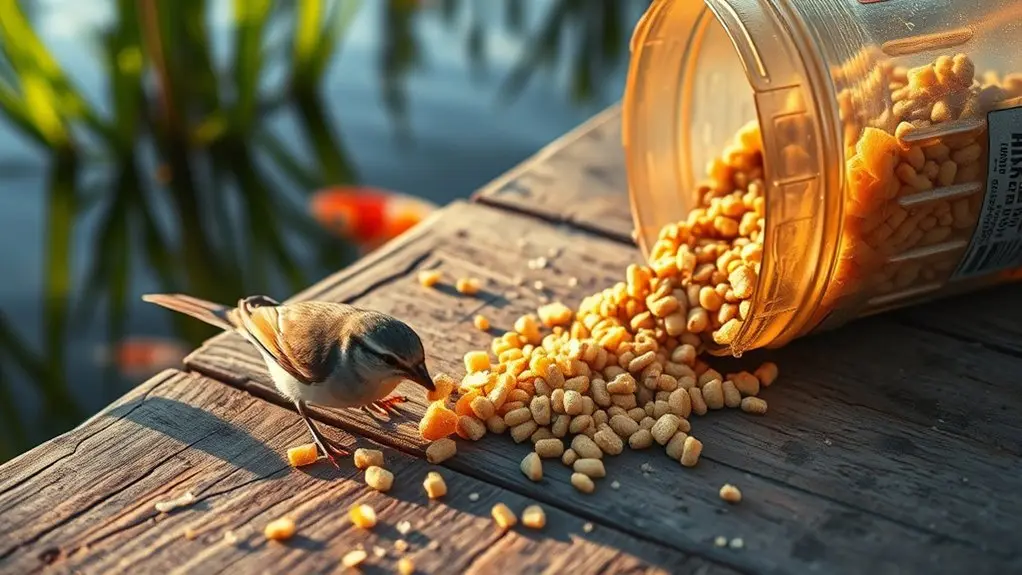
Although fish food like Koi sticks contains fish meal, vitamins, oils, and minerals that can offer some nutritional benefits, you should be cautious when feeding it to birds.
Fish food is designed primarily for aquatic creatures, so its ingredients don’t always match what various bird species need.
Some birds, like Blackbirds, may eat fish food without problems, but many native bird species rarely encounter such diets in the wild.
The fish content can be considered “cannibal food” in an avian context, which might cause nutritional imbalances.
You might notice non-native birds, such as starlings, attracted to fish food, but that doesn’t guarantee it’s healthy for all birds.
Always keep an eye on how different bird species respond if you decide to offer fish food.
Can Birds Safely Eat Fish Food?
You might wonder if it’s safe to offer fish food like Koi sticks to birds after learning what it contains.
While fish food can provide vitamins, minerals, and protein, not all birds need these nutrients in the same form.
Some species, like Blackbirds, may safely eat fish food, but many native birds don’t naturally consume it.
Certain birds, such as Blackbirds, can safely eat fish food, unlike many native species that don’t naturally consume it.
Feeding fish food can also attract non-native birds that dominate feeders, which might disrupt local ecosystems.
If you decide to feed the fish food to birds, monitor them closely for any signs of illness.
Always remember that birds need a balanced diet suited to their species, so fish food shouldn’t replace their regular food.
Use it cautiously and only as an occasional supplement rather than a primary source.
Which Bird Species Are Most Likely To Eat Fish Food?
Which bird species are most likely to eat fish food? You’ll often find species like Blackbirds and Starlings munching on fish food, including Koi sticks, without issues.
These birds, especially non-native ones, are opportunistic feeders and won’t hesitate to take advantage of easy meals.
Larger birds that frequent ponds or water bodies, such as ducks and herons, are also drawn to fish food because it complements their natural diet.
While native birds usually don’t depend on fish food, those near aquatic environments may incorporate it regularly.
If you feed fish food around your yard, keep an eye on the birds’ health to avoid nutritional imbalances.
What Are The Pros And Cons Of Fish Food For Birds?
Birds like Blackbirds and Starlings may enjoy fish food such as Koi sticks, but feeding it to birds comes with both benefits and drawbacks.
On the plus side, fish food often contains beneficial vitamins and minerals that can supplement their diet. Some birds safely consume it without adverse effects, making it a convenient alternative bird food to feed birds occasionally.
Fish food provides essential vitamins and minerals, offering a safe, convenient occasional supplement for some birds.
However, fish food isn’t a natural diet for most birds and might attract non-native species like starlings, which could disrupt local ecosystems. You also risk birds developing a dependency on unnatural food sources.
When you feed birds fish food, it’s essential to clean feeders regularly and monitor their health to prevent disease. Balancing these pros and cons helps you decide if fish food fits your bird-feeding routine.
What Risks Does Fish Food Pose To Wild Birds?
Although fish food might seem like a convenient option, it poses several risks to wild birds due to its unsuitable nutrient profile and additives.
When you offer fish food at your feeding station, you might unintentionally expose birds to high fat levels that can cause obesity and other health issues.
Fish food often contains preservatives and artificial colors that birds’ digestive systems can’t handle well.
Plus, feeding fish food can attract non-native species like starlings, which may outcompete native birds and disrupt local ecosystems.
By relying on fish food, you encourage unhealthy eating habits since it doesn’t meet most birds’ needs for seeds, fruits, and insects.
How Fish Food Nutrients Compare To Bird Diets
Since fish food is designed for aquatic animals, its nutrient profile doesn’t align well with what wild birds need. While fish food contains proteins, fats, vitamins, and minerals, bird diets call for different balances and specific nutrients like calcium, which fish food lacks.
Here’s how fish food nutrients compare to bird diets:
- Fish food often includes cereals and oils that birds can digest, but fish proteins may not suit them.
- Birds need higher calcium levels for bone and egg health, rarely met by fish food.
- Some vitamins and minerals in fish food benefit birds, but the overall mix isn’t tailored for them.
- Feeding fish food might attract non-native species, disrupting local bird populations.
You’ll see that fish food isn’t an ideal match for most bird diets.
Is It Safe To Feed Leftover Fish Food To Backyard Birds?
You might wonder if leftover fish food from your aquarium can serve as an easy snack for backyard birds. While some species like Blackbirds may eat fish food like Koi sticks without immediate harm, it’s not a natural part of their diet.
Fish food contains fish meal, oils, and fats that don’t fully meet the nutritional needs of most backyard birds and could cause health problems over time. Although fish food has certain vitamins and minerals, its overall composition raises safety concerns.
Fish food’s oils and fats don’t meet backyard birds’ nutritional needs and may lead to health issues over time.
Plus, feeding leftover fish food might attract non-native species that disrupt your local bird population.
To keep backyard birds healthy and safe, it’s best to stick with species-appropriate food rather than relying on leftover fish food.
Alternatives To Fish Food For Feeding Wild Birds
If you want to give wild birds better nutrition, try offering high-energy seeds, fresh fruits, and protein-rich mealworms instead of fish food. These options are more suited to their needs and can help keep them healthy.
Another great idea is to plant native species in your yard. Not only does this attract birds naturally, but it also supports their diet all year round.
Plus, it creates a more inviting environment for them.
It’s also important to adjust what you provide depending on the season. Birds’ nutritional needs change throughout the year, so switching up their food helps meet those needs more effectively.
This way, you’re really helping them thrive.
Nutritional Bird Food Options
Although fish food might seem like a convenient option, wild birds thrive on a variety of natural foods that better meet their nutritional needs.
When it comes to bird feeding, offering options with a high oil content and balanced nutrients supports their energy and growth far better than fish food.
Consider these nutritional bird food options:
- Black oil sunflower seeds: rich in fats and protein, perfect for energy.
- Unsalted peanuts: provide essential fats and protein for sustained fuel.
- Fresh fruits like berries and apples (seedless): offer vitamins and moisture.
- Mealworms: excellent protein source, especially during nesting season.
Choosing these foods helps you support local birds’ health and reduces their dependence on unsuitable fish food.
Native Plant Benefits
When you plant native species in your garden, you create a natural food source that supports wild birds far better than fish food.
Native plants provide food like seeds, fruits, and nectar that match the birds’ dietary needs safely and nutritiously.
These plants have evolved alongside local bird species, ensuring the food you provide is both beneficial and familiar to them.
By incorporating native plants, you encourage birds to forage naturally, reducing their dependence on artificial feeding methods like fish food.
Plus, native plants attract a diverse range of bird species, boosting biodiversity and supporting your local ecosystem.
Besides, your garden gains beauty and helps conservation efforts, all while feeding wild birds in the healthiest, most natural way possible.
Seasonal Feeding Strategies
Native plants offer birds a natural source of nourishment, but supplementing their diet with seasonal feeding strategies can help meet their changing nutritional needs throughout the year.
By adjusting the foods you provide, you’ll support birds’ health and energy levels effectively.
Consider these alternatives to fish food:
- In winter, offer high-fat foods like suet and peanuts to supply essential calories.
- During spring, provide mealworms to support protein needs for nesting birds.
- Fresh summer fruits such as berries and grapes hydrate and nourish birds.
- In fall, supply high-energy foods like sunflower seeds to aid migrating birds.
Using these seasonal feeding strategies guarantees birds get a balanced diet year-round, promoting their wellbeing without relying on fish food.
How To Feed Fish Food To Birds Safely
Since not all fish foods are safe for birds, you should carefully check the ingredients before offering them at your feeder. Look for fish food free from harmful preservatives, additives, and fish meal, which can be toxic or unsuitable for birds.
Some fish foods, like koi sticks, are good for birds in moderation, especially species like Blackbirds that tolerate them well. Choose products containing beneficial vitamins and minerals, but remember fish food shouldn’t replace their primary diet.
Koi sticks can benefit birds like Blackbirds in moderation but should not replace their main diet.
When introducing fish food, offer small amounts and observe the birds closely for any adverse reactions.
Keep your feeding area clean to prevent disease spread.
Signs Birds May React Negatively To Fish Food
You’ll want to keep an eye out for digestive issues, like vomiting or unusual droppings, when your bird tries fish food.
It’s also important to watch for behavioral changes—things like lethargy can be a sign that your bird isn’t reacting well.
Plus, some ingredients and additives in fish food might be toxic or cause allergies, so it’s a good idea to stay alert.
Digestive Issues In Birds
Although fish food might seem like a convenient option, it can cause digestive issues in birds because their systems process nutrients very differently.
Fish food often contains high protein levels and fats that bird digestive systems aren’t designed to handle. This can lead to digestive distress and even long-term health problems.
Watch for these signs of digestive issues in your bird:
- Diarrhea or vomiting
- Decreased appetite and lethargy
- Abnormal droppings
- Gastrointestinal upset due to rich oils and fats
If you notice any of these symptoms after feeding fish food, stop immediately and consult a vet.
Birds need specific nutrients, and fish food can disrupt their delicate digestive balance.
Behavioral Changes Observed
Digestive problems aren’t the only way fish food can affect birds; their behavior can change noticeably as well. You might observe behavioral changes like lethargy or reduced activity when birds struggle with fish-based diets.
Some birds develop a strong preference for fish food, losing interest in their natural diet, which impacts their overall health.
Furthermore, feeding fish food can attract non-native species such as house sparrows, which may outcompete native birds and disrupt local ecosystems.
You should also be aware that fish food encourages larger bird congregations at feeders, increasing disease transmission risks.
Over time, these factors might alter migration patterns and nesting habits, showing that fish food can trigger significant behavioral shifts in birds beyond immediate digestive issues.
Toxic Ingredient Risks
When birds consume fish food regularly, they may react negatively to certain ingredients like fish meal, oils, or artificial additives.
These toxic ingredient risks can lead to digestive issues and other health problems. Watch for signs your bird mightn’t tolerate fish food well, including:
- Lethargy or unusual tiredness
- Vomiting or regurgitation
- Changes in droppings, such as diarrhea or discoloration
- Gastrointestinal distress, like bloating or discomfort
Fish food often contains proteins and oils that birds aren’t adapted to digest.
Artificial colors or preservatives can also worsen their reactions. If you notice any of these symptoms, stop feeding fish food immediately and consult a vet.
Monitoring your bird’s response closely helps prevent serious health problems linked to these toxic ingredient risks.
Best Practices For Feeding Birds And Protecting Their Health
Since birds have unique nutritional needs, you shouldn’t rely on fish food as a regular part of their diet. Instead, focus on feeding them a varied selection of bird-safe foods like seeds, fruits, and insects to keep them healthy.
Offering a balanced diet tailored to the species helps prevent nutritional imbalances and digestive issues.
Providing species-specific balanced diets prevents nutritional deficiencies and supports healthy digestion in birds.
You should also clean feeders regularly to reduce the risk of disease and watch for any signs of illness among visiting birds.
By maintaining a clean environment and providing proper nutrition, you support their overall well-being.
When And Why You Should Avoid Feeding Fish Food To Birds
Although it might seem convenient, feeding fish food to birds can cause more harm than good. Fish food often contains ingredients like fish meal and high-fat content that aren’t suitable for birds and can lead to health issues.
You should avoid feeding fish food to birds because it disrupts their natural diet and causes nutrient imbalances.
Also, artificial preservatives and colorants in fish food may harm bird health over time.
It attracts non-native birds, upsetting the local ecosystem.
Encouraging fish food consumption can promote unhealthy feeding behaviors, increasing disease risk.
Frequently Asked Questions
Can Feeding Fish Food to Birds Affect Their Migration Patterns?
Yes, feeding fish food to birds can affect their migration behavior.
When you offer birds this non-natural diet, you risk altering their nutritional intake, which impacts their energy levels and overall health.
This nutritional impact may reduce their natural drive to migrate, as they rely more on easily accessible food sources.
Over time, you might notice changes in their migration timing and patterns due to these dietary shifts.
Does Fish Food Attract Unwanted Pests or Predators When Left Outside?
Absolutely, leaving fish food outside can turn your yard into a pest magnet overnight!
You’ll attract everything from rats to raccoons, throwing your pest control efforts into chaos.
These critters love the protein and oils, and their presence disrupts local feeding habits.
To keep unwanted predators away and maintain a balanced environment, you’ve got to clean up leftover fish food regularly.
It’s the best way to protect your space and keep pests at bay.
How Should Fish Food Be Stored to Maintain Its Quality for Birds?
You should store fish food in airtight storage containers to maximize freshness duration and protect it from moisture, heat, and pests.
Keep the containers in a cool, dry place away from strong odors or chemicals that might affect the food’s quality.
Regularly check the food for signs of spoilage and always respect expiration dates.
Proper storage guarantees the fish food stays nutritious and appealing for your birds over time.
Can Fish Food Cause Allergies or Sensitivities in Pet Birds?
Yes, fish food can cause allergies or sensitivities in pet birds. You might notice allergy symptoms like feather plucking, itching, or changes in droppings if your bird reacts poorly.
Because birds have different nutritional needs than fish, fish food’s ingredients can lead to nutritional differences that harm your bird’s health.
It’s best to watch for these signs and consult your vet before feeding fish food to avoid problems.
Is Fish Food More Cost-Effective Than Traditional Birdseed Mixes?
Yes, fish food is often more cost-effective than traditional birdseed mixes when you do a cost comparison. It tends to be cheaper and packed with vitamins and minerals, which can boost the nutritional value for some birds.
However, you should consider your bird species’ specific dietary needs before switching, as fish food’s nutrients differ from birdseed.
Balancing cost savings with proper nutrition is key for your bird’s health.
Conclusion
So, can birds eat fish food? Sure, if you want to turn your backyard into a bizarre buffet experiment. While it’s packed with nutrients, it’s not exactly a feathered feast and might ruffle some feathers, literally.
You’re better off sticking to bird-friendly snacks unless you enjoy playing wildlife nutritionist with questionable results. Remember, just because you *can* feed fish food to birds, doesn’t mean you *should*. Nature deserves better than your “creative” menu.