
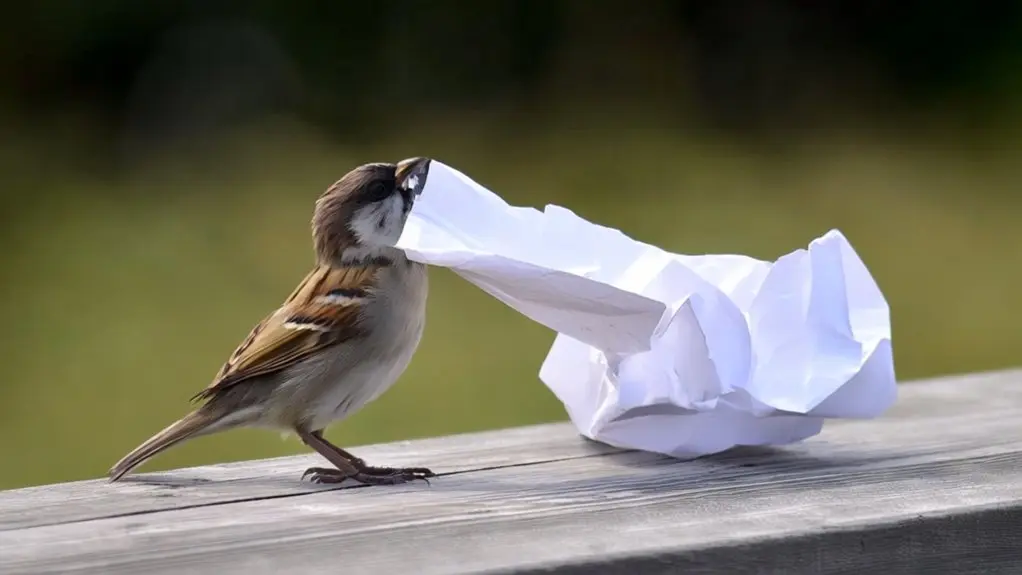
If your bird eats paper, it can face serious digestion issues like blockages, malnutrition, or even injury from sharp edges. Paper’s cellulose can’t be broken down, so it fills the stomach without providing any nutrients and causes discomfort. Ink and adhesives might add toxic risks.
Small amounts might pass safely, but if your bird eats a lot, you really need to keep a close eye on them. It’s important to know how to spot warning signs and prevent your bird from eating paper in the first place.
You can keep your bird safe by offering better alternatives that are safe and healthy. That way, you won’t have to worry about paper-related problems.
Effects of Paper Ingestion on Birds
Although it might seem harmless, when birds ingest paper, they can face serious health risks like digestive blockages that lead to malnutrition or even death if not treated. You should understand that swallowed paper can cause internal injuries or inflammation in their gastrointestinal tract, which may slow down or halt digestion.
Depending on the paper’s size and type, it might pass through slowly or get stuck, worsening the problem. Birds often accidentally ingest shredded or loose paper while foraging or building nests, not realizing the dangers.
When non-food materials like paper disrupt their digestion, birds struggle to absorb essential nutrients, weakening their health.
Why Paper Harms Birds’ Digestion
You mightn’t realize it, but paper contains fiber that birds just can’t digest. When they swallow it, this stuff can cause blockages in their digestive system.
And that makes it really hard for them to absorb the nutrients they need.
Paper’s Indigestible Fiber
When birds eat paper, their digestive systems struggle because the cellulose fibers in paper resist breakdown by their enzymes. Unlike natural foods, paper’s cellulose is indigestible to birds, passing through their system without providing any nutrition.
This means that when birds consume paper, it can accumulate in their stomach, limiting space for real food and leading to malnutrition.
You should understand that these fibers interfere with the bird’s ability to absorb essential nutrients since they can’t be broken down or processed. This isn’t just a harmless nuisance.
Paper isn’t part of their natural diet, so eating it often results in digestive disturbances and discomfort.
Protecting birds means preventing them from ingesting paper and other indigestible materials that compromise their digestive health. It’s really important to keep their environment free from such materials to keep them healthy.
Digestive Blockage Risks
Because birds can’t digest paper, eating it puts them at serious risk of digestive blockages. When birds consume paper, its indigestible fibers can build up in their gastrointestinal tract, leading to impaction and severe discomfort.
You should understand these key risks:
- Paper fibers build up in the stomach, blocking normal digestion and causing pain or starvation.
- Large amounts or chemically treated paper increase the likelihood of harmful blockages.
- Internal injuries may occur as the paper obstructs the digestive system, sometimes with fatal consequences.
Nutrient Absorption Interference
Beyond the risk of digestive blockages, eating paper disrupts how birds absorb nutrients from their food. Birds’ digestive systems are designed for soft, organic matter, so paper’s indigestible fibers interfere with nutrient absorption.
When a bird ingests paper, it can fill the stomach and create a false sense of fullness, causing the bird to eat less nutritious food. This leads to malnutrition because essential vitamins and minerals aren’t properly extracted from their natural diet.
Also, sharp paper edges can injure the digestive tract, which only makes the bird’s health worse.
If you see birds nibbling on paper, it’s important to understand that this behavior can harm their digestion and overall well-being. It can stop them from getting the nutrients they need to thrive.
Why Birds Peck or Eat Paper
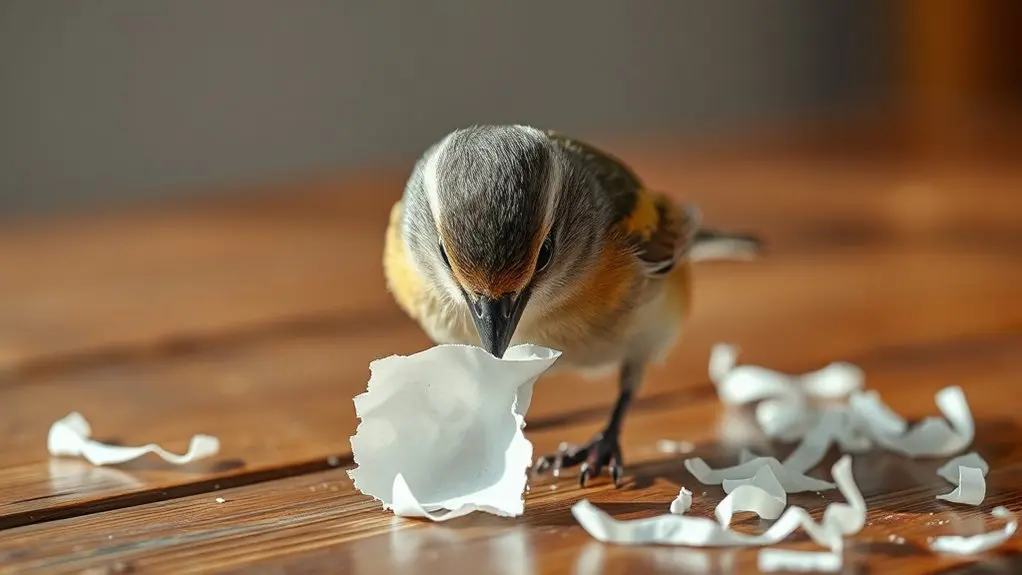
You might notice birds pecking at or even eating paper, and it’s often out of curiosity or boredom. Sometimes, it’s because they’ve certain nutritional needs they’re trying to satisfy.
Young birds, especially, can mistake paper for food since its texture feels similar.
On top of that, some birds actually use paper for building their nests. While small amounts of paper usually aren’t harmful, eating too much can cause serious digestive problems.
Reasons Birds Peck
Why do birds peck or eat paper? You might notice this behavior and wonder about its causes. Birds peck or eat paper for several reasons:
First, there’s curiosity and boredom. Birds explore their environment by pecking, and paper’s texture can be pretty intriguing, especially if they don’t have enough mental stimulation.
Sometimes, it’s about nutritional needs. Birds may chew paper to make up for missing nutrients, especially if their diet isn’t quite complete.
Also, it’s natural behavior and attraction. Species like parrots chew paper to keep their beaks healthy and stay mentally active.
Plus, ink or glue residues on paper can attract birds because they might mistake it for food.
If you care for birds, knowing these reasons can help you create a richer environment for them. It also helps you keep an eye on their behavior without worrying too much.
Paper Ingestion Effects
Understanding the reasons behind birds pecking or eating paper is important, but it’s equally vital to take into account the effects this behavior can have on their health.
When birds ingest small amounts of paper, it usually doesn’t cause harm, but larger quantities can lead to serious issues like digestive blockages or malnutrition.
Paper often contains inks or adhesives, which may introduce toxins if consumed in significant amounts.
Birds also peck at paper to use as nesting material, sometimes swallowing pieces accidentally.
The texture and color of paper can attract birds, especially when natural food sources are limited.
If you notice a bird eating paper frequently, it’s important to guarantee it has safe and appropriate alternatives for foraging and nesting to protect its well-being.
That way, you can help keep the bird healthy and safe.
Types of Paper Birds Commonly Ingest
Although birds don’t intentionally seek out paper as food, they often ingest materials like newspaper, cardboard, notebook pages, and tissue paper while searching for food or nesting supplies. You should know that these papers can vary greatly in composition and potential harm.
Birds may accidentally ingest various types of paper while foraging or nesting, each with differing risks.
Here are the most common types birds accidentally consume:
1. Newspaper and cardboard
Frequently found in urban and suburban environments, these can contain inks and dyes that may be toxic.
2. Notebook and printer paper
Often mistaken for natural fibers, these papers usually have coatings or chemicals that can irritate a bird’s digestive system.
3. Tissue paper
Soft and lightweight, birds might use it for nesting, but ingesting large amounts may cause blockages.
Understanding these helps you recognize how environmental debris impacts bird health.
Signs Your Bird Ate Paper and What to Do
Since birds often come into contact with various types of paper, it’s important to recognize the signs that your bird may have ingested some. Look for droppings containing undigested paper fibers or noticeable changes in stool consistency.
If you notice your bird excessively chewing or picking at paper, it might’ve eaten some. Pay close attention to symptoms like lethargy, loss of appetite, or signs of abdominal discomfort, as these could indicate a blockage caused by paper ingestion.
If you suspect your bird has eaten paper, contact an avian veterinarian promptly for guidance and possible treatment. Acting quickly helps guarantee your bird’s safety and well-being.
How to Stop Birds From Eating Paper
When you want to protect your bird from eating paper, taking proactive steps can make all the difference. You need to reduce your bird’s access to paper and discourage the behavior effectively.
Here’s how you can do it:
Apply a non-toxic, bitter-tasting spray on paper surfaces to deter pecking without harming your bird. Use physical barriers like mesh or netting around paper items, or store paper in sealed containers and out of reach.
Providing your bird with alternative toys or food can redirect its attention and satisfy its natural chewing instincts.
Also, make sure to regularly check for and remove any loose paper in your bird’s environment. These simple actions will help keep your bird safe and prevent accidental ingestion.
Safe Alternatives to Paper for Birds
Reducing your bird’s access to harmful paper is a great start, but offering safe alternatives helps satisfy their natural chewing instincts without risking their health. You can provide plain, unscented, non-glossy paper in moderation, but it’s safer to focus on untreated wood, natural fibers, and bird-safe toys made for enrichment.
Avoid any paper with ink, dyes, or adhesives, as these are toxic if ingested.
Commercially made bird toys and treats designed for chewing stimulate your bird mentally and physically while keeping them safe.
Additionally, natural branches and foraging toys encourage healthy behaviors and reduce the risk of your bird turning to unsafe paper.
When to See a Vet for Paper Ingestion
If your bird swallows a large amount of paper or shows signs like choking, trouble breathing, or unusual tiredness, you should seek veterinary care immediately. Paper can cause blockages or internal damage that need prompt attention.
You should contact a vet if you notice vomiting, loss of appetite, or abdominal swelling, which might mean there’s a gastrointestinal obstruction. Also, watch for straining during defecation or abnormal behavior—these could be signs of discomfort or a blockage.
If symptoms get worse or your bird shows signs of distress like lethargy or difficulty breathing, don’t wait to get help. Small amounts of paper often pass without issue, but if you think your bird is uncomfortable or obstructed, it’s better to be safe and ask a professional.
Quick veterinary intervention can prevent serious complications and help keep your bird healthy. So, when in doubt, reach out to your vet right away!
Frequently Asked Questions
Can Paper-Eating Behavior Indicate Other Health Issues in Birds?
Yes, if you notice your bird eating paper, it might signal nutritional deficiencies, stress, or underlying health issues like pica. You should monitor this behavior closely and consult a vet to guarantee your bird stays healthy and happy.
It’s always better to catch these signs early. So, don’t hesitate to reach out to a professional if something feels off. Your bird’s well-being is worth it!
Does the Color or Ink on Paper Affect Its Toxicity to Birds?
Colors on paper can be a double-edged sword for your bird. Some inks contain harmful chemicals that may cause poisoning, while bird-safe inks minimize risk.
Always check ink ingredients to keep your feathered friend safe and healthy. It’s better to be cautious than sorry when it comes to their well-being.
Are Certain Bird Species More Prone to Eating Paper Than Others?
Yes, you’ll find parrots and crows more prone to eating paper due to their curiosity and strong beaks. These birds are naturally inquisitive and often explore objects with their mouths.
On the other hand, ground-feeders like blackbirds may ingest paper accidentally during foraging or nesting. They don’t usually seek it out but might come across it while looking for food or building materials.
Can Birds Digest Paper if It’s Made From Natural Fibers Only?
Imagine a bird pecking at soft, natural fiber paper. Yes, you’ll find they can partially digest it. But don’t be fooled. Their enzymes can’t fully break it down.
Is Paper Ingestion More Common in Wild Birds or Pet Birds?
You’ll find paper ingestion is more common in pet birds because they chew household items frequently. Wild birds rarely eat paper intentionally, only accidentally when foraging in littered areas. This poses less risk overall.
Conclusion
Did you know that up to 30% of pet bird owners report their birds nibbling on paper? While it might seem harmless, paper can cause serious digestive issues for your feathered friend. Understanding why birds eat paper and spotting the signs early is essential to keeping them safe.
By providing safe alternatives and knowing when to seek veterinary help, you can protect your bird’s health and keep their curious nature from causing harm. It’s all about staying informed and being proactive. Your bird will thank you for it!