
You can safely feed your bird flax and chia seeds in moderation to boost its nutrition and feather health. Flax seeds provide omega-3s and amino acids for strong feathers and heart health, while chia seeds add fiber, antioxidants, and calcium for digestion and bone strength.
Grinding flax and soaking chia helps with digestion. Overfeeding may cause digestive upset or skin issues. If you want to understand proper feeding amounts, risks, and signs to watch for, keep exploring what these seeds really offer.
Nutrients in Flax and Chia Seeds for Birds
Because flax and chia seeds pack a variety of essential nutrients, they make excellent additions to your bird’s diet. Flax seeds are especially rich in omega-3 fatty acids, which support overall avian health.
Chia seeds, on the other hand, provide more antioxidants than many other seeds, helping protect your bird from oxidative stress. Both flax seeds and chia seeds supply dietary fiber that aids digestion and prevents gastrointestinal problems.
Chia seeds also offer five times more calcium than milk, which strengthens your bird’s bones and beak.
Plus, the protein in these seeds delivers essential amino acids that help maintain muscle and provide energy for active birds.
Including flax seeds and chia seeds in your bird’s meals guarantees it gets a balanced blend of crucial nutrients every day.
How Flax and Chia Seeds Improve Your Bird’s Feathers
Three key benefits of flax and chia seeds can directly improve your bird’s feathers. These seeds contain omega-3 fatty acids that promote healthy feather growth and enhance feather quality.
They also provide essential amino acids that support keratin production, crucial for strong, well-structured feathers.
Furthermore, antioxidants in these seeds protect feather follicles from oxidative stress, reducing damage and feather plucking.
Whether feeding a wild bird or a pet, including flax and chia seeds alongside treats like peanut butter can boost feather luster, making feathers shinier and more vibrant.
Their high fiber content aids digestion, ensuring your bird absorbs all these nutrients effectively.
Can Birds Safely Digest Flax and Chia Seeds?
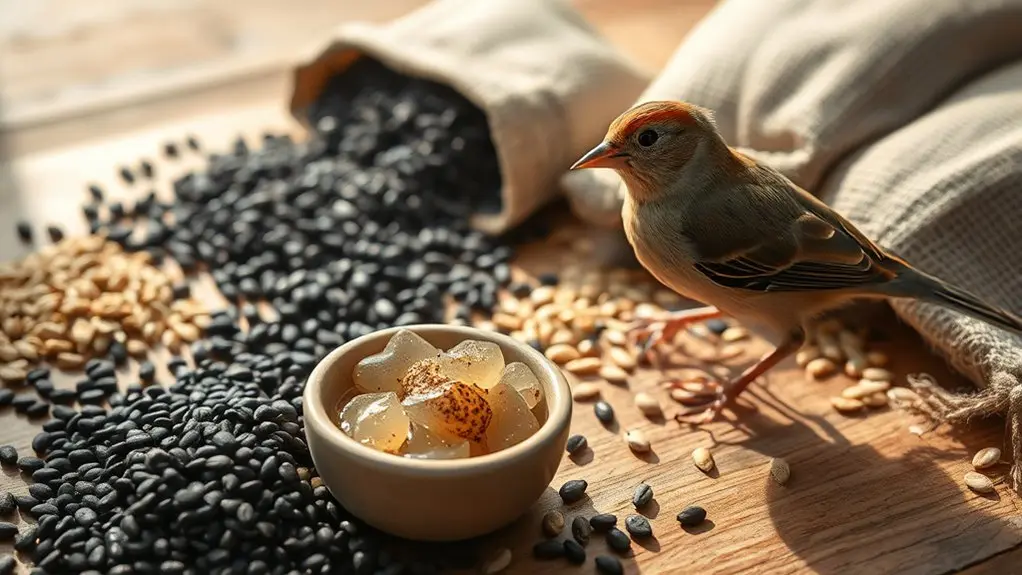
How well can birds digest flax and chia seeds? Understanding the seed digestion process is key when adding these to your bird’s diet. Birds’ dietary habits vary, so their seed variety preferences impact how they process these seeds.
Keep in mind:
- Flax seeds need to be ground because whole flax seeds may pass undigested, limiting benefits.
- Chia seeds absorb water and form a gel that helps with hydration and energy absorption.
- Both seeds have high fiber content, which supports gut health and smooth digestion.
- Introduce seeds gradually to avoid upsetting your bird’s digestive system.
How Much Flax and Chia Seeds Should You Feed Birds?
You should feed flax and chia seeds to your birds in small, measured amounts.
For small birds, about a teaspoon daily is plenty, and for larger birds, you can go up to a tablespoon.
It’s a good idea to spread out their servings throughout the week to keep their diet balanced.
That way, they get the benefits without overdoing it.
Keeping an eye on portion sizes really helps prevent digestive issues and keeps your birds healthy and happy.
Recommended Daily Seed Amount
Feeding birds no more than 1 teaspoon of flax or chia seeds per 100 grams of their body weight daily helps provide essential nutrients without overwhelming their digestive system.
This balance supports their health while offering seed variety benefits. To get it right, consider these points:
Introduce seeds gradually to avoid digestive upset and monitor reactions.
Limit flax and chia seeds to under 10% of the overall diet.
Follow feeding frequency guidelines to keep treats occasional, not constant.
Consult a vet for tailored advice based on species and health.
Seed Serving Frequency
Offering flax and chia seeds up to a quarter teaspoon daily guarantees your bird benefits from their nutrients without overloading on fats. You should introduce these seeds gradually, watching for any digestive issues.
Remember, flax and chia shouldn’t exceed 10% of your bird’s total diet to maintain seed variety benefits alongside fruits, vegetables, and pellets.
To enhance digestibility, soak chia seeds before feeding; this also provides hydration. Proper seed preparation methods matter, so avoid giving dry seeds exclusively.
For freshness, follow seed storage tips by keeping them in airtight containers away from heat and light.
Always consult your vet to tailor feeding frequency to your bird’s species and health needs, ensuring a balanced, safe diet.
Portion Size Guidelines
Determining the right portion size of flax and chia seeds depends on your bird’s size and dietary needs. You want to use portion control tips and seed measurement techniques to keep servings safe and balanced. Typically, offer about 1/4 to 1/2 teaspoon daily or a few times a week, depending on your bird.
Here are some bird feeding strategies to help:
- Introduce seeds gradually to prevent digestive upset
- Keep seeds to 5-10% of your bird’s overall diet
- Adjust portions based on species and individual tolerance
- Monitor your bird closely for any adverse reactions
Symptoms of Feeding Too Many Flax and Chia Seeds
If you feed your bird too many flax and chia seeds, you might notice some digestive upset, like diarrhea or bloating.
These seeds are healthy in moderation, but too much can cause trouble.
You could also see signs of nutrient imbalances, such as skin problems or inflammation.
It’s important to keep an eye out for these changes because they can mean your bird isn’t getting the right balance of nutrients.
Also, pay close attention to any shifts in your bird’s behavior.
Sometimes, that’s the first sign something’s off with their diet.
Digestive Upset Signs
When you feed your bird too many flax and chia seeds, you might notice signs of digestive upset like diarrhea or softer droppings due to their high fiber content.
These fiber effects can disrupt your bird’s digestive health, especially if you don’t balance the seed variety in their diet.
Overconsumption can cause bloating as the seeds absorb water and expand in the gut.
Watch for these common signs:
- Diarrhea or unusually soft droppings
- Bloating or gas causing discomfort
- Decreased appetite and lethargy
- Behavioral changes indicating distress
Introducing flax and chia seeds gradually helps you monitor how your bird responds.
If symptoms persist, consult a vet to protect your bird’s digestive health and guarantee a balanced diet.
Nutrient Imbalance Effects
Although flax and chia seeds offer valuable nutrients, feeding your bird too many can throw off its nutrient balance. These seeds are rich in omega-3 fatty acids, and overfeeding them disrupts the omega balance by skewing the ratio of omega-6 to omega-3.
This imbalance can interfere with nutrient absorption, causing deficiencies in essential vitamins and minerals. You might notice symptoms like feather plucking, lethargy, or digestive issues.
Moreover, their high fiber content can lead to gastrointestinal distress, such as diarrhea or constipation. Overfeeding these calorie-dense seeds may also cause weight gain and related health problems.
To prevent this, make certain your bird’s diet includes dietary diversity, offering a variety of foods that support balanced nutrient intake and overall well-being.
Behavioral Changes Observed
Feeding your bird too many flax and chia seeds doesn’t just affect its nutrient balance. It can also lead to noticeable changes in behavior. You might spot some troubling signs that signal something’s off because of irritability triggers and aggression linked to overfeeding these seeds.
Watch for signs like increased irritability or agitation during interactions, unexpected aggression toward other birds or humans, decreased activity or lethargy showing low energy levels, and changes in feather condition and molting patterns.
These symptoms often stem from digestive discomfort, mineral absorption issues, or omega-3 imbalances caused by too many flax and chia seeds.
If you notice these behavioral changes, it’s time to adjust their diet to restore balance and keep your bird happy and healthy.
How to Keep Flax and Chia Seeds Fresh
To keep flax and chia seeds fresh, you need to store them properly in airtight containers to block air that causes oxidation and rancidity.
Using effective seed storage methods, place the containers in a cool, dark place or refrigerate them to extend seed shelf life.
Store seeds in a cool, dark place or the refrigerator to keep them fresh longer.
Heat and light can quickly degrade seed quality indicators like smell and color, so regular checks help spot spoilage early.
Remember, flax seeds should be ground just before feeding to preserve freshness and nutrient absorption, while chia seeds can stay whole thanks to their protective shell.
Flax vs. Chia Seeds: Which Is Better for Birds?
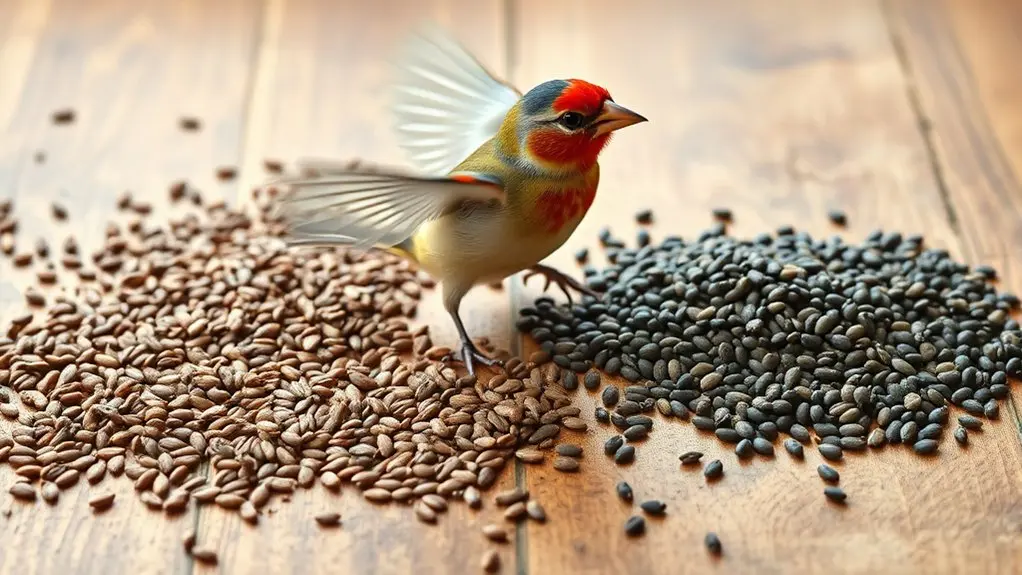
When deciding between flax and chia seeds for your bird, what really matters is their unique nutritional benefits. Both offer valuable nutrients, but their seed preferences often depend on what your bird needs most.
Flax benefits include omega-3 fatty acids that support heart and feather health.
Chia advantages come from higher fiber and antioxidants, promoting digestion and immune strength.
Chia seeds provide more calcium, essential for strong bones, while flax may need grinding for better digestibility.
Both seeds help with weight management, but chia’s fiber content keeps birds feeling fuller longer.
Ultimately, mixing flax and chia seeds can balance these benefits, catering to your bird’s overall health and dietary needs.
How to Introduce Flax and Chia Seeds Into Your Bird’s Diet
Now that you understand the unique benefits of flax and chia seeds, you can start introducing them into your bird’s diet carefully.
Begin with seed preparation techniques like grinding the seeds or soaking chia seeds to create a gel, making them easier for your bird to eat.
Mix small amounts into their regular food to avoid overwhelming their system, and watch closely for any digestive changes.
Pay attention to bird preference insights; some birds may prefer seeds in baked treats or mixed with water.
Use feeding schedule tips by offering these seeds in moderation, ensuring they complement rather than replace their main diet.
Gradual introduction using these methods helps your feathered friend enjoy the benefits without digestive issues.
How to Mix Flax and Chia Seeds With Other Foods
Although flax and chia seeds are powerful on their own, mixing them with other bird-safe foods can make their benefits even more accessible and enjoyable for your feathered friend.
Using smart seed combinations and mixing techniques can boost nutrition and texture enhancement in meals.
Try these ideas:
Sprinkle ground flax or whole chia seeds over fresh fruits and veggies to add crunch and nutrients.
Mix seeds into oatmeal or yogurt to create a smooth, nutrient-rich base.
Combine seeds with nuts or other seeds in a foraging toy to encourage natural behaviors.
Incorporate chia seeds into homemade bird treats; their gel-forming ability helps bind ingredients and improve texture.
These methods guarantee your bird enjoys varied textures and balanced nutrition while benefiting from flax and chia seeds.
Risks of Overfeeding Flax and Chia Seeds
Because flax and chia seeds pack a nutritional punch, feeding your bird too much can cause serious problems like digestive blockages, nutrient imbalances, and even obesity.
You need to pay close attention to seed preparation methods; for example, soaking chia seeds prevents them from expanding dangerously inside your bird’s digestive tract.
Proper seed preparation, like soaking chia seeds, is crucial to prevent digestive issues in birds.
Overfeeding can lead to gastrointestinal discomfort due to excess fiber and harmful cyanogenic compounds in flax seeds.
Also, high omega-3 levels can disrupt your bird’s dietary balance, affecting overall health.
Monitor your bird feeding habits carefully to avoid these risks.
How to Spot Allergic Reactions or Sensitivities in Birds
How can you tell if your bird is having an allergic reaction or sensitivity to flax or chia seeds? Watch for behavioral indicators like sudden aggression or lethargy, which often signal discomfort.
Physical signs can include skin irritations such as feather plucking or swelling around the beak and eyes.
Gastrointestinal issues are another key symptom to monitor, with vomiting or diarrhea indicating potential problems.
Keep an eye on these warning signs:
- Changes in behavior or activity levels
- Visible skin irritations or feather loss
- Swelling near the face or eyes
- Abnormal droppings in color, consistency, or frequency
Introducing these seeds gradually helps you spot sensitivities early and protect your bird’s health.
When to Consult a Vet About Your Bird’s Seed Intake
When should you see a vet about your bird’s seed intake? If your bird experiences digestive distress like diarrhea or vomiting after eating flax or chia seeds, consult a vet immediately.
Sudden weight loss or unusual behaviors such as lethargy can signal seed health risks affecting your bird’s well-being.
Persistent feather plucking or poor feather quality may indicate nutritional imbalances from an improper seed variety, so don’t hesitate to seek veterinary advice.
Skin irritations or allergic reactions, including swelling or redness, also require professional attention.
Understanding your bird’s dietary needs and balancing seed variety benefits with potential risks is essential.
Always monitor your bird closely and turn to a vet when signs point to health issues linked to seed intake, ensuring your pet stays healthy and happy.
Frequently Asked Questions
Can Baby Birds Eat Flax and Chia Seeds?
Yes, baby birds can eat flax and chia seeds if you prepare them properly.
For ideal baby bird nutrition, you should grind the seeds first to aid digestion and avoid digestive health concerns caused by whole seeds.
Introducing these seeds in moderation supports their development, but always consult a veterinarian before adding new seeds to their diet.
Proper seed preparation methods guarantee your baby bird benefits safely from these nutrient-rich options.
Are Flax and Chia Seeds Safe for Wild Birds?
Yes, flax and chia seeds are safe for wild birds when offered in moderation.
You’ll find their seed nutritional benefits valuable, as they provide omega-3 fatty acids and fiber that support wild bird diets.
Watching seed consumption patterns, you’ll notice birds enjoy these seeds alongside others, enhancing their overall nutrition.
Just avoid overfeeding flax seeds, since excessive intake might cause digestive issues, but including both seeds encourages a healthy, balanced diet for wild birds.
Do Flax and Chia Seeds Affect Bird Seed Shelf Life?
Imagine you’re storing bird seed on a warm kitchen counter. Flax and chia seeds can actually help by naturally extending seed storage methods through their oils, which deter spoilage.
Their presence impacts freshness positively, but you’ve got to watch out for nutritional degradation if the mix faces humidity or heat.
Proper storage, like keeping seeds cool and dry, guarantees these seeds maintain their benefits and keep your bird seed stash fresh longer.
Can Flax and Chia Seeds Help With Bird Weight Gain?
Yes, flax and chia seeds can help with bird weight gain benefits due to their high omega-3 fatty acids and calorie-dense nutrition.
When you compare seed nutrition, chia offers extra fiber for digestion, while flax provides lignans that support hormonal balance.
To maximize these benefits safely, follow feeding guidelines by introducing small amounts gradually.
This way, you’ll boost your bird’s diet with nutrient-rich seeds without causing digestive issues or overfeeding.
Are There Any Bird Species That Should Avoid These Seeds?
Yes, some bird species should avoid flax and chia seeds due to seed digestion challenges and species preferences.
Small birds like canaries and finches may struggle to digest these seeds properly, risking digestive issues.
Birds prone to obesity or with liver problems should skip them despite their nutritional benefits, as the high fat content can worsen health.
Always consider your bird’s species and consult a vet before adding these seeds to their diet.
Conclusion
You might be surprised to learn that just a small amount of flax or chia seeds, around 5% of your bird’s diet, can boost feather health and provide essential omega-3s. But remember, moderation is key.
Overfeeding these seeds can lead to digestive issues or allergies. Keep an eye on your feathered friend’s reactions and mix seeds with other foods to guarantee a balanced diet.
When in doubt, don’t hesitate to consult your vet for the best care.