
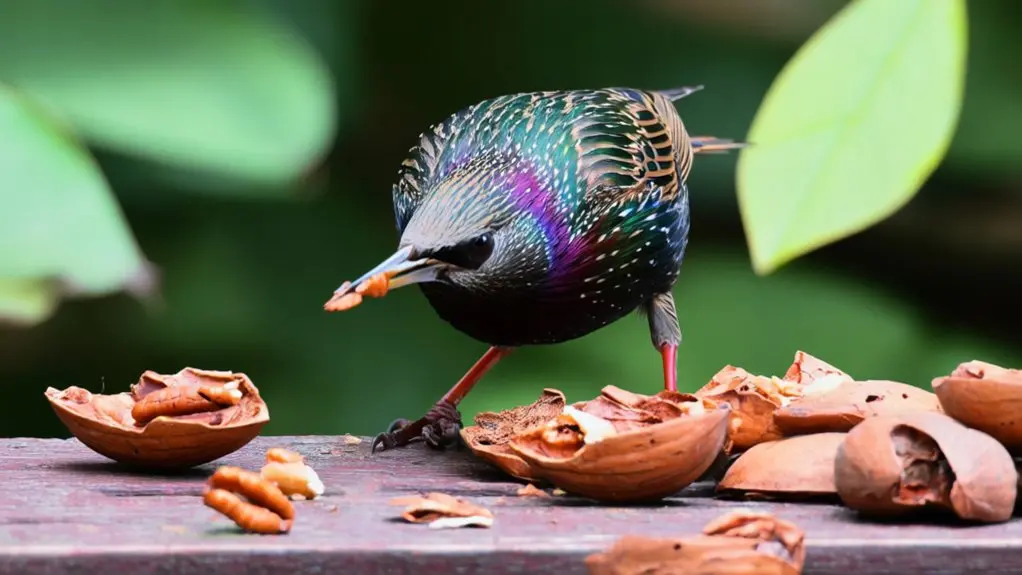
Yes, you can safely feed pecan nuts to many bird species if you offer unsalted, fresh, and properly prepared nuts in moderation. Break them into smaller pieces for smaller birds and avoid shells to prevent choking.
Watch for mold and store nuts correctly to avoid health risks. Use squirrel-proof feeders to protect your supply.
Pecans provide valuable fats, protein, and vitamins. Knowing specific feeding practices will guarantee the best benefits for your feathered visitors.
Nutritional Benefits of Pecan Nuts
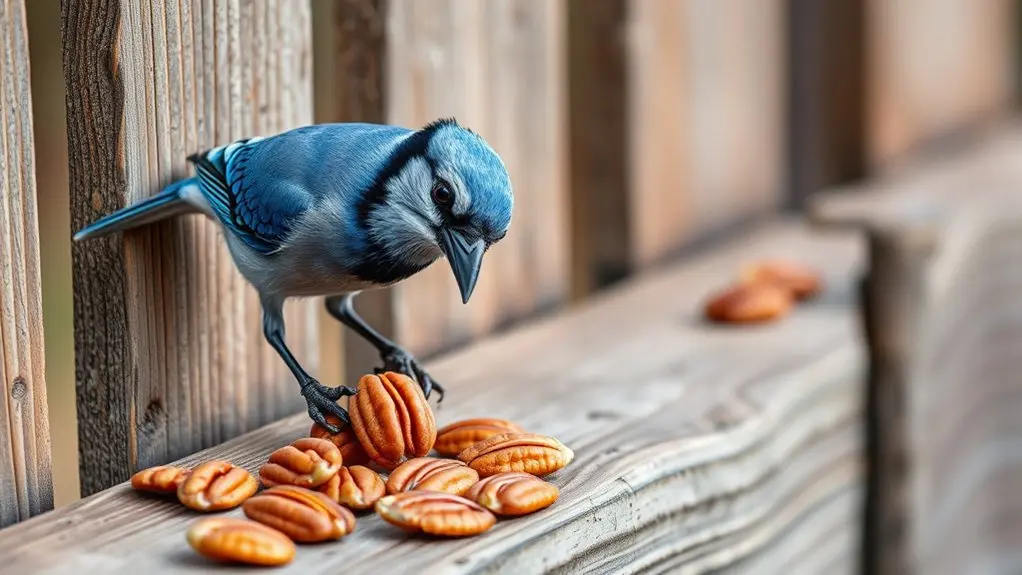
Why should you consider pecan nuts as a part of a bird’s diet? Pecan nuts provide a rich source of healthy fats, protein, and essential antioxidants, all essential for avian health. These nuts contain vitamins such as vitamin E and B-complex, which play a significant role in supporting immune function and overall well-being.
The high fat content offers a concentrated energy source, especially beneficial during colder months when birds require more calories. Additionally, pecans supply important minerals like magnesium, zinc, and manganese, which aid in metabolic processes.
When given in moderation, pecans can improve feather condition and promote healthy growth. So, incorporating pecan nuts thoughtfully into a bird’s diet can offer comprehensive nutritional support, enhancing vitality and resilience.
Safety Considerations for Feeding Pecan Nuts
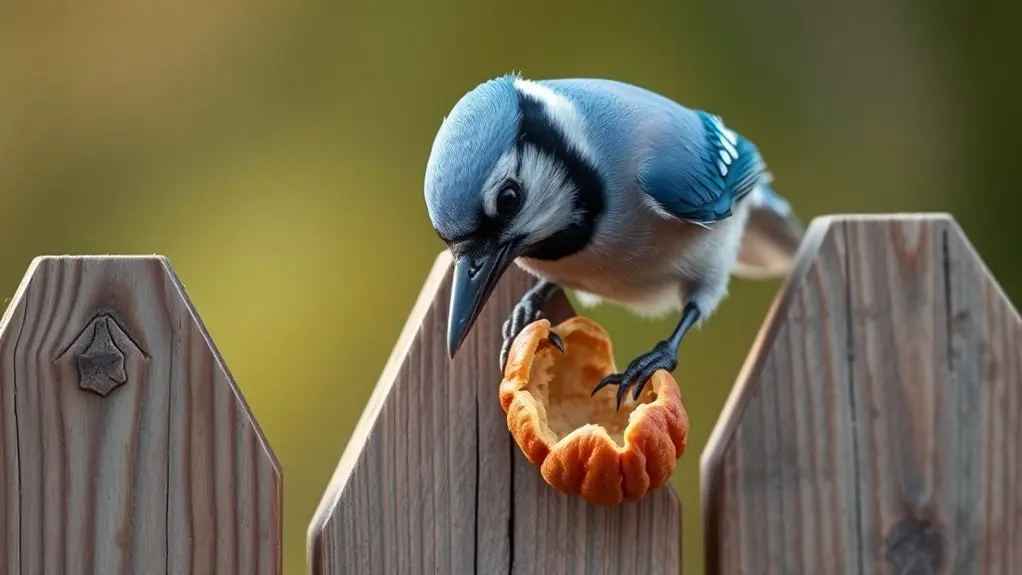
Although pecan nuts offer valuable nutrients, you must exercise caution when feeding them to birds to guarantee their safety. Always provide pecans that are unsalted and unseasoned, as salted or flavored varieties can be harmful.
To minimize choking risks, serve pecans shelled or broken into smaller pieces.
Make sure the nuts are fresh and free from mold, since spoiled nuts may lead to health complications. Additionally, regularly clean feeders to prevent mold, bacteria, or pest buildup that could contaminate the nuts. These measures help maintain a safe feeding environment.
This way, birds can enjoy the benefits of pecans without any adverse effects. Following these guidelines supports bird health while optimizing the nutritional advantages pecan nuts offer. It’s a simple way to keep your feathered friends happy and healthy!
Risks of Feeding Pecan Nuts to Birds
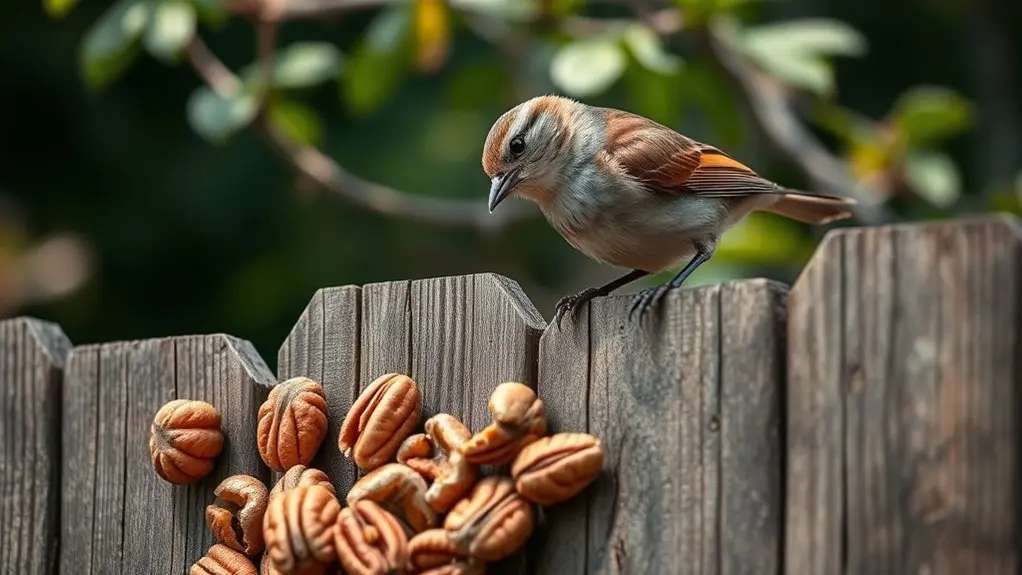
While taking precautions can reduce some dangers, feeding pecan nuts to birds still involves several risks that you should consider carefully. Pecan nuts contain high fat levels, which can cause obesity and related health problems if given excessively.
Improperly stored pecans may develop mold or bacteria, increasing toxicity or illness risks.
The natural oils in pecans might trigger digestive upset or allergic reactions in certain avian species. Additionally, the hard shells pose choking hazards or can damage a bird’s beak if not cracked properly.
- High fat content risks obesity and health issues
- Potential mold or bacterial contamination if stored poorly
- Natural oils may cause digestive or allergic problems
- Hard shells can cause choking or beak damage
These factors highlight the importance of cautious consideration before offering pecans to birds. So, it’s best to think twice and maybe explore safer snack options for your feathered friends.
How to Feed Pecan Nuts Safely
Because pecan nuts contain high fat levels and hard shells, you need to take specific precautions when feeding them to birds to guarantee safety and health. Always offer pecans unsalted, raw, and free from coatings or seasonings to avoid harmful substances.
Break the nuts into smaller pieces, which helps smaller bird species consume them effectively and minimizes waste.
Use squirrel-proof feeders or platforms to prevent squirrels from monopolizing the supply.
Store pecans in airtight containers in a cool, dry environment before feeding to inhibit mold growth and spoilage.
Limit the quantity of pecans provided to avoid overfeeding, ensuring birds maintain a balanced diet.
Bird Species That Enjoy Pecans
After confirming pecan nuts are prepared safely, you can focus on which bird species are most likely to benefit from offering them. Pecans provide high levels of healthy fats and protein, making them an excellent energy source, especially in colder months.
Different birds have varying preferences for pecan presentation. Larger species prefer whole nuts, while smaller birds do better with chopped or cracked pieces. The natural flavor of pecans attracts a diverse range of species.
Birds have unique nut preferences—larger ones enjoy whole pecans, smaller ones prefer chopped or cracked pieces.
Common birds that enjoy pecans include blue jays, which efficiently crack open whole nuts. Woodpeckers are attracted by the high-fat content. Chickadees favor smaller, manageable pieces. Nuthatches are known for caching nuts as a food reserve.
Offering unsalted, unseasoned pecans ensures these species safely benefit from this nutritious treat. It’s a simple way to support your local feathered friends!
How to Safely Introduce Pecans Into Your Bird’s Diet
You should start by offering your bird small, chopped pieces of unsalted, unseasoned pecans. This way, you can keep an eye on how well they accept the nuts and how their digestion handles it.
It’s a good idea to mix these nuts with their regular bird seed to add some variety to their diet without giving too much at once. Just make sure to watch your bird closely for any signs of allergic reactions or digestive problems while you’re introducing the pecans gradually.
Gradual Pecans Feeding
When introducing pecans into your bird’s diet, start with small, broken pieces to minimize digestive upset and allow gradual adjustment. This method helps your bird safely adapt to the new food while reducing risks.
Begin by mixing a tiny portion of unsalted, unseasoned pecans with regular bird seed or pellets to encourage acceptance.
Keep an eye on your bird carefully over several days before increasing the amount. This way, you can make sure there are no adverse reactions.
Gradually increasing the pecan quantity reduces the risk of choking or allergies and supports the development of a healthy preference for nuts.
Remember to always provide pecans free from coatings or additives to avoid health complications.
Offer small, broken pecan pieces initially.
Mix pecans with regular feed for acceptance.
Use only unsalted, unseasoned pecans.
Increase portions gradually while monitoring health.
Observing Bird Reactions
Although introducing pecans can enrich your bird’s diet, it’s important to closely observe its reactions during the first few feedings to ensure safety. Start with small, broken pieces of unsalted, fresh pecans. Watch carefully for any signs of discomfort, itching, swelling, or changes in behavior within a few hours.
You can mix pecans with foods your bird already knows and likes. This helps you see if your bird accepts the new food and also makes the experience less stressful. Keep initial servings small and only increase the amount if there are no negative reactions.
| Observation Aspect | What to Watch For | Action If Noticed |
|---|---|---|
| Physical Signs | Itching, swelling | Stop feeding pecans |
| Behavior Changes | Lethargy, irritability | Consult a veterinarian |
| Feeding Response | Acceptance or refusal | Adjust portion accordingly |
Nut Preparation Tips
Since pecans can pose choking hazards or cause adverse reactions if improperly prepared, it’s essential to serve them unsalted and free from any seasonings or coatings.
To guarantee your bird’s safety and well-being, follow these preparation tips:
Break pecans into small pieces or slices to reduce choking risk and make them easier to eat.
Introduce pecans gradually, keeping an eye on your bird for any adverse reactions or changes in behavior.
Make sure to remove any leftover pecans after 24 hours to prevent spoilage and mold growth, which can be harmful.
It’s also a good idea to combine pecans with a variety of nuts and seeds to promote a balanced and diverse diet.
Preventing Squirrels From Stealing Pecan Nuts
You can cut down on squirrels stealing your pecan nuts by using some clever deterrents, like squirrel-proof feeder designs and pole baffles. These tools make it harder for squirrels to reach your nuts, which is a big help.
Another trick is to set up designated feeding areas specifically for squirrels with pecans. This way, they get their treat in one spot and are less likely to bother your bird feeders.
When you combine these approaches, you’re not only protecting your pecan nuts but also giving local wildlife a little support. It’s a win-win all around!
Effective Squirrel Deterrents
How can you protect pecan nuts from persistent squirrel theft at your feeders? Squirrels really love pecans and often cause a lot of food loss meant for birds. To keep them at bay, try these science-backed tips.
First, put squirrel-proof cages or baffles on your feeders to physically block the squirrels from getting in.
Also, place your feeders at least 10 feet away from trees or other structures so squirrels can’t easily jump onto them.
Make sure to clean and move your feeders around regularly. This helps stop squirrels from getting too comfortable with one spot.
Some people set up separate feeding stations just for squirrels, which can help, but here we’re focusing on ways to protect the bird feeders directly.
Using these methods can really cut down on squirrel trouble. That way, your pecan nuts will stay safe and be there for the birds without encouraging squirrels to keep coming back for more.
Designated Squirrel Feeding Areas
Although squirrels are notorious for raiding bird feeders, creating designated feeding areas for them can effectively reduce this problem. By placing squirrel feeders away from bird stations, you minimize competition for pecan nuts, allowing birds to feed undisturbed.
Installing squirrel baffles on poles further limits their access to bird feeders by preventing climbing.
Providing squirrels with their own nut source satisfies their foraging needs, decreasing their motivation to steal pecans intended for birds. Managing feeding times can also help control squirrel activity around feeders.
This targeted approach diverts squirrels’ attention, preserving pecan nuts for avian consumption while maintaining ecological balance.
Implementing designated areas requires strategic placement and consistent maintenance to guarantee squirrels remain engaged and bird feeders stay protected from nut theft. It’s really about thinking ahead and keeping things organized so everyone gets what they need.
Squirrel-Proof Feeder Designs
When protecting pecan nuts from squirrels, employing squirrel-proof feeder designs considerably reduces nut theft while allowing birds to feed freely. These feeders use physical and mechanical deterrents that selectively restrict squirrel access based on size or weight.
To optimize protection, consider these strategies: use feeders with cages or barriers that let small birds in but block larger squirrels. You can also install baffles above or below feeders to stop squirrels from jumping or climbing.
Another option is weight-activated mechanisms that close access when they detect a squirrel’s weight. Mounting feeders on metal poles or using specialized hardware also helps keep squirrels from climbing.
Alternatives to Pecans for a Balanced Diet
Since pecans may not always be available or suitable, you can provide birds with several nutritious alternatives that support a balanced diet. Unsalted, raw almonds and walnuts offer similar healthy fats and nutrients and are safe when given in moderation. To reduce choking risks, especially for smaller birds, chop or break these nuts into manageable pieces.
Additionally, pistachios, macadamia nuts, and hazelnuts are viable substitutes, provided they’re free from salt, seasoning, or coatings that could harm birds. Including a variety of these nuts alongside regular bird seed enhances dietary diversity and nutritional balance for both pet and wild birds.
Frequently Asked Questions
Can Baby Birds Eat Pecan Nuts?
Yes, you can feed baby birds small, chopped pecan nuts. Make sure they’re unsalted and fresh. Giving them in moderation is important to prevent choking and digestive issues.
Try to introduce pecans gradually alongside a balanced diet. This way, you ensure ideal nutrition and safety for the baby birds.
Do Pecan Shells Pose a Choking Hazard to Birds?
Yes, pecan shells pose a choking hazard to birds, especially smaller species. You should remove shells before feeding to prevent airway obstruction and internal injury.
Sharp shell fragments can cause digestive tract irritation and blockages, so it’s really important to keep those shells away from your feathered friends. Better safe than sorry!
How Often Can Birds Have Pecan Nuts as Treats?
Like clockwork, you should offer pecan nuts no more than two to three times weekly. This frequency helps prevent excessive fat intake, ensuring your bird maintains a balanced diet and avoids potential health complications.
Keeping treats like pecans occasional is key. It’s all about balance, so your feathered friend stays healthy and happy.
Are Pecan Leaves or Tree Parts Safe for Birds?
Yes, pecan leaves and tree parts are safe for birds in small amounts if untreated. You should make sure they’re pesticide-free and supervise to prevent ingestion of large quantities. Eating too much might cause digestive issues or toxicity.
Can Wild Birds Benefit From Pecan Nuts in Feeders?
Yes, wild birds benefit from pecan nuts in feeders by gaining essential fats and nutrients. You should offer unsalted, cracked pecans moderately to support energy levels, especially in winter.
This helps promote their health and attracts diverse bird species to your feeder. It’s a simple way to give birds a tasty, nutritious boost during colder months.
Conclusion
Feeding pecan nuts to birds can be a nutritional treasure trove when done thoughtfully. You’ll open up essential fats and proteins, but you also need to watch out for risks like choking and mold toxicity. Introducing pecans gradually and in moderation is key.
This way, you create a safe dietary bridge for your feathered friends. Also, protecting these treats from squirrels makes sure the birds get to enjoy them fully. With a little care, pecans can really enrich your bird’s diet.
Think of it like a well-tuned symphony of nature’s nutrients coming together just right. It’s all about balance and attention. Keep these tips in mind, and your birds will thank you!