
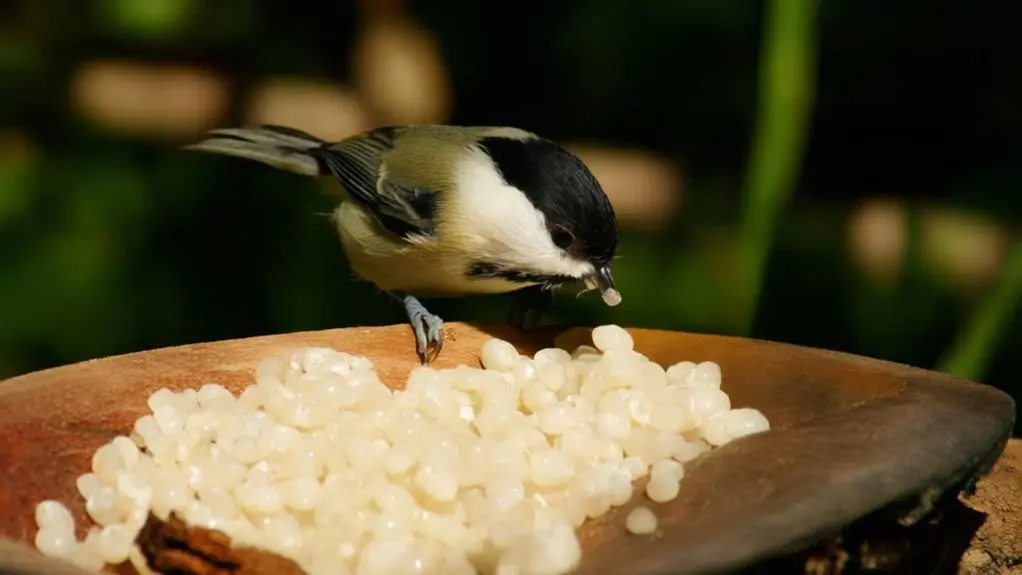
Yes, you can safely feed birds pearl barley when it’s properly prepared. Pearl barley is a nutritious, fiber-rich grain that supports digestion, energy, and overall health.
You’ll need to rinse, soak, and cook it thoroughly, serving it plain and in moderation to avoid risks like choking or nutritional imbalance. It’s especially beneficial for waterfowl like ducks.
If you want to understand its full benefits, preparation steps, and which birds gain the most, there’s more to explore.
What Is Pearl Barley and Why Birds Need It
Although pearl barley undergoes processing to remove its outer husk and bran layers, it remains a valuable grain for birds due to its rich content of fiber, vitamins, and minerals. You’ll find that this polished grain offers essential nutrients that support energy metabolism and overall health, especially for waterfowl like ducks.
Its high fiber content aids digestion, while vitamins and minerals contribute to immune function and feather quality. When included moderately in their diet, pearl barley mimics grains birds naturally forage, helping maintain balanced nutrition.
However, it’s essential to serve it plain and cooked, as raw or seasoned barley might pose health risks. Understanding pearl barley’s nutritional profile helps you provide a beneficial supplement to your birds’ feeding regimen.
Preparing Pearl Barley Safely for Birds
You should soak pearl barley before cooking it. This helps reduce phytic acid and makes the nutrients easier for birds to absorb.
After soaking, make sure to cook the barley thoroughly. Then, let it cool completely. This step is important because it ensures the barley is digestible and safe for birds, helping to avoid any choking hazards.
When you serve it, always keep it plain—no added salt or seasonings.
Also, offer it in moderation to keep your bird’s diet balanced and healthy.
Soaking Pearl Barley
Since birds can struggle to digest hard grains, soaking pearl barley before feeding is essential to soften it and reduce choking risks. You should rinse the barley thoroughly to remove any dirt or contaminants before soaking.
Soak the pearl barley in clean water for several hours or overnight to guarantee full hydration. This process breaks down the grain’s hardness, making it easier for birds to digest and lowering the chance of impaction in their digestive tract.
Avoid feeding uncooked or dry pearl barley directly, as it can be difficult for birds to process and may pose health risks. Proper soaking is a simple, effective step to prepare pearl barley safely, promoting your bird’s digestion and overall well-being.
Cooking Methods
After soaking pearl barley to soften its texture and reduce digestive risks, cooking further prepares the grain to be safe and easily digestible for birds.
Start by rinsing the soaked barley thoroughly to get rid of excess starch and any impurities. Then, boil the barley in plain water for 30 to 40 minutes until it’s nice and soft.
Make sure not to add salt, butter, or any seasonings because those can be harmful to birds.
Once the barley is cooked, let it cool completely to avoid burns or choking hazards.
It’s best to serve pearl barley in small, manageable portions to make digestion easier and to prevent overfeeding.
By following these simple cooking steps, you’re giving birds a nutritious and safe grain that really supports their health.
It’s all about making sure they get the best without any risks.
Which Birds Benefit Most From Pearl Barley
Although many birds can consume pearl barley, waterfowl such as ducks, geese, and swans benefit most from its nutritional profile. Pearl barley supplies essential carbohydrates and fiber that meet the high energy demands of these birds.
Because waterfowl naturally forage on grains and seeds, incorporating pearl barley closely mimics their typical diet, supporting their digestive health.
Properly soaked and cooked pearl barley is safe for both ducklings and adult waterfowl, providing a digestible and nutrient-rich food source.
When you supplement their diet with pearl barley, you encourage healthier growth and reduce reliance on less suitable human foods like bread.
This makes pearl barley an ideal choice for maintaining the well-being of waterfowl and other grain-foraging bird species in managed or wild settings. It’s a natural, wholesome option that helps keep these birds healthy and thriving.
How Pearl Barley Supports Duck Nutrition and Health
You can boost your duck’s nutrition by adding pearl barley to their diet. This whole grain is packed with carbohydrates and fiber, which are great for providing energy and supporting healthy digestion.
Unlike processed foods like bread, pearl barley is a safer choice because it’s low in salt. This helps reduce the risk of health problems such as angelwing.
Just make sure to cook it properly and feed it in moderation. Doing so encourages balanced growth and even helps your duck engage in natural foraging behaviors.
Nutritional Benefits of Pearl Barley
Because pearl barley provides essential carbohydrates, fiber, and key vitamins, it plays a fundamental role in supporting duck nutrition and health. The carbohydrates supply energy necessary for daily activities, while the fiber aids digestion, promoting a healthy gut in ducks.
Pearl barley also contains B vitamins, iron, and magnesium, nutrients that enhance metabolic functions and strengthen immune response.
When you cook and serve pearl barley in moderation, it becomes a safe, nutritious alternative to bread, which often lacks essential nutrients. Including pearl barley in their diet encourages natural foraging behavior, which benefits long-term health and well-being.
Enhancing Duck Health Naturally
When ducks consume pearl barley, they get a nutrient-rich grain that supports digestion and energy metabolism really well. Pearl barley provides valuable carbohydrates and fiber, which help with digestive health and keep energy levels steady.
When soaked or cooked, it becomes easy to digest, reducing gastrointestinal stress that can happen with less suitable foods.
Unlike bread, pearl barley doesn’t lead to malnutrition or health issues like angelwing. Including pearl barley in their diet helps ducks keep their natural foraging behaviors while making sure they get balanced nutrition.
This grain supports strong bones and promotes better plumage condition, which means your ducks stay more robust overall.
Adding pearl barley naturally boosts your ducks’ health by giving them essential nutrients with minimal risk. It’s a great way to support their long-term well-being.
Comparing Pearl Barley With Other Bird Grains and Seeds
Although many grains and seeds are available for bird diets, pearl barley stands out because of its balanced nutrient profile and high fiber content.
Compared to bread, pearl barley offers a more natural carbohydrate source. This helps minimize health risks linked to processed foods.
When fed in moderation, pearl barley is a good alternative to grains like cracked corn or wheat. It provides essential nutrients while supporting digestion.
Plus, unlike highly processed seeds, pearl barley keeps its nutritional integrity, which lowers the chances of digestive issues.
To make it safer and easier to digest, you should cook pearl barley before feeding it to birds. Cooking also helps reduce choking hazards.
Adding Pearl Barley to a Balanced Bird Feeding Routine
Incorporating pearl barley into your bird’s diet offers a nutritious boost by providing essential carbohydrates, fiber, and protein that support energy and digestion. To add pearl barley safely, cook it thoroughly and serve it in moderation to prevent digestive upset or overfeeding.
Pearl barley serves as a healthier alternative to processed foods like bread, supplying birds with whole grain nutrition that promotes overall health.
You should include pearl barley alongside a variety of grains, fresh greens, and natural foraging items to create a balanced feeding routine. This diversity ensures your bird receives a comprehensive nutrient profile, supporting optimal physiological function.
Frequently Asked Questions
Can Baby Birds Eat Pearl Barley?
Yes, you can feed baby birds soaked, cooked pearl barley. It provides essential nutrients and energy. Just make sure you serve it softened and in small pieces to prevent choking.
Introduce it gradually and keep an eye on them for any digestive issues. That way, you’ll know if it’s agreeing with their little tummies.
Is Pearl Barley Safe for Pet Parrots?
Yes, pearl barley is safe for pet parrots when cooked properly and fed in moderation. You should introduce it gradually, monitoring for any adverse reactions.
Keep in mind that overfeeding may cause nutritional imbalances and weight gain in your bird. So, it’s best to offer it as part of a balanced diet, not as a main staple.
How Often Should Birds Be Fed Pearl Barley?
You should feed pearl barley to birds a few times weekly, making sure it’s cooked and unsalted. This helps keep their digestion smooth and avoids any salt-related issues.
Try not to give it every day, though. Feeding pearl barley too often can cause digestive problems and throw off their nutritional balance.
It’s best to keep their diet varied with plenty of different foods. That way, they stay healthy and happy with all the nutrients they need.
Can Pearl Barley Cause Allergies in Birds?
Don’t panic if your bird suddenly acts like it’s allergic to a grain party. Pearl barley rarely triggers allergies.
Still, you should watch for itching or swelling. Make sure to prepare it properly to keep your feathered friend safe.
Does Pearl Barley Attract Wild Birds to Feeders?
Yes, pearl barley attracts wild birds to feeders by providing a nutritious, energy-rich food source. You’ll notice species like finches and sparrows visiting your feeder more often.
This happens especially during winter when natural seeds are scarce. Birds really appreciate the extra help in colder months. It’s a simple way to support local wildlife and enjoy birdwatching too.
Conclusion
Think of pearl barley as a gateway opening a nutritious treasure chest for your feathered friends. Just as a well-crafted tool enhances a craftsman’s work, pearl barley, when prepared safely, enriches your birds’ diet, especially ducks.
It complements other grains and seeds, creating a balanced nutritional mosaic. By adding pearl barley thoughtfully, you help guarantee your birds thrive. You’re combining nature’s wisdom with your care for peak health and energy.