
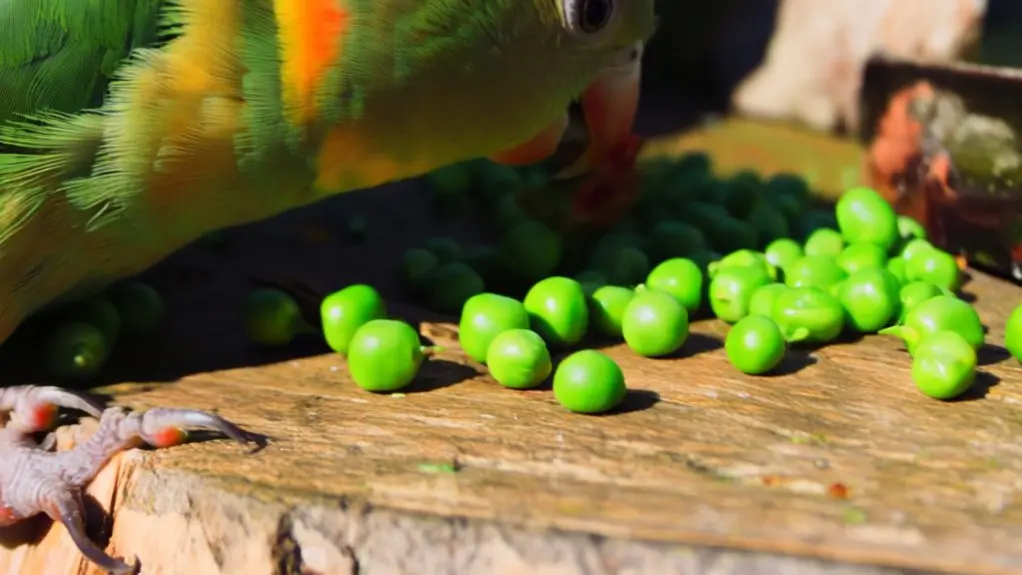
You can safely feed your bird fresh or cooked peas in moderation, as they provide protein, fiber, and essential vitamins. Just be sure to avoid salted, canned, or processed peas because those can cause digestive issues.
Cooking peas actually helps improve nutrient absorption and reduces anti-nutrients, which makes them easier for your bird to digest. It’s a good idea to introduce peas gradually and keep an eye on how your bird reacts.
That way, you can watch out for any problems like bloating or diarrhea. If you want more detailed tips on feeding and protecting your bird, it’s worth looking into further guidance.
Nutrients Peas Provide to Birds
Although many bird foods provide essential nutrition, peas stand out because they offer a rich blend of protein, fiber, and vitamins A, C, and K that directly support your bird’s health. These nutrients help strengthen your bird’s immune system and boost energy levels, ensuring it stays active and resilient.
Peas also contain antioxidants and phytochemicals, which promote cellular health and protect against oxidative stress. By incorporating properly cooked or fresh peas into your bird’s diet, you provide a valuable supplement that supports growth and vitality.
Feeding peas in moderation complements their natural food intake, enhancing overall well-being without overwhelming their digestive system. Including peas thoughtfully can make a significant difference in maintaining your bird’s ideal health.
Are Raw Peas Safe for Birds?
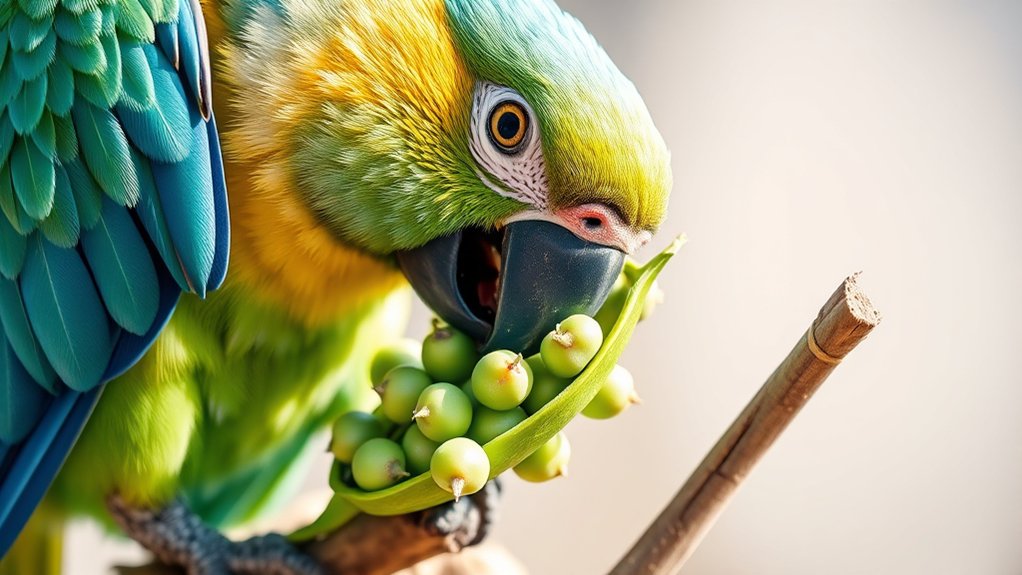
You can safely offer raw peas to most birds in moderation. They provide essential nutrients and natural sugars that support their health.
Just make sure to avoid salted or seasoned peas, and always wash them thoroughly to remove any pesticides.
It’s also a good idea to introduce raw peas gradually to help prevent any digestive issues or refusal.
Nutritional Value Of Raw Peas
When feeding birds, raw peas can serve as a nutritious treat packed with protein, vitamins C and K, and beneficial fiber. These nutrients support their immune system, promote healthy blood clotting, and aid digestion.
To maximize benefits, make sure you follow these guidelines: Offer only fresh, raw peas without added salt, seasonings, or preservatives, which can harm birds. Provide peas in moderation, treating them as an occasional supplement rather than a dietary staple.
Also, avoid cooked or processed peas, as these may contain unsafe ingredients for birds. Just stick to fresh raw peas, and your feathered friends will thank you!
Potential Risks For Birds
While raw peas offer valuable nutrients to birds, feeding them improperly or in excess can pose certain risks. You should avoid giving your bird large quantities of raw peas, as this may lead to digestive problems like diarrhea or bloating.
Also, canned or preserved peas often contain added salt, sugar, or preservatives, which can harm your bird’s health. To keep your feathered friend safe, introduce peas gradually into their diet and monitor their response carefully.
Always opt for fresh or properly cooked peas, as these provide essential vitamins and minerals without harmful additives.
If you’re uncertain about how much or how often to feed peas, consult an avian veterinarian to make sure you’re meeting your bird’s nutritional needs safely.
Should You Cook Peas Before Feeding Birds?
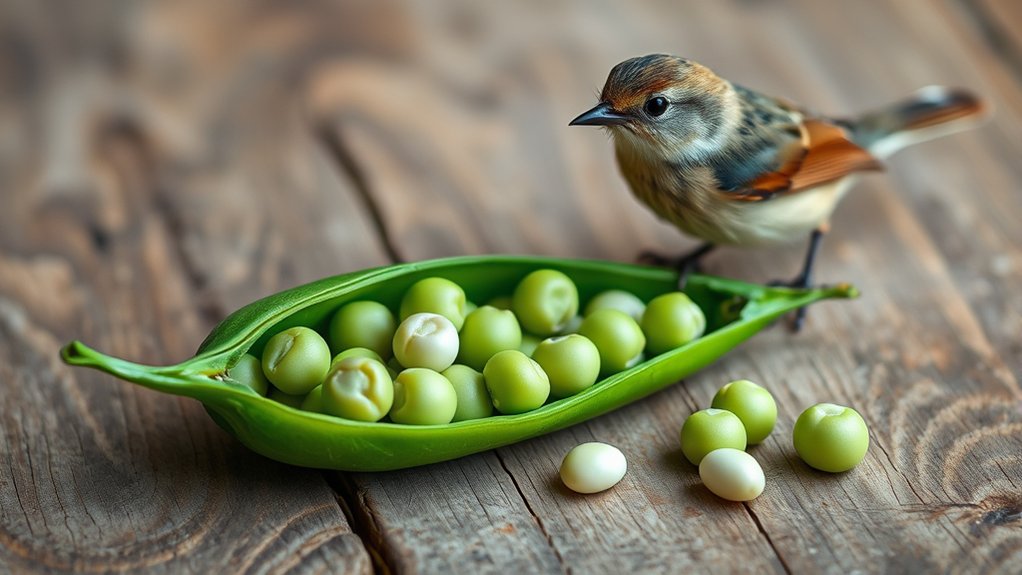
If you’re thinking about feeding peas to birds, it’s a good idea to cook them first. Cooking helps the birds absorb nutrients better and reduces harmful substances like lectins that can be tough on their digestive systems.
When you cook peas, it also breaks down those tough cell walls, making them easier to digest.
Plus, cooking lowers the chance of mold or bacteria growing on the peas, which keeps your feathered friends safer.
Just remember to serve the peas plain—no seasoning or additives. That way, you’re giving the birds a healthy and safe treat they’ll enjoy!
Raw Vs Cooked Peas
How should you prepare peas before feeding them to birds? The choice between raw and cooked peas depends on safety and preference.
Cooking peas breaks down antinutrients, making them easier to digest and reducing choking risks. However, raw peas retain natural enzymes and nutrients but must be thoroughly washed to eliminate bacteria or pathogens.
Consider these key points:
- Cook peas without seasoning to guarantee safety and softness, which many birds prefer.
- If serving raw peas, wash them thoroughly to remove harmful contaminants.
- Observe your bird’s response to both forms to determine which best suits their dietary needs.
Nutritional Impact Cooking
Because cooking peas deactivates certain anti-nutrients like lectins, it improves their digestibility and nutritional availability for birds.
When you cook peas, you make them softer and easier for birds to consume, reducing the risk of choking.
Raw peas contain lectins that can cause digestive upset or harm some bird species, so cooking them is safer.
Properly cooked peas encourage better nutrient absorption since birds can digest them more efficiently.
However, when preparing peas for birds, avoid adding salt, seasonings, or oils, as these additives may be harmful.
By cooking peas simply, steaming or boiling without additives, you provide a nutritious, safe treat that supports your bird’s health and well-being.
Cooking peas is the best way to maximize their benefits for your feathered friend.
It’s easy, safe, and makes a big difference in how your bird enjoys and benefits from this healthy food.
How Much Peas Are Safe for Birds?
When feeding peas to your bird, offering small quantities guarantees a safe and nutritious treat without risking digestive issues. Peas provide valuable protein, vitamins, and minerals, but moderation is key to preventing nutritional imbalances.
To guarantee safety and health, follow these guidelines:
- Serve peas plain. Avoid salt, seasoning, or oils because they can harm your bird.
- Limit portions to a few peas per day. You can adjust this based on your bird’s size and species.
- It’s a good idea to consult an avian veterinarian. They can help tailor serving sizes specific to your bird’s health needs.
Risks of Feeding Processed or Salted Peas to Birds
While peas are generally a healthy treat for birds, processed or salted varieties pose significant risks to their health. High salt content in these peas is toxic to many bird species, leading to dehydration and kidney damage.
Also, canned or pre-seasoned peas often contain preservatives and flavorings that can upset a bird’s digestive system. Some processed peas include additives like garlic or onion, which are outright toxic to birds and should be strictly avoided.
To protect your bird’s well-being, always choose plain, unsalted, and unseasoned peas. Feeding them anything else increases the risk of serious health issues.
Your best approach is to provide natural peas without additives to guarantee your bird stays safe and healthy.
How Peas Affect Bird Digestion and Health
Though peas offer valuable nutrients like protein, fiber, and essential vitamins that support your bird’s immune system and metabolism, feeding them in moderation is essential to avoid digestive upset. Peas influence bird digestion and health in several key ways:
Peas provide essential nutrients for birds but should be fed in moderation to prevent digestive upset.
- Nutrient Support: Peas provide vitamin C and B-complex vitamins, enhancing immune function and metabolic processes.
- Digestive Balance: The fiber content aids digestion, but excess fiber or anti-nutritional factors in raw peas can cause gastrointestinal discomfort.
- Risk of Overfeeding: Too many peas may disrupt nutrient balance and lead to digestive issues, so portion control is imperative.
It’s all about finding the right balance. Feeding peas in the right amounts helps keep your bird healthy and happy!
How to Safely Introduce Peas Into Your Bird’s Diet
How can you safely add peas to your bird’s diet without causing digestive issues? Start by offering fresh, cooked, or frozen peas without any added salt, seasoning, or oils.
Introduce peas gradually, giving small amounts at first to monitor your bird’s reaction. This way, you can spot any digestive upset or allergic response early.
Always remove uneaten peas promptly to prevent spoilage and harmful bacterial growth in the cage.
Before adding peas or any new food, it’s a good idea to consult an avian veterinarian to confirm it suits your bird’s species and health needs.
Signs Peas May Be Causing Problems
If you notice missing or uprooted pea seeds shortly after planting, birds are likely the culprits disrupting your crop’s growth. These signs indicate bird predation, especially by species like blackbirds and finches that target seeds during germination.
To identify if peas are causing problems, watch for:
- Seed disturbance: Uprooted or missing seeds soon after planting.
- Seedling damage: Tender pea seedlings pulled from the soil or showing signs of nibbling.
- Bird activity: Increased presence of birds around your pea beds, often digging or pecking.
Repeated losses despite protective measures confirm bird interference. Recognizing these signs early helps you take swift action to protect your crop and ensure successful pea establishment.
Alternatives to Peas for a Balanced Bird Diet
When you want to provide birds with a balanced diet, offering alternatives to peas is crucial to meet their nutritional needs and reduce crop damage. You can safely offer vegetables like carrots, spinach, sweet potatoes, and squash. These supply essential nutrients and protect your garden.
Fruits such as apples and berries add valuable vitamins and variety. Incorporate seeds, pellets, and specially formulated bird foods to guarantee your birds get all necessary minerals and vitamins.
Avoid relying solely on peas to prevent nutritional deficiencies.
Always research the specific dietary requirements of your bird species to avoid harmful foods and optimize their health. By diversifying their diet thoughtfully, you support their well-being while minimizing risks to your crops.
Frequently Asked Questions
Can All Bird Species Eat Peas Safely?
Not all bird species can safely eat peas. You should avoid feeding peas to birds with sensitive digestive systems, like raptors.
Small to medium garden birds generally tolerate peas in moderation without issues. So, it’s usually fine to offer peas to those birds but always keep an eye on how they react.
Do Peas Help With Bird Feather Growth?
Yes, peas help with bird feather growth by providing essential amino acids, protein, vitamins, and minerals.
Including peas in your bird’s balanced diet supports feather strength, shine, and the molting process.
Are Frozen Peas as Good as Fresh for Birds?
You’ll find frozen peas just as nutritious, just as tasty, and just as safe as fresh peas for your bird. Just thaw them fully, avoid additives, and introduce gradually to keep your bird happy and healthy.
It’s really that simple! Birds usually love peas, and using frozen ones can be super convenient. Just make sure to handle them right, and your feathered friend will be just fine.
Can Peas Be Used as a Bird Training Treat?
Yes, you can use peas as a bird training treat. They’re nutritious, high in protein, and low in fat.
Just offer them in moderation to keep your bird healthy while reinforcing positive behaviors effectively.
It’s a simple way to make training fun and rewarding for your feathered friend.
How Do Peas Compare to Other Legumes for Birds?
Peas are the gentle giants of legumes for birds, being softer and easier to digest than others. You’ll find them more palatable and less risky, offering a safer, protein-rich alternative that birds enthusiastically enjoy.
They’re kind of like the easygoing option in the legume world, making them a favorite among feathered friends. Birds tend to prefer peas because they’re less tough on their digestive systems.
Conclusion
You might be surprised to learn that peas provide about 5 grams of protein per 100 grams. This makes them a nutritious snack for your bird. Just remember to serve them plain and cooked to avoid digestive issues.
Moderation is key. Too many peas can upset your bird’s balance. By introducing peas safely and watching for any problems, you’ll support your bird’s health while adding variety to their diet.