
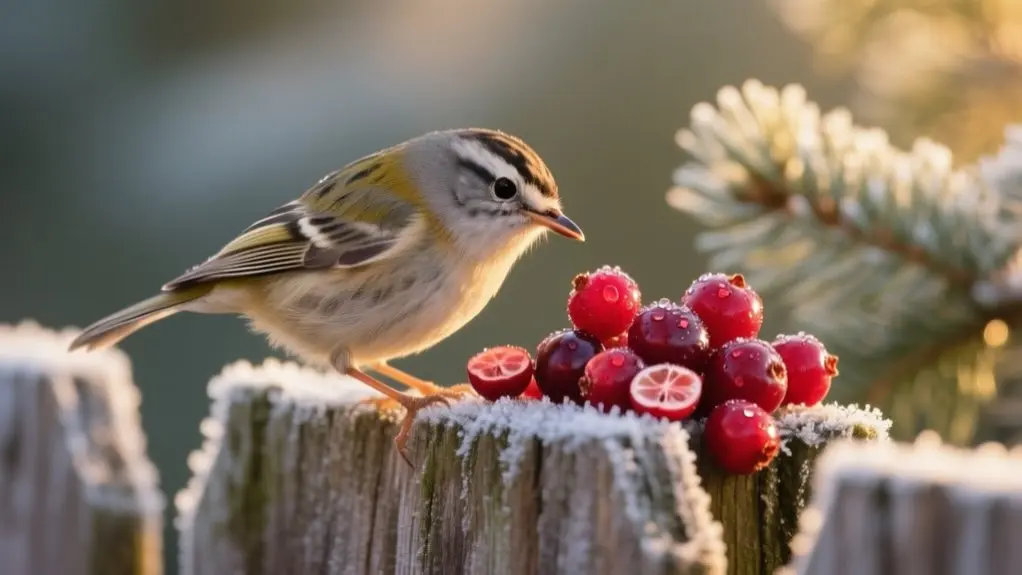
Yes, you can safely feed fresh cranberries to many bird species. They provide essential vitamins, antioxidants, and hydration, especially during winter when food is scarce.
Birds like American Robins, Cedar Waxwings, and Jays enjoy their tart flavor and health benefits. Just remember to rinse them well and offer in moderation to avoid waste.
If you want to know which birds prefer cranberries and the best ways to serve them, there’s more useful info ahead.
Can Birds Eat Fresh Cranberries?
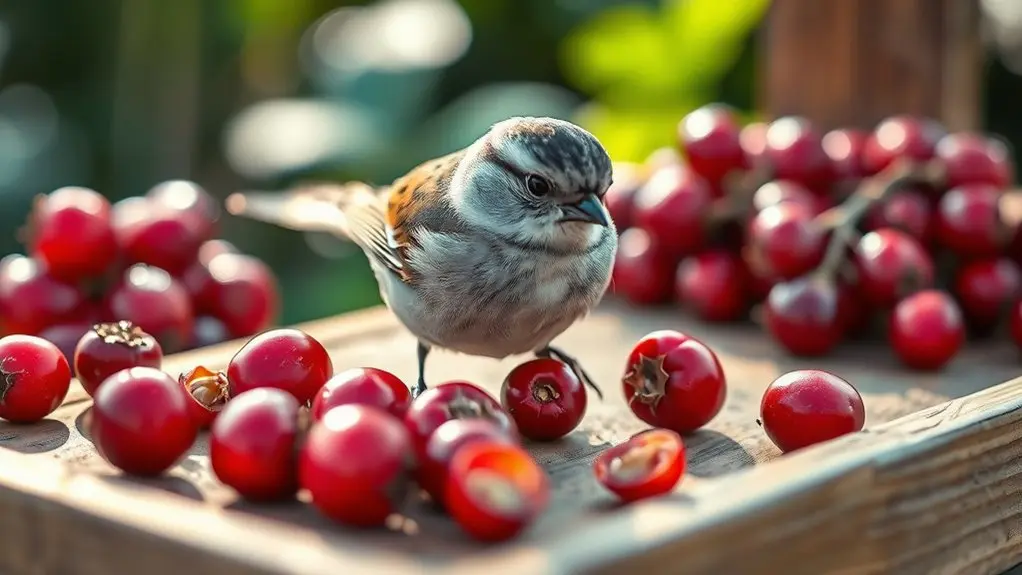
How can fresh cranberries benefit the birds in your backyard? Birds can definitely enjoy fresh cranberries as part of their diet.
These bright berries offer essential vitamins and antioxidants that support their health. Plus, fresh cranberries provide natural hydration, which is especially helpful during winter when water sources freeze.
Many bird species, such as thrushes and jays, are attracted to the vibrant color and taste of cranberries, making them a popular bird food.
You can offer fresh cranberries whole or mashed to suit different birds. Just remember to provide them in moderation alongside other bird foods like seeds and nuts to guarantee a balanced diet.
Including fresh cranberries in your feeders can add variety and appeal for the birds visiting your backyard.
Nutritional Benefits of Cranberries for Birds
You’ll find fresh cranberries packed with vitamins, antioxidants, and fiber that help boost birds’ health and immune systems.
Plus, their natural sugars give birds a quick energy boost, which is especially handy during the colder months.
Knowing these benefits makes it easier to support the birds that visit your backyard.
Nutrient Content Overview
Although fresh cranberries are low in calories, they pack a powerful nutritional punch that benefits birds, especially during the harsh winter months. Their nutrient content includes a rich supply of vitamin C, which supports bird health by boosting the immune system when food is scarce.
Fresh cranberries also contain dietary fiber, aiding digestion and promoting gut health. The natural acidity in these berries helps deter harmful bacteria in a bird’s digestive tract, contributing further to digestive well-being.
Birds like thrushes and jays are particularly drawn to fresh cranberries, making them a valuable addition to winter feeding options. By offering these berries, you provide essential nutrients that support overall bird health through challenging seasons.
Antioxidant Properties Benefits
Since fresh cranberries are packed with antioxidants like vitamin C and flavonoids, they play an essential role in boosting birds’ immune systems during winter.
These antioxidant properties help reduce oxidative stress, promoting overall health and longevity in birds.
By offering fresh cranberries, you support their natural defenses against illnesses when food is scarce.
Furthermore, cranberries contain dietary fiber that aids digestive health, helping birds process their food efficiently.
This combination of immune system support and digestive benefits makes cranberries a valuable addition to a bird’s diet.
Including fresh cranberries in your backyard feeding routine not only attracts species like thrushes and jays but also contributes to their wellbeing through these powerful nutritional benefits.
Energy Source Potential
When birds face the cold months, fresh cranberries provide a valuable energy source packed with essential nutrients. These berries are low in calories but rich in vitamin C and antioxidants, supporting birds’ immune systems and overall health.
By including fresh cranberries in their diet, birds boost their nutritional intake, helping them maintain energy levels when other food sources are scarce. Cranberries also offer dietary fiber, which promotes healthy digestion, a vital benefit during winter.
The tartness of these berries attracts species like thrushes and jays, making them a favored energy source.
If you add fresh cranberries to your bird feeder, you’ll not only diversify a bird’s diet but also help sustain them through colder months with this nutritious, natural energy source.
Which Birds Eat Fresh Cranberries in Winter?
If you offer fresh cranberries in winter, you’ll notice many birds flocking to them for their tart flavor and rich nutrients. Larger birds like American robins and jays, as well as wintering birds such as cedar waxwings and bluebirds, relish these berries when other fruit options are scarce.
Placing cranberries on a platform feeder or mixing them with other fruits invites a vibrant variety of visitors to your yard.
| Bird Type | Why They Eat Cranberries | Emotional Connection |
|---|---|---|
| American Robins | High vitamin content | Joy of watching life thrive |
| Cedar Waxwings | Moisture and tart flavor | Warmth in cold months |
| Bluebirds | Seasonal treat with other fruits | Delight in colorful guests |
| Jays | Energy-rich winter food | Satisfaction in sharing |
Which Birds Don’t Eat Cranberries (And Why)?
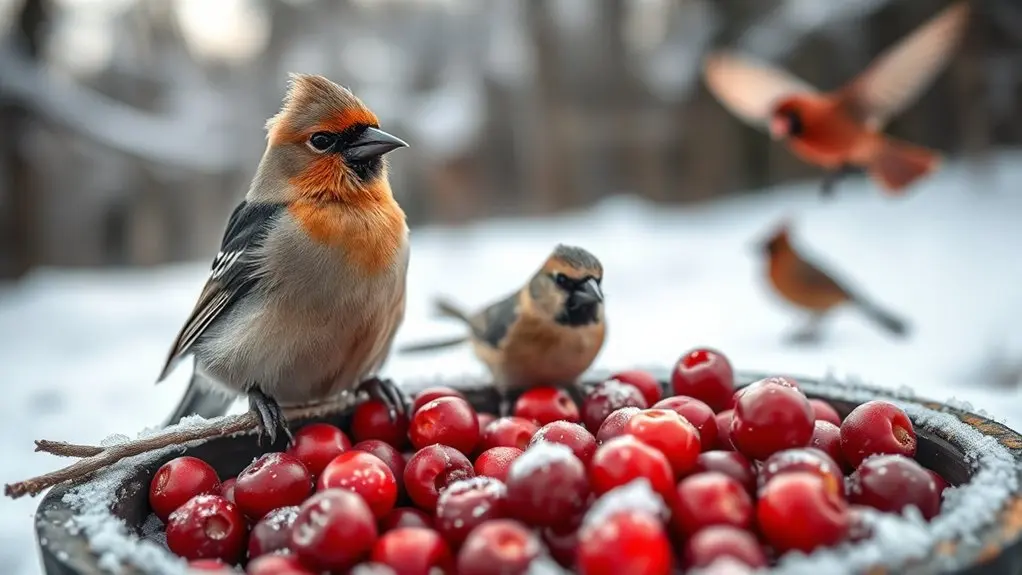
Why don’t some birds eat cranberries at all? It’s because their diets focus on foods that better meet their nutritional needs.
Seed-eating birds like sparrows and American goldfinches prefer seeds and grains rather than the main fruit like cranberries.
Seed-eating birds such as sparrows and goldfinches favor seeds and grains over fruits like cranberries.
Insectivorous birds such as warblers and flycatchers avoid cranberries since those berries don’t give birds the protein they need.
Larger predators like hawks and owls skip cranberries entirely, relying on small mammals or other birds for sustenance.
Ground feeders such as doves and quail also bypass cranberries, favoring easier-to-forage seeds.
If you want to attract the best bird variety, consider offering a mix that suits their preferences rather than focusing solely on cranberries. This approach better supports diverse bird populations.
Fresh or Dried Cranberries: Which Do Birds Prefer?
Understanding which birds eat cranberries helps you decide how best to offer them, whether fresh or dried. Fresh cranberry flavors appeal to birds like thrushes and jays who enjoy the tartness and texture.
On the other hand, dried cranberries have higher calorie content and sweetness, making them ideal for winter feeding. Your bird feeding preferences might vary depending on the season and bird species you want to attract.
| Cranberry Type | Bird Feeding Preferences |
|---|---|
| Fresh Cranberries | Attracts thrushes, jays; tart flavor |
| Dried Cranberries | Preferred in winter; sweeter, calorie-rich |
| Nutritional Value | Vitamins & antioxidants in fresh |
| Convenience | Dried lasts longer; easy to store |
Both types are great. Just avoid added sugars or preservatives.
How to Prepare Fresh Cranberries for Birds
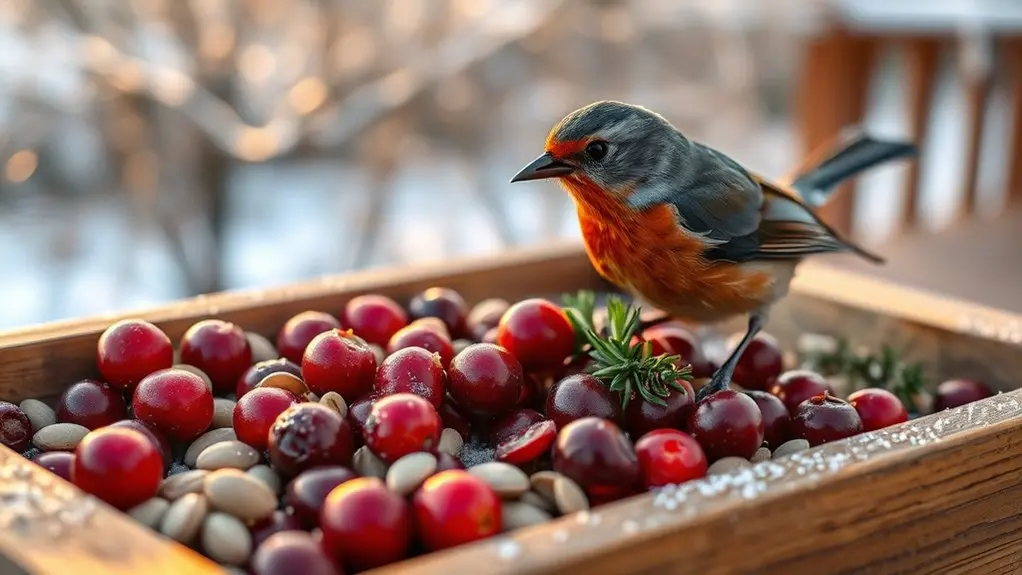
Offering fresh cranberries to birds can boost their winter nutrition with antioxidants and vitamins. To prepare them, rinse the berries thoroughly to remove any pesticide residues, ensuring they’re safe for your feathered friends.
Slice or crush cranberries to help smaller birds eat them easily, as whole berries can be tough for some species. You can get creative with cranberry recipes by stringing berries along with popcorn or other fruits, crafting eye-catching bird feeder designs that attract various birds.
For seasonal feeding, scatter cranberries on the ground or mix them with seeds in feeders to entice ground-feeding birds like thrushes and jays.
These simple steps make fresh cranberries an appealing and nutritious addition to your bird-feeding routine during colder months.
How to Safely Offer Fresh Cranberries
If you want to safely offer fresh cranberries, start by making sure they’re fresh and free from any moldy spots. It’s important to check each berry so your feathered friends only get the best.
You can get creative with how you serve them, too. Try stringing the cranberries up or putting them in mesh feeders—this way, you’ll attract all kinds of different birds.
And one more thing: always steer clear of any toxic additives or treatments. Keeping it natural is the safest way to look out for your visiting birds.
Preparing Cranberries Properly
When you prepare fresh cranberries for birds, make certain to rinse them thoroughly to remove any pesticides or contaminants. Choose cranberry varieties that suit the seasonal availability in your region to guarantee freshness.
Since birds have different preferences, cutting cranberries in half can help smaller species access the fruit easily and enjoy the juicy interior. This preparation also makes the berries more enticing, drawing in a variety of birds.
Keep in mind that fresh cranberries are a nutritious treat packed with vitamins and antioxidants, benefiting bird health. By properly preparing cranberries considering bird preferences and seasonal availability, you create a safe and attractive food source.
Always monitor and remove any uneaten berries to prevent spoilage and avoid attracting pests.
Serving Methods For Birds
Although fresh cranberries provide a nutritious treat, you should always prepare and serve them carefully to guarantee birds can enjoy them safely. Start by washing cranberries thoroughly to remove pesticides or chemicals.
You can offer whole berries directly or string them into cranberry garlands to create festive displays that attract various bird species during winter. Hang these garlands from tree branches or feeders to encourage natural foraging, especially for fruit-eating birds like thrushes and jays.
Moreover, mix cranberries into homemade bird treats with seeds or suet for added nutrition.
Avoiding Toxic Additives
Serving fresh cranberries to birds can be rewarding, but you need to keep an eye on what goes along with them. To protect bird health, avoid offering cranberries with added sugars, preservatives, or other toxic additives. These substances can disrupt feeding habits and even harm your feathered visitors.
Always choose fresh cranberries, washing them thoroughly to remove pesticides or chemicals. Cut them in half or offer them whole to suit seasonal preferences, attracting birds like thrushes and jays that enjoy fruit.
Steer clear of dried cranberries, as they often contain harmful additives.
Feeding Cranberries? Avoid These Common Mistakes
Since fresh cranberries can upset birds’ stomachs if given in excess, you should always offer them in moderation.
Follow cranberry safety tips by thoroughly washing berries to remove pesticides and avoid mixing them with sugary or salty foods, which can harm birds.
Respect bird dietary habits by providing cranberries as part of a balanced diet alongside seeds and nuts, ensuring they get essential nutrients.
Use seasonal feeding strategies like threading cranberries on strings or placing them in mesh feeders to make access easy and reduce waste.
Avoid overfeeding or combining cranberries improperly, and you’ll support birds’ health while enhancing their natural diet safely and effectively.
Signs Birds Are Enjoying Fresh Cranberries
You’ll notice birds flocking to fresh cranberries if they’re enjoying them. Often, they’ll peck away quickly, leaving just the skins or pits behind.
Keep an eye out for frequent visits and a variety of species feeding. That’s a good sign they’re really into the berries.
These clear signs show the cranberries are hitting the spot for your feathered visitors.
Cranberry Consumption Behaviors
When you spot birds like American robins or cedar waxwings enthusiastically pecking at fresh cranberries, it’s a clear sign they’re enjoying the fruit.
These birds use specific cranberry feeding strategies, such as breaking open the berries with their strong beaks or pecking repeatedly to reach the pulp and seeds.
The bright red color of cranberries acts as an important bird attraction factor, signaling ripe and nutritious food.
Seasonal feeding habits also come into play. During colder months, fresh cranberries provide essential vitamins and hydration, making them especially valuable.
Bird Activity Around Cranberries
If you notice birds like American robins or blue jays gathered around cranberry bushes, it’s a strong indication they’re enjoying the fresh fruit.
These birds rely on cranberries as essential winter food sources when other options are limited.
You’ll see their bird feeding strategies in action as they peck and snack on the berries.
For effective backyard birdwatching, watch for these signs:
- Groups of birds hovering near vibrant cranberry clusters.
- Birds actively plucking berries, showing preference for fresh fruit.
- Frequent visits during colder months when hydration from cranberries matters.
- Increased activity around bushes offering easy access to the berries.
Visible Cranberry Feeding Signs
Noticing birds around cranberry bushes often means they’re actively feeding on the fruit, and this activity leaves clear signs you can spot. Look for distinctive pecking patterns on the berries. Small bite marks reveal where birds have sampled the fruit.
You’ll also find scattered cranberry pieces on the ground beneath feeders, a telltale sign birds are enjoying their seasonal foraging treat.
If you observe a variety of species like robins and jays visiting frequently, it highlights their feeding preferences for fresh cranberries.
The vibrant red color attracts their attention, encouraging more visits and quicker disappearance of berries.
These visible cranberry feeding signs let you know birds appreciate fresh cranberries as part of their natural diet during certain times of the year.
Best Times to Feed Cranberries for Maximum Benefit
Since birds rely on natural feeding rhythms, offering fresh cranberries in the early morning and late afternoon aligns perfectly with their energy needs.
To make the most of feeding schedules, consider these tips based on bird preferences and seasonal variations:
- Feed cranberries during peak winter months when natural food is scarce.
- Scatter berries on the ground or use platform feeders to attract ground-feeders like robins and thrushes.
- Offer cranberries gradually to avoid upsetting birds’ digestive systems.
- Increase feeding during cold snaps, as birds need extra energy to stay warm and find food under snow.
How Fresh Cranberries Compare to Other Winter Bird Foods
Offering fresh cranberries during winter provides birds with a unique nutritional boost that differs from typical seeds and suet.
Cranberry feeding techniques, like stringing whole berries or mixing them into seed trays, cater to winter bird preferences for fruit versus seeds.
While seeds and suet offer high energy and fat, fresh cranberries supply vitamins, antioxidants, and hydration, attracting fruit-loving birds such as thrushes and jays.
They’re lower in calories but add valuable variety to a bird’s diet.
You won’t want to replace seeds entirely with cranberries, but combining them enhances your feeding station’s appeal and nutritional balance.
Using fresh cranberries alongside traditional foods meets diverse bird tastes and supports healthier winter feeding habits.
Where to Find Fresh Cranberries for Bird Feeding
If you want to add fresh cranberries to your bird feeding routine, you can usually find them at local grocery stores during the fall and winter seasons.
To source the best berries, consider these options:
Explore various sources to find the freshest cranberries for your bird feeding needs.
- Local grocery options often stock fresh cranberries in season. Look for firm, plump berries with vibrant color.
- Farmers’ market selections offer fresh cranberries directly from regional growers, supporting local agriculture.
- Online retailers provide convenient bulk purchasing, perfect for keeping a steady supply for your feathered friends.
- Specialty health food stores may carry organic or locally sourced cranberries. These are ideal if you want high-quality options.
Frequently Asked Questions
Can Feeding Cranberries Attract Unwanted Wildlife?
Yes, feeding cranberries can attract unwanted wildlife. When you offer fresh cranberries, their high sugar content and seasonal availability can invite raccoons, deer, and rodents.
This can lead to challenging wildlife interactions. These animals may disrupt birds’ natural feeding habits and damage feeders.
To manage this, you should limit cranberry offerings to small amounts and peak bird activity times. This helps maintain a balanced environment and protects your backyard birds from competition and pests.
Do Cranberries Affect Bird Migration Patterns?
You know what they say: “A bird in the hand is worth two in the bush.”
Cranberries, with their seasonal availability, serve as key migration triggers for birds. Their nutritional benefits, like natural sugars and vitamins, provide energy boosts that can alter migration timing.
When cranberries are abundant, birds might delay departure to fuel up. This shows how food sources directly influence migration patterns and support successful journeys.
How Often Should I Offer Cranberries to Birds?
You should offer cranberries to birds once or twice a week to balance feeding frequency and avoid overfeeding.
Their nutritional benefits make them a great supplement during winter when natural food is scarce.
Since cranberries have seasonal availability, it’s best to provide them mainly in colder months.
Remember to cut them in half for smaller birds and remove any uneaten fruit to keep the feeding area clean and safe.
Can Birds Eat Cranberry Plants or Leaves?
Yes, birds can eat cranberry plants and leaves. You’ll find cranberry plant benefits include antioxidants that support bird health impacts positively.
While birds prefer the fruit for its sweetness, nibbling on leaves occasionally adds variety to their diet.
For seasonal feeding tips, offer the leaves in moderation during fall and winter when other food is scarce. This helps maintain a balanced diet and promotes overall bird well-being.
Are Organic Cranberries Better for Birds Than Conventional Ones?
Choosing organic cranberries is like giving birds a clean, fresh meal instead of leftovers. You’ll enjoy the organic benefits that come from the absence of harmful pesticides, making these berries safer for your feathered friends.
Their nutritional value stays just as strong, but feeding recommendations lean toward organic to support bird health and the environment.
Conclusion
Yes, you can feed fresh cranberries to birds, and they’ll often gobble them up like little treasures from nature’s pantry. These tart berries offer a nutritious boost, especially in winter when food is scarce.
While some birds might pass, many enjoy this vibrant snack. By sharing fresh cranberries, you’re not just feeding birds, you’re painting your backyard with life and joy, turning cold days into a feast of color and cheer.